-
Complicating Long-Term Stability: Water Security and the Iran War
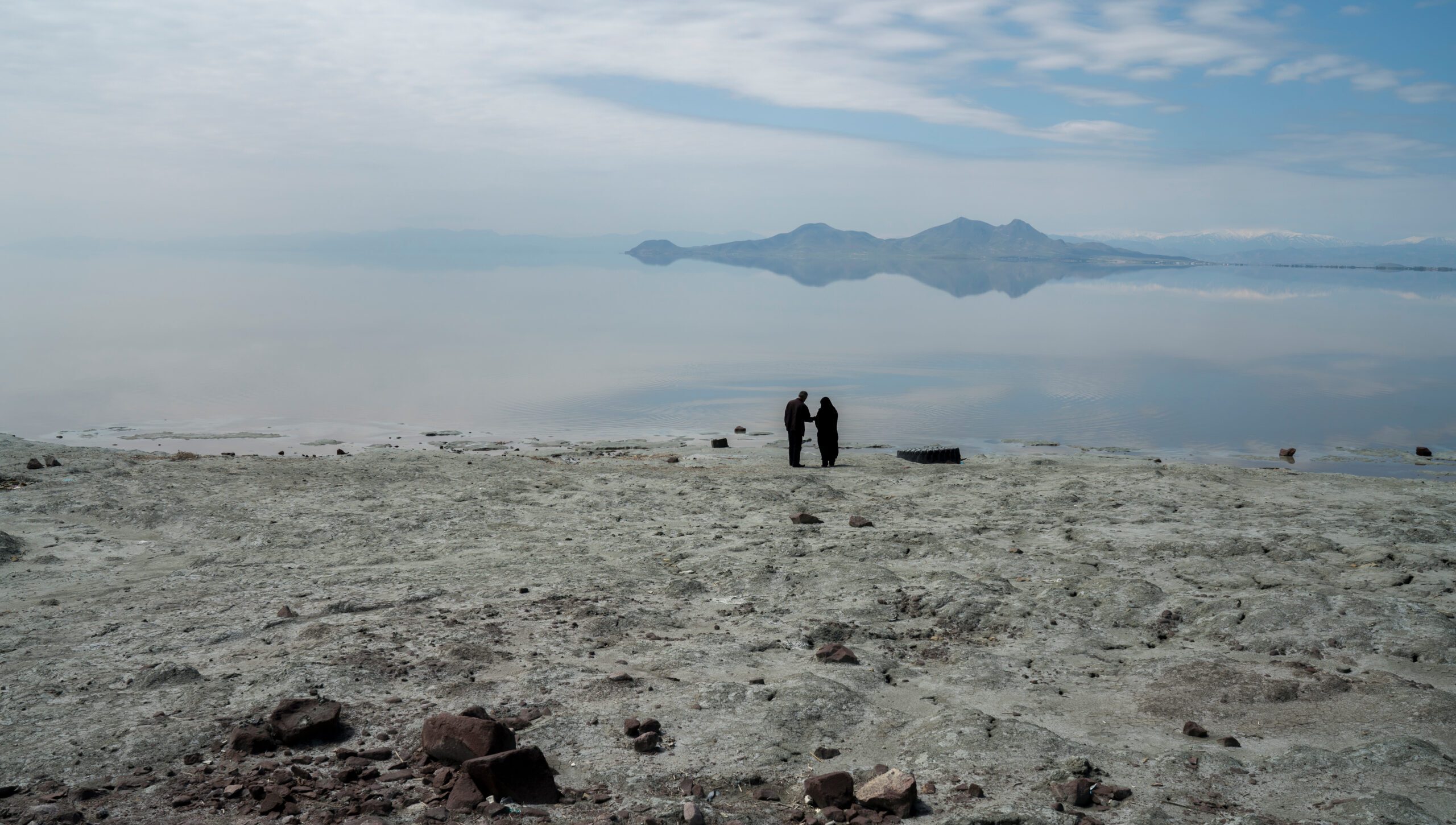
In the summer of 2025, Tehran almost reached “Day Zero” – a designation for the moment when the city’s municipal water supply was no longer able to meet basic demand through normal distribution systems. Indeed, Iranian President Masoud Pezeshkian has repeatedly warned that the capital may need to be relocated due to the worsening water crisis.
Such extremes in water scarcity conditions unfolded across the country before the commencement of the U.S.-Iran War in March and contributed to societal unrest and intermittent water-related protests in recent years. The new conflict promises to further devastate already limited water resources through the direct weaponization of infrastructure, attention and money drawn away from water management, and impacts on energy supplies.
Most attention is focused on the immediate devastation of the ongoing aerial campaign. However, extreme heat and drought are anticipated in coming months, the conflict’s impact on Iran’s water security—and, by extension, its long-term stability—should also attract attention—and be treated as a critical concern.
Assessing Structural Drivers
The World Resources Institute ranks Iran as the world’s 14th most water-stressed country, with 26 of its 31 provinces experiencing “extreme water stress.” Water supply is expected to fall nearly 11% by 2080, while demand will increase by roughly 30% by 2050.
Iran’s severe water stress is the result of decades of poor water management, compounded by the intensifying effects of climate change. Historically, Iran used a qanat system to sustainably collect and distribute water, but over pumping now has rendered around half of these underground pipelines completely useless.
Decisions about water usage throughout the 20th century added to the problem. Beginning in the 1930s, and accelerating through the 1960s under the “White Revolution,” Iran promoted water-intensive agriculture and industrial expansion, largely without regard for the country’s underlying hydrological constraints.
The 1979 revolution and Iran-Iraq war in the 1980s further devastated both Iran’s water infrastructure and economy. The resulting pressure created by the sanctions imposed by the international community pushed Tehran further towards agricultural self-sufficiency and ultimately unsustainable water management practices.
The activities of the construction arm of the Islamic Revolutionary Guard Corps have further exacerbated these pressures. This de facto “water mafia” has advanced large-scale projects that benefit political elites and create the appearance of productivity while intensifying the degradation of water resources. Beyond the effects on water security, this mismanagement has eroded public trust in government services and contributed to unrest.
The cascading challenges pose an existential threat. While Tehran’s near-relocation received media attention this past summer, lawmakers warned the Sistan and Baluchistan province also would face water bankruptcy as early as September 2023.
The risks posed by severe water scarcity already have contributed to societal unrest, mostly rooted in frustration from ethnic minority-dominated provinces about water diversion from their provinces to big cities like Tehran. In 2021, for example, Ahwaz Arabs in the western Khuzestan province led an “uprising of the thirsty” rooted in frustrations with water mismanagement and perceived government-manufactured drought to displace Arab farmers. And the anti-government protests in early 2026 also were influenced by rising food prices that were linked to underlying water scarcity.
Weaponization and the Water-Energy-Food Nexus
Water has already been weaponized in the Iran conflict, further exemplifying an emerging pattern in modern warfare in which control over essential resources is increasingly used as a strategic tool. These tactics include the targeting of critical infrastructure, such as dams, desalination plants, pipelines, and irrigation systems.
Water desalination plants have been damaged in the new conflict. Iran has intentionally hit plants in Bahrain and Kuwait, while U.S. attacks reportedly hit one Iranian plant. Iranian leadership also has threatened to destroy Gulf countries’ desalination facilities in response to Trump’s threats to strike their energy infrastructure.
The US attack on Iran’s desalination facility will likely have minimal impact in Iran because desalination makes up a small fraction of its domestic water supply. Yet attacks or collateral damage to dams or other water infrastructure would be devastating given already limited water supplies. Tehran already must spend significant time and money mitigating the impacts of extreme drought, especially as the country’s extremely hot and dry summer is just around the corner. Even if water is not weaponized, either intentionally or unintentionally, an intensifying war shifts government funding and priorities away from addressing water security challenges.
The pressures on water also have cascading impacts on food security. Approximately 90% of the country’s water resources go towards agricultural production, and Iranian news sources approximate that 83% of food is produced domestically. Any major disruption to Iran’s water supply would likely undermine domestic food production, increasing dependence on expensive imports and further strain a population already burdened by high living costs.
As we have seen, these costs contributed to the protests earlier this year before the war began, and would likely continue to stoke domestic unrest. Beyond potential high cost, food shortages more broadly may pose a significant challenge to Iranians: as the conflict continues, risk of acute food insecurity, especially for poorer communities, will grow.
Water shortages may also contribute to energy challenges. Water scarcity affects thermal power plants, which dominate Iran’s energy mix. Most fossil fuel and nuclear plants require large volumes of water for cooling. When water is scarce, plants must either reduce output or shut down temporarily. Research shows that some of Iran’s steam-based power plants are particularly water-intensive, making them vulnerable during drought conditions.
This situation also creates a structural constraint. Electricity production can still falter due to lack of water, even with abundant supplies of oil and gas. Many of these facilities also are being targeted in the current conflict, placing further strain on grids. Devastated energy supply chains and damaged electric utility grids will increase prices for Iranians. And if the government chooses to rely more heavily on hydropower to mitigate these costs? Water supplies will drop further.
Political Instability and Water Disruptions
Many questions remain to be answered about what the future of the Iranian regime will look like, but whatever government is in charge will be faced with a myriad of water-related challenges.
Impacts from potential weaponization or deprivation of dwindling water supplies will be acute, particularly if the conflict drags into the hot and dry summer months. Given the role of water-related protests in Iran’s broader domestic unrest, additional stressors are likely to intensify and extend existing patterns of instability. Yet beyond civilian dissatisfaction and insecurity regarding water management, the challenge can easily spiral into a humanitarian catastrophe – especially if Iranian dams are targeted or damaged unintentionally.
Even after the current war ends, persistent water challenges—and public dissatisfaction with the government’s response—will complicate reconstruction efforts and risk further instability. While global energy markets and economic shocks dominate headlines, the Iranian government and the humanitarian community must make the provision of reliable water supplies throughout and after the conflict a priority.
The views expressed in this publication are those of the authors and do not reflect the official stance of the University of Alaska Fairbanks or the Alaska Center for Climate Assessment and Preparedness.
Eleanor Greenbaum is a Policy Fellow with the Alaska Center for Climate Assessment and Preparedness. She specializes in climate security with an emphasis on food and water security, particularly in Iran and the wider Middle East.
Marcus D. King is Professor of the Practice in Environment and International Affairs at Georgetown University’s Walsh School of Foreign Service and Earth Commons. He specializes in environmental security and politics with an emphasis on climate and water security.
Sources: Al Jazeera; Atlantic Council; CSIS; IEA; Nature; NBC News; New York Times; Pacific Institute; Press TV; Reuters; Scientific American; World Resources Institute; Yale Environment 360
Photo Credits: Licensed by Adobe Stock.
Topics: climate, climate change, conflict, Guest Contributor, Infrastructure, Iran, meta, water, water security
 A Publication of the Stimson Center.