-
In Context: Erika Weinthal and Jeannie Sowers on the Middle East Conflict’s Impacts on Civilian Infrastructure
March 11, 2026 By Environmental Security Staff
Recent attacks on critical infrastructure in Iran and the Persian Gulf mark a troubling escalation in the widening regional conflict. Since the U.S. and Israel launched a bombing campaign against Iran on February 28, Iran has responded with waves of missiles and drones targeting Gulf states across the region. Last weekend, both sides crossed a new threshold by striking civilian water and energy infrastructure. U.S. strikes allegedly hit a desalination plan on Iran’s Qeshm Island; Iran retaliated with a drone strike on a desalination plant in Bahrain; and Israeli airstrikes on fuel depots sent toxic smoke across Tehran. Taken together, the strikes underscore what experts have long warned—in a region where desalination plants are existential infrastructure and energy systems underpin daily survival, attacks on critical infrastructure can rapidly translate into a humanitarian crises in the short-term, and entrenched instability in the long-term.
These attacks are not happening in a vacuum. Researchers have been tracking the targeting of water, energy, food, and health infrastructure in Middle Eastern conflicts for years. Erika Weinthal, John O. Blackburn Distinguished Professor in Environmental Policy at Duke University, and Jeannie Sowers, Professor of Political Science at the University of New Hampshire, are among the leading experts in this space. We asked Weinthal and Sowers to put this weekend’s strikes into context.
New Security Beat: Your joint work has documented attacks on water and other environmental infrastructure in Syria, Yemen, Gaza, and Libya. How do the strikes on desalination plants in Iran and Bahrain fit (or not) into the patterns you have identified? Given the existential dependence of Gulf populations on desalination, what risks are run by targeting this infrastructure?
Erika Weinthal: Our research has found that different armies and armed groups have targeted desalination plants in the wars since 2011 in the MENA, so recent attacks on desalination plants in Iran and Bahrain are not the first time this has occurred. During the 1990-1991 Gulf War, Iraqi troops destroyed most of Kuwait’s desalination capacity and attacked its oil fields. Desalination facilities also have been targeted in Yemen and Gaza. What is consistent about warfare in the MENA, unfortunately, are the persistent attacks on the critical infrastructure upon which populations depend.
The attacks on desalination in Bahrain highlight the vulnerability of depending largely on one source of technology for drinking water. The confluence of water scarcity in the Gulf states and revenue generated from sales of oil and gas mean that these nations can invest heavily in desalination facilities to meet domestic demand for drinking water. And as the price of desalinated water has dropped and technologies have improved in recent years, the Gulf states have continued to rely upon desalination as the primary source of drinking water, which leaves the plants that do this work exposed and vulnerable to attacks.
Iran’s foreign minister said “the U.S. set this precedent” with the Qeshm Island strike, and Iran appears to have struck Bahrain’s desalination plant in retaliation. Your research has examined how infrastructure targeting is used to punish civilian populations and gain leverage. Is the retaliatory logic at work in these attacks different than from what you have observed in other contexts? How does the involvement of state actors (including the U.S.) change the calculus around norms and accountability?
Weinthal: Civilian objects such as desalination plants must be protected in armed conflict. Yet state and non-state actors in Syria, Gaza, Libya, Yemen, and Ukraine have targeted critical infrastructure, often to make cities unlivable. Indeed, targeting infrastructure has been a way to harm civilians since the Second World War. Back then, it resulted in the destruction of cities such as Dresden. More recently, cities such as Aleppo, Gaza City and Rafah, among others, have been destroyed.
Targeting of critical infrastructure by the U.S. dates to the air power doctrine adopted in the 1990s, which legitimized air strikes on Iraq’s critical infrastructure, including electricity, oil, and communications. The U.S.-led coalition in the 1991 war undertook such bombing with the intent to paralyze civilian life and incite protests against the regime of Saddam Hussein.
Military planners have argued that such a use of airpower reduces civilian casualties and shortens the duration of a conflict. Yet our research shows that the destruction of critical infrastructures results in longer-term environmental, social, and health impacts. So while some might suggest that these attacks are retaliatory, the wars waged in the MENA show a pattern of deliberate targeting of critical infrastructure by both domestic actors and foreign actors. Russia and Turkey did so in Syria, as did Saudia Arabia and the UAE in Yemen. Now the United States and Israel have done so in Iran and Iran has in Bahrain.
Israeli strikes on Tehran’s fuel depots this past weekend produced toxic smoke and “black rain” over the city, which poses different environmental harms than water infrastructure destruction, but it points to a broader pattern of attacks with cascading environmental and public health consequences. What effects of recent strikes are getting lost in the coverage? What should draw closer attention?
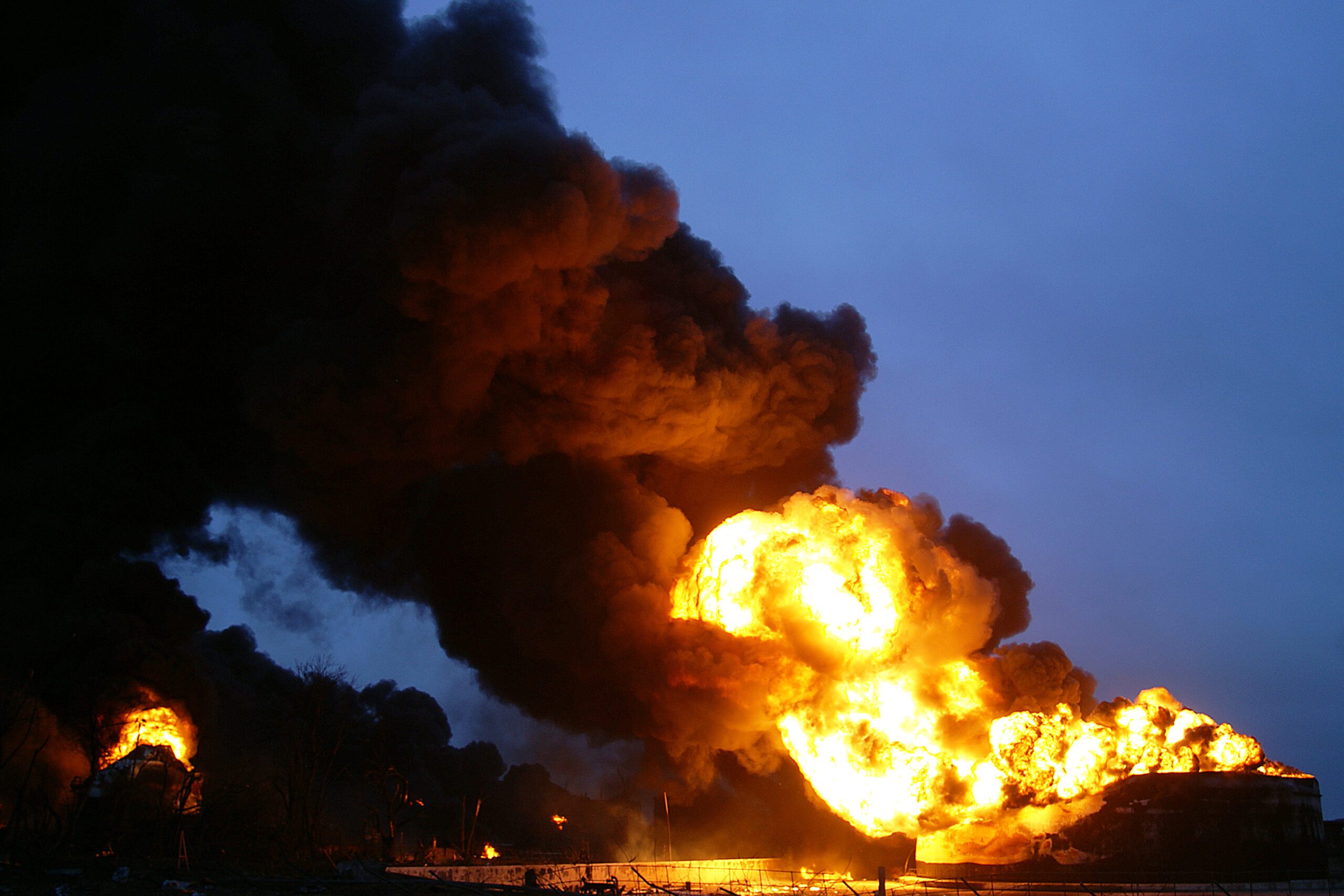
Weinthal: The health and environmental impacts from attacking a desalination plant may not be immediately apparent, but destroying oil fields, refineries, and fuel depots results in visible damage. This was as true in Iraq in 1991 with the burning of the oil fields as it is today over Tehran. The burning of hydrocarbons releases a range of pollutants, notably volatile organic compounds (VOCs), which are carcinogenic. Exposure to toxic pollutants affects high-risk groups, especially the elderly and those suffering from asthma. News images capture immediate exposure, but environmental health specialists must monitor air and soil quality over time to understand the long-term health and environmental impacts of these attacks.
Jeannie Sowers: In addition to air pollution, oil from damaged fuel depots and refineries has reportedly flowed into streets and drains in Tehran, which also raises issues about potential contamination of groundwater.
One striking feature of the recent U.S.-Israeli attacks on Iran’s oil infrastructure is that the United States has been a vocal critic in the past when other militaries and armed groups attack energy and civilian infrastructures. When Houthi forces threatened maritime shipping through the Red Sea in response to Israel’s military campaign in Gaza, the Trump Administration invoked the protection of energy assets and trade to justify air and naval strikes on Houthi positions.
Your work has emphasized that protecting environmental infrastructure is important not only during conflict, but also to pave the way for eventual stability and peace. Given that Iran was already facing severe water stress before these attacks, and that Gulf cities are structurally dependent on desalination, what are the longer-term implications of this war for post-conflict recovery?
Weinthal: Climate change is exacerbating water stress across the MENA and diminishing the amount of water available across the region both spatially and temporally. An increasing number of cities face water stress owing to increasing temperatures and less rainfall. In Tehran, this has resulted in the depletion of major reservoirs that provide water to the city. Conflict also destroys the governance systems necessary to manage water institutions and services. The attacks also highlight the broader vulnerability of highly-centralized large-scale infrastructure.
But the impacts of airstrikes on water infrastructure will be experienced differently across the region depending upon a country’s wealth and strength of institutions. Countries rich in oil and gas can use their resource wealth to rebuild desalination systems and other critical infrastructure. Iran’s economy has been hobbled from years of international sanctions, however. As with many other conflict-affected countries, rebuilding critical infrastructure there to provide basic services such as water and electricity will be vital. Years of protracted drought also underscore the need for climate-sensitive planning, especially in countries like Iran that are experiencing water shortages. Many Gulf states such as the UAE already have recently begun to introduce renewable energy (including solar, which can help fuel desalination), offering a different vision to fossil-fuel driven recovery.
International humanitarian law prohibits attacks on infrastructure indispensable to civilian survival. Desalination plants clearly fit that definition. What would it take to strengthen the protection of environmental infrastructure in active conflict zones? Are any existing levers not being used?
Weinthal: International humanitarian law (IHL) is clear about prohibiting attacks on civilian objects such as desalination plants. Additional Protocol I (Article 54, paragraph 2), states that “it is prohibited to attack, destroy, remove or render useless objects indispensable to the survival of the civilian population.” IHL offers a legal instrument to protect infrastructure, and military planners and lawyers understand the need to distinguish between military and civilian objects in conflict and to avoid harm to civilians. Unfortunately, even though the distinction between military and civilian is clear, civilian objects such as desalination plants continue to come under fire.
Organizations like the Geneva Water Hub have developed the Geneva List of Principles on the Protection of Water Infrastructure to encourage militaries to respect IHL and human rights law during armed conflicts. Scholars and organizations such as PAX and CEOBS also track the extensive damage to infrastructure, which is vital work in bolstering protections and allowing for accountability at the end of a conflict. Such assessments of damage and environmental impacts are necessary before any rebuilding of destroyed infrastructure can ensue. There is also increasing interest in expanding legal protections. This includes the concept of ecocide, which holds countries accountable for environmental damage during war.
Other mechanisms that could bolster environmental protections also exist. The UN Compensation Commission held Iraq liable for all damage arising from the 1990-91 war, including harms to the environment, natural resources, property, and public health. The greatest challenge to strengthening protection for both the environment and civilians is that members of the Security Council (including Russia and the United States) possess veto power to halt such remedies.
Sowers: The UN Compensation Commission did set an important precedent for considering environmental war crimes in international law. Yet the fires that Saddam Hussein’s troops set in Kuwait’s oil fields as they retreated in the first Gulf War are also important for what they did not accomplish. In that case, the United Nations required Iraq to pay Kuwait compensation for war-related damage from the oil fires. The bulk of these payments went to companies for loss of profit, and then to individuals for a variety of harms, rather than to compensate for broader damage to the environment. While it is hard to see how the U.S. or Israel will be held accountable in a similar manner at this point in time, the precedent is there.
Domestic mobilization and engagement is another avenue to pursue accountability. The negative environmental, health, and economic effects created by using explosive weapons in populated areas needs to become more widely recognized. The mass displacement and humanitarian impacts that occur when targeting civilian and environmental infrastructures have been demonstrated in several recent Middle Eastern wars. The role that previous U.S. administrations played in upholding norms for the conduct of war and in its military training was important. Domestic pressure on politicians to respect the laws of war and to expand these norms to include environmental security is very important.
Erika Weinthal is the John O. Blackburn Distinguished Professor of Environmental Policy at Duke University’s Nicholas School of the Environment. She specializes in global environmental politics and environmental peacebuilding with an emphasis on water and energy.
Jeannie Sowers is Professor of Political Science and International Affairs at the University of New Hampshire. Her research focuses on political economy and environmental issues in the Middle East and North Africa.
Sources: Foreign Policy; Geneva Water Hub; The New York Times; Reuters
Photo Credits: Licensed by Adobe Stock.
 A Publication of the Stimson Center.