-
Reconsidering Arctic Resilience: Community Bonds and Coping with Change
February 11, 2026 By Nadezhda Filimonova, Anngelica Kristoferqvist, Åsa Andersson, Francis Joy & Katariina Vuori
President Donald Trump’s revived interest in buying Greenland attracted worldwide attention to the Arctic and triggered renewed geopolitical discussions about the region. These policy and academic debates mainly focus on traditional military threats and protecting national interests linked to great power rivalries—specifically a broader global competition involving the USA, Russia, and China.
As national interests take center stage, there is limited clarity on the significant ways that these changes will impact local and Indigenous communities. Given the diverse challenges and disruptions that communities across the Arctic encounter, these policy debates often shift focus away from other important approaches (such as community resilience) to meet these challenges.
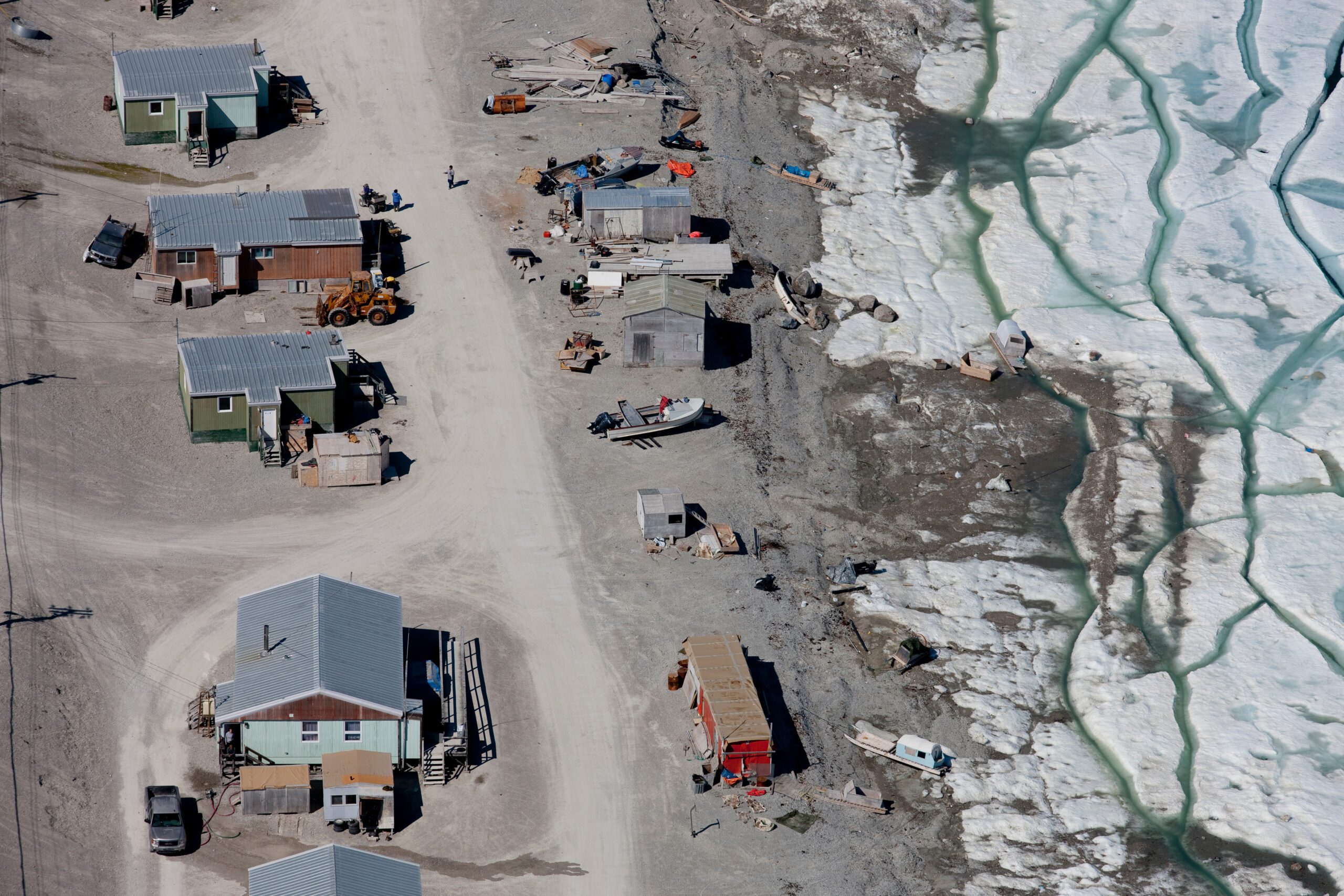
Climate change is happening in the Arctic four times faster than it is in other parts of the world, so building community resilience for Arctic societies is becoming more essential. Community resilience is complex, and its close links to social cohesion make it particularly vital. Physical structures like houses and roads can be repaired after damage, but recovery is more difficult when community bonds weaken.
Any loss of community cohesion is experienced deeply in the Arctic. Some communities have been relocated (or are in the process of moving) due to thawing permafrost that destabilizes their social infrastructure, or because of changes to land use from expanding military and economic activities. These relocations bring obvious financial and logistical hurdles, but they also have considerable impacts on community cohesion that include a diminished sense of belonging to a place and community.
As local and Indigenous communities in the Arctic adapt and thrive despite harsh weather, vast distances, and climate change, preserving these community bonds is crucial. Doing so requires that they draw upon cultural practices, local knowledge, and heritage, which foster community bonds and enhance both communal and individual resilience.
Examining the case of Kiruna (Giron in the Sámi language), a mining city in northern Sweden, illustrates vividly how an expansion of the mining activities that sustain the city’s economy also has compromised the physical integrity of its built environment and caused fractures beyond its infrastructure.
Mining’s Impacts on the Urban Environment in Kiruna
Kiruna was founded in 1900 to support the iron ore mining industry. It received an initial boost via a railroad connection to the area, and it was later linked to the Norwegian city of Narvik in 1903 as a route to transport ore to shipping harbors. A key reason that a permanent settlement was established here was that the mining company Luossavaara-Kiirunavaara AB (LKAB), founded in 1890, was required by the state to provide housing for its workers to enable mining operations in the area.
From its planning stage, Kiruna was envisioned by planners as a model city with high standards for housing, social welfare, and income levels for mining workers. The new economic activities and urban center proved controversial, since the land on which mining was established, and the city was founded, was initially inhabited by Sámi people, who used it for reindeer herding. Over time, Kiruna’s population has grown to approximately 23,000 residents, many of whom are employed in the mining sector. Iron ore mining here has also made LKAB one of Europe’s leading ore producers.
This economic success had drastic downsides, however. As plans progressed to expand mining directly into Kiruna’s central areas, the risks of damage to urban infrastructure in the inhabited area raised concerns. Eventually, LKAB announced plans in 2004 to relocate Kiruna, and submitted amendments to the city’s comprehensive plan to make it happen.
The company’s plan called for the demolition of approximately 3,000 homes, 1,000 workplaces, two schools, the city hospital, two highways, and national rail infrastructure over 30 years. About 12,000 residents would be compelled to relocate, representing two-thirds of Kiruna’s central population. The actual relocation began 10 years later.
“Church on the move”
In August 2025, the relocation in the region was extended to a prominent building, when Kiruna’s 113-year-old wooden church was moved 5 km from the city. The journey was named “The Great Church Walk” by the media, and it drew thousands of spectators, including the King of Sweden.
While relocating a church in one piece was a remarkable technological achievement, some Kiruna residents saw something more profound than a logistical feat. Sámi and Tornedalian artist Åsa Andersson Martti characterizes the “church move” as a disconnection from familiar spaces with a profound psychological impact on the community.
The loss of familiar spaces and the sight of familiar infrastructure in ruins resulting from relocation disrupts the emotional and relational bonds that residents have built over generations. These shifts entail changes in daily life that affect both individuals and community practices, including attachments to places that have sustained the community. Protecting these bonds is more than just sentimentality; it is also about preserving the foundations of the community.
Paths Forward: Strengthening Community Bonds for Resilience
Events in Kiruna exemplify broader dynamics occurring throughout the region. The Arctic is expected to remain a crucial region for natural resource extraction. In particular, the European part of the Arctic is likely to serve as an upstream source of materials necessary to meet the European Union’s climate neutrality goals and support its green transition.
Yet these developments will impact local and Indigenous communities in varying degrees. Given these future trajectories, what actions should be prioritized to maintain community bonds during times of disruptive change?
Nurturing relationships between people and nature is one key aspect. As Francis Joy suggests, nature-human coexistence extends beyond mere recreation; for instance, lying beside a boulder or mountain and sensing its presence, or simply being in the forest, can serve as a source of grounding and renewal. Such embodied connections with the land also enhance identity and a sense of belonging.
Symbolic engagements with heritage are also essential, especially when using creativity to link it to broader well-being. This activity advances emotional processing and helps individuals manage uncertainty. Joy’s work on forest sentience and the powers of nature in northern Finland mentions this specifically.
Others are also suggesting paths forward. Katariina Vuori’s research invited people experiencing homelessness to work with ballast stones from an old harbor area. One participant in this study noted that time spent with his stone helped him not only acknowledge his past but also recognize the importance of balance.
Building resilience in the Arctic begins with enhancing bonds between its residents. When the Arctic is framed primarily as a geopolitical arena, the social bonds that enable communities to adapt and endure in this space are overlooked. Sustainable Arctic policies and actions at both national and subnational levels should also include practices that recognize social cohesion as a matter of long-term stability, and not as a peripheral concern, but as a core element of community resilience.
Nadezhda Filimonova is a Postdoctoral Researcher at the Arctic Centre, University of Lapland.
Anngelica Kristoferqvist is a Coordinator at the Arctic Centre and Education Coordinator at the Arctic Graduate School at Umeå University.
Åsa Andersson Martti is a Master’s student at the University of Gävle.
Francis Joy is a Postdoctoral Researcher at the Arctic Centre, University of Lapland.
Katariina Vuori is a Doctoral student at the University of Oulu.
Sources: Australian Journal of Environmental Education; Council on Foreign Relations; European Planning Studies; Geographical Review; Global Construction Review; Health and Social Care in the Community; Journal of Land Use Science; Kiruna Municipality; Kritisk Etnografi – Swedish Journal of Anthropology; Nature; OECD; Polar Geography; Public Archaeology; Relate North; Sustainability; University of Gävle; WIREs Climate Change
 A Publication of the Stimson Center.