-
From the Forests of Yunnan: Rethinking What Tea Can Be
February 5, 2026 By Judy Song
“Where is the tea?” I asked after our class had hiked through densely wooded hills for half an hour, looking around in confusion. I was among a team of Duke Kunshan University (DKU) graduate students led by Dr. Binbin Li to study tea crops grown in the tropical forests of Xishuangbanna, Yunnan Province.
Usually, when I think of a tea plantation, I picture endless terraces of tidy, waist-high bushes like those I’ve seen in many tea-growing regions around the world. I knew the crop was called a tea tree, and yet, until I found myself standing in this lush agroforest above the village of Gaoshan, it had never really occurred to me that tea plants were really trees.
Zhou, the young village leader showing us around, laughed with unbridled amusement at the clueless city dweller. “You’re standing right in front of about a dozen.”
I blinked at the stretch of forest in front of me and realized that the seemingly random trees scattered beneath the towering native canopy were, in fact, Camellia senesis. I recognized them only by their rough-edged, deeply verdant leaves and not by their form. Some were small saplings barely reaching my chest; others were tall, full-bodied trees twice my height. Their branches grew upward and outward, freely, as any tree reaching for sunlight would.
“Here, our tea grows as it always has,” Zhou said knowingly, “among the forest.”
Zhou and the 130 households residing in Gaoshan Village have practiced ecologically friendly tea cultivation long before eco-labels began declaring products “organic” or “sustainably grown.” In a consumer goods market now inundated with such claims, only niche tea experts know about this uniquely biodiversity-friendly forest tea.
As explored in a new DKU report, this undervalued cultivation method is an opportunity for the industry to introduce a biodiversity-friendly tea certification that formally recognizes producers who excel in forest conservation, celebrates traditional tea culture, and gives eco-conscious consumers a clear way to identify truly biodiversity-friendly tea.

Leaves From the Mountains of Yunnan
Yunnan is China’s second-largest tea-producing province and home to the country’s largest population of wild and ancient tea trees. These centuries-old cultivated trees grow within multi-layered forest ecosystems beneath tall canopy trees and above the herbs and shrubs covering the forest floor.
This traditional way of farming, practiced for generations by the Blang, Dai, Hani, and other ethnic minorities in the region, is self-sustaining. The forests regulate water and soil, attract pollinators, and keep pests in check without chemical inputs. For these communities, forest tea is not just a crop for livelihood, but a cultural heritage practice.
In recent years, forest tea has become highly sought after by Chinese tea enthusiasts for its distinctive flavor and quality, commanding prices up to thousands of yuan per kilogram. Its value extends far beyond the cup: unlike terrace monoculture farms that typically were built on deforested land and require heavy chemical use, forest-grown tea thrives in symbiosis with its natural environment, needing minimal human intervention.
Still, outside of connoisseur circles, farmers like Zhou struggle to reach broader consumer markets.
“We’ve tried e-commerce since everyone buys online now, but we only saw a few sales,” one young farmer shared. “Most of our buyers are people who’ve known our tea for years.”
Despite the uniqueness of their product, forest tea producers lack a clear way to stand out in a crowded, confusing marketplace. Organic and eco-friendly labels exist, but none truly capture the ecological and cultural value of biodiversity-rich forest tea. Even when consumers have heard of forest tea, only seasoned drinkers know how to identify what’s authentic.
A Biodiversity-Friendly Tea Certification for People and the Planet
While the tea industry has not yet adopted biodiversity-focused certification, coffee has paved the way through programs like Smithsonian Bird-Friendly, created in response to widespread deforestation tied to coffee production.
To develop biodiversity-friendly standards for tea, Dr. Binbin Li and her DKU team are studying bird and mammal diversity in different tea management sites throughout Yunnan. They have discovered tea forests have markedly higher diversity compared to that of terrace tea.
The introduction of such a certification could be transformative for tea producers and tea consumers alike.
For traditional forest tea growers, it could strengthen rural livelihoods through recognition and increased income stability. By differentiating forest tea from mass-market “eco-friendly” teas, farmers could reach new customers and maintain premiums even when broader tea prices fluctuate. For eco-conscious tea drinkers, it would be a straightforward signal to understand which teas promote forest conservation, while connecting them with the ecological and cultural story behind each cup.
For the planet, it offers a way to align community wellbeing with conservation goals. With China’s national emphasis on ecological civilization and global biodiversity targets like 30×30, such a certification could reinforce existing ecological practices and encourage more producers to transition towards sustainable systems. Market incentives paired with a clear, scientifically verified certificate would ensure current forest tea farmers continue long-term land stewardship, while also creating a pathway for conventional monoculture farms to transition into restoration sites.
In the long run, a biodiversity-friendly tea certification could help push the entire industry toward a climate-resilient, regenerative future.
Shaping Resilient, Future-Forward Forests
But challenges remain – especially ensuring both consumer and producer buy-in. Growers mainly question whether there will be real market demand and institutional backing.
“We’re mostly satisfied with our current sales,” one matriarch said as she poured tea in her family’s home. Despite drought and price fluctuations pummeling the rest of the tea industry, families in Gaoshan remain relatively comfortable thanks to long-term contracts and price premiums significantly higher than those for terrace-grown tea.
While many farmers expressed interest in a biodiversity-focused certification, particularly its potential to attract new buyers, stabilize prices, and complement eco-tourism initiatives, they consistently raised concerns about the time and opportunity costs. They need assurance that the benefits will be worth the effort.
Certification programs must secure strong consumer trust and ecological credibility. Within Yunnan and China’s broader tea market, government-endorsed policy support, especially at the local level, would not only legitimize such a certification for farmers but also help mobilize communities to shift cultivation practices collectively.
Yunnan’s tea forests are living archives – home to native plants, wildlife, and centuries of traditional knowledge. They show that economic wellbeing and biodiversity-rich landscapes do not have to be in conflict. With the right incentive structure and credible framework, these forests could become a model for resilient livelihoods and stronger conservation outcomes, not just for Yunnan, but for tea-growing regions across the world.
More analysis on the global tea industry and detailed insights into building a biodiversity-friendly tea certification modelled after the tea forests of Yunnan, China can be found in this new DKU report Toward a Biodiversity-Friendly Tea Certification.
Judy Song is an environmental policy graduate student at Duke University whose research explores how food systems, conservation, and rural livelihoods intersect. She has led fieldwork on sustainable, climate resilient agriculture in Yunnan Province, and worked on other conservation projects across China and North America.
Sources: Britannica, China Tea Marketing Association, DKU Environmental Research Center, Global Ecology and Conservation, Mongabay, National Geographic, PRC Ministry of Ecology and Environment, PwC, Smithsonian Institute, The Nature Conservancy, US EPA, UNESCO
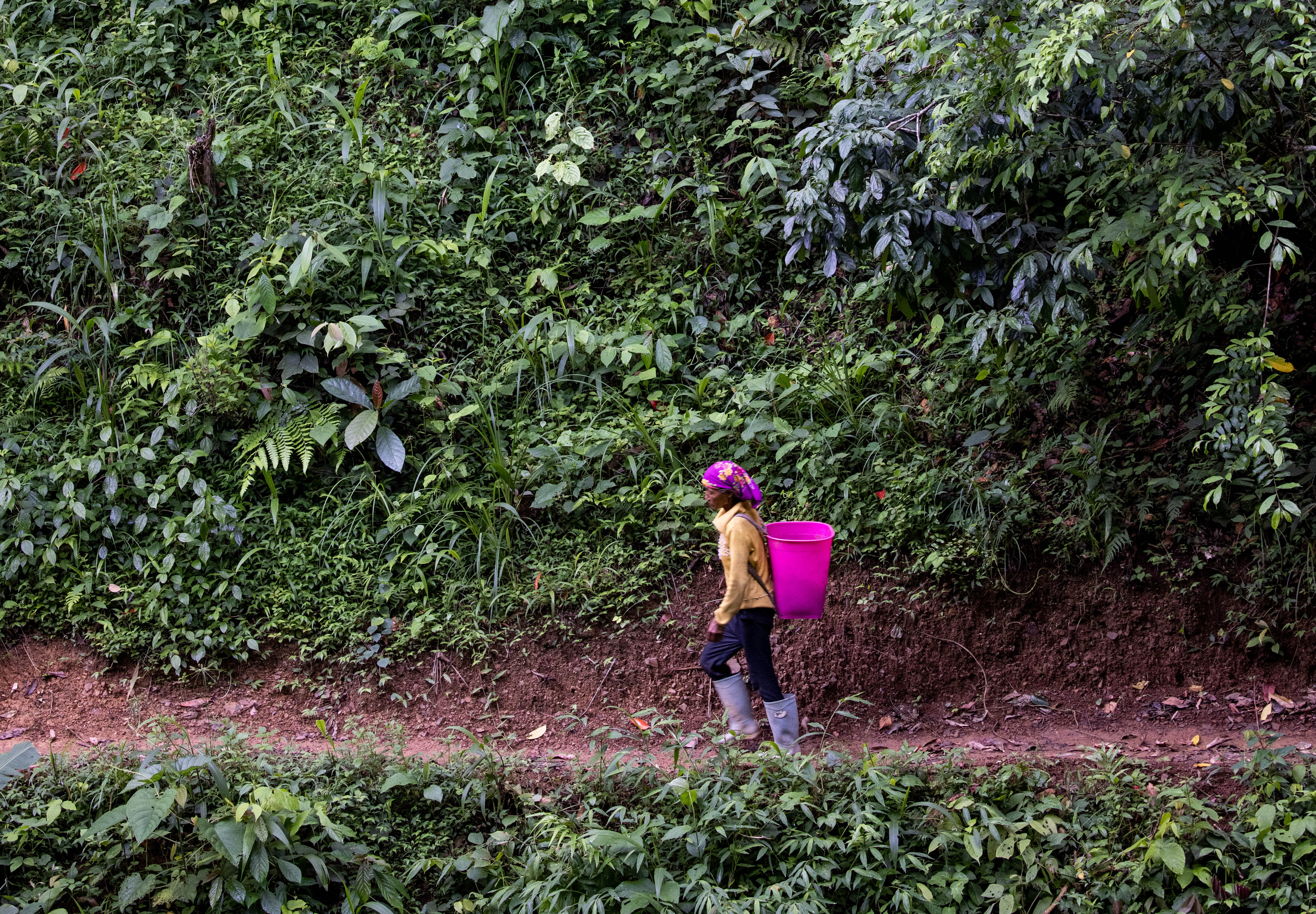
Header Photo: Villager walking through forest tea plantation near Gaoshan Village, photo courtesy of Binbin Li
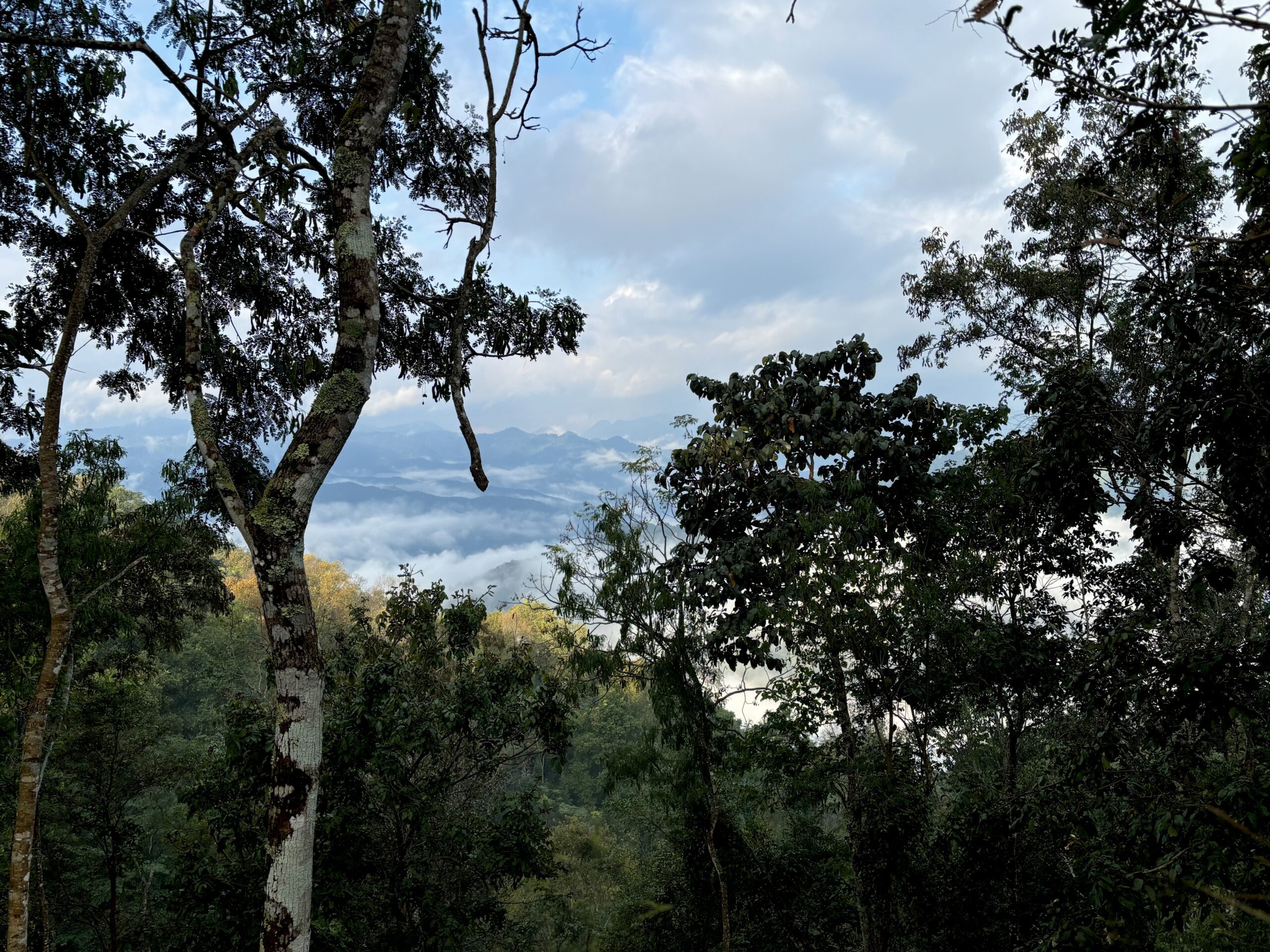
Second Photo: Yunnan tea mountains, photo courtesy of Judy Song
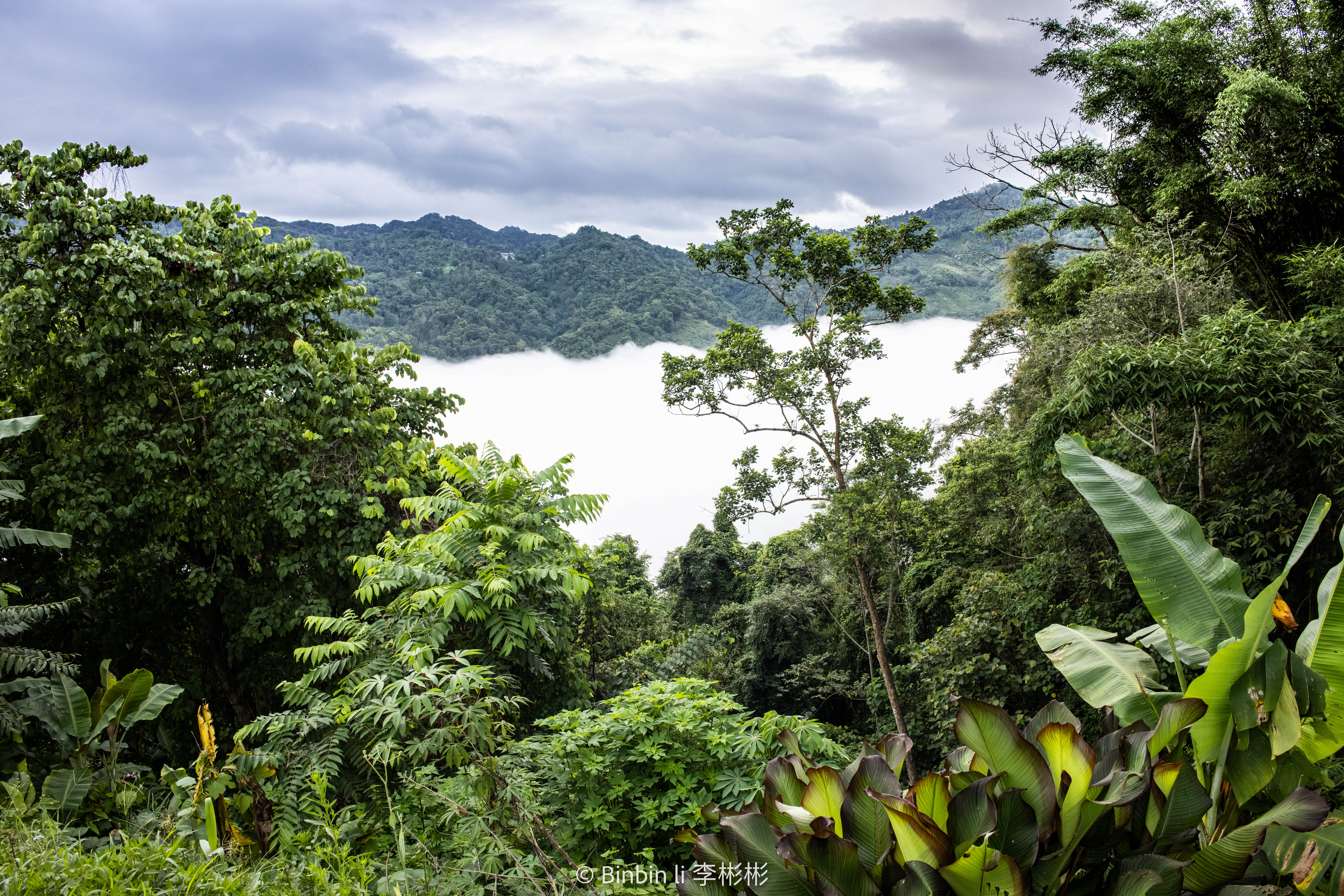
Third Photo: The lush forest above Gaoshan Village, photo courtesy of Binbin Li
Fourth Photo: Gaoshan Village at sunset, photo courtesy of Judy Song
 A Publication of the Stimson Center.