
-
Climate Change Will Likely Influence Fertility Rates
September 16, 2019 By Brian Thiede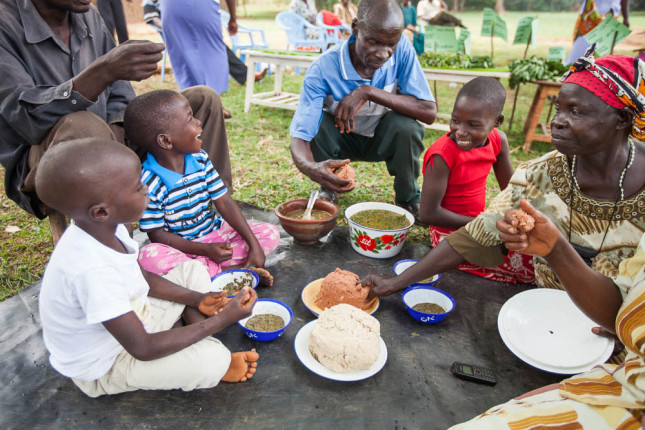
Many of climate change’s demographic impacts—including those on migration, health, and mortality—are well known. But will climate change also affect population growth? So far, relatively little is known about whether and how the reproductive goals and behaviors of women and their partners may be influenced by a changing climate. However, a number of recent empirical studies offer evidence of such effects, underscoring the multidimensional ways that households modify their structure and activities in response to changing environmental conditions. The effects also highlight the complex and interactive linkages between population growth rates and climate change.
Multiple Pathways Link Climate and Fertility
Changes in temperature and precipitation may influence reproductive goals (e.g., the desire for another child, ideal family size) and behaviors (e.g., contraceptive use, childbearing) through multiple pathways. For example, climate-induced changes in household resources may lead to intentional decisions to increase or decrease family size. If children are viewed as net consumers of resources, climate-induced resource constraints, such as diminished agricultural output or income, may lead to a reduction in family size. The opposite may occur if children are viewed as net producers (e.g., a source of labor). Climatic changes may also spur shifts in fertility by decreasing children’s health and survival, which may lead women to have additional children in anticipation of increased mortality risks (“insurance effects”) or in response to an actual child death (“replacement effects”).
However, in many cases climate change is likely to influence fertility indirectly, outside of intentional decision-making processes about how many children to have. For example, climate-induced changes in labor migration may lead to increased (or decreased) spousal separation, which is inversely related to fertility. Likewise, climate-induced changes in the demand for labor and corresponding time allocation may influence the availability of “leisure time”, which may be positively associated with fertility. For example, disruptions to agricultural production may reduce demand for household labor and increase partners’ spare time at home. Such changes in time allocation are associated with increased risk of conception—similar to increases in fertility observed after prolonged power outages.
Events associated with climate change may also interrupt access to contraceptives. While such disruptions may be particularly likely in the case of acute environmental events (e.g., tropical cyclones), climate-induced changes in economic conditions over the longer run may also affect households’ ability to afford contraceptives. These and related examples underscore the numerous pathways through which climate variability and its second-order socioeconomic impacts may influence reproductive behavior.
Changed Reproductive Responses
These expectations have been supported by a number of recent empirical studies. In a recent paper with my collaborators Sarah Eissler and Johann Strube, I assessed whether and how women across 18 sub-Saharan African countries alter their reproductive goals in response to changing temperatures and precipitation. We found that women exposed to unusually high temperatures—which is usually associated with poor agricultural and economic outcomes—tended to report a lower ideal family size and be less likely to want another child, relative to women exposed to average conditions.
Changes in precipitation also influenced reproductive goals but in a slightly more complex and inconsistent manner. Here, our findings point to a dynamic in which women reduce the number of desired children in response to short spells of above-average precipitation—perhaps due to immediate demands for their own labor—while multi-year spells of above-average precipitation lead to increased ideal family size. Assuming such extended periods of above-average precipitation are associated with improved agricultural and economic outcomes, the increases in ideal family size that we find may reflect growing demand for household labor.
Other available evidence suggests that our findings from sub-Saharan Africa are not an anomaly. For example, a study by Daniel Simon found that in historically-dry regions of rural Mexico, women are more likely to have a child after periods of above-average precipitation. In another recent paper, Samuel Sellers and Clark Gray examine how changes in temperature and the timing of the beginning of the monsoon season affect contraceptive use, reproductive goals, and fertility in Indonesia. They find that use of family planning tends to decrease, and the intention to have another child increases, when monsoon onset is delayed; but that family planning use increases and the probability of recent childbearing decreases in response to high temperatures. In line with our abovementioned study, however, these effects often varied significantly across different groups (e.g., by socioeconomic status, livelihood), which suggests that women’s ability and propensity to change their reproductive behavior in response to climate varies. Further attention to these differences between groups is needed to identify the most vulnerable populations.
Family Planning’s Role
The emerging research on climate change and fertility dynamics underscores the multiple ways that households may respond to changes in temperature, precipitation, and their second-order consequences. While more research is needed to refine our understanding of climatic influences on reproductive goals and outcomes, our current research already supports at least three conclusions. First, it is important to look beyond climate effects on migration and consider the diverse ways through which households may modify their size and structure in response to changing environmental conditions. These strategies may include changes not only to fertility, but also other processes such as marriage and child fostering.
Second, there is evidence that ideal family size and the desire for more children may decline in response to adverse environmental conditions, but in many areas, women may not have access to contraceptives or the power within their relationships to determine when they are used. The implication is that improved access to contraceptives and women’s empowerment may be needed to facilitate effective climate adaptation in this domain. Third, our research highlights the need to think about family planning as an integral part of climate change policy. It must be considered when designing both mitigation and adaptation plans.
Brian Thiede is Assistant Professor of rural sociology, sociology, and demography at The Pennsylvania State University.
Sources: American Economic Journal: Applied Economics, Demography, Global Environmental Change, National Bureau of Economic Research, Nature Climate Change, Population and Environment, Proceedings of the National Academy of Sciences of the United States of America, The Journal of Human Resources, World Development.
Photo Credit: Kenyan family eating together, March 2013. Photo by Fintrac Inc., courtesy of U.S. Agency for International Development.
 A Publication of the Stimson Center.


