• woodrow wilson center
  • ecsp

New Security Beat

Subscribe:
  • rss
  • mail-to
  • Who We Are
  • Topics
    • Population
    • Environment
    • Security
    • Health
    • Development
  • Columns
    • China Environment Forum
    • Choke Point
    • Dot-Mom
    • Friday Podcasts
    • Navigating the Poles
    • Reading Radar
  • Multimedia
    • Water Stories (Podcast Series)
    • Backdraft (Podcast Series)
    • Tracking the Energy Titans (Interactive)
  • Films
    • Water, Conflict, and Peacebuilding (Animated Short)
    • Paving the Way (Ethiopia)
    • Broken Landscape (India)
    • Scaling the Mountain (Nepal)
    • Healthy People, Healthy Environment (Tanzania)
  • Publications
  • Events
  • Contact Us

NewSecurityBeat

The blog of the Wilson Center's Environmental Change and Security Program
  • Friday Podcasts

    Family Planning an Important Component of Resilience to Climate Change, Says Roger-Mark De Souza

    March 29, 2013 By Carolyn Lamere
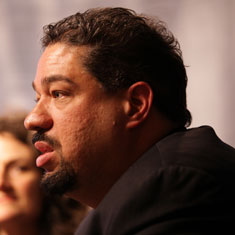
    “We believe that if you want to respond to critical development issues like climate change, that you need to address the social dimensions of resilience,” says Roger-Mark De Souza of Population Action International (PAI) in this week’s podcast.

    “If you want to address climate change and you only look at mitigation, you are missing some of the important components,” he said. PAI, which advocates for better access to family planning in developing countries, starts from the standpoint that allowing couples to decide how many children they have leads to “investments in education and technology, providing opportunities for additional economic growth, enhanced development, and ultimately helping to build resilience and adaptive capacity.”.

    “We believe that if you want to respond to critical development issues like climate change, that you need to address the social dimensions of resilience,” says Roger-Mark De Souza of Population Action International (PAI) in this week’s podcast.

    “If you want to address climate change and you only look at mitigation, you are missing some of the important components,” he said. PAI, which advocates for better access to family planning in developing countries, starts from the standpoint that allowing couples to decide how many children they have leads to “investments in education and technology, providing opportunities for additional economic growth, enhanced development, and ultimately helping to build resilience and adaptive capacity.”

    De Souza spoke at the Wilson Center on March 18.

    Friday podcasts are also available for download from iTunes.

    Topics: adaptation, Bangladesh, climate change, community-based, development, environment, environmental health, family planning, Friday Podcasts, livelihoods, Malawi, PHE, Philippines, podcast, population, risk and resilience
    • http://twitter.com/geoffdabelko Geoff Dabelko

      De Souza provides a real service by framing this issue as one of empowerment rather than penalty to engage on these two critical topics and their interconnections.

Join the Conversation

  • RSS
  • subscribe
  • facebook
  • G+
  • twitter
  • iTunes
  • podomatic
  • youtube
Tweets by NewSecurityBeat

Trending Stories

  • unfccclogo1
  • Pop at COP: Population and Family Planning at the UN Climate Negotiations

Featured Media

Backdraft Podcast

play Backdraft
Podcasts

More »

What You're Saying

  • Volunteers,At,The,Lagos,Food,Bank,Initiative,Outreach,To,Ikotun, Pan-African Response to COVID-19: New Forms of Environmental Peacebuilding Emerge
    Rashida Salifu: Great piece 👍🏾 Africa as a continent has suffered this unfortunate pandemic.But it has also...
  • A desert road near Kuqa An Unholy Trinity: Xinjiang’s Unhealthy Relationship With Coal, Water, and the Quest for Development
    Ismail: It is more historically accurate to refer to Xinjiang as East Turkistan.
  • shutterstock_1779654803 Leverage COVID-19 Data Collection Networks for Environmental Peacebuilding
    Carsten Pran: Thanks for reading! It will be interesting to see how society adapts to droves of new information in...
  • woodrow
  • ecsp
  • RSS Feed
  • YouTube
  • Twitter
  • Facebook
  • Home
  • Who We Are
  • Publications
  • Events
  • Wilson Center
  • Contact Us
  • Print Friendly Page

© Copyright 2007-2021. Environmental Change and Security Program.

Woodrow Wilson International Center for Scholars. All rights reserved.

Developed by Vico Rock Media

Environmental Change and Security Program

Woodrow Wilson International Center for Scholars

Ronald Reagan Building and International Trade Center

  • One Woodrow Wilson Plaza
  • 1300 Pennsylvania Ave., NW
  • Washington, DC 20004-3027

T 202-691-4000
