-
Access to Contraception Could Reduce Maternal Mortality by One Third, World Bank Reports
›August 14, 2008 // By Sonia SchmanskiFertility rates worldwide have been on the decline for many years, the result of a steady decrease in desired family size. But more often than not, fertility rates have not fallen as quickly as desired family size, as access to contraceptives has not kept pace with increasing demand. Consequently, more than 75 million pregnancies each year are unintended, finds “Fertility Regulation Behaviors and Their Costs: Contraception and Unintended Pregnancies in Africa and Eastern Europe & Central Asia,” a World Bank discussion paper surveying decades of research from Africa, Eastern Europe, and Central Asia. One fifth of these pregnancies end in induced abortion, fully half of which are classified as unsafe, meaning they are not attended by a properly trained health care worker or in an environment that conforms to minimum medical standards.
The costs of unsafe abortion are tremendous, financially and in terms of human lives. Approximately 67,000 women die annually from complications resulting from unsafe abortion, leaving more than 200,000 children motherless. Sexual and reproductive health issues constitute 20 percent of the global disease burden, and produce additional “direct and indirect costs to the individual woman, the woman’s household, the country’s health system and society as a whole.”
In Africa, post-abortion care can consume up to half of obstetrics and gynecology department budgets. The cost of this care is often much higher than the patient’s monthly salary. The authors report that “comprehensive family planning services to prevent unwanted pregnancy and reduce unsafe abortion in Nigeria would cost only a quarter of what is being spent in direct costs to treat post-abortion complications.” This point is taken up by author Margaret E. Greene is the latest issue of FOCUS, ECSP’s series of occasional papers featuring Wilson Center speakers. She writes that “[r]obust, compelling evidence linking good reproductive health to poverty reduction,” as is offered in the World Bank report, will “support efforts to include it in country-level poverty reduction strategies and in the allocation of international poverty reduction funding.”
This situation repeats itself across the globe. In Central Asia and Eastern Europe, induced abortion is “the principal method of birth control,” due to the expense of importing Western contraceptives, the medical community’s stigma against oral contraceptives, and the availability of abortion result. In Russia, government concerns about low fertility led the government to dismantle its sex-education curriculum and to carry out widespread layoffs in the government-controlled offices of contraceptive manufacturers.
Without exception, the case studies in this discussion paper find significant financial benefit to increasing modern contraceptive availability. Inadequate access is “an important barrier,” the authors write, discounting the argument that the contraceptives are there and people simply don’t use them. DHS surveys worldwide find that cost has prohibited contraceptive use for fewer than 2 percent of the estimated 137 million women with an unmet need. Women have decided, it seems, that the costs of childbearing far outweigh those of contraceptives.
“It is imperative,” the authors write, “that policies and programs address the need for contraception globally – for all population groups but with special emphasis on those who are most disadvantaged.” Community insurance schemes to reduce out-of-pocket payments can help accomplish this. Other ideas include increased subsidies for basic health services and adjusted user fee policies. The report also urges expanded and improved provision of contraceptive information and services, as well as improved training for health care providers. The problem is not a lack of good ideas and policies, but a lack of political will.
-
No Good Deed Goes Unpunished: Climate Scientists in the Policy Realm
›August 14, 2008 // By Geoffrey D. Dabelko As someone who sits between scholarship and policy at the Woodrow Wilson Center, I am sympathetic to Harvard Professor John Holdren’s efforts to articulate critical scientific issues in short, digestible formats. Holdren, who also directs the Woods Hole Research Center, recently tackled what he views as the dangers of climate change deniers in a Boston Globe op-ed—which is, by definition, brief. According to an email sent by Holdren, the reaction to “Convincing the climate-change skeptics” has been quite critical, with castigation running 6 or 7 to 1 over praise.
Holdren’s op-ed neglected to explicitly note that healthy skepticism is a necessary foundation for good science. In a response posted online, Holdren provides his original text including this point, which was edited out by the Globe—a common frustration of scientists who attempt to simplify complex arguments to fit the constraints of newspapers and more popular outlets (he was on Letterman in April).Those scientists who excoriate Holdren for underplaying skepticism are often the same ones who complain about bad (or no) climate policy—but refuse to engage policymakers and the media (and, therefore, forfeit their right to complain). Just as bad, some scientists assume policymakers will find their book or article, read it, understand it, and glean the correct conclusion from the scientific evidence—with no translation necessary. I’ve said it before: to reach policymakers, we have to speak their language.
I also think headline writers are the bane of every serious op-ed or news story. As someone who spends a lot of time on the faux water wars argument, I have come to believe that headline writers seeking to make a splash are a big part of the continued belief that states go to war over water.
Holdren’s experience suggests scientists should take proactive steps, such as setting up supporting web pages when the piece is published, and including the URL as part of their byline. This annotated or fully referenced and extended online version may help temper some of the outrage in cases like this. Jeff Sachs’ “Sustainable Developments” column in Scientific American, Andy Revkin’s Dot Earth blog, and Nick Kristof’s New York Times column and “On the Ground” blog commonly include links to more extensive discussions.
-
Update: Conflict in Ossetia
›August 13, 2008 // By Daniel GleickThe New York Times reports that Russian President Dmitri A. Medvedev has “ordered a halt to his country’s military operation in Georgia”; however, “he did not say that troops were pulling out and he insisted that Russian forces were still authorized to fire on enemies in South Ossetia.” Despite the ceasefire, a New York Times reporter said bombing continued.
As posted last week in the New Security Beat, the conflict in Ossetia has significant natural resources elements, as the region is rich in timber, manganese, iron ore, and copper and coal deposits. In a Foreign Affairs article last winter (which to a large extent predicted the current conflict), Nixon Center President Dimitri K. Simes pointed out that high energy prices have granted Russia newfound economic and political independence: “Energy exports finance about 30 percent of the Kremlin’s budget”—and this was at $61 per barrel.
By positioning itself as the major energy supplier to Europe, Russia is attempting to regain much of its sphere of influence. However, Georgia maintains oil and gas pipelines to Europe that offer alternatives to the Russian supplies. Some of these, such as the Baku-Tbilisi-Ceyhan (BTC) pipeline, were built at the strong urging of the United States.
Reuters reports that Georgia “accused Russia of bombing its fuel lines on Tuesday.” However, while British Petroleum “has closed two oil and gas pipelines [including BTC] running from its Caspian Sea fields through Georgia,” according to inspections “neither has been damaged by recent fighting in the country.”
The BTC pipeline is “the only major conduit for Central Asian resources not under Russian control,” notes The Telegraph, which quotes the Georgian President Mikhail Saakashvili on Russia’s motivation: “They need control of energy routes.”
-
Senegal’s Burgeoning Cashew Industry Linked to Rebel Movement
›August 13, 2008 // By Sonia SchmanskiSenegal’s southernmost region, Casamance, has been the site of outright or latent conflict for some 40 years. Even before Senegal gained independence, there were calls for independence from the region. Separatist agitation in the region was inflamed during the 1970s by an influx of unemployed migrants from Senegal’s drought-stricken northern regions, seeking a part of “the greatest [economic] potential in all of Senegal.” Beginning in 1983, calls for independence soon led to armed conflict between southern separatist groups and the Senegalese government.
The U.S. Agency for International Development (USAID) mission in Senegal worked to support a peaceful resolution to the conflict by bolstering infrastructure and providing jobs. One USAID-funded program, undertaken in partnership with EnterpriseWorks Worldwide in 2001, aimed to modernize Casamance’s cashew-processing industry to strengthen the region’s war-torn economy. While cashew exports can bring in significant revenue, the region lacked the infrastructure to produce high-quality nuts for export. Processed cashews can bring in seven to 10 times the price of raw nuts. Today, 90 percent of the 15,000 metric tons of cashews Senegal produces each year come from Casamance.
Sadly, violence in the Casamance region has welled up again in earnest. The peaceful conclusion that many had hoped for following the peace accord of 2004 failed to materialize, and instead, the Senegalese army and Movement for Democratic Forces of Casamance (MFDC) rebels both maintain a large presence in the region.
The USAID-funded expansion of cashew production in Casamance may be having an unintended, and profoundly negative, consequence, reports IRIN News: Skyrocketing cashew prices are “lining the pockets of armed rebels.” Cashews remain a central feature of this conflict in other ways, as well. Earlier this year, more than a dozen villagers attempting to harvest nuts were rewarded by having their ears cut off with machetes by rebels patrolling the area.
MFDC member Damien Manga disputes claims that rebel groups are financed by revenue from cashew exports. He says that while rebels do sell the nuts, the profits finance living expenses only, not weapons purchases. “We collect cashew nuts to sell like everyone else…Some say [selling] cashews…enables us to buy weapons. This is false…it is only our leaders who buy our weapons.” Instead, Manga places blame for violence around the cashew orchards squarely on the shoulders of the Senegalese military. Senegalese military spokesman Lieutenant Malamine Camare refutes this claim, saying that the army’s mission is “to ensure the safety of people and goods in this region. We never engage in profit-making activities, and we execute our mission by the rules.”
Because certain resources and activities are so frequently linked to conflict – diamonds and oil, for example – the role of agriculture is often ignored. As authors Alec Crawford and Oli Brown argue in a new publication discussed in this New Security Beat post, any resource can be exploited to further conflict. Earlier this year, ECSP hosted the “New Horizons at the Nexus of Conflict, Natural Resources, and Health” event series exploring the interaction between human health, natural resources, and conflict.
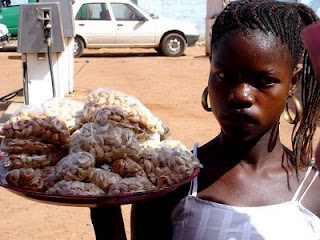
Photo: A cashew seller in the Gambia. Courtesy of Flickr user Javier D.
-
Population, Natural Resource Pressures Could Ignite Human-Wildlife Conflict in Laos
›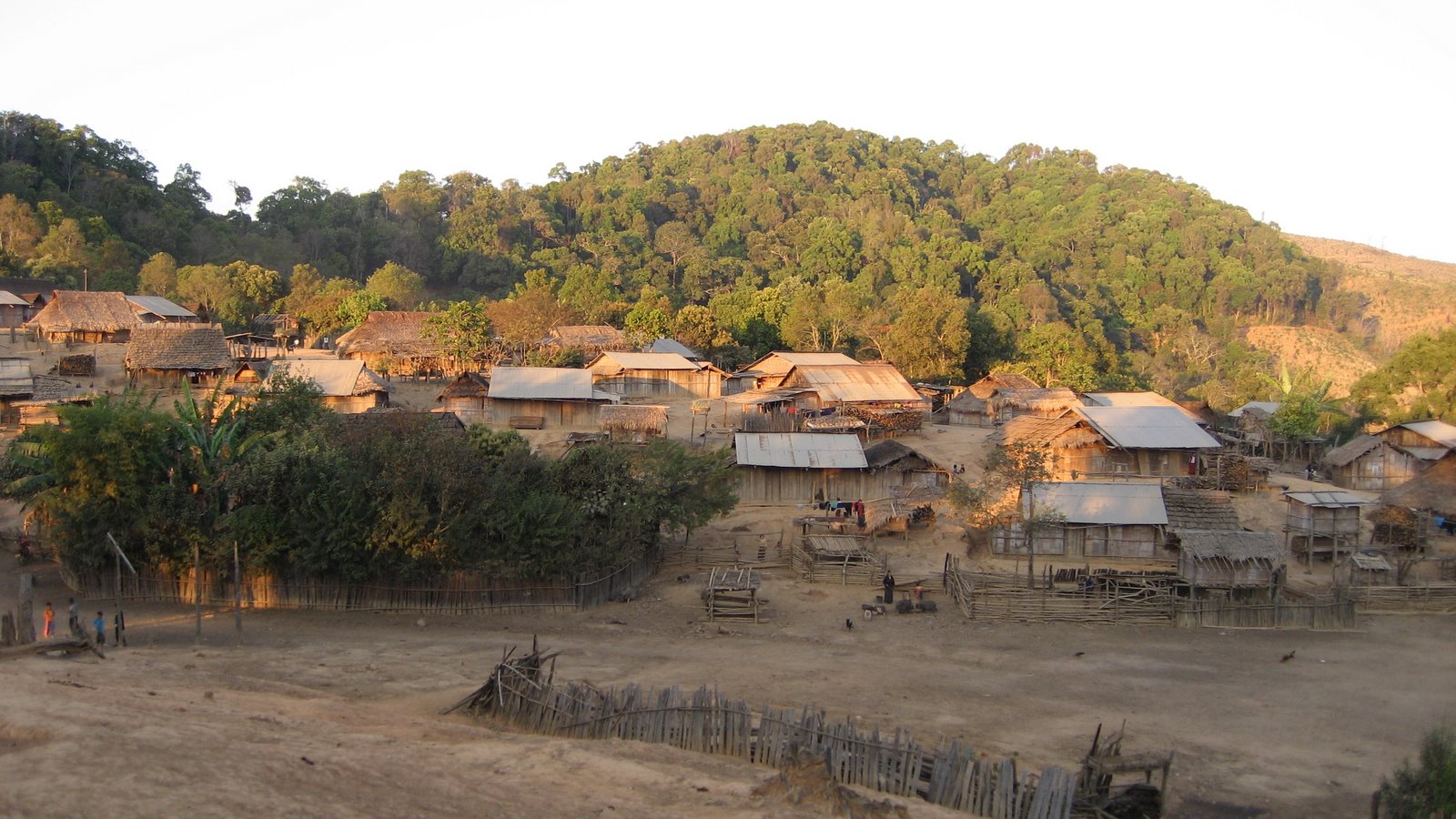 High population growth, limited arable land, and soaring rice prices in Lao People’s Democratic Republic mean that land access is critical for food security. At the same time, there is immense pressure to convert forests and small-scale agricultural land into commercial plantations for rubber, coffee, and other valuable crops. Together, these factors are significant threats not only to people, but to wildlife and biodiversity as well. They are also resulting in the emergence of new tensions between people and wildlife across the Lao landscape.
 -
Conflict Escalates in Resource-Rich South Ossetia
›August 9, 2008 // By Sonia SchmanskiEarlier today, Russian tanks attacked Georgian positions in South Ossetia, the much-disputed Georgian territory sandwiched between Georgia and Russia. With a population of around 70,000, the region has not known peace since the fall of the Soviet Union. Russia’s actions came in response to the Georgian army’s attacks on Russian-backed separatists. Hostilities between Georgian troops and the separatists had been rising since six people died during a skirmish between the two in early July, with Russia and Georgia subsequently accusing each other of violating the ceasefire by flying jets over South Ossetian territory.
The conflict has significant natural resource and environmental aspects. South Ossetia possesses rich stores of natural resources (including timber, manganese, iron ore, and copper and coal deposits), although it remains an economically isolated and depressed region. Also, its location is geopolitically strategic: It houses “[t]wo of the four major border crossings among the mountains separating Russia and Georgia,” along with several other critical roads, and is next to two vital oil pipelines, the Baku-Tbilisi-Ceyhan and the Baku-Supsa, which run from Azerbaijan to Turkey’s Black Sea ports and provide oil for numerous European countries, as well as the United States. These pipelines, in addition to Georgia’s “pivotal role in the global energy market,” render this newest iteration of the conflict cause for international concern.
There are additional environmental concerns in this region. The long-simmering conflict in South Ossetia has left a former Russian industrial complex categorized as “still generating pollution” and a nuclear waste site both untended. With no one to secure, assess, monitor, or remove the hazardous material, regional water sources and arable land are threatened. Lack of economic opportunity in Georgia, and particularly in South Ossetia, has led to illegal logging; “[i]ncentives for illegal export of valuable timber and endemic tree species from the conflict areas…are exacerbating deforestation.”
Economic desperation—combined with a lack of natural resource monitoring—can lead to conflict as people vie for use of a limited resource. A 2004 report from the Environmental Security Initiative (a joint program of UNEP, UNDP, and OSCE) on the South Caucasus region warned that “[u]ncontrolled exploitation of forests, combined with outdated farming practices, are contributing to land degradation and desertification, threatening agricultural productivity.” Indeed, these factors did lead to further trouble for South Ossetia. When Georgia tried to clamp down on “the significant black market trade [in everything from vegetables to illegal arms] going on between South Ossetia and Russia” in 2004, violence quickly re-emerged.
-
Weekly Reading
›“Some argue that global demographic trends are progressively pushing the world toward greater peace and prosperity. They are wrong. The risks of both chaotic state collapse and neoauthoritarian reaction are rising,” argue Neil Howe and Richard Jackson in “Battle of the (Youth) Bulge,” published in the National Interest.
A recent online discussion with the Population Reference Bureau’s Jason Bremner covered a variety of topics related to environmental change and migration, including climate change migrants, rural-to-rural migration, and disease vectors.
Rising food and fuel prices could trigger turmoil in Guinea-Bissau, says the latest report from the International Monetary Fund. The country already suffers from chronic food insecurity, reports IRIN News. -
2008 Olympics Fuels Burma’s Oppressive Jade Trade
›August 8, 2008 // By Daniel GleickFour billion people are expected to watch the opening ceremonies of the Olympics today. But what many people may not know is that in an attempt to highlight Chinese heritage, the medals given to victorious Olympic athletes over the next several weeks will include jade—much of which is mined in terrible conditions in neighboring Burma. Although the Beijing Organizing Committee has publicly stated that the medals and officially licensed products are being made with jade from China’s Qinghai Province, not jade from Burma, Blood Jade: Burmese Gemstones & the Beijing Games, a new report by 8-8-08 for Burma and the All Kachin Students and Youth Union maintains that the “showcasing of jade on the world stage will further escalate the growth in demand.
Despite being internationally and internally reviled, Burma’s ruling military junta has been able to maintain its grip on power by controlling the country’s rich natural resources. Burma exports many types of gems, all of which the junta requires be sold through government auctions, where it takes a cut of the profits. BusinessWeek reported that Burma’s official 2006 jade exports totaled $433.2 million, or 10 percent of the country’s total exports. Official tallies are often unreliable, however, and the black market further obscures the true figures.
“In the mining areas, the companies make their own laws,” says a Burmese citizen quoted in the report. Blood Jade tells of mining companies—sometimes with official military support—beating, torturing, and even killing miners who dig through mine waste for discarded stones or make mistakes on the job. “Jadeite production comes at significant costs to the human rights and environmental security of the people living in Kachin state,” says the report. “Land confiscation and forced relocation are commonplace and improper mining practices lead to frequent landslides, floods, and other environmental damage. Conditions in the mines are deplorable, with frequent accidents and base wages less than US$1 per day.”
In an attempt to keep workers on duty for longer hours and to suppress rebellion, the Burmese government has encouraged drug sales and use. The economic situation is so desperate that many women are forced into the sex trade, which the government also condones. The combination of prostitution and drug use has led to disastrous HIV/AIDS rates. “Today,” Blood Jade reports, “four prefectures in Yunnan Province are regarded as having ‘generalized HIV epidemics.’”
Yet despite the misery they cause, jade and other gems are not even the largest single source of income for Burma’s rulers. According to a 2007 article from Foreign Policy, two other resources rate higher: natural gas and the tropical hardwood teak, which is so valuable that it has “perpetuated violent conflicts among the country’s many fractious ethnic groups.”
Several groups have organized campaigns urging people not to buy jade products, but it is unclear what impact they will have on the trade. Following the junta’s crackdown on anti-government protests by Buddhist monks in November 2007, a representative of Kam Wing Cheong Jewelry in China told BusinessWeek: “We will not stop purchasing stones in Burma because of the political situation. The political chaos did not start with the junta; the country has been plagued by the conflicts with ethnic minorities for years. This is totally out of our control.”
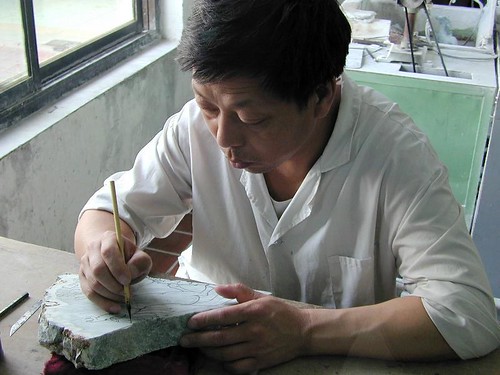
Photo: Man working in a jade factory in China. Courtesy of Flickr user maethlin
 A Publication of the Stimson Center.
 As someone who sits between scholarship and policy at the