-
Harnessing the Peace Potential of Youth in Post-Conflict Societies
›July 22, 2010 // By Marie HokensonIn many post-conflict societies throughout the world, young people must deal with poverty, exploitation, and neglect. It is perhaps not surprising then that many youth eventually find themselves embroiled in violence, either as perpetrators or victims of crime. However, often overlooked are young people’s current and potential future contributions to peace, since with the proper support, youth can prove instrumental in a society’s rebuilding process.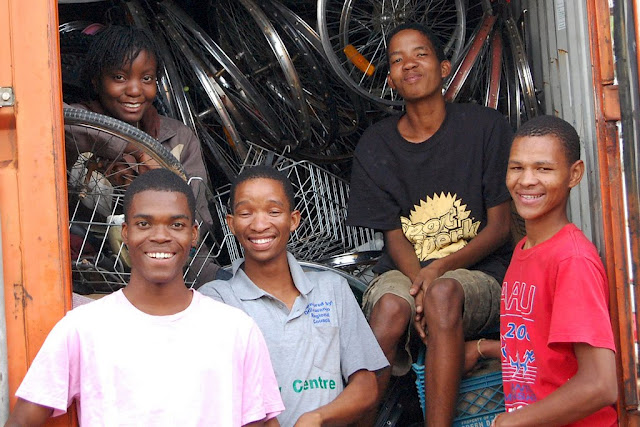
In her new book Youth in Post-Conflict Reconstruction: Agents of Change, Stephanie Schwarz examines the intersections between youth, war, and peace. These linkages were examined at a book launch and panel discussion held last week at the U.S. Institute of Peace.
According to Schwarz, youth are often ignored despite their potentially strong influence on society. Traditionally, children and adults—easier age cohorts to define—dominate the focus of aid programs and government outreach efforts in nations recovering from war, she said.
Yet in post-conflict environments, youth are highly vulnerable, since they often comprise a large portion of society, but have few opportunities available to lead a peaceful life. Schwarz broadly defines youth to encompass those that should be targeted in order to improve the prospects for a successful post-war reconstruction process.
Schwarz challenged those that link “youth bulge” with instability, describing the concept as an “exaggerated youth theory.” She asserted that youth can play either negative or positive roles in post-conflict societies, but specifically emphasized young people’s positive contributions as community leaders, with their ability to raise a “coordinated political voice…through spontaneous motivation.”
Communities and governments need to support young people engaged in these positive roles, Schwarz added. Otherwise, youth could become a “resource for perpetuation of violence,” she warned, especially if they become apathetic toward the reconstruction process, or are recruited as child soldiers. Schwarz advised that young people need empowerment programs to “provide skills to be productive in [their] community,” as well as to boost their sense of belonging.
Marc Sommers, also with the U.S. Institute of Peace, described obstacles that youth programs currently face in post-conflict societies. He pointed out that although post-war populations are often “youth dominated,” many young people are disengaged from programs linked to reconstruction efforts, which he said exacerbates the feeling of exclusion. In turn, he said, it becomes difficult for youth to reintegrate themselves into their communities, increasing the likelihood that they fall victim to child-soldier recruiters, or become drawn into other negative roles.
Lessons From Kenya: Integrate Young People to Avoid Conflict
In an interview, Margaret Muthee, a scholar with the Wilson Center’s Africa Program, used her personal observations and experiences from Kenya to shed some light on the obstacles young people often face in the developing world. She emphasized that while “youth are very resilient with lots of potential,” they often find themselves in a “disadvantaged position.”
In Kenya, Muthee said, youth suffer from a vicious cycle, where a lack of educational or economic opportunity places young people—especially men—on a slippery slope toward crime and violence. In turn, she explained, “male youth are vilified” and sometimes dealt with through government-supported “shoot to kill…[measures] designed to instill fear rather than reintegrate them into society.”
Muthee recommended countering the top-down approach of dealing with youth, asserting that with the right approach and improved support from government and civil society, peaceful paths can be developed for young people, which would help achieve a greater sense of security for entire communities.
Marie Hokenson is a cadet at the United States Military Academy at West Point and an intern with the Woodrow Wilson Center’s Environmental Change and Security Program.
Photo Credit: “Joy Centre – BEC,” used courtesy of flickr user Ben Namibia.
-
Chad Briggs: Dealing With Risk and Uncertainty in Climate-Security Issues
›July 21, 2010 // By Wilson Center StaffWe must do more than simply take our current understanding of climate-change risk and extrapolate it into the future, asserted Chad Briggs of the Berlin-based Adelphi Research in a video interview with the Wilson Center’s Environmental Change and Security Program.
-
Demographics, Depleted Resources, and Al Qaeda Inflame Tensions in Yemen
›July 21, 2010 // By Schuyler NullA second spectacular Al Qaeda attack on Yemeni government security buildings in less than a month is a worrisome sign that the terrorist group may be trying to take advantage of a country splitting at the seams. U.S. officials are concerned that Yemen, like neighboring Somalia, may become a failed state due to a myriad of challenges, including a separatist movement in the south, tensions over government corruption charges, competition for dwindling natural resources, and one of the fastest growing populations in the world.
Wells Running Dry
Water shortages have become commonplace in Yemen. Last year, the Sunday Times reported that Yemen could become the first modern state to run out of water, “providing a taste of the conflict and mass movement of populations that may spread across the world if population growth outstrips natural resources.”
Earlier this year, government forces came to blows with locals over a disputed water well license in the south. Twenty homes were damaged and two people were killed during the resulting eight day stand-off, according to Reuters.
The heavily populated highlands, home to the capital city of Sanaa, face particularly staggering scarcity. Wells serving the two million people in the capital must now stretch 2,600 – 3,200 feet below the surface to reach an aquifer and many have simply dried up, according to reports.
Yemeni Water and Environment Minister Abdul-Rahman al-Iryani told a Reuters reporter that the country’s burgeoning water crisis is “almost inevitable because of the geography and climate of Yemen, coupled with uncontrolled population growth and very low capacity for managing resources.”
Nineteen of Yemen’s 21 aquifers are being drained faster than they can recover, due to diesel subsidies that encourage excessive pumping, loose government enforcement of existing drilling laws, and growing population demand. Qat farmers in particular represent an excessive portion of water consumption; growing the popular narcotic accounts for 37 percent of agricultural water consumption. Meanwhile, according to a study by the World Food Programme this year, 32.1 percent of the population is food insecure and the country has become reliant on imported wheat.
Yemen’s other wells – the oil variety – have long been the country’s sole source of significant income. According to ASPO, oil has historically represented 70-75 percent of the government’s revenue. But recent exploration efforts have failed to uncover significant additions to Yemen’s reserves, and as a result oil exports have declined 56 percent since 2001. The steep decline has pushed Yemeni authorities to look to other natural resources, such as rare minerals and natural gas, but the infrastructure to support such projects will take significant time and money to develop.
The Fastest Growing Population in the Middle East
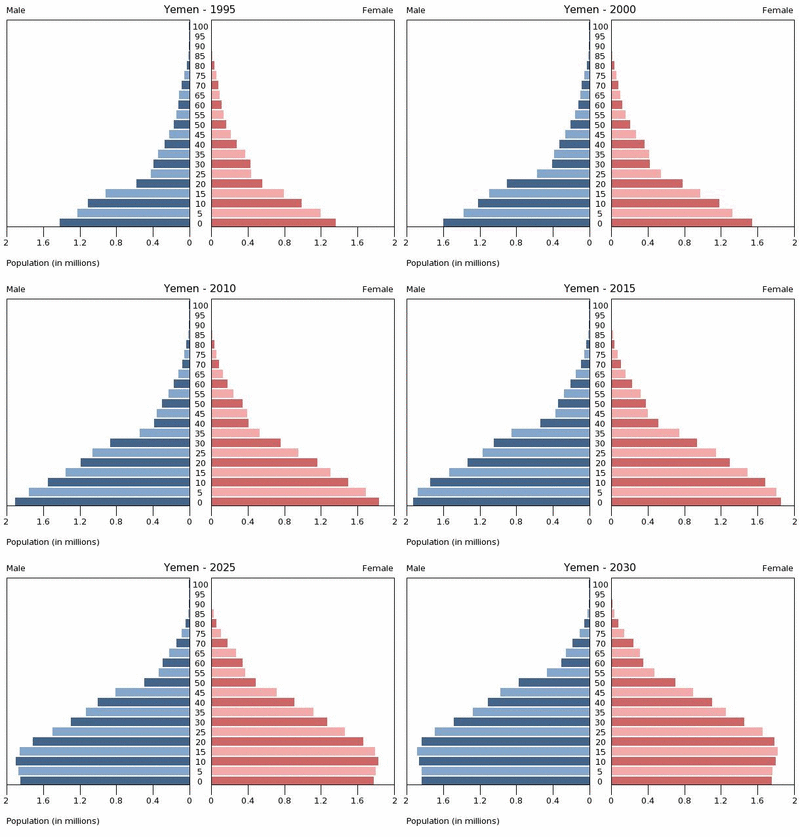
Despite the country’s limited resources, Yemen’s population of 22.8 million people is growing faster than any other country in the Middle East. According to projections from the Population Reference Bureau, by 2050, Yemen’s burgeoning population is expected to rival that of Spain.
Fully 45 percent of the current population is under the age of 15 – a troubling ratio that is expected to grow in the near future. The charts from the U.S. Census Bureau embedded below illustrate the dramatic growth of the country’s youth bulge from 1995 through 2030.A poor record on women’s rights and a highly rural, traditional society contribute to these rapid growth scenarios. According to Population Action International’s Elizabeth Leahy Madsen, only 41 percent of Yemeni women are literate and their total fertility rate is well over the global average. A recent survey from Social Watch ranking education, economic, and political empowerment rated Yemen last in the world in gender equity. Yemeni scholar Sultana Al-Jeham pointed out during her Wilson Center presentation, “Yemeni Women: Challenges and Little Hope,” that there is only one woman in a national parliament of 301 members and that ambitious political women routinely face systematic marginalization.
A contributing factor is that 70 percent of Yemen’s population live outside of cities – far more than any other country in the region – making access to education and healthcare difficult, especially in the large swaths of land not controlled by the government.
External migration from war-torn east Africa adds to Yemen’s demographic strains. According to IRIN, approximately 700,000 Somali refugees currently reside in country, and that number may grow as the situation in Somalia continues to escalate. Within Yemen’s own borders, another 320,000 internally displaced people have fled conflict-ridden areas, further disrupting the country’s internal dynamics.
Corruption and Rebellion
Competition over resources, perceived corruption, and Al Qaeda activity have put considerable pressure on the Saleh regime in Sanaa. The government faces serious dissidence in both the north and the south, and the Los Angeles Times reports that talk of rebellion is both widespread and loud:Much of southern and eastern Yemen are almost entirely beyond the central government’s control. Many Yemeni soldiers say they won’t wear their uniforms outside the southern port city of Aden for fear of being killed. In recent months, officials have been attacked after trying to raise the Yemeni flag over government offices in the south.
USAID rates Yemen’s effective governance amongst the lowest in the world (below the 25th percentile), reflecting Sanaa’s poor control and high levels of corruption. Some reports claim that up to a third of Yemen’s 100,000-man army is made up of “ghost soldiers” who do not actually exist but whose commanders collect their salaries and equipment to sell on the open market.
The West and Al Qaeda
In testimony before Congress earlier this year, Assistant Secretary of State Jeffrey Feltman called on the Yemeni government to take a comprehensive approach to “address the security, political, and economic challenges that it faces,” including its natural resource and demographic challenges.
The Yemeni government is poised to receive $150 million in bilateral military assistance from the United States. But some experts are critical of that approach: Dr. Mustafa Alani of the Dubai-based Gulf Research Center told UN Dispatch that, “you are not going to solve the terrorist problem in Yemen by killing terrorists,” calling instead for investing in economic development.
USAID has budgeted $67 million for development assistance, economic support, and training programs in Yemen for FY 2010 and has requested $106 million for FY 2011 (although about a third is designated for foreign military financing).
While Yemen’s Al Qaeda presence continues to captivate Western governments, it is the country’s other problems – resource scarcity, corruption, and demographic issues – that make it vulnerable to begin with and arguably represent the greater threat to its long-term stability. The United States and other developed countries should address these cascading problems in constructive ways, before the country devolves into a more dangerous state like Somalia or Afghanistan. In keeping with the tenets of the Obama administration’s National Security Strategy, an exercise in American soft power in Yemen might pay great dividends in hard power gains.
Sources: Association for the Study of Peak Oil – USA, Central Intelligence Agency, Congressional Research Service, Guardian, IRIN, Los Angeles Times, New York Times, Population Action International, Population Reference Bureau, ReliefWeb, Reuters, Social Watch, Sunday Times, U.S. Census Bureau, U.S. Department of State, UN Dispatch, USA Today, USAID, World Food Programme.
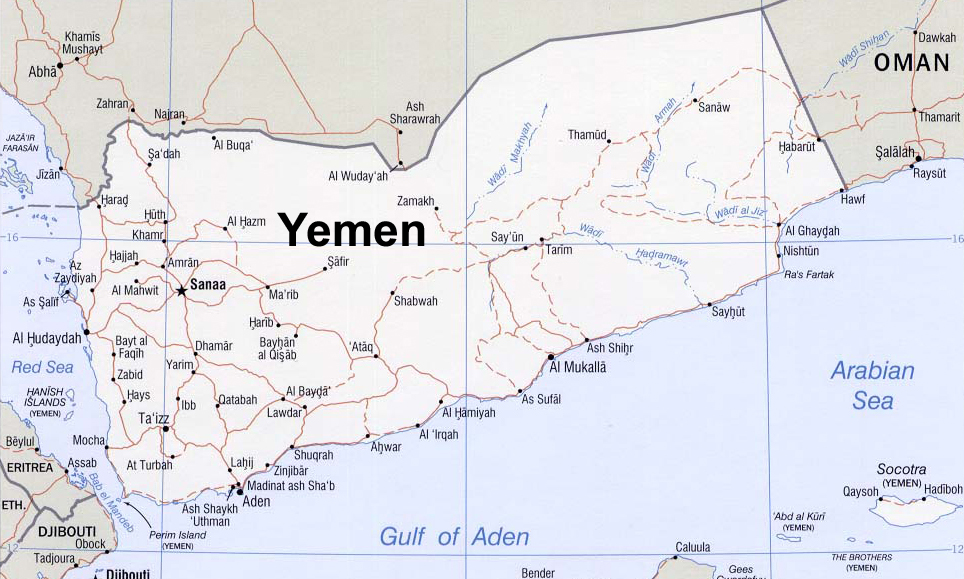
Photo Credit: “Yemen pol 2002” via Wikimedia Commons courtesy of the U.S. Federal Government and “Yemen youth bulge animation” arranged by Schuyler Null using images courtesy of the U.S. Census Bureau’s International Data Base. -
In Pakistan, Clinton Calls for Human Security; USAID’s Shah Commends Birth Spacing
›July 20, 2010 // By Russell SticklorIn Islamabad yesterday, Secretary of State Hillary Clinton acknowledged longstanding Pakistani concerns that the U.S.’s ongoing mission in the country is solely military in nature. However, Clinton asserted at the opening of the second U.S.-Pakistan Strategic Dialogue that the “future demands a comprehensive human security, a security based on the day-to-day essentials like jobs, schools, clinics, food, water, fuel, equal access to justice, [and] strong, accountable public institutions.” To that end, she announced a $500 million assistance package earmarked largely for new agricultural and hydroelectric infrastructure development, as well as the construction of new hospitals and other health infrastructure.
Family planning was another key element in this week’s U.S-Pakistani talks. A U.S. delegation headed by USAID Administrator Rajiv Shah met with top Pakistani health officials to discuss the strategic importance of birth spacing. Both sides agreed that encouraging women to extend the interval between bearing children would not only improve maternal and child health, but also start to bring Pakistani’s population growth rate down to a more sustainable level—a goal fully explored at a recent Wilson Center conference on Pakistan’s population challenge.
As Pakistani demographer Zeba Sathar told New Security Beat in an interview at the conference, educating young women and empowering them to control their own reproductive health will allow them to “take care of their fertility and their family size themselves”—a development that could ease Pakistan’s resource crunch and reduce traditional gender inequities in the years to come.
Sources: Daily Times (Pakistan), International Business Times (U.K.), Los Angeles Times, Times of India, U.S. Agency for International Development.
Photo Credit: “Secretary Clinton Travels to Pakistan,” courtesy of the State Department. -
In Kampala, African Leaders Discuss Maternal Health While Attacks Renew Concern over Somalia
›July 19, 2010 // By Schuyler NullLeaders from 49 African countries are meeting today in Kampala, Uganda, at the start of a scheduled week-long African Union (AU) summit on maternal and child health. Uganda is a fitting location, as it faces some of the toughest health and demographic challenges in Africa, including a very young and rapidly growing population and poor maternal health services. However, with the memory of last week’s twin bomb blasts still fresh, peace and security issues will surely be on the agenda as well.
Somalia’s lead insurgency group, Al Shabab, took responsibility for the attacks in Kampala, which killed more than 70 people. Al Shabab’s first prominent cross-border attack is only the latest sign that Somalia’s issues – which also include a very young and rapidly growing population – are starting to spill over its borders. For more on Somalia’s deepening crisis and its effects on the East African region, see New Security Beat’s recent analysis: “As Somalia Sinks, Neighbors Face a Fight to Stay Afloat.”
Sources: AP, Washington Post.
Photo Credit: Adapted from “Ugandan African Union contingent in Mogadishu, Nov. 25, 2007” courtesy of flickr user david axe. -
Local Case Studies of Population-Environment Connections
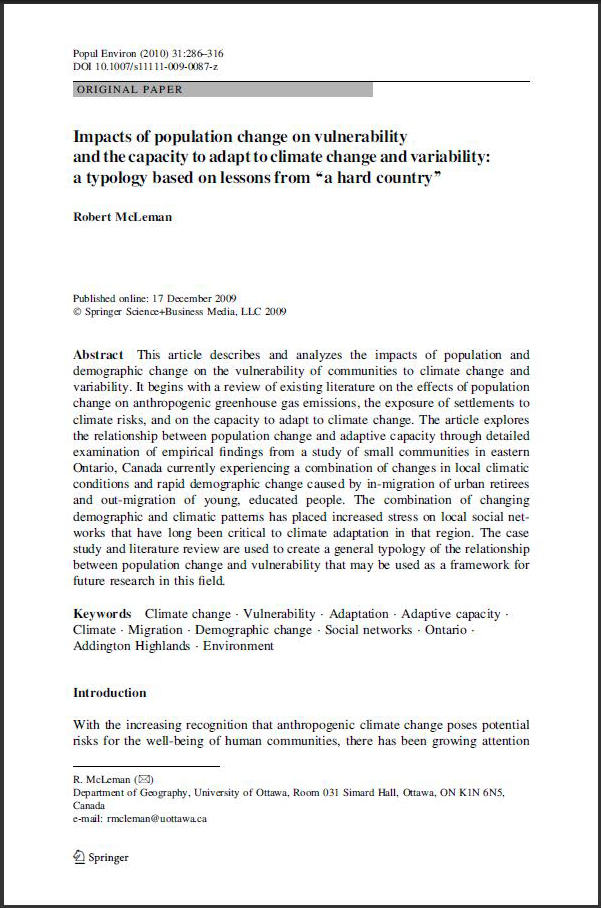
›“The role of intergenerational transfers, land, and education in fertility transition in rural Kenya: the case of Nyeri district” in Population & Environment by Karina M. Shreffler and F. Nii-Amoo Dodoo, explores the reasons for a dramatic and unexpected decline in fertility in rural Kenya. In one province, total fertility rate (TFR) declined from 8.4 to 3.7, from 1978 to 1998. The study found numerous contributing factors for this decline, which occurred more quickly and earlier than demographers expected, but land productivity seemed to be the primary motivator. A growing population and the tradition of dividing family land among sons made continuing to have large families unrealistic for these Kenyan families. “Family planning is, therefore, not the primary causal explanation for limiting the number of children, but rather serves to help families attain their ideal family sizes,” the authors conclude.Also in Population & Environment, “Impacts of population change on vulnerability and the capacity to adapt to climate change and variability: a typology based on lessons from ‘a hard country,’” by Robert McLeman, explores the potential for human communities to adapt to climate change. The article centers on a region in Ontario that is experiencing changes in both local climatic conditions and demographics. The study finds that demographic change can have both an adverse and positive effect on the ability of a community to successfully adapt to climate change and highlights the importance of social networks and social capital to a community’s resilience or vulnerability. McLeman also presents a new typology that he hopes will “serve the purpose of drawing greater attention to the degree to which adaptive capacity is responsive to population and demographic change.”
SpringerLink offers free access to both these articles through August 15. -
‘Dialogue Television’ Interviews Paul Collier
›Watch below or on MHz Worldview
According to last week’s guest on Dialogue, restoring environmental order and eradicating global poverty have become the two defining challenges of our era. The environmental horror unfolding in the Gulf of Mexico illustrates just how difficult it is to balance economic progress and protection of the planet. It provides an alarming example of how the search for resources and profit can lead to the plunder of nature. Host John Milewski speaks with Oxford University economist Paul Collier on his latest book, The Plundered Planet: Why We Must and How We Can Manage Nature for Global Prosperity. Scheduled for broadcast starting June 30th, 2010 on MHz Worldview channel.
Paul Collier is professor of economics and director of the Center for the Study of African Economies at Oxford University. Formerly, he served as director of development research at the World Bank. He is the author of several books, including the award-winning The Bottom Billion.
Note: A QuickTime plug-in may be required to launch the video. -
Rear Admiral Morisetti Launches the UK’s “4 Degree Map” on Google Earth
›Having had such success with the original “4 Degree Map” that the United Kingdom launched last October, my colleagues in the UK Foreign and Commonwealth Office have been working on a Google Earth version, which users can now download from the Foreign Office website.
This interactive map shows some of the possible impacts of a global temperature rise of 4 degrees Celsius (7° F). It underlines why the UK government and other countries believe we must keep global warming to below 2 degrees Celsius, compared to pre-industrial times; beyond that, the impacts will be increasingly disruptive to our global prosperity and security.
In my role as the UK’s Climate and Energy Security Envoy I have spoken to many colleagues in the international defense and security community about the threat climate change poses to our security. We need to understand how the impacts, as described in this map, will interact with other drivers of instability and global trends. Once we have this understanding we can then plan what needs to be done to mitigate the risks.
The map includes videos from the contributing scientists, who are led by the Met Office Hadley Centre. For example, if you click on the impact icon showing an increase in extreme weather events in the Gulf of Mexico region, up pops a video clip of the contributing scientist Dr Joanne Camp, talking about her research. It also includes examples of what the UK Foreign and Commonwealth Office and British Council are doing to increase people’s awareness of the risks climate change poses to our national security and prosperity, thus illustrating the FCO’s ongoing work on climate change and the low-carbon transition.
Rear Admiral Neil Morisetti is the United Kingdom’s Climate and Energy Security Envoy.
 A Publication of the Stimson Center.