-
Talk Versus Action
‘Dialogue Television’ on Rebuilding Haiti
›Watch below or on MHz Worldview
In the aftermath of Haiti’s 7.0 earthquake, the world turned its attention to the impoverished and devastated island nation (including the New Security Beat, which covered some its demographic problems). Reporters, relief workers, and volunteers from around the globe rushed to provide coverage and aide. Western leaders announced bold blueprints for building a “new Haiti.” Six months later, only a tiny portion of pledged funds have been delivered, over one million Haitians remain homeless, and much of the country’s infrastructure remains in ruins. This week on dialogue, host John Milewski speaks with Donna Leinwand of USA Today and Sheri Fink, Public Policy Scholar at the Wilson Center, on their experiences working and reporting in Haiti after the devastation. Scheduled for broadcast starting July 21st, 2010 on MHz Worldview channel.
Donna Leinwand is a reporter for the nation’s top-selling newspaper, USA Today. She’s been with the paper since 2000, covering legal issues, major crimes, the Justice Department, terrorism, and natural disasters. She is also a past president of the National Press Club. Sheri Fink is a senior fellow with the Harvard Humanitarian Initiative, a staff reporter for Pro Publica, and is a public policy scholar at the Wilson Center. She was awarded a 2010 Pulitzer Prize for her investigative piece on doctors at a hospital cut off by Hurricane Katrina flood waters.
Note: A QuickTime plug-in may be required to launch the video. -
Addressing Gender-Based Violence to Curb HIV
›July 28, 2010 // By Marie HokensonAt the recent International AIDS Conference in Vienna, Austria, an astonishing development in the campaign to stem the spread of HIV/AIDS was unveiled—a microbicide with the ability to reduce the risk of transmission of HIV. This welcome development coincides with an intensified focus on women’s health and security needs among donors, especially the United States.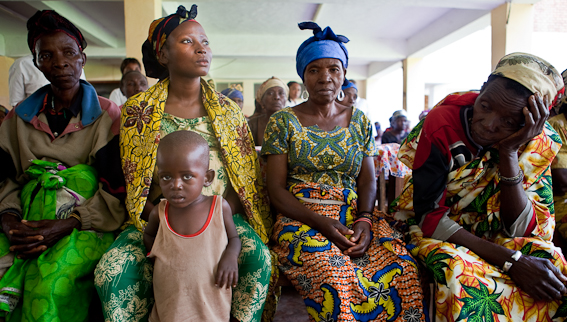
At the conference, the “Gender Programming and Practices: Practical Approaches with HIV and AIDS” session took an integrated approach, examining the links between gender-based violence and HIV/AIDS infection. Women are more vulnerable to gender-based violence and HIV infection than men, particularly in parts of sub-Saharan Africa where “girls and women aged 15 to 19 are three times more likely” to become infected with HIV than men in the same age group, according to the World Bank.
Michelle Moloney-Kitts, with the Office of the U.S. Global AIDS Coordinator, said that gender-based violence “affects not only public health, but [also] the ability of women and girls to contribute to developing their countries.” Since women play integral roles in supporting their families and communities in developing nations, their absence or weakened capacity due to HIV infection, injuries, or unwanted pregnancy can have larger repercussions for economic development and community health.
Deep Roots: Changing Minds About Gender-Based Violence
Elizabeth Mataka, the UN Secretary-General’s special envoy for AIDS in Africa, described the obstacles facing female victims of gender-based violence as “deep-rooted social, economic, legal, and cultural affairs” in their communities. Mataka asserted that “communities must be engaged” through a “change in mindset” in order to allow these women to “claim their basic human rights.” Scrutinizing the paucity of women’s organizations, she cited a “serious shortage of women’s leadership at the grassroots level” as a problem that must be overcome to empower and protect women.
Pamela Barnes, a co-leader of the Partnership to End Sexual Violence Against Girls, highlighted the extent of this “deep-rooted societal issue.” She pointed out that a 2007 Swaziland study found the most “common venue for sexual violence was…within the homes of the victims.”
Rui Bastos, representing Mozambique’s Ministry of Health, added that there is a pressing need to “change relationships between men and women,” and called for a shift in the current relationship dynamic to “give power to the women.” Noting the low number of men receiving HIV treatment, he called on men to “increase demand in treatment” in order to stem the spread of the disease.
Silent Voices: Talking About Sexual Violence Against Minors
Since the Swaziland survey found that “30 percent of the respondents indicated that they had experienced some form of sexual violence prior to the age of 15,” Barnes said greater efforts must be made to educate children about how to protect themselves from sexual violence. She added that efforts to protect children should also address other “risk factors for abuse [which] include lack of education, exposure to emotional abuse, and witnessing sexual assault.”
At a recent Wilson Center event on sexual violence against minors, Jama Gulaid of UNICEF Swaziland said that while talking about sexuality is not easy, “when you bring in violence it is even more difficult.” For that reason, Gulaid said, “you have to do two things—you have to share information and you have to present it in certain ways.” He explained that Swaziland was addressing the issue by relying on school-based interventions, which include trained community-child protection groups, toll-free telephone lines, case investigation services, and personal counseling.
Prevention First: Scaling Up to Stop Rape
While the new microbicide might help female victims of sexual violence avoid HIV infection, it will not stop the problem of gender-based violence. That is why Moloney-Kitts called on donors and NGOs to “scale up gender-based violence programs,” but in a way that goes beyond simply improving “post-rape care” and instead places greater emphasis on prevention efforts.
Not only would better rape prevention help reduce HIV and STD infection rates, but it would also help women avoid psychological damage and unwanted pregnancies—and, as Moloney-Kitts pointed out, improve economic development and enhance public health at the same time.
For more on gender-based violence, see these Wilson Center events:- Gender-Based Violence in Sub-Saharan Africa: A Review of Demographic and Health Survey Findings and Their Use in National Planning
- From Relief to Development: Gender-Based Violence Interventions in Conflict and Post-Conflict Contexts
- Dynamics Of Sexual Violence In The Eastern Democratic Republic Of Congo: Perpetrators, Community Response, and Policy Implications
Photo Credit: “Congo Kivu Violences Panzi,” used courtesy of flickr user andré thiel. -
Wilson Center’s Michael Kugelman Finds the Real Culprit in Pakistan’s Water Shortage
›July 28, 2010 // By Wilson Center StaffExcerpt from Dawn:
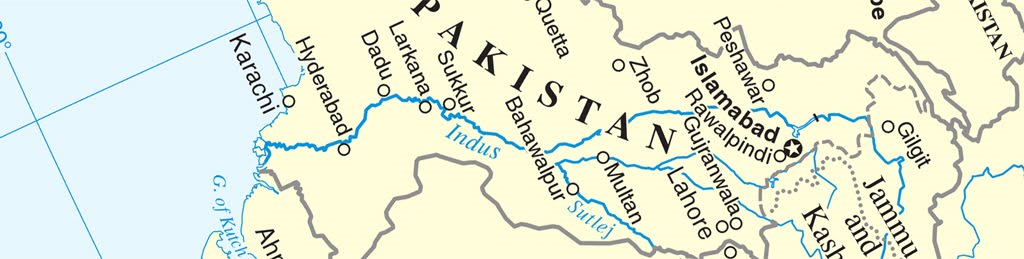
ON Jan 15, 2006, the Karachi Port Trust (KPT) inaugurated its new fountain – the Rs320m lighted harbour structure that spews seawater hundreds of feet into the air.
Also on this day – as on most others in Karachi – several million gallons of the city’s water supply were lost to leakage, some hundred million gallons of raw sewage oozed into the sea, and scores of Karachiites failed to secure clean water.
Over the next few years, the fountain jet would produce a powerful and relentless stream of water high above Karachi. Meanwhile, down below, tens of thousands of the city’s masses would die from unsafe water.
After several fountain parts were stolen in 2008, the KPT quickly made the necessary repairs and re-launched what it deems “an extravaganza of light and water”.
In an era of rampant resource shortages, boasting about such extravagance demonstrates questionable judgment. So, too, does the willingness to lavish millions of rupees on a giant water fountain, and then to repair it fast and furiously – while across Karachi and the nation as a whole, drinking water and sanitation projects are heavily underfunded and water infrastructure stagnates in disrepair.
Continue reading on Dawn.
For more on Pakistan’s water crisis, see the Wilson Center report, “Running on Empty.”
Photo Credit: Adapted from UN map of South Asia, courtesy of Wikimedia Commons. -
Cleo Paskal: India Is Key to Climate Geopolitics
›July 27, 2010 // By Wilson Center Staff“Copenhagen was many things to many people,” said Chatham House’s Cleo Paskal, in a video interview with the Wilson Center’s Environmental Change and Security Program, but “what was very clear was that India, specifically, was playing quite a strong, clear role in deciding how alignments would be working.” We spoke to Paskal following her presentation at a recent Wilson Center event.
-
A Return to Rural Unrest in Nepal?
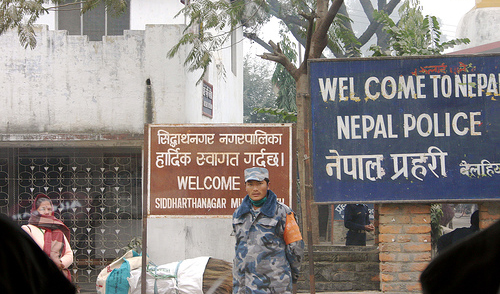
›July 27, 2010 // By Russell SticklorIn the four years since the end of Nepal’s civil war, political progress in creating a multi-party unity government in Kathmandu has moved in fits and starts. While the effort to bring the Maoists into the fold has made some headway since 2006, continuing environmental and economic troubles in the Nepalese countryside threaten to undermine these tentative steps.
In recent months, a new threat to political stability has emerged: the Sapta Kosi Multipurpose Project, a massive, India-backed hydropower scheme in eastern Nepal currently in the early stages of development. Once operational, the controversial dam—slated to reach a height of nearly 270 meters, making it one of the tallest dams in the world—is projected to generate 3,300 megawatts of electricity.
A proposed barrage and series of canals round out the project, enabling new irrigation and flood-control infrastructure in both eastern Nepal and the Indian state of Bihar, immediately to the south. But the potential environmental impacts of the mega-project have already sparked significant backlash among some Maoist-linked ethnic groups in the region, where the reach and influence of Nepal’s fledgling unity government is tenuous at best.
“Strong” Protests Threatened Over India-Backed Mega-Dam
In June, a network of 15 groups sympathetic to the Nepalese government’s Maoist wing warned of “strong” protests if survey work on the dam continued and “the voice of the indigenous people was not heard.” A memo released by the group dismissed the Sapta Kosi project as “anti-people.”
Specific criticisms of the project have ranged from safety concerns (the dam would be built in a seismically active region) to population displacement. Maoist leaders in the region have alleged that many villages—as well as important local religious sites and valuable agricultural land—could be flooded if the project goes forward. Other Maoists say the project should be delayed until Nepal is reorganized as a federal republic, at which point the states directly impacted by Sapta Kosi could be given greater control over the project.
Meanwhile, some objections to the project have targeted Nepal’s partnership with India. According to ShanghaiNews.net, members of the Maoist opposition have insinuated that hydropower from Sapta Kosi will not be consumed domestically, but rather exported to meet the needs of energy-hungry India.
A number of prominent Nepalese and Indian environmental activists have also spoken against the project, including Medha Patkar, a well-known activist who has played a major role in many past Indian anti-dam protests. Patkar warns the project will not mitigate but instead worsen seasonal flooding, calling plans for the joint India-Nepalese dam project “inauspicious from [an] environmental, cultural and religious point of view,” according to the Water & Energy Users’ Federation-Nepal.
As Nepal Pledges Security for Dam Project, India Pushes Forward
In the past, threats against the Sapta Kosi project have caused surveillance work in the area to be suspended repeatedly. But after the latest round of warnings, the Nepalese government adopted a different tactic, pledging heightened security in the region to ensure the safety of Indian officials doing fieldwork.
In doing so, Nepal’s coalition government is throwing its limited weight around, and—to a degree—staking its reputation on its ability to prevent an outbreak of violence. Historically, Nepal’s government has been largely bypassed or ignored in matters of hydroelectric development. As Nepal Water Conservation Foundation Director Dipak Gyawali told International Rivers in a June 2010 interview:The main players are private investors, with state entities and civil society unable to stand up to them….In Nepal, we just saw local politicians burn down the office of an international hydropower company even after the project was sanctioned by their leaders in the central government.
Gyawali added that during the Nepalese civil war (1996-2006), private developers were able to build “small hydropower projects even while a Maoist insurgency was raging because they did not ride roughshod over local concerns.” Regarding Sapta Kosi, Gyawali said the government should adopt a similar approach, and “start listening to the marginalized voices.” Otherwise, he warned, the Indian-Nepalese team spearheading the project “will be faced with delays, impasse, and intractable political problems,” including the potential for Maoist violence in the region. (As noted earlier this month in New Security Beat, the Indian government has also struggled with Maoist-linked violence in recent years, as New Delhi struggles to pacify a Naxalite insurgency in eastern and central India.)
Rural Nepal’s Troubles Far Bigger Than Sapta Kosi
Maoists may be wielding Sapta Kosi as a weapon to gain political leverage both in the countryside and Kathmandu, but the proposed dam is far from the only environmental issue impacting rural lives and threatening to undermine support for the central government.
In a country where firewood still accounts for 87 percent of annual domestic energy production, deforestation has been hugely problematic across rural Nepal. As of 2010, less than 30 percent of the country’s original forest-cover now remains. The rapid removal of forest cover has reduced soil quality, exacerbated seasonal flooding, and caused degraded water quality due to high sedimentation levels.
Further, as the country’s population grows at an annual rate of 2 percent, low soil productivity and unsustainable farming practices have turned Nepal’s effort to feed itself into a constant uphill struggle. According to the World Bank, the country sports one of the world’s highest ratios of population to available arable land, paving the way for potential further food shortages.
Sustainable energy development in Nepal perhaps represents one way of slowly restoring environmental health to the country. By investing in a more reliable national power grid, the central government could reduce rural dependence on firewood for fuel, allowing the country’s forests, soil, and waters to recover even as population increases. Further, hydroelectric projects like Sapta Kosi—implemented with greater involvement from local communities—could play an important role in moving the country forward. With an estimated untapped hydroelectric potential of 43,000 megawatts, Nepal could not only meet its own energy needs by developing its waterways, but profit from hydroelectric energy exports as well.
On the other hand, the Nepalese government could—at its own peril—continue to overlook rural populations’ grievances, and the environmental degradation unfolding outside Kathmandu. If left unchecked, however, these conditions could once again make the Maoist insurgency an appealing movement, potentially reviving grassroots support for anti-government extremism.
Sources: CIA, eKantipur.com (Nepal), International Rivers, Kathmandu Post, NepalNews.com, New York Times, ShanghaiNews.net, South Asia News Agency, Taragana.com, Thaindian News, Times of India, U.S. Energy Information Administration, WaterAid, Water & Energy Users Federation-Nepal, World Bank, World Wildlife Fund.
Photo Credit: “Neither in Nepal Nor India,” courtesy of Flickr user bodhithaj. -
Stephanie Hanson Reports on PHE in Agricultural Development and Rwanda’s ‘One Acre Fund’
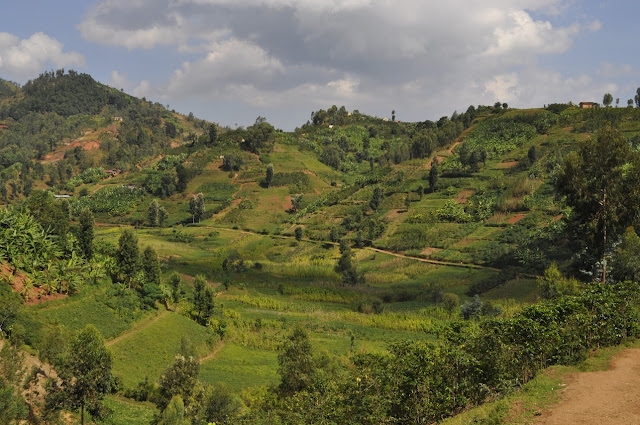
›Driving from Kigali into rural Rwanda, the hills that flank either side of the paved road are covered with bananas, maize, coffee, and beans under cultivation. Most Rwandans are farmers, using any bit of available land to feed their families and generate income. In this country—the most densely populated in Africa—little arable land is left untended.
My organization, One Acre Fund, offers loans and education to smallholder farmers in Kenya and Rwanda. We work with 18,000 farmers in three districts in the southwestern and western part of Rwanda, where we are know as Tubura, which means “multiply” in Kinyarwanda.
Though One Acre Fund is not a traditional population, health, and environment (PHE) project, agricultural development work inherently is PHE work, particularly in Rwanda, which faces significant population and environment challenges.
Our farmers have small plots of land because Rwanda’s population density is so high—375 people per square kilometer, higher than Japan—leaving only .13 hectares of arable land per person. They struggle to grow enough food because it’s difficult to support a big family on a small piece of land, especially without access to high-quality seed and fertilizer.
When farmers don’t grow enough to ensure basic food security for their families, their children are malnourished, which makes them more susceptible to illness.
Finally, agriculture both depends on and affects the environment. Farmers need favorable growing conditions—good soil and adequate rainfall—for a good harvest. Sustainable agriculture practices, such as composting and preventing soil erosion, ensure the environment remains healthy to support future farming.One Acre Fund is acutely aware of the challenges that our farmers face due to high population density, food insecurity, and environmental degradation. We offer a service model that addresses all the needs of a smallholder farmer: financing, farm inputs, education, and market access.
When a farmer enrolls with One Acre Fund in Rwanda, she joins as part of a group of 6-15 farmers. She receives an in-kind loan of seed and fertilizer, which is guaranteed by her group members. One Acre Fund delivers this seed and fertilizer to a market point within two kilometers of where she lives. A field officer provides in-field training on composting, techniques to prevent soil erosion, land preparation, planting, fertilizer application, and weeding.
Over the course of the season, the field officer monitors the farmer’s fields. At the end of the season, he trains her on how to harvest and store her crop. One Acre Fund also offers a harvest buyback program that farmers can choose to participate in.
On average, One Acre Fund farmers double their farm income per acre in one growing season. Ninety-eight percent of our farmers repay their loans, which are due several weeks after harvest.
With their increased harvests, One Acre Fund farmers are able to feed their children, which reduces malnutrition. Anecdotally, we also know that One Acre Fund children experience less illness; this year, we are working to incorporate health indicators into our monitoring and evaluation work.
At a harvest buyback last month, I met many farmers who had benefited from One Acre Fund’s services. One woman, Tamar, had sold 400 kilograms (880 pounds) of beans at the previous season’s buyback, which earned her roughly 132,000 Rwandan francs ($235 USD). She told me that she was using the money to build a bigger home for the six of her ten children who lived at home.However, Tamar really wanted to buy a cow, but she knew that she would not earn enough money this year to afford one. With so many children, she struggled to earn enough money to invest in something that might generate additional income for her and her family.
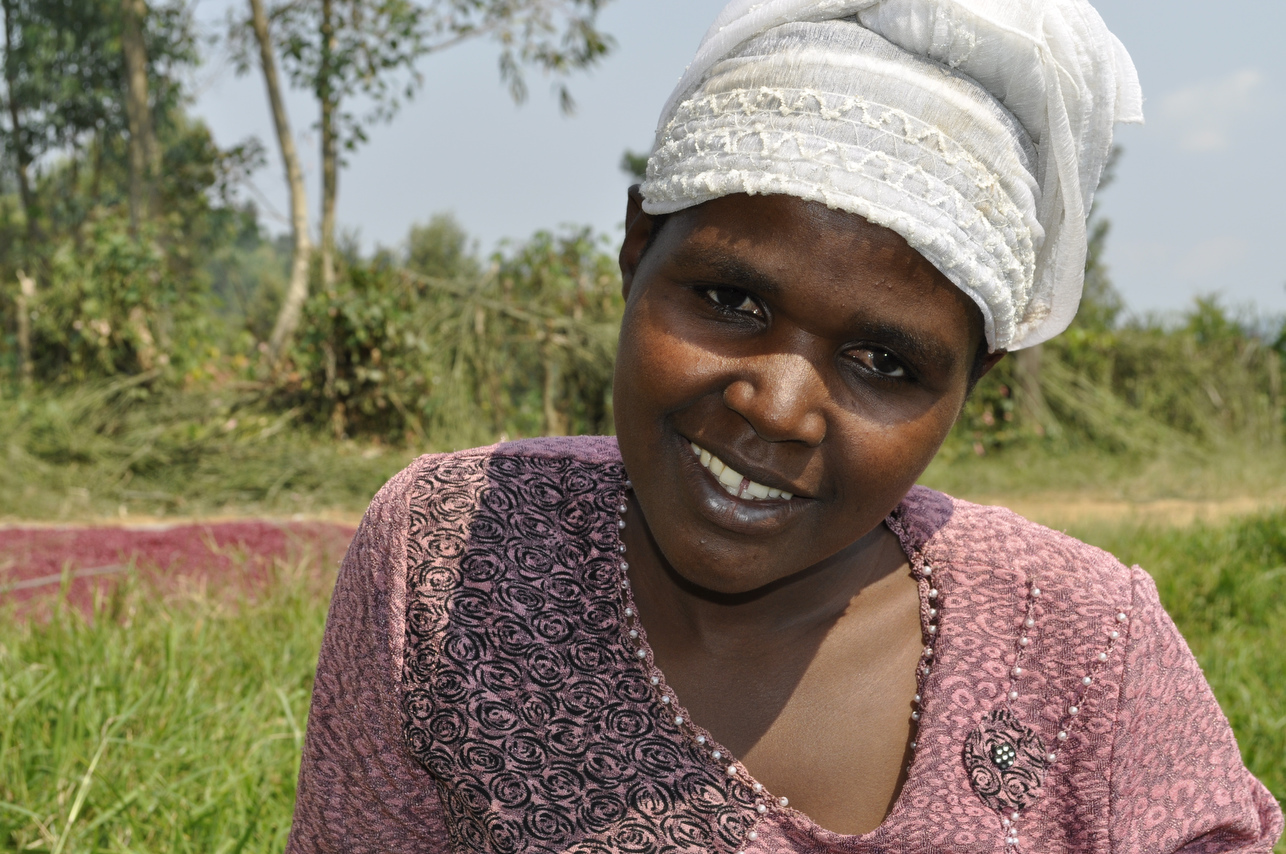
Another woman, Medeatrice, had also made $235 USD from the sale of her beans. With that income, she had opened a small shop with her husband in a nearby market. Unusually for Rwanda, where the average woman has 5.5 children, Medeatrice only had one, a three-year old boy named Prince. I asked her if she planned to have more children.
“I only want one more child,” she told me. “If I only have two children, it is easy to educate and to take care of them.”
The Rwandan government has invested in educating its population on family planning, but it will take time for birth rates to drop. For now, families with five, six, or nine children are not uncommon.
However, research shows that when women have increased access to economic opportunities, birth rates drop. One Acre Fund is focused on helping Rwanda’s families increase their harvests so that they not only have enough to eat, but they can start investing in their futures.
Guest Contributor Stephanie Hanson is the director of policy and outreach at One Acre Fund.
Photo Credit: Rwanda’s hills and Medeatrice, courtesy of Stephanie Hanson. -
WomanStats Maps Gender-Linked Security Issues
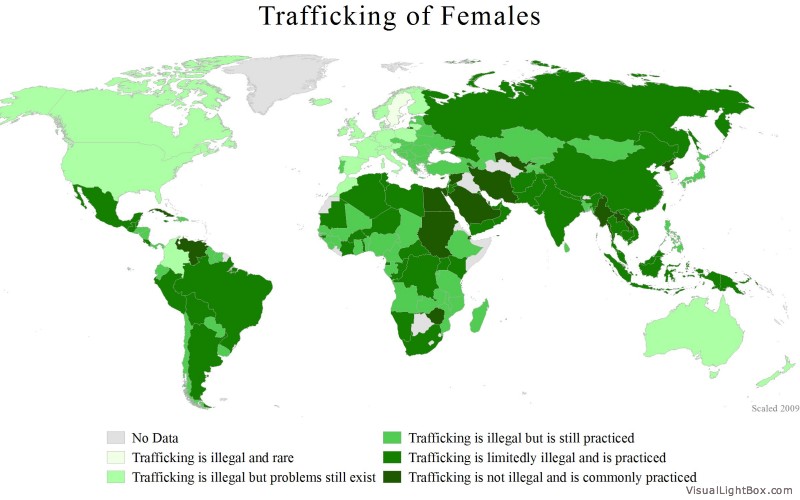
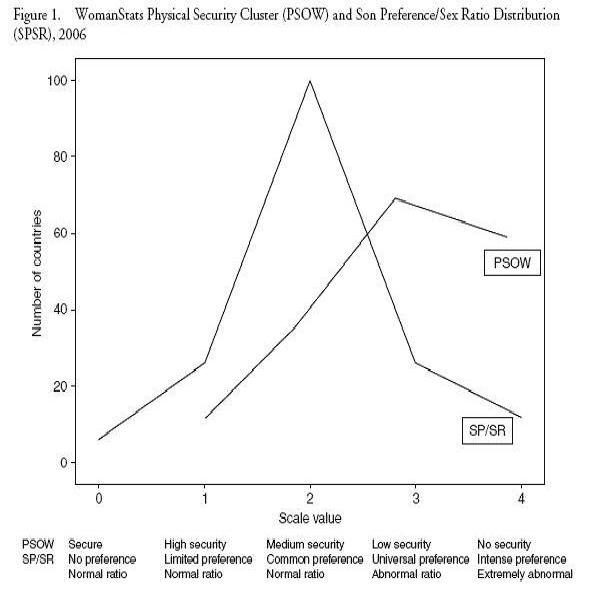
›The WomanStats Project has published an array of maps depicting the challenges and conditions facing women worldwide today. The maps, which serve as a visual representation of the project’s database, cover gender-linked security issues such as: son preference and sex ratio, physical security, inequity in family law, human trafficking, polygamy, maternal mortality, discrepancy in education, government participation, intermingling between the sexes in public, and required dress codes.These maps help researchers visually see correlations between two or more map themes. For example, Women’s Physical Security is moderately correlated to fertility rate, while Sex Ratio/Son Preference is not highly correlated to any other measures tested, such as women in the labor force, democracy, political rights, and economic rights. In addition to maps, the WomanStats Project’s database was used to create graphs that compare the scale values of Physical Security Clusters and Son Preference/Sex Ratio Distributions to the number of countries the scale level affected.
Some of the maps would benefit from additional functionality. For example, the “Women’s Physical Security” map broadly categorizes states based on high, medium, and low levels of security, but the legend is not linked to the definitions of these classifications. Another useful addition would be data tables that rank the countries for each theme. Such enhancements would better enable the viewer to perform empirical and spatial analysis of the status of women.
Overall, the WomanStats Project maps offer the viewer engaging visual depictions of how women’s lives vary across the world, and how countries compare to each other in terms of women’s security.
Josephine Kim is a cadet at the United States Military Academy at West Point and an intern with the Woodrow Wilson Center’s Environmental Change and Security Program.
Map and graph used courtesy of the WomanStats Project. -
Landmark Law Takes Aim at the “Resource Curse”
›July 22, 2010 // By Schuyler NullBy signing the financial overhaul package on Wednesday, President Obama also enacted the first major U.S. government attempt to require transparency in the international oil, gas, and mineral trade, aimed at reducing the risk of “resource curse” scenarios that have plagued countries like Nigeria and the Democratic Republic of Congo.
The amendment, sponsored by Senators Bill Cardin and Richard Lugar, requires extractive companies registered with the SEC to publicly disclose their tax and revenue payments to foreign governments. The amendment singles out the DRC for additional scrutiny: companies trading in tin, coltan, wolframite, and gold – minerals found commonly in eastern Congo – will need to report whether they are sourcing from the DRC or its neighbors and disclose what steps they have taken to ensure that their supplies are conflict-free.
The international community will be eagerly watching the results of this effort. Can a U.S. law on conflict minerals reduce violence in the DRC’s complex civil war? I recently argued that while the legislation is a great initial effort, it will have little immediate impact on the violence and suffering in the country. In a recent interview with New Security Beat, EITI expert Jill Shankleman called the Cardin-Lugar bill “an important step” but pointed out that it only covers companies who are listed with the SEC and does not reduce the need for countries to enter into EITI.
Will this new law help Afghanistan – with its allegedly vast stores of valuable minerals – avoid the fate of the DRC? While some fear that corruption and lack of transparency may lead to conflict around the new Chinese contract to operate Afghanistan’s Aynak copper field, a recent U.S. Army War College paper argues that contrary to prevailing opinion, the Chinese approach to large-scale extractive investments could complement Western-led military stabilization efforts.
Photo Credit: “Wolframite” from the DRC, courtesy of flickr user Julien Harneis.
 A Publication of the Stimson Center.