-
Greater Than the Sum of Its Parts: Quantifying the Integration of Population, Health, and Environment in Development
›It makes intrinsic sense that integrated approaches working across development sectors are a good thing – especially when it comes to the complex issues facing people in developing countries and the environment in which they live. After all, integration avoids overlap and redundancies, and adds value to results on the ground. Yet, quantifying the benefit of integration has been difficult and to date, little on this topic has been published in the peer-reviewed literature.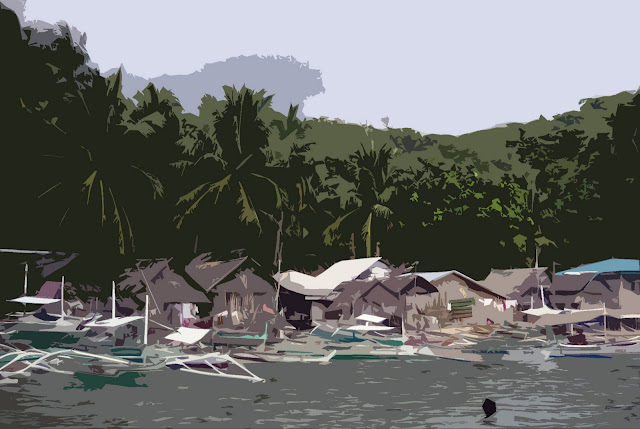
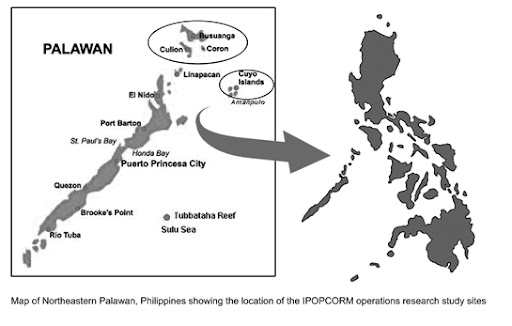
Not anymore. Our article, “Integrated management of coastal resources and human health yields added value: a comparative study in Palawan (Philippines),” recently published in the journal Environmental Conservation, breaks new ground. Rigorous time-series data and regression analysis document evidence of different disciplines working together to produce synergies not obtainable by any one of the disciplines alone.
The article presents quasi-experimental research recently conducted in the Philippines that tested the hypothesis that a specific model of integration – one in which family planning information, advocacy, and service delivery were integrated with coastal resources management – yields better results than single-sector models that provide only family planning or coastal resources management services.The study collected data from three island municipalities in the Palawan region of the Philippines, where the residents are dependent on coastal resources for their livelihoods. The integrated model was implemented in one municipality, while the single-sector models (one coastal resource management program and one reproductive health management program) were conducted in two separate municipalities.
The results of the study provide strong evidence that the integrated model outperformed the single-sector models in terms of improvements in coral reef and mangrove health; individual family planning and reproductive health practices; and community-level indicators of food security and vulnerability to poverty. Young adults – especially young men – at the integrated site were more likely to use family planning and delay early sex than at the sites where only family planning and reproductive health interventions were provided.
Coral reef health – as measured by a composite condition index – and mangrove health increased significantly at the integrated site, compared to the site where only coastal resource management interventions were provided. Data from the integrated site also showed a significant decline in the number of full-time fishers, as well as fewer people who knew someone that used cyanide or dynamite to fish – both factors that amplify a community’s vulnerability to food insecurity. Finally, the proportion of young people with income below the poverty threshold decreased by a significant margin in areas where the integrated population and coastal resources management (IPOPCORM) model was applied.
Let’s hope this research is just the beginning of a more thoughtful and effective approach to meeting multiple development goals in a lasting mannerEducational activities at the integrated site focused on illuminating the intrinsic relationship between fast-growing coastal communities in the Philippines and the diminishing health of the coral reefs and fisheries that they depend on for food and livelihoods. Community change agents, often fishermen and their families, talked to their neighbors and fellow fishers about the importance of planning and spacing families and establishing and respecting marine reserves to protect the supplies of food from the sea. They referred those interested in family planning to community-based social marketers of contraceptives or the nearest health center for other services.
These same community members also participated in activities to sustainably manage their coastal resources: working with local government officials to establish marine reserves, replant mangroves, serve as community fish wardens to patrol those reserves, test out alternative livelihoods such as seaweed farming, and start small businesses to diversify their income and reduce fishing pressure.
Development professionals should pay close attention to the conclusions of this study. In environmentally significant areas where human population growth is high, it will be difficult to sustain conservation gains without parallel efforts to address demographic factors and inequities in the distribution of health and family planning services. Integrating responses to population, health, and environment (PHE) issues provides an opportunity to address multiple stresses on communities and their environments and, as this study demonstrates, adds value in such a way that significantly improves community resilience and other outcomes.
This research allows those of us who believe strongly in integrating population, health, and environment programming to point to quantitative proof that the approach works. We now need to expand PHE programming to reach more people in other parts of the world where communities face a similar nexus of challenges. New initiatives have started taking the lessons from this research, applying them to new contexts in Africa and Asia, and scaling them up to reach many more in the Philippines.
Let’s hope this research is just the beginning of a more thoughtful and effective approach to meeting multiple development goals in a lasting manner in the places that need it most.Leona D’Agnes is the technical director of IPOPCORM, Joan Castro is the executive vice president of PATH Foundation Philippines Inc, and Heather D’Agnes is the Population, Health, Environment Technical Advisor in the U.S. Agency for International Development’s (USAID) Office of Population and Reproductive Health.
Sources: BALANCED, Link TV, PATH Foundation Philippines Inc., World Wildlife Foundation.
Image Credit: Philippines village (adapted) and municipalities map courtesy of PATH Foundation Philippines Inc. -
Women and Climate Change
›A new Worldwatch Institute report, “Population, Climate Change, and Women’s Lives,” by Robert Engelman, discusses the relationship between women’s equality and climate change. Slowing population growth will reduce greenhouse gas emissions and help societies adapt to climate change, says Engelman. What’s more, this can only be done through an investment in women’s rights and education. Population change comes primarily through reducing unintended pregnancies by offering men and women access to family planning services, improving education for all (especially girls and women), and promoting full gender equality. “Population change should be viewed as one element of the historic effort to bring women into equal standing with men,” writes Engelman.A recent report by Scott Moreland, Ellen Smith, and Suneeta Sharma of the Futures Group analyzes just what the impact of meeting the unmet need for family planning would be on global population growth. Looking at 99 developing countries and the United States, the report, titled World Population Prospects and Unmet Need for Family Planning, found that by gradually meeting the global demand for family planning, population would be reduced to 6.3 billion people by 2050, below current world population and well below the UN medium fertility variant prediction, which is derived from past trends but does not take into account meeting unmet need for family planning. Meeting this need would only cost $3.7 billion more per year than the UN medium fertility variant scenario and less than the low scenario. $1.4 billion of this would cover the unmet demand in the United States. -
Civil-Military Interface Still Lacks Operational Clarity
›The Quadrennial Diplomacy and Development Review (QDDR) is an important first step in redefining civilian roles and capacities in crises, conflict, and instability. After the expensive failures of both the military and USAID in Vietnam during the 1960s and 70s, Congress set new guidelines governing military interventions and assistance to foreign governments. Foreign assistance staff was cut from 15,000 to 2,000 people. When modern-day conflicts arose and USAID found itself understaffed and under-funded, the military was called upon to fill a gap and became overnight, in essence, our primary development agency.
-
Integrated Development in PHE: Updates From Ethiopia and the Philippines
›“All protected areas in Ethiopia are being threatened by population pressure,” said Negash Teklu, executive director of PHE Ethiopia at an event at the Wilson Center co-sponsored by ECSP and the Africa Program. The best way to address this pressure is by implementing integrated population, health, and environment (PHE) programs that combine natural resource management with family planning services, said Teklu. “Without the family planning component, they cannot solve the protected area problems,” he said.
Teklu was joined by Joan Regina Castro, executive vice president at PATH Foundation Philippines, Inc., and Annie Wallace, PHE technical advisor with the USAID Global Health Fellows Program, to compare PHE projects in Ethiopia and the Philippines and identify best practices. [Video Below]
The Population-Climate Connection
To address population growth in areas of high biodiversity, Teklu created PHE Ethiopia, a consortium to coordinate PHE projects in the country and increase awareness of the value added by integrating them.
“The population-climate connection is easily seen in Ethiopia,” said Teklu. The country’s deforestation, loss of biodiversity, poverty, high maternal and child mortality, and vulnerability to climate change are linked to the rapid growth of its population, which is currently 85 million. Building community resilience in this kind of environment is “critical,” he said.
Bridging Gaps: Gender, Youth, and Religion
Wallace, in her assessment of the Packard Foundations’ PHE projects in Ethiopia, found the projects bridged gender gaps. By integrating health and environmental education in PHE youth groups and in outreach by extension workers, the projects increased male involvement in health and family planning (a traditionally female activity) and increased women’s involvement in agriculture and environmental activities (traditionally male). This cross-gender success increased the total number of family planning users, said Wallace.
But for any of this work to succeed, “community ownership and participation are very critical and essential,” said Teklu. Both youth and religious leaders were primary stakeholders in this process. “Youth are the next leaders. By targeting youth you can get them to think about livelihoods and make these connections,” said Wallace.
PHE has proven to “transcend religion,” said Castro. Despite traditional opposition to abortion and family planning, support from Christian and Islamic leaders in Ethiopia and the Philippines was critical in determining a project’s success. “When religious leader buy-in comes in, the community really responds to that,” said Wallace.
In addition, religious leaders understand the population-environment connection. “Our livelihoods are affected when we have too many mouths to feed…family planning and reproductive health makes sense,” an Ethiopian religious leader told Wallace.
Securing Sustainable Support for Scaling Up
IPOPCORM, the PHE initiative in the Philippines, is now “the biggest [PHE] project, modesty aside, in the world,” said Castro, because it has succeeded in working at all levels of government. To scale up its work in the “priority areas” of high biodiversity and rapid population growth, where the “poorest of the poor” live, IPOPCORM first scaled up its advocacy work. To be sustainable, “you have to have a lot of PHE leaders and champions” at all levels, from village to national government, she said.
Ethiopia faces a significant challenge in securing sustainable support and funding from the national government and other sources. “While there is buy-in for the local approach, there isn’t funding,” Wallace said. “A lot of work is donor-driven, whether we like it or not,” she added. “There needs to be a more sustainable strategy” to ensure the survival of these projects, she said, which means garnering national and international support.
But it also means conducting research to provide empirical evidence of PHE’s added value, the speakers agreed. A new paper in the journal Environmental Conservation, coauthored by Castro, uses evidence from IPOPCORM’s projects to conclude that integrating family planning and coastal resource management offers benefits over single-sector approaches. But elsewhere, there is a “big need for monitoring and evaluation” to “strongly gather data to show our success on the ground,” said Teklu.
However, communities on the ground “don’t need the empirical evidence,” said Castro. “The community and the people say their lives are linked and so the solutions should be linked,” she said. “The life that they live speaks of integration.”
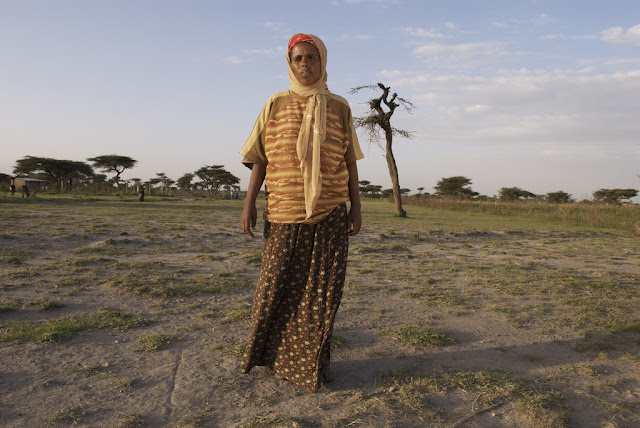
Photo Credit: “Safia Fungie Hasenna – Climate witness from Ethiopia” by Zeresenay Berhane Mehar courtesy of flickr user Oxfam International -
Environmental Security at the UN
UNEP/PCDMB Progress Report From Brussels
›January 11, 2011 // By Lauren Herzer RisiAt a November Environmental Security Assessments conference on methodologies and practices, held jointly by ENVSEC and IES outside of Brussels, I had the opportunity to catch up with David Jensen, a policy and planning coordinator in the UN Environment Programme’s (UNEP) Post Conflict and Disaster Management Branch (PCDMB).
Jensen pointed to several upcoming reports coming from UNEP and expressed some relief that the concept of environmental security was finally getting some recognition without having to constantly be “banging on doors.”
PCDMB is a branch of UNEP created to provide five core services to UN member states: post-crisis environmental assessments; post-crisis environmental recovery; environmental cooperation for peacebuilding; disaster risk reduction; and, most recently, humanitarian action and early recovery.
There has been a steady stream of activity flowing from PCDMB and a lot to look forward to this spring:
Finally, it sounds like PCDMB is getting some recognition from within the upper echelons of the UN. Jensen has been asked to brief senior peacebuilding officials, and the Secretary-General’s political advisor called him in to talk about peacekeeping and natural resource management and conflict prevention.- The guidance notes on conflict prevention and natural resources, recently published on the PCDMB website, are draft notes that will be revised following pilot programs in four countries (Jensen particularly noted that there is much work to be done on them still). Ultimately, they hope to identify funding for 100 experts to deploy to countries (at the country’s request) to apply the guidance notes in the field.
- PCDMB has a project of 150 case studies coming out in six volumes in February 2011 on natural resources and peacebuilding.
- The culmination of a three-year UNEP project in Nigeria, which includes a full analysis and remediation plan of 300 oil-contaminated sites in the Ogoniland region of the Niger Delta, is expected to be released in the second quarter of 2011. (Editor’s note: though not finished, the report caught flack last summer over concerns that it will largely exonerate Shell.)
- PCDMB is also partnering with UN’s Department of Peacekeeping Operations and the Department of Field Support to assess options for resource-efficient technologies and practices in peacekeeping camps (the so-called “green helmets“). They will be issuing a policy report on best practices in May 2011.
In an interview with ECSP last fall, Jensen predicted the UN was finally approaching a fundamental tipping point for inclusion of natural resource issues in the broader peacebuilding process, and the kind of interest noted above appears to be proving him right.
In a report this summer, Secretary-General Ban Ki-moon noted the need for inclusion of environmental security in peacekeeping operations and highlighted the particular work of PCDMB in places like Afghanistan, Timor-Leste, and the Sudan.
It’s no surprise then that when Jensen briefed the full Secretariat, he said he was greeted by a packed house.
Image Credit: Arranged from “UNEP and Disasters and Conflicts at a Glance,” courtesy of UNEP. -
Women and Youth in 21st Century Statecraft
›January 10, 2011 // By Richard CincottaWhether one supports or finds fault with current (and envisioned) U.S. diplomacy and international development processes and practices, most foreign policy analysts and academics will recognize the first Quadrennial Diplomatic and Development Review (QDDR) as a landmark document. In my opinion, the QDDR – titled Leading Through Civilian Power – is essential reading for those who seek a career in government or who otherwise need to understand the nature and purpose of the work that foreign service officers and USAID missions perform overseas.
-
Watch: Annie Wallace on Connecting PHE Approaches With Climate and Poverty
›“It’s really important to link the integrated PHE approach with the policies and strategies of the country,” says Annie Wallace, who worked as a PHE technical advisor with USAID’s Global Health Fellows Program in Ethiopia. “Because if you don’t have political buy-in from the decision-makers and the leaders, then it’s going to be really difficult to justify the allocation of different funds for these projects to be expanded to other regions, or expanded in scale, or even to expand outside of the country.”
With Ethiopia in particular, Wallace stressed the importance of PHE practitioners connecting their integrated approach with how it will help address the country’s poverty alleviation and climate change adaptation strategies. “The prime minister is a leader in Africa talking about climate change,” Wallace said, “and we really need to talk about how an integrated approach can help with adaptation and reducing a community’s vulnerability to climate change.”
On the funders’ side, Wallace noted that as monitoring and evaluation becomes more important, donors also need to be able to support building capacity in organizations in order to meet the new requirements. During her work with The David and Lucile Packard Foundation (via USAID), Wallace helped set up the PHE Ethiopia Consortium to facilitate such capacity-building efforts. -
Bringing PHE to a Muslim Community in Tanzania
Abdalah Overcomes the Odds
›This PHE Champion profile was produced by the BALANCED Project.
“Now, people can plan their families and know how to use a condom,” says Abdalah Masingano as he proudly tells how his community has come to accept integrated population, health, and environment (PHE) activities.
The 35 year-old Abdalah is a PHE provider. He lives near the Saadani National Park (SANAPA) — one of Tanzania’s newest, and the only terrestrial park with a contiguous marine area in southeastern Tanzania. Saadani is home to the rare Roosevelt Sable antelope and the nesting grounds for several endangered species of marine turtles. One of the largest threats to biodiversity in this area is the clearing of mangroves and coastal forests for firewood and charcoal-making. About 95 percent of households in the area depend on firewood for cooking and most use a three-stone fireplace that utilizes only about 10 percent of its energy potential. These are just some of many pressures that people living around the park place on the biodiversity-rich forest and marine resources of the area.
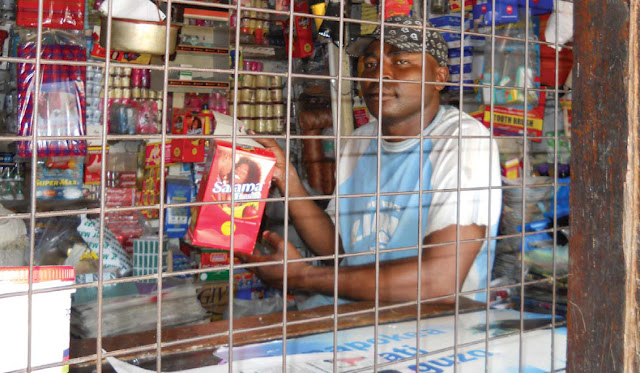
Abdalah and his 31 year-old wife have two children: a 14-year-old boy and a six-year-old girl. His wife has been on the pill for four years. For two years now, Abdalah has been selling condoms in his village store. He made this decision for simple reasons. He saw that people needed condoms for both family planning and health, and he had come to understand the linkages between the behaviors of people living in the area and the health of the environment.
Abdalah gained this understanding when he was recruited to become a PHE provider by the Tanzania Coastal Management Partnership as part of its work through the USAID-supported BALANCED Project, which is promoting PHE implementation in biodiversity-rich countries. In a two-day training, Abdalah learned about integrated PHE and the links between population (family planning), health, and the environment. He has been educating villagers ever since.
“In the past, it was difficult for people to plan their families because they were embarrassed,” recalls Abdalah. As a PHE provider, Abdalah delivers integrated PHE messages to his fellow villagers. After attending the BALANCED training, Abdalah learned that promoting family planning makes sense for reasons beyond health. Forest and marine resources found both around and inside the Saadani are heavily exploited by local villages – and from a biodiversity conservation perspective, reducing population pressures is just one critical step in protecting this biodiversity.
When people visit his shop, Abdalah takes the opportunity to explain the population and environment connection. Because deforestation is a particular problem in the area where Abdalah lives and works, he promotes the use of fuel-efficient stoves.
Showcasing his own stove, his explains that by using a simple clay stove – which is made locally – a household can save almost 1.5 tons of fuelwood annually and reduce by 50 percent the time women spend collecting fuelwood. At the same time, he reminds villagers that when they plan their families they help keep mothers and children healthy. Healthier families also tend to put fewer pressures on – and thus keep healthier – the very natural resources they depend on for food and income.
Initially, Abdalah’s Muslim neighbors were unhappy with him promoting family planning and condom use. They believed what he was doing encouraged sex and prostitution. “They thought I was lost,” he explains smiling. Fortunately, his wife has been very supportive of him despite the discouraging reactions of his fellow villagers early on in his efforts.
Today, Abdalah’s perseverance has paid off. He now sells more than 200 condoms monthly and takes the time to demonstrate to his customers how to use them properly. When there is the opportunity, he also refers his customers to the local health dispensaries for additional family planning services and commodities. Abdalah believes people respect him now. “I feel good because I am able to help,” he concludes. That “help” impacts both the health and well-being of his fellow villagers and the health and well-being of the environment. Abdalah and his wife plan to have their third child two years from now.
This PHE Champion profile was produced by the BALANCED Project. A PDF version can be downloaded from the PHE Toolkit. PHE Champion profiles highlight people working on the ground to improve health and conservation in areas where biodiversity is critically endangered.
Sources: Darfur Stoves Project, IPS News, TSN Daily News, UN.
Photo Credit: Abdalah showing a box of condoms for sale in his small shop by Juma Dyegula, courtesy of the BALANCED Project.
 A Publication of the Stimson Center.