• woodrow wilson center
  • ecsp

New Security Beat

Subscribe:
  • rss
  • mail-to
  • Who We Are
  • Topics
    • Population
    • Environment
    • Security
    • Health
    • Development
  • Columns
    • China Environment Forum
    • Choke Point
    • Dot-Mom
    • Friday Podcasts
    • Navigating the Poles
    • Reading Radar
  • Multimedia
    • Water Stories (Podcast Series)
    • Backdraft (Podcast Series)
    • Tracking the Energy Titans (Interactive)
  • Films
    • Water, Conflict, and Peacebuilding (Animated Short)
    • Paving the Way (Ethiopia)
    • Broken Landscape (India)
    • Scaling the Mountain (Nepal)
    • Healthy People, Healthy Environment (Tanzania)
  • Publications
  • Events
  • Contact Us

NewSecurityBeat

The blog of the Wilson Center's Environmental Change and Security Program
  • VIDEO—How the World’s Poor Live on $2 a Day

    ›
    January 22, 2010  //  By Dan Asin
    “Most people think that if you’re living on $1 a day or $2 a day, it’s impossible to save,” Jonathan Morduch tells ECSP Director Geoff Dabelko in a discussion of his book, Portfolios of the Poor: How the World’s Poor Live on $2 a Day. The Woodrow Wilson Center hosted Morduch and his co-author, Daryl Collins, for presenations at the Center and on Capital Hill last September. “[I]n fact, because of being poor—not despite it—households were spending a lot of time building up for the future.”

    “What was really critical about what this new work was showing was that poor households were strategizing, they were making decisions,” says Morduch. “They were, essentially, juggling, active in ways that had been hidden from sight with the bigger surveys.” Now revealed, this knowledge creates opportunities for policymakers to help poor households in new ways, such as reducing regulatory costs for financial institutions seeking to service poor communities.

    Morduch says microfinance and microcredit schemes are doing well, but that they are not enough to serve poor communities’ entire financial needs. “The next steps involve embracing what’s already going on and making products, devising products, that are even more flexible or even more appropriate,” he says. Households have a diverse range of needs, from food and water to financing health care and education, and Morduch says these diverse needs merit diverse solutions.
    MORE
  • Lessons from the Field: Focusing on Environment, Health, and Development to Address Conflict

    ›
    From the Wilson Center  //  January 21, 2010  //  By Julia Griffin
    “Even in the hardest moments of conflict there are opportunities for cooperation, and they need to be seized,” said Juan Dumas, senior advisor of Fundación Futuro Latinamericano during the Pathways to Peace: Stories of Environment, Health, and Conflict roundtable event co-hosted by the Wilson Center’s Environmental Change and Security Program and the Fetzer Institute on January 13th.

    “Even as you were talking about the conflict potential,” said Aaron Wolf, professor of Geoscience at Oregon State University, “everywhere you looked there were people talking about water uniting together across boundaries and being able to share… [and] people being willing to talk about water when they wont talk about anything else.”

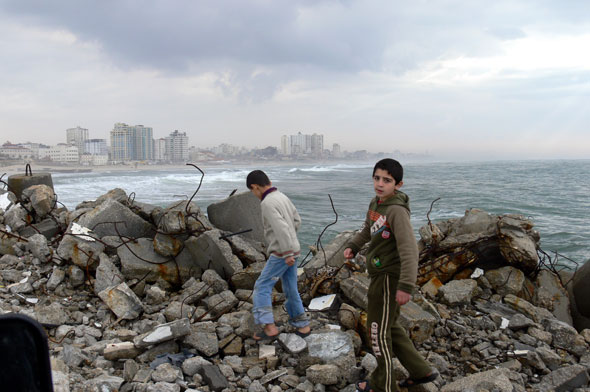
    Dumas and Wolf were joined by Gidon Bromberg, co-director of Friends of the Earth Middle East (FoEME); Shewaye Deribe, project coordinator for the Ethio Wetlands and Natural Resources Association (EWNRA); and Joan Regina L. Castro, executive vice president of the PATH Foundation Philippines, Inc. (PFPI) to discuss work that demonstrates the positive impact multi-dimensional development and peacebuilding programs can have on environmental conflict arenas.

    Water as an Entry Point


    “In the academic world, there’s a growing documentation about the coming wars of the 21st century are going to be about water resources,” said Wolf, discussing how water resources are inherently intertwined with the Arab-Israeli and other regional conflicts. His research, however, suggests the opposite. In recent history, he said, cooperation for the resource, not conflict, was observed in nearly two-thirds of the world’s cross-boundary watersheds.

    “Water is a wonderful way to have regional dialogue,” he continued, discussing how technical data and modeling are only part of any successful water conflict resolution. “A language that people have in common, and when we talk about water—because it’s connected to everything we do—we end up talking about our shared vision of the future.”

    “We came out with a vision that is a shared vision,” echoed Bromberg in describing the Good Water Neighbors (GWN) project—a FoEME program seeking to improve water scarcity and quality in the Jordan River watershed by fostering cooperation between Israeli, Palestinian, and Jordanian leaders. “The Jordan office advocates that vision to the Jordanian government, the Israeli office to Israeli government, the Palestinian office to the Palestinian authority. That’s proven to be very effective because it’s the same vision.”

    While hesitant to say the program could lead to or be a model for peace in the Middle East, Bromberg did underscore how multi-dimensional methods used in GWN could productively serve future peacebuilding efforts in the region.

    “By empowering young people to go out and improve their own water reality with their own hands [through rainwater harvesting and grey water collection] they learn together, and then they build the facilities within their own communities,” said Bromberg. “…Not only does it empower the youths but it helps create peacemakers.”

    Integrated PHE and Conflict Avoidance

    “Water is common for all of us because it is the base of our life, of our survival,” said Deribe, linking ENWRA’s integrated population, health, and environment (PHE) wetland restoration program in Ethiopia to the greater discussion. “I think it is a lack of altruism, a lack of mutualistic thinking which leads us to this kind of conflict.”

    Ethiopia’s 12 river basins serve more than 200 million people. Managing local wetlands and waterways with PHE approaches can therefore play an integral role in maintaining environmental quality and productivity for current and future generations while avoiding conditions that contribute to conflict, according to Deribe.

    Castro, pointing to her own PHE experience with PFPI, found that multi-sectoral programs promote improved environmental quality and community stability. In the Philippines, her program targeted local youth, fishermen, and policymakers to promote food security through sustainable resource management, improved medical and family planning services, and expanded livelihood training.

    Castro found that a PHE program could continue even after funding ran out. “A project can be sustained and can be owned by the local governments and local communities if they are provided the capacity to be able to continue to implement the programs and that they see the value of the programs that they do,” she said.

    Lessons in Conflict Resolution

    Funding, said Dumas, is the biggest limiting operating factor for organizations that facilitate dialogue in environmental conflict areas. The ability to travel across Latin America on short notice to help resolve conflict has been extremely beneficial to Dumas’ organization; but in an arena where funders require full proposals with specific outcomes and indicators, such availability over the long-term is “not financially sustainable.”

    Dumas did, however, suggest ways to reduce the need for conflict resolution while opening accessibility to funding. He recommended that institutions mainstream environmental considerations into all sectors of decision-making, thereby improving capacity to respond to environmental conflicts within the given population. He also suggested the creation of “early action funds” – pools of money that his and other organizations can use on short notice for dialogue facilitation support.
    MORE
  • Challenges to Covering Population

    ›
    On the Beat  //  January 21, 2010  //  By Dan Asin
    “We journalists tend to deal with the immediate crisis,” Tim Wheeler, an environmental reporter with the Baltimore Sun, told an October gathering of the Society of Environmental Journalists in Madison, Wisconsin. Because the effects of population growth largely won’t be felt until the future, the subject is challenging for journalists who, as a whole, “tend not to look down the road too far.”

    There are, however, other challenges, ranging from funding to ideology. Falling profits have pushed newspapers into expanding “hyperlocal” coverage at the expense of other stories and editorial boards are reluctant to risk increasingly important readership over a topic that, when brought to its logical conclusion, can enflame sensitivities over immigration and abortion.

    On the positive side, Wheeler noted an increase in the number of articles covering intersects of population and the environment. As an example, he pointed to a Baltimore Sun series on the Chesapeake Bay citing growing population as a reason that 25-year efforts to restore the Bay have had a limited impact. Nevertheless, he lamented that the majority of articles covering population were op-ed opinion pieces rather than hard news coverage.

    Without knowledge of the population-environment connection, Wheeler says, efforts to reduce our environmental impacts will run into the same problem as those to restore the Chesapeake Bay. “We’re going to wake up . . . after 25 years and say, ‘After all that we’ve done and spent, why haven’t we made greater progress?’” He underscored that, to ensure reductions aren’t outpaced by overall growth in population, issue awareness is essential.
    MORE
  • Water: The Next Climate Negotiation Tool?

    ›
    January 21, 2010  //  By Kayly Ober
    When the dust settled at the COP15 in Copenhagen, participating parties failed to reach a formal climate change agreement and old divisions between developed and developing countries intensified. Despite such setbacks, there may be a natural building block in formal climate change negotiations between the north and south in the future: water.

    Luis Alberto Moreno, president of the Inter-American Development Bank, argues in a recent LA Times op-ed that economic interdependence and, more concretely, basic survival hinge on water in both developed and developing countries alike, most especially in Latin America.

    With 31 percent of the world’s freshwater resources, Latin America enjoys a competitive advantage in agriculture and energy. But recently, drought has taken its toll. Repercussions were most acutely felt in Argentina in 2008, when 1.5 million head of cattle died and half its wheat crop was ruined. Meanwhile, hydroelectric output in the most populous part of Chile plunged by 34 percent and water-dependent states like Venezuela, Ecuador, Colombia, Paraguay, and Mexico rationed water, cut power, or both.

    Water’s importance in the region is obvious, but why should developed countries care about it when negotiating a climate deal? The simplest answer, according to Moreno, is that developed countries can invest in projects that resolve near-term, climate-related problems such as water supply and sanitation as they look for ways to spend the billions in aid they have just pledged for climate adaptation in the developing world. And many international donors, particularly the UN Development Programme, World Bank, and World Wildlife Fund already have invested millions of dollars towards water management and sanitation adaptation projects.

    On the other side of the coin, Latin American governments should “start treating water as a truly strategic resource instead of a free and limitless one.” Moreno claims this would mean “prioritizing investments and reforms in basic services in order to reduce waste, closing the coverage gap and eliminating waterborne diseases among the poor” in the short term and would also require “a willingness to make concessions in pursuit of global emission reductions that…could be crucial to ensuring reliable supplies of water.”

    While it may seem that Latin America’s water problems are not pressing, it is undeniable that if not properly managed, essential components of the region—such as the vital agricultural economy, the health of the population, and political and economic stability—may be in jeopardy.

    Photo: Man drinking water from a pipe in Ecuador. Courtesy Edwin Huffman and the World Bank.
    MORE
  • Water, Conflict, and Cooperation: Practical Concerns for Water Development Projects

    ›
    From the Wilson Center  //  January 20, 2010  //  By Julien Katchinoff
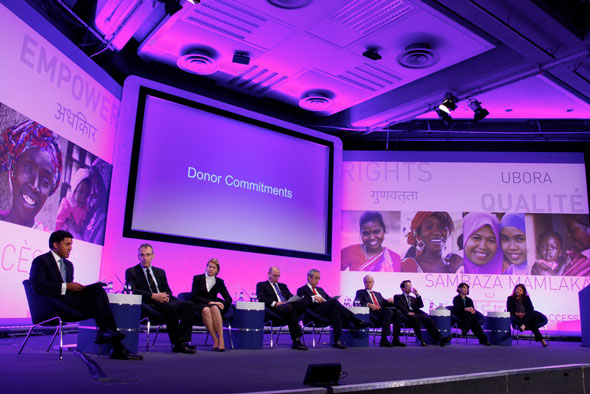
    “Water disputes that can start at the local level—little things—have the potential, in extreme cases, to burgeon into something much bigger,” warned Ken Hackett, president of Catholic Relief Services (CRS), during a discussion at the Woodrow Wilson Center (Webcast) for the launch of CRS’ new publication, Water and Conflict: Incorporating Peacebuilding into Water Development. The report provides guidance to water development practitioners, civil society members, and others striving to incorporate water and peacebuilding into their project frameworks.

    In recognition of water’s potential to drive conflict, Hackett—part of a panel featuring Jason Gehrig, Water and Conflict‘s primary author; William Hall, professor of conflict resolution at Georgetown University; and Tjip Walker, team leader of USAID’s conflict management and mitigation office‘s warning and analysis unit—urged those working on water to focus attention on identifying and diffusing areas of emerging disagreement while they are still manageable. “We must, in a proactive way, incorporate peacebuilding methodologies in water and sanitation work,” said Hackett.

    Looking Beyond Tubes and Tanks

    Prior to witnessing violent protests within the Altiplano region of Bolivia, Jason Gehrig assumed that the primary obstacles to successful water development efforts would be found in the technical phase of designing or building delivery systems. Local political developments, however, demonstrated that “we can’t just be looking at development without also looking at the structural issues at play,” said Gherig.

    Emphasis on “social infrastructure” and the inclusion of peacebuilding paradigms allows for conflict transformation and the mitigation of future violence through heightened conflict sensitivity by local practitioners. Such understanding and sensitivity to local conflicts and structures, Gehrig asserted, can only be achieved by “listening, winning hearts and minds (beginning with our own) by getting close to the people so that their struggle for life, for dignity, for peace, becomes our own.”

    Defining the Role of Environmental Conflict Resolution

    William Hall noted that conflict sensitive practices apply several elements of environmental conflict resolution (ECR), such as in-depth social participation, context analysis, stakeholder involvement, and the use of neutral parties.

    For Hall, the goal of ECR is not only conflict resolution, but “also how people will be involved.” Adapting a framework design from the International Association for Public Participation, Hall reminded the audience that decision-makers must clearly communicate both the goals of their intervention as well as the degree of public involvement required and desired. These issues are sensitive; Hall emphasized that, once a commitment has been made, it is extremely important “to be true to [one’s promises.]”

    In situations such as those included in the CRS report, successful peacebuilding efforts—which result in high-quality agreements and improved working relationships between the affected parties—must include effective engagement of appropriate stakeholders, proper mediation, and high-quality information. While many of these factors may be seen as additional procedural complications and expenses, Hall countered that recent research has shown that, compared to standard methods, agreements reached within an ECR context grant economic and environmental benefits beyond those afforded by alternative processes.

    Peacefully Managing the Commons

    Tjip Walker noted that effective governance of water and other common pool resources, often magnets for mismanagement and contention, should be a pivotal concern for peacebuilders in fragile states. Drawing on research on governance and conflict, Walker explained that countries that are more democratic, and allow for greater social participation, are at a lower risk for violent conflict.

    With regard to threats posed by common pool resources, Walker reminded the forum that Elinor Ostrom’s work demonstrates it is possible—providing a “enabling environment” for governance—to manage such resources without exposure to dire consequences. In many cases, however, Ostrom’s requirements for sustainable management are unfortunately difficult to achieve and are further complicated by pre-existing challenges stemming from economic dependencies and political arrangements.

    Referring to previous trans-boundary river conflict projects, Walker noted that “most of them have been positive…[which] seems to suggest that we are all in this together.” Successes such as these grant hope for the future, yet also demonstrate a need for negotiated agreements across political boundaries. “Under the right circumstances,” Walker concluded, “we do have the ability to manage these resources effectively in ways that are perceived as generally being effective and legitimate.”

    For more information about water, conflict and cooperation, as well as other events and publications under ECSP’s Navigating Peace Initiative, please visit www.wilsoncenter.org/water.


    Photo: Courtesy David Hawxhurst, Woodrow Wilson Center.

    MORE
  • Human Resources for Maternal Health

    ›
    Dot-Mom  //  January 20, 2010  //  By Calyn Ostrowski
    “Pregnancy is not a disease, a woman should not die of pregnancy…it doesn’t need a new drug…it doesn’t need research – we just need skilled workforce at different levels,” argued Seble Frehywot, assistant research professor of Health Policy and Global Health at George Washington University, at the Global Health Initiative’s second event of the Advancing Policy Dialogue on Maternal Health Series.

    Research shows that increased access to skilled health workers during pregnancy and delivery, including midwives and other practitioners, can significantly reduce maternal mortality in developing countries. One solution to the current human resource crisis is to expand, and in many cases, acknowledge, the skills and responsibilities of non-physician health workers.

    Task-Sharing: Who, What, and How

    “There are too many preventable deaths…if we look at the data, quality maternal health services are not available,” argued Frehywot, as she presented the following evidence:
    • Countries that have the highest maternal mortality rates are those that also have the greatest worker shortage
    • In Africa, for every 10,000 births, only 2 physicians and 11 nurses or midwives are present at delivery.
    • According to the World Health Organization, there needs to be at least 53 skilled health care workers (nurses, doctors, midwives) per 10,000 births to meet Millennium Goal 5 which seeks to reduce maternal deaths by 75 percent by 2015.
    There are four common types, or levels, of task-shifting:
    1. Doctors to non-physician health clinicians
    2. Health clinicians to registered nurses and midwives
    3. Nurses/midwives to community health care workers
    4. Community health care workers to expert patients
    “All [task-shifting] needs to be done through a sound regulatory framework…it is very important to match tasks that are needed at the ground level with the competency needed to back it up,” maintained Frehywot. Regulatory issues such as the scope of practice, standard of care, training, licensure, and supervision must be addressed to ensure safe and high-quality treatment. Additionally, political buy-in and commitment from the Ministry of Health, medical universities, and professional councils and associations are necessary for long-term development, argued Frehywot.

    Policies for scaling-up human resources should start at the district level, as these localized hospitals are geographically closest to the need, argued Frehywot. “If one really wants to decrease the maternal mortality ratios, especially by 2015, this is where most of the people live.”

    Applying Task-Shifting in Afghanistan

    “Maternal mortality ratios in Afghanistan are the second highest in the world,” declared Jeffrey Smith, regional technical director for Asia at Jhpiego. In 2002, when Smith arrived in Afghanistan, there were limited health workers, most with out-of-date skills, and no functional schools for training. “The most important decision made early in the reconstruction [of] Afghanistan was that midwives would be the backbone of the reproductive health workforce and they would be empowered with the skills to perform the tasks necessary for provision of basic emergency obstetric care,” shared Smith.

    Making the case for task-shifting, Smith discussed the importance of empowering health workers on the front line so that they may provide services in the most peripheral areas. “Task shifting should not be a temporary fix until we have more doctors,” argued Smith, as this framework disenfranchises a cadre of health workers and fails to build long-term solutions for human resources. Instead, Smith advocated for the “Health Center Intrapartum Care Strategy” that makes midwives the foundation of care and includes strategies for training, staffing, and linkages to the overall health system.

    In this post-conflict setting, task-shifting began as an emergency approach. However, it rapidly became a development strategy for professionalizing the workforce and rebuilding the health system. Afghanistan’s Ministry of Public Health was imperative to the success of scaling up midwives as they clearly defined from the beginning what was needed and who would provide care, taking steps to ensure that the midwifery schools maintained legitimacy and received formal accreditation.

    “Keep it clinical and keep it local,” shared Smith. The midwifery schools made efforts to recruit individuals from the provincial level, teaching specific life-saving skills applicable in the field. This framework has successfully retained 86% of its graduates, and many of the women report that the program has provided them with a sense of community and ownership.

    Building a Sustainable Health Workforce

    “We invite the maternal health community to take advantage of the incredible momentum that human resources for health is having right now,” shared Pape Gaye, president and CEO of IntraHealth. While there are many issues within the health system that need to be strengthened, Gaye maintained that “we must pick our battles” and advocated for an emphasis on scaling-up the training and availability of midwives.

    In order to scale-up midwives for maternal health we must avoid the same old traps, particularly the lack of donor coordination shared Gaye. “If we do a better job of improving coordination we will start solving the problem.” Additionally, Gaye discussed the implications for training generation “Y,” emphasizing the importance of including new technologies available for training, including PDA’s and e-learning courses.

    Performance outcomes and training are the two key pillars of effective scale-up, shared Gaye. Task-shifting also requires legal support and the endorsement from medical associations to help legitimize this new health system framework. “This is not simple work; you really need to have a systems approach. What we seek in the end is good integration. Integration across systems, integration across roles, courses, learning processes, and training for maximum adaptability,” shared Gaye.
    MORE
  • Walker’s World: From Warming to Warring: A Review of Cleo Paskal’s New Book

    ›
    January 15, 2010  //  By Wilson Center Staff
    Wilson Center Senior Scholar Martin Walker recently reviewed Global Warring: How Environmental, Economic, and Political Crises Will Redraw the World Map by Cleo Paskal, for his UPI column, “Walker’s World.”

    Excerpts:
    The Copenhagen summit showed that climate change is as much about geopolitics and power as it is about the weather. China‘s blunt refusal to accept any binding limits on its carbon emissions, despite the agonized pleas of small island governments facing extinction, demonstrated that this new aspect of the game of nations is going to be played as hardball.

    And yet, as Cleo Paskal argues in her pioneering new book “Global Warring,” China is also powering ahead on every aspect of climate change. While protecting its right to pollute (because it depends heavily on coal as its main homegrown energy source), China is using state subsidies to seize the lead in solar power manufacturing….But perhaps Paskal’s most striking story is the way that China is also seeking to become a major player in the arctic. China has acquired an icebreaker, a seat with observer status on the Arctic Council and its own arctic research base at Svalbard. (China also has two research bases in the Antarctic.) …

    Paskal’s book is full of such vignettes, illustrating the way that climate change and the intensifying competition for resources is starting to change the nature of power politics. Paskal, a Canadian who is a fellow of London’s prestigious Chatham House think tank and a consultant for the U.S. Department of Energy, has been a pioneering scholar of the new terrain where climate change confronts national security, where geopolitics, geoeconomics and global warming all collide. It is not just rivalry for oil and gas supplies and water, but also for fishing rights and undersea mining and mineral rights that may well be up for grabs when some of the lowest-lying Pacific island countries disappear under the rising waves. …

    “We need to start thinking about the legal and economic implications of these developments now, before we have to start tackling them in the middle of a crisis or a humanitarian emergency,” Paskal told a seminar at Washington’s Woodrow Wilson Center Friday. …

    Paskal sees China and Russia taking these issues more seriously that the United States and Europe, and her book is not just a wakeup call for Western leaders but is also an arresting and original work on climate change, probably the most important book on the environment to be published this year.

    “As pressure is put on food, water supplies and national boundaries, famine and war may become more frequent,” Paskal concludes. “This instability may make populations more tolerant of autocratic governments, especially nationalistic capitalist ones where the political, economic and military sectors combine to protect existing resources and aggressively try to secure new ones. China and Russia already have a head start on this model.”

    Read the full column on UPI.

    MORE
  • Alec Crawford on Climate Change and Conflict in Africa and the Middle East

    ›
    January 14, 2010  //  By Sajid Anwar
    “Climate change certainly does pose a risk to the world in terms of violent conflict, but there’s a lot of nuance to that argument and a lot of attention and care has to be put into making that case,” says Alec Crawford, project officer at the International Institute for Sustainable Development (IISD) in this video interview with ECSP Director Geoff Dabelko.

    According to Crawford, the argument that climate change will lead directly to violent conflict is overly simplistic, but climate could be one of conflict’s many drivers in both Africa and the Middle East. A recent IISD report discusses the potential security challenges of climate change and how to prevent them.
    MORE
Newer Posts   Older Posts
View full site

Join the Conversation

  • RSS
  • subscribe
  • facebook
  • G+
  • twitter
  • iTunes
  • podomatic
  • youtube
Tweets by NewSecurityBeat

Trending Stories

  • unfccclogo1
  • Pop at COP: Population and Family Planning at the UN Climate Negotiations

Featured Media

Backdraft Podcast

play Backdraft
Podcasts

More »

What You're Saying

  • Volunteers,At,The,Lagos,Food,Bank,Initiative,Outreach,To,Ikotun, Pan-African Response to COVID-19: New Forms of Environmental Peacebuilding Emerge
    Rashida Salifu: Great piece 👍🏾 Africa as a continent has suffered this unfortunate pandemic.But it has also...
  • A desert road near Kuqa An Unholy Trinity: Xinjiang’s Unhealthy Relationship With Coal, Water, and the Quest for Development
    Ismail: It is more historically accurate to refer to Xinjiang as East Turkistan.
  • shutterstock_1779654803 Leverage COVID-19 Data Collection Networks for Environmental Peacebuilding
    Carsten Pran: Thanks for reading! It will be interesting to see how society adapts to droves of new information in...

What We’re Reading

  • Rising rates of food instability in Latin America threaten women and Venezuelan migrants
  • Treetop sensors help Indonesia eavesdrop on forests to cut logging
  • 'Seat at the table': Women's land rights seen as key to climate fight
  • A Surprise in Africa: Air Pollution Falls as Economies Rise
  • Himalayan glacier disaster highlights climate change risks
More »
  • woodrow
  • ecsp
  • RSS Feed
  • YouTube
  • Twitter
  • Facebook
  • Home
  • Who We Are
  • Publications
  • Events
  • Wilson Center
  • Contact Us
  • Print Friendly Page

© Copyright 2007-2021. Environmental Change and Security Program.

Woodrow Wilson International Center for Scholars. All rights reserved.

Developed by Vico Rock Media

Environmental Change and Security Program

Woodrow Wilson International Center for Scholars

Ronald Reagan Building and International Trade Center

  • One Woodrow Wilson Plaza
  • 1300 Pennsylvania Ave., NW
  • Washington, DC 20004-3027

T 202-691-4000