• woodrow wilson center
  • ecsp

New Security Beat

Subscribe:
  • rss
  • mail-to
  • Who We Are
  • Topics
    • Population
    • Environment
    • Security
    • Health
    • Development
  • Columns
    • China Environment Forum
    • Choke Point
    • Dot-Mom
    • Friday Podcasts
    • Navigating the Poles
    • Reading Radar
  • Multimedia
    • Water Stories (Podcast Series)
    • Backdraft (Podcast Series)
    • Tracking the Energy Titans (Interactive)
  • Films
    • Water, Conflict, and Peacebuilding (Animated Short)
    • Paving the Way (Ethiopia)
    • Broken Landscape (India)
    • Scaling the Mountain (Nepal)
    • Healthy People, Healthy Environment (Tanzania)
  • Publications
  • Events
  • Contact Us

NewSecurityBeat

The blog of the Wilson Center's Environmental Change and Security Program
  • António Guterres, The New York Times

    Why Mali Matters

    ›
    September 11, 2012  //  By Wilson Center Staff

    The original version of this op-ed, by António Guterres, appeared in The New York Times.

    For many people, Timbuktu has long represented the essence of remoteness: a mythical, faraway place located on the boundaries of our collective consciousness. But like many of the myths associated with colonialism, the reality is very different.

    MORE
  • Regulating the Resource Curse: U.S. Adopts International Transparency Rules for Oil Industry

    ›
    Guest Contributor  //  September 10, 2012  //  By Jeff Colgan

    The original version of this article appeared on Foreign Policy.

    It’s not often that a change in accounting rules could reduce the probability of war. But that’s exactly what happened at the U.S. Securities and Exchange Commission (SEC) last month.

    MORE
  • Jill Hagey, Behind the Numbers

    Sahel Drought: Putting Malnutrition in the News

    ›
    On the Beat  //  September 7, 2012  //  By Wilson Center Staff

    The original version of this article, by Jill Hagey, appeared on the Population Reference Bureau’s Behind the Numbers blog.

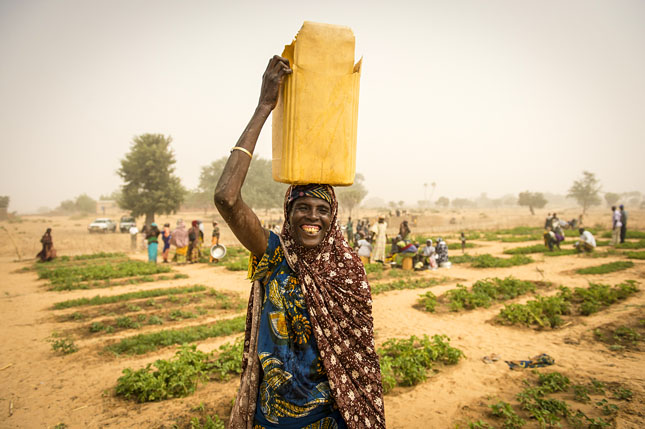
    Over the past few months, the Sahel drought has sparked attention of news media and concerned citizens around the world. Throughout this media blitz, I have been struck by the sharp contrast between this coverage and how the devastating effects of malnutrition are usually portrayed. Malnutrition is often overlooked in favor of more “newsworthy” diseases, and it takes a crisis to focus our attention on this public health issue. Yet an emergency such as this drought – affecting more than 18 million people, including nearly 2 million children – is difficult to ignore.

    MORE
  • Top 10 Posts for August 2012

    ›
    What You Are Reading  //  September 6, 2012  //  By Schuyler Null

    August is a slow month in DC, but not so on New Security Beat: 8 of the top 10 last month (measured by unique pageviews) were new posts. Laurie Mazur’s discussion of inequality, population, and sustainability took the top spot followed by a look at what’s new in the Population Reference Bureau’s latest data sheet; Kate Diamond’s feature on Mongolia’s climate and development challenges; a discussion on the naming of the Failed States Index; a summary of the National Intelligence Council’s extensive series on aging; and two reactions to Iran’s surprising shift on family planning.

    MORE
  • Nile Basin at a Turning Point as Political Changes Roil Balance of Power and Competing Demands Proliferate

    ›
    September 4, 2012  //  By Carolyn Lamere

    In 1979, Egyptian President Anwar Sadat famously said that “the only matter that could take Egypt to war again is water.” Sadat’s message was clear: the Nile is a matter of national security for Egypt.

    Indeed, Egypt relies on the Nile for 95 percent of its water. But it is not the only state with an interest in the world’s longest river. There are 11 states in the Nile River basin, which stretches from Africa’s Great Lakes region – Tanzania, Uganda, Kenya, Rwanda, Burundi, and the Democratic Republic of the Congo – to the Ethiopian and Eritrean highlands through South Sudan, Sudan, and Egypt to the Mediterranean Sea.

    MORE
  • Changing Cities: Climate, Youth, and Land Markets in Urban Areas

    ›
    From the Wilson Center  //  September 3, 2012  //  By Lauren Herzer Risi

    The number of urban slum dwellers worldwide is staggering. According to UN-Habitat, 827.6 million people live in slums around the world. Despite meeting a Millennium Development Goal to significantly improve the lives of at least 100 million slum dwellers by 2020, the total number of people living in these areas still increased by 55 million between 2000 and 2010. By 2020, the world slum population is projected to reach 889 million. With the majority of people now living in cities, urban priorities are synonymous with human security and environmental sustainability and must be accounted for in the global development agenda.

    MORE
  • As Urbanization Accelerates, Policymakers Face Integration Hurdles

    ›
    August 31, 2012  //  By Blair A. Ruble

    The challenges for cities in the coming century will be many, but accounting for swelling numbers of new residents – due to more open avenues of communication and flows of goods, economic opportunity, population growth, and potential climate change-induced displacement – is perhaps the biggest.

    MORE
  • Should AFRICOM Leave Development to the Professionals?

    ›
    August 30, 2012  //  By Schuyler Null

    Since its inception, there’s been a great deal of prognostication about the role and goals of the U.S. military’s newest regional command, AFRICOM. The smallest of the six regional commands, in terms of staff and budget, its objectives have included traditional roles like building local military capacities, confronting transnational threats (terrorism, weapons of mass destruction, small arms, drugs, etc.), and helping to mitigate violent conflicts, but also more development-oriented goals, like fighting HIV/AIDs and malaria, “strengthening democratic principles,” and “fostering the conditions that lead to a peaceful, stable, and economically strong Africa.”

    MORE
Newer Posts   Older Posts
View full site

Join the Conversation

  • RSS
  • subscribe
  • facebook
  • G+
  • twitter
  • iTunes
  • podomatic
  • youtube
Tweets by NewSecurityBeat

Trending Stories

  • unfccclogo1
  • Pop at COP: Population and Family Planning at the UN Climate Negotiations

Featured Media

Backdraft Podcast

play Backdraft
Podcasts

More »

What You're Saying

  • Volunteers,At,The,Lagos,Food,Bank,Initiative,Outreach,To,Ikotun, Pan-African Response to COVID-19: New Forms of Environmental Peacebuilding Emerge
    Rashida Salifu: Great piece 👍🏾 Africa as a continent has suffered this unfortunate pandemic.But it has also...
  • A desert road near Kuqa An Unholy Trinity: Xinjiang’s Unhealthy Relationship With Coal, Water, and the Quest for Development
    Ismail: It is more historically accurate to refer to Xinjiang as East Turkistan.
  • shutterstock_1779654803 Leverage COVID-19 Data Collection Networks for Environmental Peacebuilding
    Carsten Pran: Thanks for reading! It will be interesting to see how society adapts to droves of new information in...

What We’re Reading

  • Rising rates of food instability in Latin America threaten women and Venezuelan migrants
  • Treetop sensors help Indonesia eavesdrop on forests to cut logging
  • 'Seat at the table': Women's land rights seen as key to climate fight
  • A Surprise in Africa: Air Pollution Falls as Economies Rise
  • Himalayan glacier disaster highlights climate change risks
More »
  • woodrow
  • ecsp
  • RSS Feed
  • YouTube
  • Twitter
  • Facebook
  • Home
  • Who We Are
  • Publications
  • Events
  • Wilson Center
  • Contact Us
  • Print Friendly Page

© Copyright 2007-2021. Environmental Change and Security Program.

Woodrow Wilson International Center for Scholars. All rights reserved.

Developed by Vico Rock Media

Environmental Change and Security Program

Woodrow Wilson International Center for Scholars

Ronald Reagan Building and International Trade Center

  • One Woodrow Wilson Plaza
  • 1300 Pennsylvania Ave., NW
  • Washington, DC 20004-3027

T 202-691-4000