• woodrow wilson center
  • ecsp

New Security Beat

Subscribe:
  • rss
  • mail-to
  • Who We Are
  • Topics
    • Population
    • Environment
    • Security
    • Health
    • Development
  • Columns
    • China Environment Forum
    • Choke Point
    • Dot-Mom
    • Friday Podcasts
    • Navigating the Poles
    • Reading Radar
  • Multimedia
    • Water Stories (Podcast Series)
    • Backdraft (Podcast Series)
    • Tracking the Energy Titans (Interactive)
  • Films
    • Water, Conflict, and Peacebuilding (Animated Short)
    • Paving the Way (Ethiopia)
    • Broken Landscape (India)
    • Scaling the Mountain (Nepal)
    • Healthy People, Healthy Environment (Tanzania)
  • Publications
  • Events
  • Contact Us

NewSecurityBeat

The blog of the Wilson Center's Environmental Change and Security Program
  • Top 10 Posts for March 2013

    ›
    What You Are Reading  //  April 2, 2013  //  By Schuyler Null

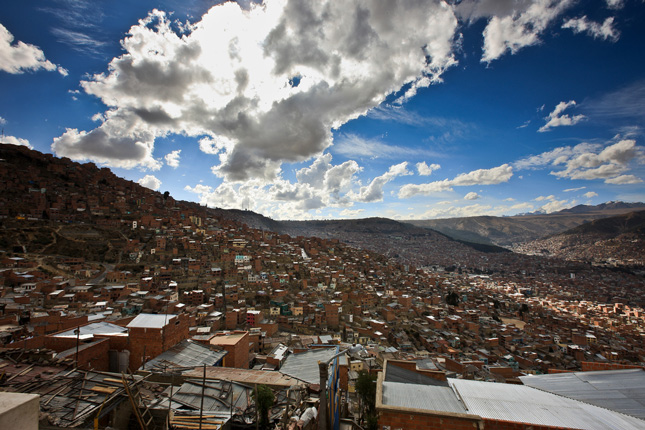
    Not too hot, not too cold – Goldilocks had it right, says Laurie Mazur in a new series on the concept of resilience. Joining her in the top posts last month (measured by unique pageviews) was the World Resources Institute’s water risk atlas, an illustration of the effect of the demographic dividend using new Human Development Index data, and an update on Uganda’s population-development challenges by Gladys Kalema-Zikusoka. The Wilson Center’s China Environment Forum also continued their new Choke Point column with a discussion with activist Wang Canfa on China’s current environmental difficulties.

    MORE
  • Demography and Political-Socioeconomic Change

    ›
    Reading Radar  //  April 1, 2013  //  By Graham Norwood
    population_public-policy-sm

    In “On Demographic and Democratic Transitions,” published in the February edition of Population and Development Review, author Tim Dyson postulates that the so-called “demographic transition” – a two-step process in which diminishing mortality rates are followed by decreases in total fertility – is an important predictor of a society’s transition from autocracy to democracy. Specifically, Dyson suggests that the population surge resulting from a decline in mortality may tend to destabilize pre-democratic regimes, while a subsequent drop in fertility rates may empower women and raise the median age of a population, thus paving the way for democracy to emerge. Dyson demonstrates a statistically significant correlation between population aging and inclination toward democracy, echoing the work of New Security Beat contributor, Richard Cincotta.

    MORE
  • Stewart M. Patrick, The Internationalist

    Environmental Security Goes Mainstream: Natural Resources and National Interests

    ›
    March 29, 2013  //  By Wilson Center Staff

    The original version of this article, by Stewart M. Patrick, appeared on the Council on Foreign Relations’ The Internationalist blog.

    Not long ago, concerns about environmental degradation were marginal in U.S. national security deliberations. What a difference climate change has made. Foreign policy officials and experts are starting to recognize profound linkages between planetary health, economic prosperity, and international security. These connections were on full view last Wednesday, when the Council on Foreign Relations (CFR) teamed up with Conservation International (CI) to convene a symposium, “Global Resources, the U.S. Economy, and National Security.”

    MORE
  • Family Planning an Important Component of Resilience to Climate Change, Says Roger-Mark De Souza

    ›
    Friday Podcasts  //  March 29, 2013  //  By Carolyn Lamere

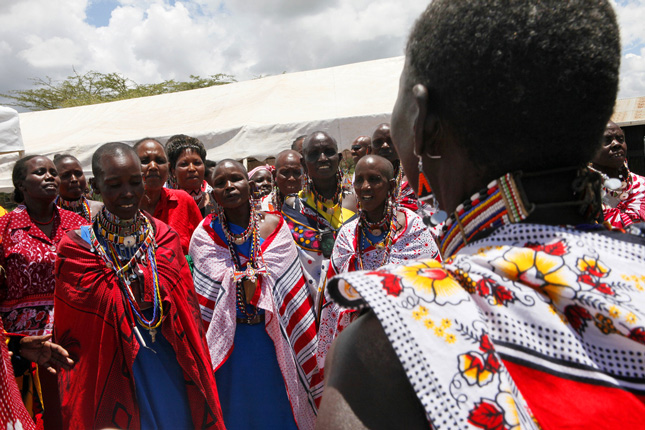
    “We believe that if you want to respond to critical development issues like climate change, that you need to address the social dimensions of resilience,” says Roger-Mark De Souza of Population Action International (PAI) in this week’s podcast.

    “If you want to address climate change and you only look at mitigation, you are missing some of the important components,” he said. PAI, which advocates for better access to family planning in developing countries, starts from the standpoint that allowing couples to decide how many children they have leads to “investments in education and technology, providing opportunities for additional economic growth, enhanced development, and ultimately helping to build resilience and adaptive capacity.”.

    MORE
  • After Cyclone Haruna, Blue Ventures Leverages Its PHE Program for Disaster Response in Madagascar

    ›
    Beat on the Ground  //  Guest Contributor  //  March 28, 2013  //  By Laura Robson

    ‘Toward Resilience’ is a series on the meaning of global resilience and vulnerability today.

    Balbine is moving through her coastal village of Andavadoaka with a sense of urgency. Normally she works as a community-based distributor for Blue Ventures’ integrated population, health, and environment (PHE) program in southwest Madagascar, providing health information and products to her community. However, since Cyclone Haruna swept through the region several weeks ago, Balbine has been especially busy distributing diarrhea treatment kits to mothers caring for sick infants, providing families sleeping out in the open with mosquito nets to protect against malaria, setting up water filtering stations, and emphasizing the importance good hygiene practices.

    MORE
  • Making ‘Healthy People, Healthy Environment’: A Look Inside Integrated Development

    ›
    From the Wilson Center  //  March 27, 2013  //  By Carolyn Lamere

    “We need dynamic approaches. We can’t just keep going with the single sector approach and hoping that a conservation project will do really more than it’s intended to do,” said ECSP’s Multimedia Editor Sean Peoples in an interview with Dialogue at the Wilson Center. “These people are living integrated lives. How can we have integrated solutions for them?”

    MORE
  • Carl Gierstorfer, Pulitzer Center on Crisis Reporting

    River Erosion a Push Factor for India’s Bride Trafficking

    ›
    March 27, 2013  //  By Wilson Center Staff

    The original version of this article, by Carl Gierstorfer, appeared on the Pulitzer Center on Crisis Reporting.

    After spending almost two weeks in India’s northwestern state of Haryana, the destination for many trafficked brides, we decided to head to the source area. It lies two hours by plane to the east, in the lush green hills of Assam. Here, as well as in the surrounding states of West Bengal, Bihar, and Nagaland, many women are trafficked from the towns and villages to live the lives of slaves more than a thousand miles away from their homes.

    We wanted to find out why.

    MORE
  • ‘National Geographic’ Reports on “Water Grabbers” From Mali to India

    ›
    On the Beat  //  March 26, 2013  //  By Carolyn Lamere

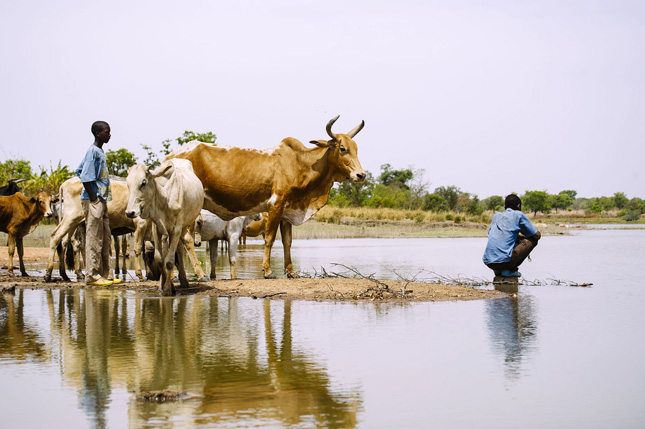
    Much ink has been spilled on the growing trend of global land grabs – land purchased en masse in developing countries like Ethiopia by foreigners mainly for agricultural export. But along with land, investors often also gain the right to use local water, and sometimes with little consideration for local livelihoods. Fred Pearce recently looked into these “water grabs” in a series for National Geographic.

    MORE
Newer Posts   Older Posts
View full site

Join the Conversation

  • RSS
  • subscribe
  • facebook
  • G+
  • twitter
  • iTunes
  • podomatic
  • youtube
Tweets by NewSecurityBeat

Trending Stories

  • unfccclogo1
  • Pop at COP: Population and Family Planning at the UN Climate Negotiations

Featured Media

Backdraft Podcast

play Backdraft
Podcasts

More »

What You're Saying

  • Volunteers,At,The,Lagos,Food,Bank,Initiative,Outreach,To,Ikotun, Pan-African Response to COVID-19: New Forms of Environmental Peacebuilding Emerge
    Rashida Salifu: Great piece 👍🏾 Africa as a continent has suffered this unfortunate pandemic.But it has also...
  • A desert road near Kuqa An Unholy Trinity: Xinjiang’s Unhealthy Relationship With Coal, Water, and the Quest for Development
    Ismail: It is more historically accurate to refer to Xinjiang as East Turkistan.
  • shutterstock_1779654803 Leverage COVID-19 Data Collection Networks for Environmental Peacebuilding
    Carsten Pran: Thanks for reading! It will be interesting to see how society adapts to droves of new information in...

What We’re Reading

  • Rising rates of food instability in Latin America threaten women and Venezuelan migrants
  • Treetop sensors help Indonesia eavesdrop on forests to cut logging
  • 'Seat at the table': Women's land rights seen as key to climate fight
  • A Surprise in Africa: Air Pollution Falls as Economies Rise
  • Himalayan glacier disaster highlights climate change risks
More »
  • woodrow
  • ecsp
  • RSS Feed
  • YouTube
  • Twitter
  • Facebook
  • Home
  • Who We Are
  • Publications
  • Events
  • Wilson Center
  • Contact Us
  • Print Friendly Page

© Copyright 2007-2021. Environmental Change and Security Program.

Woodrow Wilson International Center for Scholars. All rights reserved.

Developed by Vico Rock Media

Environmental Change and Security Program

Woodrow Wilson International Center for Scholars

Ronald Reagan Building and International Trade Center

  • One Woodrow Wilson Plaza
  • 1300 Pennsylvania Ave., NW
  • Washington, DC 20004-3027

T 202-691-4000