-
Thermometers of Change: Snow Leopard Diplomacy in Asia’s High Mountains
›
“Change is everywhere where snow leopards live,” said World Wildlife Fund (WWF) Vice President Kate Newman at a recent Wilson Center event. “The life of the snow leopard is intimately intertwined with the lives of the people in these high mountains,” she said. If you care about water security and climate resilience in Asia, you should also care about the integrity of the snow leopard’s habitat, added Koustubh Sharma of the Snow Leopard Trust. These beautiful and enigmatic animals are “the thermometers of the health of these ecosystems.”
-
From Disclosure to Development: Can Transparency Initiatives Improve Natural Resource Management?
›
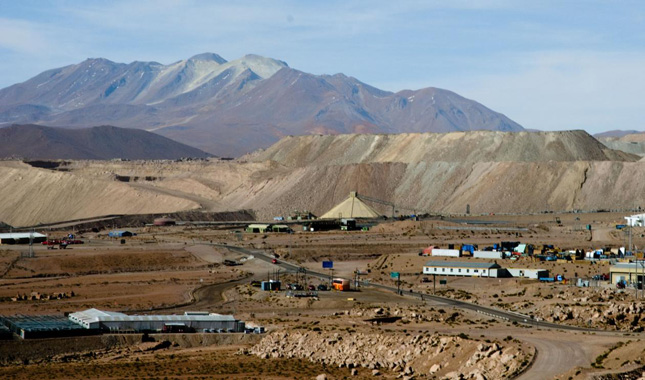
“In the end, we all have to be accountable,” said Geoff Healy of BHP Billiton, the largest natural resource extraction company in the world, at a recent event on transparency, anti-corruption, and sustainable development at the Brookings Institution.
-
From the Pacific to the Atlantic, Protecting Coastal Communities From Climate Threats
›The frontlines of climate change are the world’s shorelines. “It goes without saying that people living in coastal communities are already observing impacts,” said Erin Derrington, a coastal resources specialist working in the Northern Mariana Islands, at a recent Wilson Center event, the third in a series on coastal resilience presented in collaboration with the Hoover Institute and the Stanford Woods Institute on the Environment. “Although that is a challenge, it is also an opportunity and a driver for change and innovation,” said Derrington.
-
Innovations in Midwifery Save Mothers’ Lives: Q&A With Geeta Lal
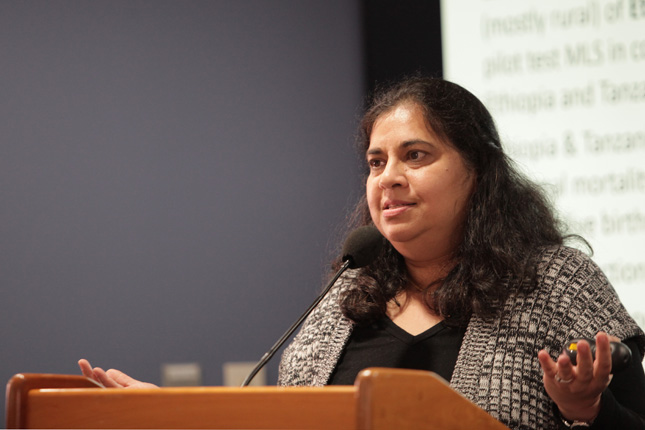
›To prevent maternal mortality, we need new approaches to this very old problem. The United Nations Population Fund (UNFPA)’s Midwifery Programme, which operates in 120 countries, recently launched an innovative tool to improve training for maternal health workers. Dot-Mom, the column of the Maternal Health Initiative on New Security Beat, recently spoke with Geeta Lal, global coordinator for the Midwifery Programme, about the challenges of developing innovations in maternal health and new projects on the horizon for UNFPA.
-
Alice Hill: Invest in Resilience to Manage Future Risks to Economy, Security
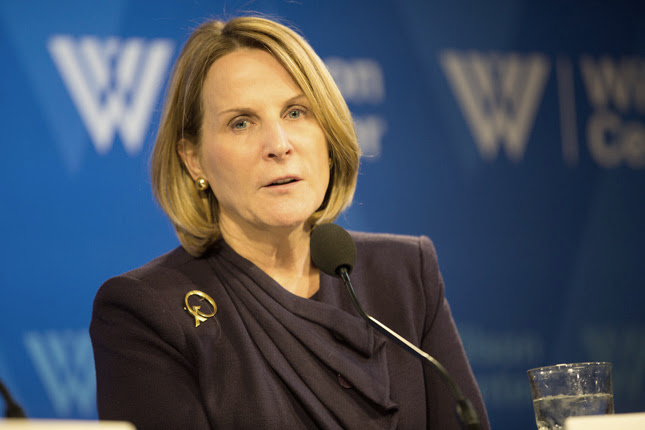
›As our climate changes, “we are vulnerable to unacceptable risks of failures in functionality, durability, and safety,” said Alice C. Hill, former senior director for resiliency policy for the National Security Council, as she launched Resilience Week at the Wilson Center. During the week, members of the UN Resilience Academy joined representatives from the Wilson Center, Stanford Woods Institute for the Environment and the Hoover Institute for in-depth discussions on building global resilience in the face of environmental change. “Resilience is proving necessary to withstand the disruptions to our very interconnected systems,” she said.
-
Top 5 Posts for October 2017
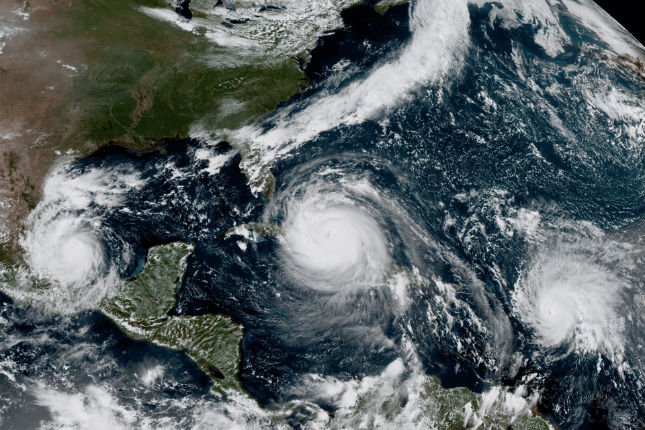
›Hurricanes Irma and Maria devastated Puerto Rico, leaving many on the island without power, drinking water, or cellular service. Such disasters are not just an issue for the Caribbean, said the Wilson Center’s Roger-Mark De Souza in an interview with WOUB that was last month’s most read story on New Security Beat. All coastal areas of the United States, with their growing populations and vulnerable but valuable infrastructure, should be prepared to face more severe climate-related natural disasters.
-
A Toxic Legacy: Remediating Pollution in Iraq
›As the so-called Islamic State loses control over the areas it once occupied, it is leaving behind a toxic legacy. The initial findings of a scoping mission undertaken by UN Environment Programme’s Conflict and Disasters branch found a trail of localized pollution that could have acute and chronic consequences for Iraq—and not just for its environment.
-
Unequal Women, Insecure World: The State of the World’s Population in the Age of Inequality
›Women in Madagascar are scrambling to access contraception—while they still can. By the end of this year, one of the most prominent organizations that provides family planning services in the country will have shut down 21 of its 22 mobile contraception clinics, an important service in a country where transportation and roads are in poor shape.
 A Publication of the Stimson Center.