-
Destruction of Habitat and Loss of Biodiversity are Creating the Perfect Conditions for Diseases like COVID-19 to Emerge
›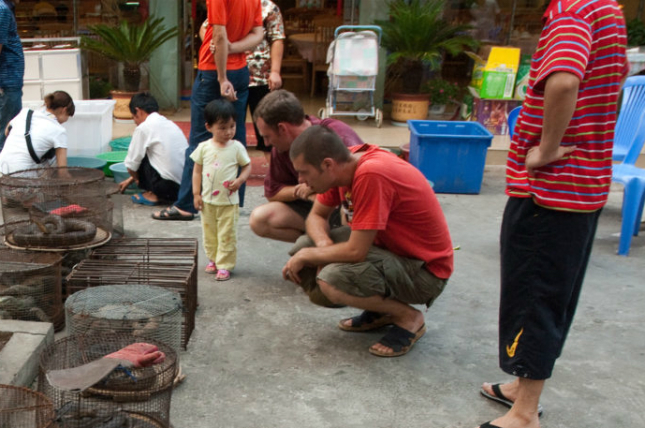
Mayibout 2 is not a healthy place. The 150 or so people who live in the village, which sits on the south bank of the Ivindo River, deep in the great Minkebe forest in northern Gabon, are used to occasional bouts of diseases such as malaria, dengue, yellow fever and sleeping sickness. Mostly they shrug them off.
-
Cardiovascular Disease Can be a Silent Killer During and After Pregnancy
›
Stacy Ann Walker could have died.
During what she thought was going to be a normal exam, Stacy learned that she would need to have a C-section. While recovering in the hospital, she began to have breathing problems and after some testing was told that her heart had been scarred by an earlier bout of rheumatic fever. Shortly after, she also learned that she had heart failure, an enlarged heart, and problems with multiple heart valves.
She was 29.
-
It’s Time We Scale Up Climate Leadership
›The urgency to address climate change is only growing. As youth step up and are increasingly vocal about climate change, international negotiations—most recently at COP25—fail to deliver the ambitious global action required for effective response.Where does this leave the communities most at risk from climate impacts? How can they adapt and transform in the face of enormous threats, sometimes to their very existence? With researchers and policy experts often focused on technological fixes and pushing new solutions to specific threats, it’s easy to assume that transformation is underway to respond to the new climate reality. In reality, transformative change is tough—especially when up against ingrained habit, culture, and a lack of political and financial resources to support it. Perhaps most importantly, transformative change requires effective leadership and champions—those people who build political will and create momentum to move policy innovations or on-the-ground action.
-
How Natural Resources Could Help Build Peace in Afghanistan
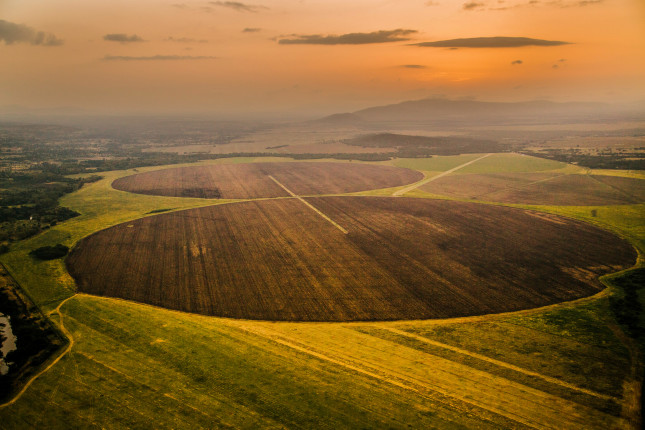
›Potential water wars due to plans for multiple dams, violent opium cartels supporting world heroin markets, and many conflict-financing minerals including everyday talc used for baby powder. These are the types of natural resources stories that usually make front page news about Afghanistan. But natural resources have a significant role to play in stabilizing Afghanistan. Instead of being a source of conflict, they may help with peacebuilding by creating livelihoods and creating opportunities for ex-combatants.
-
Can Singapore’s NEWater Spark a Wastewater Revolution in China?
›China is one of the “thirstiest” countries in the world with a per capita water availability a quarter of the United States. With population, pollution, and water shortages growing unabatedly, reclaimed water (e.g., treating wastewater to drinking water standards) could be the answer to China’s water insecurity. In China, extensive research in the 1980s into water reclamation and urban investments supporting infrastructure in the 2000s sparked production capacity in the country to rise from 63 billion gallons a day to 236 billion gallons per day between 2009 to 2015. Today, however, reclaimed water is a mere drop in the bucket meeting less than 1 percent of total urban water use. China could look to the tiny Southeast Asian city-state of Singapore to learn how it tapped reclaimed water to turn its water-scarce tiny island into a high-tech hydrohub.
-
Multiple Stressors Shape Mothers’ Mental Health in Nairobi, Kenya
›The mental health of mothers cannot be studied in isolation, as just a psychological snapshot in time. Their complex lives both past and present must be taken into consideration. When I was researching marriage, motherhood, and social support in Korogocho, an informal settlement in Nairobi, stories I heard underscored how a range of life experiences conspire to affect a woman’s mental health. I heard life histories like this:When Ann was 17, she met Fredrick, got pregnant and moved in with him when she was 18. Two years later, Fredrick got arrested and was gone for two years. When he came back, she got pregnant with child No. 2 within a month but then left the relationship seven months later because of ongoing conflict. When she was about 23 with a 2-month-old and 5-year-old, Frederick shot her. Two months later, he himself was killed. Four months later, she met the man who would become her second husband. After living together for three years, he took her back to his home to meet his family. She then had her third baby.
-
Top 5 Posts of February 2020
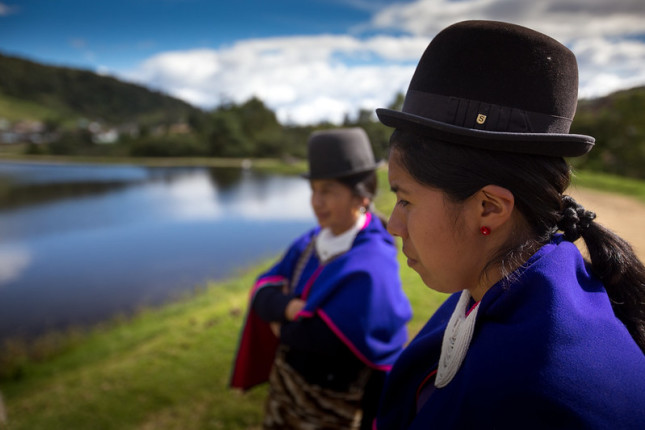
›Indigenous women and girls are making significant contributions to global peace agendas through their traditional knowledge of natural resource management and valuable insights on how to cope with the negative impacts of climate change. In our most read post, Marisa O. Ensor highlights the importance of these “Unsung Sheroes” in moving global agendas forward.
-
Enhancing Water Security and the Role of Diplomacy in Africa’s Mara River Basin and Beyond
›The Mara River traverses nearly 14,000 kilometers in Kenya and Tanzania, flowing through the Masai Mara National Reserve in Kenya and the Serengeti National Park in Tanzania. It is a vital water source for more than 1 million people in the area, as well as for 2 million zebras and wildebeests. In fact, the Mara River Basin is “one of the most ecologically important basins in the world,” according to Basil Mahayni, Deputy Director of USAID’s Sustainable Water Partnership’s (SWP). Communities in Kenya and Tanzania depend on the Mara River Basin for a variety of needs, including drinking water, livelihoods, and ecosystem preservation. Therefore, water security in this basin is essential to ecological health of the basin and its wildlife and the region’s economic development.
 A Publication of the Stimson Center.

 The urgency to address climate change is only growing. As youth step up and are increasingly vocal about climate change, international negotiations—most recently at COP25—fail to deliver the ambitious global action required for effective response.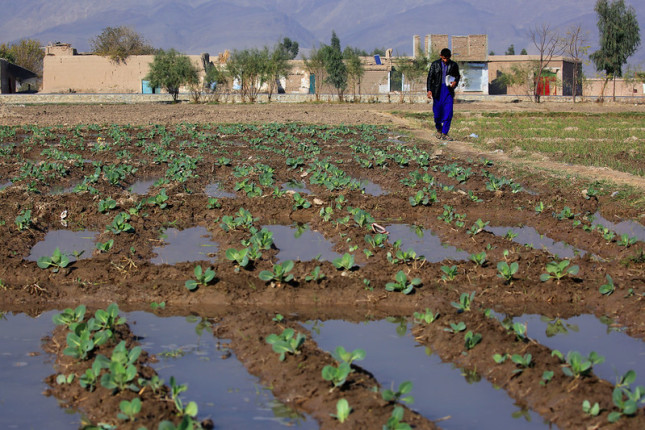

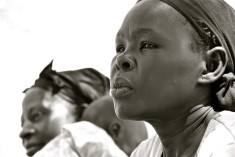 The mental health of mothers cannot be studied in isolation, as just a psychological snapshot in time. Their complex lives both past and present must be taken into consideration. When I was researching marriage, motherhood, and social support in Korogocho, an informal settlement in Nairobi, stories I heard underscored how a range of life experiences conspire to affect a woman’s mental health. I heard life histories like this: