-
Midwife-Delivered Interventions Could Provide Dramatic Benefits
› In a year that has presented enormous challenges, it is even more gratifying to present evidence that strengthens the importance of midwives as providers of essential sexual and reproductive health (SRH) services and the impact they can have on maternal and neonatal mortality and stillbirths, said Anneka Knutsson, Chief of the SRH Branch at the United Nations Population Fund (UNFPA) at a recent Wilson Center event, in partnership with UNFPA and Johnson & Johnson, to launch the Impact of Midwives study conducted by UNFPA, the International Confederation of Midwives (ICM), and the World Health Organization (WHO) and published in The Lancet Global Health.
 -
Vanessa Nakate on Giving Weight to the Voices of Those Most Affected by Climate Change
›“We need to give more weight to the voices of people who are most affected by climate change,” says Vanessa Nakate, a prominent Ugandan climate activist, in this week’s Friday Podcast. At the local, regional, and global levels, Nakate’s work sheds light on the imperative for policymakers to value the lived experiences of oft-overlooked groups such as women, youths, and citizens of developing nations. “When I talk about climate justice, it is not something that I want for the future—it is something that I want right now, because our present is catastrophic,” she says. -
A Dangerous Taste for Plastic in the Ocean Depths
›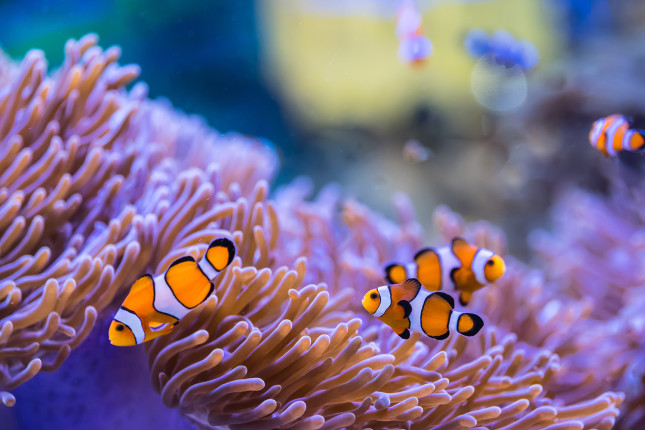 If you watched Finding Nemo (who hasn’t?), you may remember Nemo’s home in the beautiful pink sea anemone with its tentacles waving around. These tentacles are able to sting and eat fish, crabs, and sometimes even birds. Lucky for Nemo, clownfish have a mucus coat that protects them from the sea anemone’s poisonous stings. And lucky for the sea anemone, clownfish protect them from being consumed by other fish and provide them nutrients through their food and fecal droppings. Nemo and his fellow clownfish, however, can’t shield these sedentary sea animals from nearly invisible plastic microfibers or plastic preproduction pellets, called nurdles. At Duke University I have been studying one specific species of sea anemone, Aiptasia pallida, which seems to find plastic particularly tasty. My work is part of a larger wave of scientific research around the world looking into how and why sea animals are eating microplastics and how it may impact their health.
 -
More Midwife-based Interventions Could Save Millions of Lives
›“This is real,” said Franka Cadée, President of the International Confederation of Midwives (ICM). “And we can no longer get around it. And we can no longer linger.” She spoke at a recent Wilson Center event, in partnership with the United Nations Population Fund (UNFPA) and Johnson & Johnson, launching a new study, Impact of Midwives, published in The Lancet Global Health. If any other intervention could have the same impact as midwives or midwifery, it would be implemented worldwide immediately, she said.
-
The Top 5 Posts of November 2020
›A powerful method for communicating and examining uncertainty, scenario planning has come to the fore in discussions on how to address COVID-19. As scenario planners continue to map the potential consequences of COVID-19, they are finding much in common with risk managers, who use past data to identify and forecast external threats. In our top post this month, Steven Gale suggests that it’s time for scenario planners and risk managers to align and join forces to produce a single foresight capability.
-
“An Idea Born of Desperation”: Simon Nicholson on Solar Radiation Management
›“If solar radiation management were done well—that is, the science is right, the engineering is right, and the policy and governance frameworks around all of the stuff work—then solar radiation management could be a really important, positive contribution to humanity’s responding to climate change,” says Simon Nicholson, associate professor at American University’s School of International Service and co-founder of the Forum for Climate Engineering Assessment in this week’s Friday Podcast interview with ECSP senior advisor and Ohio University professor, Geoff Dabelko. “But, there are all kinds of risks associated with this endeavor.” -
New Constitution Could Help Chile Avert the Lithium Curse
›December 3, 2020 // By Matthew GallagherChile is on the cusp of a new era. Just as its lithium—a common element of energy storage technology, which is itself a critical component of the clean energy transition—is experiencing a rise in global market demand, Chilean citizens have called for a new constitution.
-
Reproductive Justice in the United States Prison System
›The United States imprisons the most women in the world. Across the United States, approximately 200,000 women are incarcerated—nearly an 800 percent increase since 1980. Women of color are disproportionately affected by the criminal justice system. In 2017, twice as many Black women and 1.3 times as many Hispanic women were incarcerated compared to white women. An often overlooked aspect of the increasing rates of women’s incarceration is the impact on the sexual and reproductive health needs of these women. “Despite being the fastest growing incarcerated population, women and girls are correctional afterthoughts,” writes Kimberly Haven, an activist and formerly incarcerated woman who had to undergo a hysterectomy—a surgical procedure to remove the uterus (and, with it, childbearing possibilities)—after being denied proper menstrual products while incarcerated.
 A Publication of the Stimson Center.
 In a year that has presented enormous challenges, it is even more gratifying to present evidence that strengthens the importance of midwives as providers of essential sexual and reproductive health (SRH) services and the impact they can have on maternal and neonatal mortality and stillbirths, said Anneka Knutsson, Chief of the SRH Branch at the United Nations Population Fund (UNFPA) at a recent Wilson Center event, in partnership with UNFPA and Johnson & Johnson, to launch the
  “We need to give more weight to the voices of people who are most affected by climate change,” says Vanessa Nakate, a prominent Ugandan climate activist, in this week’s Friday Podcast. At the local, regional, and global levels, Nakate’s work sheds light on the imperative for policymakers to value the lived experiences of oft-overlooked groups such as women, youths, and citizens of developing nations. “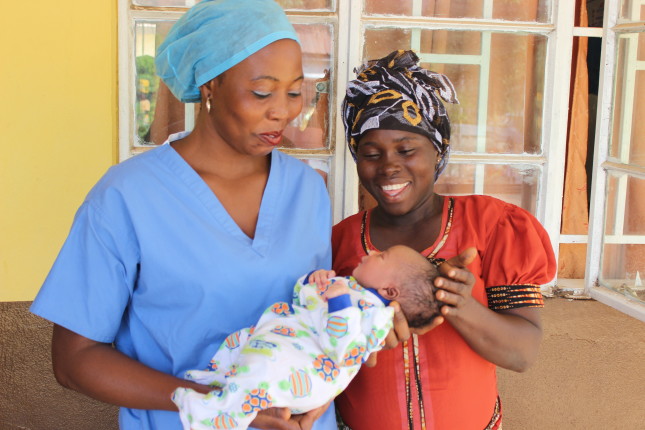
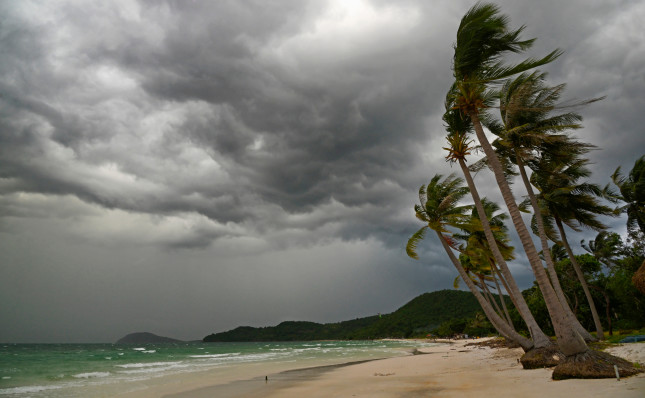
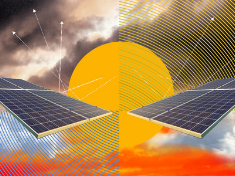 “If solar radiation management were done well—that is, the science is right, the engineering is right, and the policy and governance frameworks around all of the stuff work—then solar radiation management could be a really important, positive contribution to humanity’s responding to climate change,” says Simon Nicholson, associate professor at American University’s School of International Service and co-founder of the