-
Uganda’s Demographic and Health Challenges Put Into Perspective With Newfound Oil Discoveries [Part One]
›April 26, 2012 // By Kate Diamond
Uganda’s population is the second youngest in the world, with half of the country younger than 15.7 years old (just older than Niger’s median age of 15.5 years). In the past 10 years, the country – about half the size of France in land area – has added 10 million people, growing from 24 to 34 million. That growth, paired with other factors like poor governance and long-standing insecurity, has made providing basic services a difficult task for a government that is one of Africa’s most aid-dependent.
-
What Would It Take To Help People ‘and’ the Planet?
›February 1, 2012 // By Geoffrey D. DabelkoThe original version of this article first appeared in the “Scientist’s Soapbox” column of Momentum magazine’s special issue on “what would it take” to craft solutions to some of the Earth’s toughest challenges.
People living in the most biodiverse areas of the world tend to be poor, isolated, and dependent on natural resources. They often lack reliable access to alternative livelihoods and health services and thus can place stress on these ecologically unique regions.
Conservation efforts will merely slow habitat loss if they don’t fundamentally address the living conditions of the human residents as well as the flora and fauna. But programs to assist these communities have commonly focused on one problem at a time, reflecting the interests of the funders: Environmental groups focus on conservation, while health organizations concentrate on disease. We must ask whether investments to protect biologically rich areas are effective and sustainable if they don’t respond to the many needs of the people who live there.
But the problems faced by people in these remote areas don’t fit our traditional sectors. The way we disburse our funds, divide our bureaucracies, demarcate our disciplines, and measure success ignores the reality of intersecting needs. Such stovepiping can disrespect the communities’ scarce resources, especially their time. It can waste development aid on duplicate supplies and staff. And it can lead us to miss how the solution to one problem (e.g., providing antiretroviral drugs to treat HIV/AIDS) can be undercut by another (e.g., lacking access to safe water with which to take the pills).
So, what would it take to help particularly vulnerable populations while protecting particularly important ecological systems?
We need to strategically target our help by addressing HELP – health, environment, livelihoods, and population – through a truly integrated approach to sustainable development in these areas. Evidence suggests tackling problems concurrently can be more efficient and effective. Key donors such as the U.S. Agency for International Development are increasingly prioritizing integrated responses, providing some funding for sustainable development innovators and supporting evaluation of the results. But we need more evidence that these efforts can achieve results that match or exceed the outcomes of single-sector projects. To rigorously test this approach, more projects must be funded, implemented and analyzed, over longer periods of time and at bigger scales.
To date, some promising projects and research in diverse locations – Ethiopia, Nepal, Madagascar, Rwanda, the Philippines, and Uganda – suggest that the HELP approach offers greater benefits than traditional programs.
In the Philippines, for example, the PATH Foundation Philippines’ Integrated Population and Coastal Resource Management (IPOPCORM) program addresses pressing needs for both family planning services and sustainable environmental stewardship in densely populated coastal communities, where local fisheries have been depleted because of increased demand for food. IPOPCORM helps create marine protected areas and promotes alternative economic livelihoods such as seaweed harvesting, thus allowing critical local fish stocks to recover. Concurrently, the initiative mitigates human-induced pressures on the environment and lowers the vulnerability of this underserved population by providing voluntary family planning services. Since its launch in 2001, the IPOPCORM program’s approach has yielded measurable benefits, simultaneously reducing program costs and improving health and environmental outcomes – and outperforming compartmentalized, side-by-side sector interventions.
How can we bring HELP to biodiversity-rich communities? First, we can encourage scholars, practitioners, and policy-makers to step outside their stovepipes by producing and distributing manuals, for example, based on lessons learned from existing cross-disciplinary projects. Second, we must bridge the gap between analysis and field-based programs by developing new metrics that better assess the impact of integrated programs. Third, we must open up bureaucratic funding structures by demonstrating not only the short-term savings but also the synergies that bolster long-term sustainability.
The challenges are significant, but I see promising new opportunities for overcoming them. For example, the new Pathfinder International-led projects around Lake Victoria in Uganda and Kenya mark the entry of a respected health organization into the environmental arena and the return of a leading private funder – the MacArthur Foundation – to HELP programs. With some of Africa’s highest population densities, poverty, ethnic diversity, and biodiversity, the Great Lakes region is one of the most volatile intersections of human development and environmental change.
Through these and other community-based, integrated projects, we can truly help people and the planet at the same time.
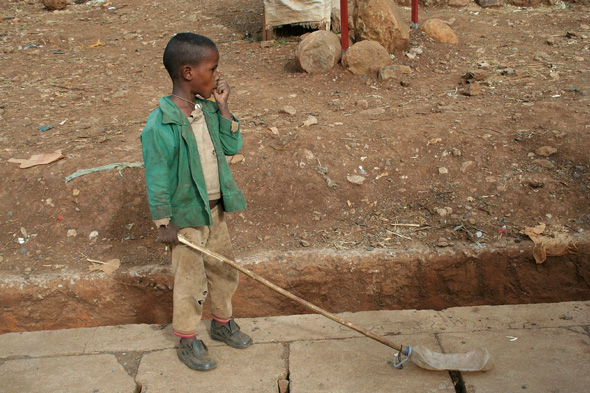
Photo Credit: “Boy on road east of Addis,” courtesy of Geoff Dabelko/Wilson Center. -
Migration and Environmental Change, Minority Land Rights and Livelihoods
›Migration and Global Environmental Change: Future Challenges and Opportunities, from the UK Government Office for Science’s Foresight Programme, looks at how environmental change, including climate change, land degradation, and the degradation of coastal and marine ecosystems, over the next 50 years will affect migration trends. The report emphasizes that migration is a complex and multi-causal phenomenon, which makes it difficult to differentiate environmental migrants as a distinct group. Nevertheless, research suggests that global environmental changes will affect the drivers of migration, particularly economic forces, such as rural wages and agricultural productivity.
Though Foresight finds that many will use migration as an adaptation strategy that improves resilience to environmental change, they also point out that some affected individuals may become “trapped” in vulnerable situations, lacking the financial capacity to respond to environmental changes, while others may be able to move but will inadvertently enter more exposed areas, particularly, at risk urban centers. For recommendations, they stress the importance of strategic, long-term urban planning, and recognition within adaptation and development policies that migration can be part of the solution.A study, released on December 5 by Minority Rights Group International, finds that minority communities in Kenya, Uganda, and South Sudan face significant challenges around access to and control of critical natural resources. The report, Land, Livelihoods, and Identities: Inter-Community Conflicts in East Africa, shows how rapid population growth, climate change, and globalization are increasing competition for land, water, and forest and mineral resources in territories traditionally occupied by minority groups. These pressures can undermine livelihoods and trigger multiple and overlapping conflicts, especially where ownership has not been formalized in law. The study also notes that women are doubly vulnerable as their access to land and resources is frequently mediated through customary law, which depends on their communities retaining control over traditional territory. Although the report makes national-level legal and policy recommendations, the authors note that some of the most effective resource management and conflict resolution strategies adapt traditional cultural practices to the current circumstances of communities. -
Three New Reports Highlight Ongoing Significance of Youth Demographics in Global Trends
›January 2, 2012 // By Elizabeth Leahy MadsenAmidst world population reaching seven billion and last year’s Arab Spring, which in some nations is continuing into this winter, it can be easy to miss emerging pieces of research that tell us something relatively objective about youth and instability. Three new studies give practitioners and policymakers a stronger foundation of evidence to highlight the challenges and opportunities facing the world’s largest generation of young people.
Results of a recent UNICEF staff survey indicate that the people responsible for the UN’s efforts targeting children and youth are seriously concerned about demographic and economic dynamics. Asked to review a list of 20 “global trends,” UNICEF staff rated “growing disparities” and “youth bulge and youth unemployment” as the most significant to children. The results, which the agency will soon publish in a paper on “The Next Generation and Global Trends,” also indicate that staff members feel that UNICEF has a strong capacity to influence the future of these trends.
UNICEF’s recent “Child Outlook” report on global trends discusses the issues highlighted in the survey. The report notes that although many countries are moving toward middle-income status, poverty rates remain stubbornly high, indicating that economic development does not benefit all equally. Income and consumption in such countries tend to be concentrated among the wealthiest households. “While many families will prosper, others are being left behind,” the report explains.
“Tensions and discouragement arising from youth unemployment, combined with higher food prices and fiscal contractions, may have contributed to increased civil unrest, protests, and political instability,” UNICEF asserts. In many developing countries, the number of young people entering the labor market far surpasses the number of available jobs. Although some youth are not working because they are enrolled in secondary or tertiary education, low rates of youth participation in the workforce often are not a matter of choice. Young people, especially those with low levels of education and from poorer families, are often unable to find secure, decent jobs. More than one-quarter of all young people with jobs worldwide live below the poverty line of $1.25 per day.
Economic Pressures on Youth in East Africa
Two other research projects – one published, one still underway – provide additional context to the combination of demographic and economic challenges that face the world’s young people. In the first, part of a recent special U.S. Institute of Peace series on South Sudan, Stephanie Schwartz and Wilson Center fellow Marc Sommers probe the expectations of and obstacles faced by youth in the newly created country.
According to the incipient government’s statistics agency, 72 percent of South Sudan’s population is younger than 30, which places it among the 20 youngest age structures in the world. Only 40 percent of youth ages 15 to 24 are literate, and nearly 80 percent of households depend on agriculture for their income. Based on interviews conducted with urban and rural youth in three areas of South Sudan, the authors find that the pressure of paying rising dowry costs is the most salient issue facing young men, while young women are treated as economic assets with no influence in their own future. The authors’ research suggests that “some young men join armed gangs, at least in part, because they believe it will help them pay dowries.”
Although many young people in South Sudan aspire to the stability of government work, the limited number of jobs and shortage of relevant skills inhibit their aspirations. With an underdeveloped private sector, few opportunities for training, and nepotistic practices in hiring, there is little work for those living in towns and urban areas beyond manual labor and selling goods. The authors recommend that education and job training be expanded, with a focus on equitable access among young people from varied geographic backgrounds.
Across the border in northern Uganda, Chris Blattman, an associate professor of political science at Yale, has been studying the social effects of the government’s youth employment program started in 2007. The program offered grants to small groups of young people for vocational training or to fund the costs of starting a new business. Although a full paper has not yet been published, preliminary findings indicate strong economic benefits of the program which in turn improve social cohesion and community participation while diminishing aggression and “disputes with authorities” among young men. If they bear out, the results may well confirm the oft-repeated policy recommendation that focusing on youth employment is critical to improving national development as well as reducing the likelihood of instability and conflict.
In the year of seven billion, we heard much about the need to invest in young people and the tremendous potential they embody, for demographic dividends as well as overall development. Yet 2011 was also a year of tremendous upheaval, much of which was driven by young people – and their older counterparts – seeking representative and democratic governance. This should serve as a reminder that youth can be a remarkable force for positive change, but in too many places – South Sudan among them – their opportunities, prospects, and contributions are constrained. As the UNICEF survey results reiterate how important this issue is to development programming, the Uganda research may be another important piece of evidence that direct investment in young people reaps tangible results not only for them, but also for society.
Elizabeth Leahy Madsen is a consultant on political demography for the Wilson Center’s Environmental Change and Security Program and senior technical advisor at Futures Group. She was previously a senior research associate at Population Action International.
Sources: Bill and Melinda Gates Institute for Population and Reproductive Health, Chris Blattman, ILO, Sommers and Schwartz (2011), South Sudan National Bureau of Statistics, UNICEF, World Bank.
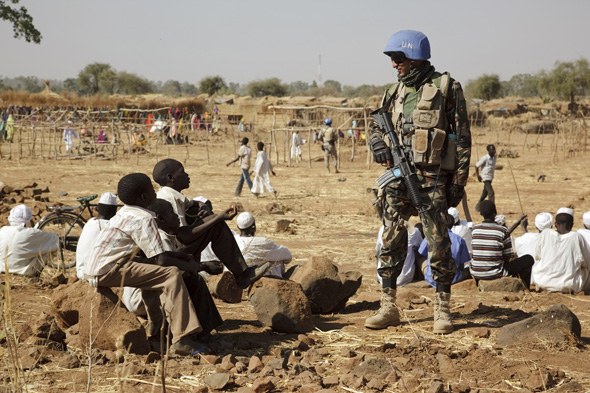
Photo Credit: “UNAMID Peacekeeper Speaks with Sudanese Youth,” courtesy of UN Photo/Albert Gonzalez Farran. -
African Women, Most Vulnerable to Climate Change, Are Agents of Change
›December 6, 2011 // By Brenda ZuluIt is the poorest people whose lives are most undermined by changes in the weather, said Chair of the Global Leaders Council for Reproductive Health Mary Robinson at a side event on “Healthy Women, Healthy Planet” during COP-17 in Durban, South Africa. “When farmers don’t know how to predict the seasons, when there is more flooding than there was, when there are longer periods of drought and then flash flooding,” she said, people need more resilience. “They have to be even stronger in being able to cope with the drought and flooding.”From Population Action International’s Weathering Change – Fatima’s Story.
“In the past, February and March were planting months, while June and July were harvest months in the first season,” explained Constance Okollet, chairperson of the Osukura United Women Network in eastern Uganda, in an interview. “The second season started in August and September as planting months, but now we don’t have any seasons anymore.”
Okollet said that since 2007, there have been floods in her area that have destroyed homes and fields and forced some to leave their homes. “I actually had to leave when the floods destroyed my house and when I went back there was nothing; and immediately after that there was a drought after planting,” she said.
“These days we gamble with agriculture, as we are not sure when to plant. What we see now is, if it is not torrential rains, then it is a storm. During the rainy season, you find a lot of winds. We never used to see them and now we have mudslides, which are occurring every year. With heavy rains it has been difficult for people to dry cassava and groundnuts. Last month, I lost two fields of groundnuts because the rain has been very heavy,” Okollet said. “In the community, we used to harvest heavily, but it is not the same anymore.”
African women are often particularly vulnerable to such environmental disruptions. Okollet pointed out that women walk long distances to look for water and feed children before they go to school. “Women always eat little and leave the rest for their children,” she said. “Children are sick and there is a lot of death in the village because of hunger and lack of food security.”
Water-borne diseases, such as cholera, erupt after floods contaminate the water, and getting health care can be difficult for women because the health center is very far away.
Okollet said that when all this was happening, she and her fellow network members thought that maybe God was punishing them. “We only knew what was happening when Oxfam talked to us about climate change,” she said.
The Osukura United Women Network has asked the Ugandan government for help supplying early-maturing crops that will adapt to the seasonal change. The group is working to sensitize their community to the importance of hygiene and sanitation as well as working with men in the community to build wells and latrines.
“We need women to be agents of change in their local communities,” said Robinson.
Brenda Zulu is a member of Women’s Edition for Population Reference Bureau and a freelance writer based in Zambia. Her reporting from the COP-17 meeting in Durban (see the “From Durban” series on New Security Beat) is part of a joint effort by the Aspen Institute, Population Action International, and the Wilson Center.
Video Credit: “Fatima’s Story – Weathering Change Extra,” courtesy of vimeo user Population Action International. -
New Population, Health, and Environment Program for Lake Victoria
›With some of Africa’s highest population densities, ethnic diversity, and biodiversity, the Great Lakes region is one of the most volatile intersections of human development and the environment. A new population, health, and environment (PHE) initiative from Pathfinder International, announced Monday at the International Conference on Family Planning in Senegal, aims to help address these issues by supporting sustainable resource management and women’s right to choose when and how often they have children.
Jointly funded by the David and Lucile Packard Foundation and the John D. and Catherine T. MacArthur Foundation, with additional support from USAID’s Office of Population and Reproductive Health, the project will focus on Ugandan and Kenyan sections of the Lake Victoria basin.
Lake Victoria is the second largest freshwater source in the world, a biodiversity hotspot, and an important regional waterway, but regional population growth among the highest in Africa and economic development have led to declining water quality, reduced fish stocks, and industrial pollution. The basin as a whole supports upwards of 35 million people.
“This new project is a welcome development for many reasons,” said ECSP Director Geoff Dabelko. “It brings the integrated PHE approach to one of the world’s greatest lakes, it enables respected health NGO Pathfinder to pursue PHE efforts, and marks the return of a leading private donor, the MacArthur Foundation, to a group of foundations willing to support this innovative approach.”
Sono Aibe, senior advisor for strategic initiatives at Pathfinder emphasized the integrated challenges facing the region. “In these remote, resource dependent areas of the world, the interconnectedness between the health of people and the health of the environment is undeniable,” she said in a press release. “When women are empowered to participate in the sustainable management of natural resources alongside men and youth, as well as have access to sexual and reproductive health care services, their lives will improve and so will the condition of the ecosystems that they depend on.”
The project’s objective, according to Pathfinder, is to reduce threats to biodiversity, conservation, and ecosystem degradation by increasing access to family planning and sexual/reproductive health services. The project plans to develop scalable approaches that can be adopted by communities, local governments, and national governments. Technical support is to be provided by the BALANCED Project, ExpandNet, and the Population Reference Bureau.
“Lessons learned from this new project will help us better develop and design projects for vulnerable communities in fragile ecosystems, while simultaneously advocating for increased government support for integrated programs throughout the Lake Victoria Basin,” said Lucy Shillingi, Pathfinder’s country representative for Uganda.
The Lake Victoria effort will build upon the experiences of other integrated PHE efforts in the region, such as Rwanda’s SPREAD Project, Uganda’s Conservation Through Public Health, and Tanzania’s TACARE and Coastal Management Partnership.
Sources: Lake Victoria Basin Commission, Pathfinder International, UNEP. -
Supply and Demand, Land and Power in the Global South
›In “Competition over Resources: Drivers of Insecurity and the Global South,” author Hannah Brock examines how an increased demand for non-renewable resources could lead to insecurity and contribute to local and international discord. The first of four papers examining what the Oxford Research Group has identified as the “most important underlying drivers of insecurity,” the paper focuses on competition over resources – specifically energy, water, and food – and argues that “a new way of approaching security is needed, one that addresses the drivers of conflict: ‘curing the disease’ rather than ‘fighting the symptoms.’” Through numerous examples, Brock illustrates the various strategies that nations are currently undertaking to satisfy demand and cautions that “where northern states and corporations buy access to southern resources, regulatory principles may be required to ensure this competition does not impair the human rights and security of local populations.”A new briefing paper from Oxfam, “Land and Power: The growing scandal surrounding the new wave of investments in land,” heavily criticizes the rising trend of foreign land acquisitions, or “land grabs,” that have occurred since the 2007-08 food prices crisis, calling them an infringement on the rights of more vulnerable populations and decrying their environmental impact. The authors use case studies in Uganda, Indonesia, Guatemala, Honduras, and South Sudan to argue that land grabbing is a type of “development in reverse.” “National governments have a duty to protect the rights and interests of local communities and land rights-holders,” Oxfam writes, “but in the cases presented here, they have failed to do so.” The authors conclude with recommendations to improve transparency and shift power more towards local rights. -
Book Review: ‘Plundered Nations? Successes and Failures in Natural Resource Extraction’
›The principal argument of Plundered Nations? Successes and Failures in Natural Resource Extraction is highlighted by the question mark in the title. In many resource rich countries, natural assets have not led to development. The book advances the hypothesis that “for the depletion of natural assets to be converted into sustained development, a series of decisions has got to be got sufficiently right” (p. 1). That series of decisions is examined in detail through case studies on Cameroon, Chile, Iran, Kazakhstan, Malaysia, Nigeria, Russia, and Zambia, produced by a diverse group of academic and practicing economists under the auspices of the Center for the Study of African Economies and the Oxford Center for the Economics of Resource Rich Countries (OxCarre).
Showing posts from category Uganda.