• woodrow wilson center
  • ecsp

New Security Beat

Subscribe:
  • rss
  • mail-to
  • Who We Are
  • Topics
    • Population
    • Environment
    • Security
    • Health
    • Development
  • Columns
    • China Environment Forum
    • Choke Point
    • Dot-Mom
    • Friday Podcasts
    • Navigating the Poles
    • Reading Radar
  • Multimedia
    • Water Stories (Podcast Series)
    • Backdraft (Podcast Series)
    • Tracking the Energy Titans (Interactive)
  • Films
    • Water, Conflict, and Peacebuilding (Animated Short)
    • Paving the Way (Ethiopia)
    • Broken Landscape (India)
    • Scaling the Mountain (Nepal)
    • Healthy People, Healthy Environment (Tanzania)
  • Publications
  • Events
  • Contact Us

NewSecurityBeat

The blog of the Wilson Center's Environmental Change and Security Program
Showing posts from category Uganda.
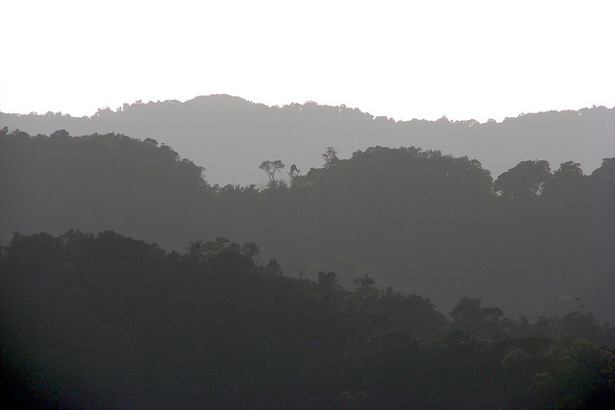
  • In Uganda, Integrating Population, Health, and Environment to Meet Development Goals

    ›
    Beat on the Ground  //  Guest Contributor  //  March 13, 2013  //  By Gladys Kalema-Zikusoka

    Fifty years after independence, Uganda has one of the highest population growth rates in the world at 3.3 percent – a rate which puts the country on track to nearly double in population over the next two decades. More than 50 percent of the population is under the age of 18. This large youth cohort will ensure that the country continues to grow for decades to come, even if couples choose – and are able – to have smaller families. And according to the State of Uganda Population Report 2011, “with more than one million people added to the population every year, the quality of [health] service delivery will suffer.”

    MORE
  • Avoiding the Resource Curse in East Africa’s Oil and Natural Gas Boom

    ›
    Guest Contributor  //  February 14, 2013  //  By Jill Shankleman

    This year, Texas-based Anadarko and Italian partner ENI are due to make the final investment decision on whether to construct one of the largest liquefied natural gas facilities in the world in Mozambique. The complex would allow them to tap into deep off-shore gas fields that could rival Australia and Qatar as the largest liquefied natural gas reserves in the world.

    MORE
  • Rachel Yavinsky, Behind the Numbers

    Energy-Saving Stoves and Family Planning Benefit Women and Families in Rural Uganda

    ›
    January 23, 2013  //  By Wilson Center Staff

    The original version of this article, by Rachel Yavinsky, appeared on the Population Reference Bureau’s Behind the Numbers blog.

    After 45 minutes on Lake Victoria in a wooden fishing boat, my PRB colleague and I arrived on Busi Island, one of the Ugandan sites of the HOPE-LVB (Health of People and the Environment – Lake Victoria Basin) project. PRB, who partners on this project, came to Busi Island to see HOPE-LVB in action.

    MORE
  • Stronger Evidence Base Needed to Demonstrate Added Value of PHE

    ›
    Guest Contributor  //  January 9, 2013  //  By Laurel Hamilton

    This miniseries focuses on the monitoring and evaluation of PHE projects in Ethiopia.

    It is well known that public health issues that affect the world’s most vulnerable populations – food insecurity, maternal and child health, water- and sanitation-related disease, and resource scarcity – are inextricably linked. Where these linkages are strongest, experience on the ground has shown that community-based integrated approaches to development provide more effective and sustainable solutions over vertical, sector-based programs. But so far, there are very few comprehensive evaluations providing strong quantitative evidence of this advantage.

    MORE
  • Beyond Carbon Credits: TIST Combines Reforestation, Health, and Livelihood Efforts

    ›
    Beat on the Ground  //  December 17, 2012  //  By Carolyn Lamere

    Carbon offsets have fallen in and out of favor since they were established with the Kyoto Protocol in 1997. Critics say they allow wealthy organizations to placate consumers and claim their products are “green” without making any real, lasting changes. But, if the scheme works properly, some action is supposed to be taken somewhere, so what is it like at one of these credit-producing organizations?

    MORE
  • Regulating the Resource Curse: U.S. Adopts International Transparency Rules for Oil Industry

    ›
    Guest Contributor  //  September 10, 2012  //  By Jeff Colgan

    The original version of this article appeared on Foreign Policy.

    It’s not often that a change in accounting rules could reduce the probability of war. But that’s exactly what happened at the U.S. Securities and Exchange Commission (SEC) last month.

    MORE
  • Nile Basin at a Turning Point as Political Changes Roil Balance of Power and Competing Demands Proliferate

    ›
    September 4, 2012  //  By Carolyn Lamere

    In 1979, Egyptian President Anwar Sadat famously said that “the only matter that could take Egypt to war again is water.” Sadat’s message was clear: the Nile is a matter of national security for Egypt.

    Indeed, Egypt relies on the Nile for 95 percent of its water. But it is not the only state with an interest in the world’s longest river. There are 11 states in the Nile River basin, which stretches from Africa’s Great Lakes region – Tanzania, Uganda, Kenya, Rwanda, Burundi, and the Democratic Republic of the Congo – to the Ethiopian and Eritrean highlands through South Sudan, Sudan, and Egypt to the Mediterranean Sea.

    MORE
  • UNHCR Report on East African Environmental Migrants: Long on Anecdotes, Short on Data

    ›
    July 6, 2012  //  By Graham Norwood
    As part of the recently-concluded Rio+20 Conference on Sustainable Development, the UN High Commissioner for Refugees (UNHCR) presented a new report last week, titled Climate Change, Vulnerability, and Human Mobility: Perspectives of Refugees From the East and Horn of Africa. The report was created in order to “understand the extent to which refugees and IDPs (internally displaced persons) in the East and Horn of Africa have perceived, experienced, and responded to climatic events and trends in recent years.”

    In order to achieve this goal, UNHCR and its collaborators (including the United Nations University Institute for Environment and Human Security, the London School of Economics, and the University of Bonn) interviewed approximately 150 refugees and IDPs in parts of Ethiopia and Uganda.

    While the narrative is more anecdotal than data-driven, it nevertheless identifies several apparent trends in climate-related migration:
    Overwhelmingly, stories of mobility associated with moving away from worsening impacts associated with climate variability followed a specific pattern. That is, where movement related to climatic stressors did occur, such movement was taken as a last resort (only after all efforts to remain and adopt other methods of adaptation had been exhausted), particularly where the land being left was self-owned and only after all efforts to remain and try a number of alternative forms of adaptation had failed. Where movement occurred, in most cases it was likely to be internal, circular, and temporary rather than cross-border and permanent.
    Stories of international migration were rare, and generally occurred either because migrants already lived near a border and were familiar with the area, or because they had encountered violent conflict (often of a political nature) during an earlier intra-state relocation.

    The report also mentions that a majority of those interviewed claimed to have noticed significant changes in weather patterns over a 10- to 15-year period. In fact, many interviewees frequently claimed to be able to distinguish “normal” climate variability from more “permanent” changes.

    Significantly, Climate Change, Vulnerability, and Human Mobility highlights several ongoing sources of debate and controversy regarding the issue of climate-induced migration as well.

    The links between climate change, migration, and violent conflict are not well understood. And the question of whether climate change precipitates conflict or merely exacerbates it is still unresolved, though research on the subject is ongoing.

    The terminology used to describe climate migrants remains a hotly-contested issue as well. While terms like “environmental refugee” and the especially popular “climate refugee” can make for good headlines, the UNHCR report strongly disapproves of such terms, given that the word “refugee” has a very specific legal definition.

    Indeed, there is still much debate over how to classify climate migrants. It has been pointed out, for instance, that it is virtually impossible to separate out the various factors that induce migration, and questions as to whether migration is forced or voluntary also persist. For the most part, the UNHCR report shies away from such contentious questions, aiming instead to present a general and “human” narrative designed to call attention to the plight of climate migrants.

    Definitional debates aside, the issue of climate-induced migration has been in headlines recently. The Asian Development Bank reported in March that 42 million people were displaced in the region during the last two years due to storms, floods, and other extreme weather events. And Israel signaled a tougher stance on immigration by deporting South Sudanese refugees in the wake of a major Israeli Ministry of Environmental Protection report warning of future climate-induced migration.

    The particular vulnerability of women too is drawing increased interest. An article in Environmental Research Letters points out that “women tend to be poorer, less educated, have a lower health status, and have limited direct access to or ownership of natural resources,” and will therefore be disproportionately affected by climate change. Gender disparities must be accounted for in policymaking then, to ensure that future climate migration policies are equitable and inclusive, the author, Namrata Chindarkar, argues.

    The challenges of defining and measuring the phenomenon remain – the UN Environment Program’s 2006 prediction of 50 million climate migrants by 2010 has not come true, and has even been a source of some embarrassment for the organization – but the recent UNHCR report is a timely reminder that climate-induced migration remains a major issue with tremendous long-term implications.

    Sources: Asian Development Bank, Environmental Research Letters, Human Rights Education Association (HREA), The Jerusalem Post, The New Republic, National Geographic, OECD, Scientific American, Der Spiegel, UNHCR, The Washington Post.

    Photo Credit: Displaced Somalis, courtesy of UNHCR.
    MORE
Newer Posts   Older Posts
View full site

Join the Conversation

  • RSS
  • subscribe
  • facebook
  • G+
  • twitter
  • iTunes
  • podomatic
  • youtube
Tweets by NewSecurityBeat

Trending Stories

  • unfccclogo1
  • Pop at COP: Population and Family Planning at the UN Climate Negotiations

Featured Media

Backdraft Podcast

play Backdraft
Podcasts

More »

What You're Saying

  • Volunteers,At,The,Lagos,Food,Bank,Initiative,Outreach,To,Ikotun, Pan-African Response to COVID-19: New Forms of Environmental Peacebuilding Emerge
    Rashida Salifu: Great piece 👍🏾 Africa as a continent has suffered this unfortunate pandemic.But it has also...
  • A desert road near Kuqa An Unholy Trinity: Xinjiang’s Unhealthy Relationship With Coal, Water, and the Quest for Development
    Ismail: It is more historically accurate to refer to Xinjiang as East Turkistan.
  • shutterstock_1779654803 Leverage COVID-19 Data Collection Networks for Environmental Peacebuilding
    Carsten Pran: Thanks for reading! It will be interesting to see how society adapts to droves of new information in...

What We’re Reading

  • Rising rates of food instability in Latin America threaten women and Venezuelan migrants
  • Treetop sensors help Indonesia eavesdrop on forests to cut logging
  • 'Seat at the table': Women's land rights seen as key to climate fight
  • A Surprise in Africa: Air Pollution Falls as Economies Rise
  • Himalayan glacier disaster highlights climate change risks
More »
  • woodrow
  • ecsp
  • RSS Feed
  • YouTube
  • Twitter
  • Facebook
  • Home
  • Who We Are
  • Publications
  • Events
  • Wilson Center
  • Contact Us
  • Print Friendly Page

© Copyright 2007-2021. Environmental Change and Security Program.

Woodrow Wilson International Center for Scholars. All rights reserved.

Developed by Vico Rock Media

Environmental Change and Security Program

Woodrow Wilson International Center for Scholars

Ronald Reagan Building and International Trade Center

  • One Woodrow Wilson Plaza
  • 1300 Pennsylvania Ave., NW
  • Washington, DC 20004-3027

T 202-691-4000