• woodrow wilson center
  • ecsp

New Security Beat

Subscribe:
  • rss
  • mail-to
  • Who We Are
  • Topics
    • Population
    • Environment
    • Security
    • Health
    • Development
  • Columns
    • China Environment Forum
    • Choke Point
    • Dot-Mom
    • Friday Podcasts
    • Navigating the Poles
    • Reading Radar
  • Multimedia
    • Water Stories (Podcast Series)
    • Backdraft (Podcast Series)
    • Tracking the Energy Titans (Interactive)
  • Films
    • Water, Conflict, and Peacebuilding (Animated Short)
    • Paving the Way (Ethiopia)
    • Broken Landscape (India)
    • Scaling the Mountain (Nepal)
    • Healthy People, Healthy Environment (Tanzania)
  • Publications
  • Events
  • Contact Us

NewSecurityBeat

The blog of the Wilson Center's Environmental Change and Security Program
Showing posts from category U.S..
  • Clearing the Air: Is Natural Gas a Game Changer for Coal in China?

    ›
    China Environment Forum  //  January 15, 2015  //  By Luan "Jonathan" Dong
    gas-terminal-China

    On the heels of a landmark U.S.-China climate agreement, 2015 will be a critical year for China’s environmental and energy policy. A revised and much stricter Environmental Protection Law went into force on January 1; new amendments to the Air Pollution Law are likely to be put in place; and the National Development and Reform Commission will draft a new five-year plan.

    MORE
  • Reporting on the Spaces Between: How to Cover Climate, Population, and Health Connections

    ›
    From the Wilson Center  //  January 13, 2015  //  By Kathleen Mogelgaard
    NYTimes-building

    In his 2007 best-seller, The World Without Us, Alan Weisman explored what would happen to the planet if the human race suddenly vanished – the gradual deterioration of the built environment, the geologic fossilization of our everyday stuff, and the ecological processes that would rebound and thrive without continual and growing human pressure. [Video Below]

    MORE
  • Low Oil Prices Could Shake up Africa’s Petro States

    ›
    Guest Contributor  //  January 12, 2015  //  By Jill Shankleman
    UNAMID

    One in five African states produce hydrocarbons, and most of these are heavily dependent on oil and gas revenues to finance their governments and generate foreign exchange. Further, an emerging group of East African states are waiting on international oil companies to develop new oil and gas reserves. But Africa’s record using non-renewable oil and gas resources to trigger economic and social development is poor – and plummeting prices may portend more instability to come.

    MORE
  • Living Through Extremes: Livelihood Systems Key to Effective, Empowering Resilience Measures

    ›
    From the Wilson Center  //  January 7, 2015  //  By Sarah Meyerhoff
    Living Through Extremes

    As climate change upends established patterns of life, resilience – the ability of social and ecological systems to mitigate, endure, and adapt to short-term shocks and long-term stressors – has become a buzzword in development and humanitarian circles. [Video Below]

    MORE
  • Mobile Tech Drives Faster Data Collection for Family Planning Indicators With PMA2020

    ›
    December 22, 2014  //  By Elizabeth Leahy Madsen
    PMA2020_Kenya

    In an effort to revamp the time-intensive process of conducting household surveys to collect health data in developing countries, a new project is using mobile phones and rapid processing techniques to generate regular updates for a tranche of indicators previously only adjusted every three to five years.

    MORE
  • Two Decades Trying to Solve China’s Environmental Problems: An Interview With WWF’s Tao Hu

    ›
    China Environment Forum  //  December 18, 2014  //  By Susan Chan Shifflett
    Beijing-air-pollution

    Despite some critics, the recent U.S.-China agreement over carbon emissions has sparked remarkable optimism in global climate negotiations. It’s also opened the door to new bilateral engagement between the U.S. and Chinese environmental communities on other issues, including China’s massive air pollution problems (16 of the world’s 20 most polluted cities are in China).

    MORE
  • Fossil Fuel Boom Rewiring North America’s Energy Infrastructure

    ›
    Choke Point  //  December 15, 2014  //  By Brett Walton
    MackinacBridge_cJGanter
    “Global Choke Point,” a collaboration between Circle of Blue and the Wilson Center, explores the peril and promise of the water-food-energy nexus with frontline reporting, data, and policy expertise.

    Until two years ago, when the National Wildlife Federation pointed out their presence, the 61-year-old steel oil pipelines running beneath the fast-flowing Mackinac Straits between Lake Michigan and Lake Huron were like nearly every other piece of North America’s energy transport network: out of sight and out of mind.

    MORE
  • Pakistan’s Most Recent Demographic and Health Survey Reveals Slow Progress

    ›
    December 10, 2014  //  By Richard Cincotta
    Lahore-old-city

    A quick scan through the charts and graphs of Pakistan’s most recent Demographic and Health Survey yields more than a few insights into the performance of the government’s health policies and the public health and demographic challenges it will face in the future.

    MORE
Newer Posts   Older Posts
View full site

Join the Conversation

  • RSS
  • subscribe
  • facebook
  • G+
  • twitter
  • iTunes
  • podomatic
  • youtube
Tweets by NewSecurityBeat

Trending Stories

  • unfccclogo1
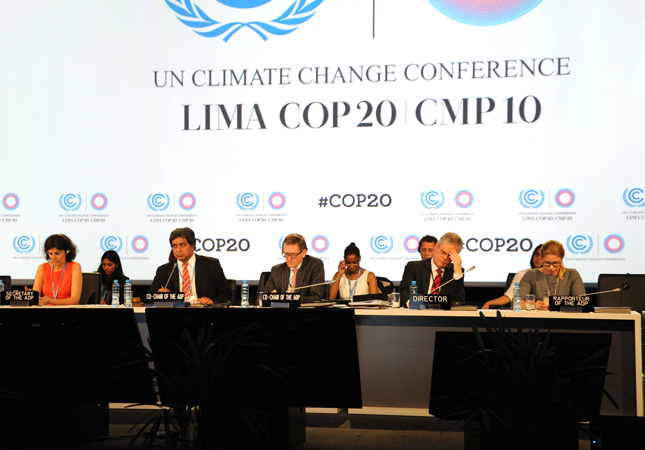
  • Pop at COP: Population and Family Planning at the UN Climate Negotiations

Featured Media

Backdraft Podcast

play Backdraft
Podcasts

More »

What You're Saying

  • Volunteers,At,The,Lagos,Food,Bank,Initiative,Outreach,To,Ikotun, Pan-African Response to COVID-19: New Forms of Environmental Peacebuilding Emerge
    Rashida Salifu: Great piece 👍🏾 Africa as a continent has suffered this unfortunate pandemic.But it has also...
  • A desert road near Kuqa An Unholy Trinity: Xinjiang’s Unhealthy Relationship With Coal, Water, and the Quest for Development
    Ismail: It is more historically accurate to refer to Xinjiang as East Turkistan.
  • shutterstock_1779654803 Leverage COVID-19 Data Collection Networks for Environmental Peacebuilding
    Carsten Pran: Thanks for reading! It will be interesting to see how society adapts to droves of new information in...

What We’re Reading

  • Rising rates of food instability in Latin America threaten women and Venezuelan migrants
  • Treetop sensors help Indonesia eavesdrop on forests to cut logging
  • 'Seat at the table': Women's land rights seen as key to climate fight
  • A Surprise in Africa: Air Pollution Falls as Economies Rise
  • Himalayan glacier disaster highlights climate change risks
More »
  • woodrow
  • ecsp
  • RSS Feed
  • YouTube
  • Twitter
  • Facebook
  • Home
  • Who We Are
  • Publications
  • Events
  • Wilson Center
  • Contact Us
  • Print Friendly Page

© Copyright 2007-2021. Environmental Change and Security Program.

Woodrow Wilson International Center for Scholars. All rights reserved.

Developed by Vico Rock Media

Environmental Change and Security Program

Woodrow Wilson International Center for Scholars

Ronald Reagan Building and International Trade Center

  • One Woodrow Wilson Plaza
  • 1300 Pennsylvania Ave., NW
  • Washington, DC 20004-3027

T 202-691-4000