• woodrow wilson center
  • ecsp

New Security Beat

Subscribe:
  • rss
  • mail-to
  • Who We Are
  • Topics
    • Population
    • Environment
    • Security
    • Health
    • Development
  • Columns
    • China Environment Forum
    • Choke Point
    • Dot-Mom
    • Friday Podcasts
    • Navigating the Poles
    • Reading Radar
  • Multimedia
    • Water Stories (Podcast Series)
    • Backdraft (Podcast Series)
    • Tracking the Energy Titans (Interactive)
  • Films
    • Water, Conflict, and Peacebuilding (Animated Short)
    • Paving the Way (Ethiopia)
    • Broken Landscape (India)
    • Scaling the Mountain (Nepal)
    • Healthy People, Healthy Environment (Tanzania)
  • Publications
  • Events
  • Contact Us

NewSecurityBeat

The blog of the Wilson Center's Environmental Change and Security Program
Showing posts from category U.S..
  • Breaking Out of the Dome: Can Energy Efficiency Help Chinese Cities Conquer Air Pollution?

    ›
    China Environment Forum  //  February 2, 2016  //  By Qinnan Zhou
    Huzhou-Power-Plants

    In December 2015, Beijing issued its first-ever “red alert” for smog, its highest air pollution warning, which closed schools and restricted the number of cars on the road. Less than two weeks later, it issued its second.

    MORE
  • Adapting to Climate Change in Cities May Require a Major Rethink

    ›
    Guest Contributor  //  February 1, 2016  //  By Linda Shi
    manila-flooding

    Around the world, urbanization and climate change are transforming societies and environments, and the stakes could not be higher for the poor and marginalized. The 2015 UN climate conference in Paris (COP-21) highlighted the need for coordinated action to address the profound injustice of the world’s most disadvantaged people bearing the greatest costs of climate impacts. Among those at the COP were mayors from around the world advocating for the important role of cities in these efforts.

    MORE
  • The U.S. Intelligence Community’s Assessment on Food Security, Famine and Migration in the Sahel

    ›
    Reading Radar  //  January 26, 2016  //  By Gracie Cook

    DNIThis fall, the National Intelligence Council released an intelligence community assessment of the extent to which factors such as climate change, severe weather, conflict, resource scarcity, disease, poor governance, and environmental degradation will impact peoples’ purchasing power and food availability over the next decade. They found “the overall risk of food insecurity in many countries of strategic importance to the United States will increase.”

    MORE
  • Kenneth Weiss, Worldwatch Institute

    Environmental Researchers and the Touchy Topics of Family Planning and Population

    ›
    January 20, 2016  //  By Wilson Center Staff
    pearl-farming-Australia

    The original version of this article, by Kenneth Weiss, appeared on the Worldwatch Institute’s Family Planning and Environmental Sustainability Assessment (FPESA) blog.

    As a young and promising marine biologist, Camilo Mora led a team of 55 scientists assessing the rapid decline of fish on the world’s coral reefs. It was a global enterprise with broad implications. Hundreds of millions of people rely on reef fish for their primary source of animal protein. Healthy reefs protect coastal communities from devastating storms and provide a multitude of livelihoods, including jobs in the fast-growing tourism industry.

    MORE
  • An Empty Table? Food-Climate-Conflict Connections in Paris

    ›
    January 15, 2016  //  By Roger-Mark De Souza & Meaghan Parker
    Mali

    “Wilson Perspectives: The Paris Climate Agreement” is a series of short essays exploring the key issues that emerged during the 21st Conference of Parties that originally appeared on WilsonCenter.org.

    Security, terrorism, conflict, and peace: you won’t find any of these words in the landmark agreement released on December 12 at the 2015 Paris Climate Conference (COP-21). It’s never been front-and-center on the agenda at previous Conference of Parties, from Copenhagen to Cancun. But in Paris, a city reeling from terrorist attacks, the specter of climate-related conflict haunted delegates and the potential of a climate-resilient peace inspired grassroots protests.

    MORE
  • Mogelgaard, McGray, Amerasinghe, World Resources Institute

    What Does the Paris Agreement Mean for Climate Resilience and Adaptation?

    ›
    January 14, 2016  //  By Wilson Center Staff
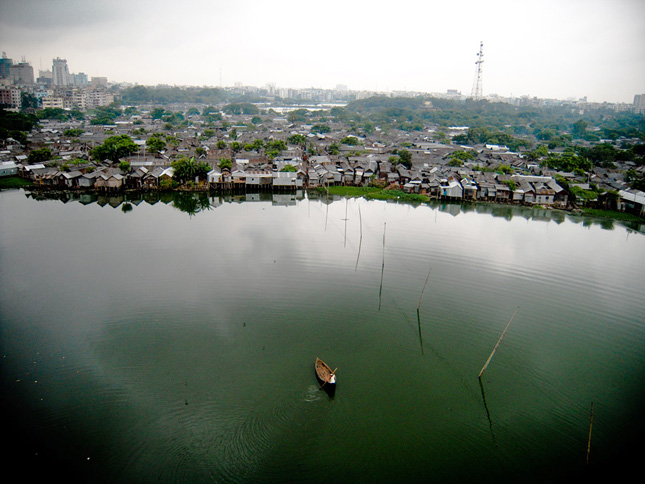
    Dhaka Bangladesh

    The original version of this article, by Kathleen Mogelgaard, Heather McGray, and Niranjali Manel Amerasinghe, appeared on the World Resources Institute.

    Climate change impacts, such as severe drought, sea-level rise, and shifting seasonal patterns, will affect people everywhere. So it’s fitting that the new Paris Agreement places unprecedented importance on actions needed – both nationally and globally – to help people adapt, and solidifies expectations that all countries will do their part to promote greater climate resilience. It also recognizes that even the greatest resilience may not completely prevent harm to life and property, and that the global community must find ways to address “loss and damage” in cases where impacts are beyond the limits of adaptation.

    MORE
  • The Climate Community Turns to Pragmatism, Mostly

    ›
    January 14, 2016  //  By Ruth Greenspan Bell
    COP-21-celebration

    “Wilson Perspectives: The Paris Climate Agreement” is a series of short essays exploring the key issues that emerged during the 21st Conference of Parties that originally appeared on WilsonCenter.org.

    The good news out of Paris is that the world is finally getting serious about reducing greenhouse gas emissions. Here are a few reasons to cheer and one quibble.

    MORE
  • Fire and Oil: The Collateral Environmental Damage of Airstrikes on ISIS Oil Facilities

    ›
    Guest Contributor  //  January 13, 2016  //  By Wim Zwijnenburg & Annica Waleij

    As the United States, Russia, and others step up attacks on the self-proclaimed Islamic State in Iraq and Syria (ISIS), there is concern over their direct and long-term environmental and public health impacts. Many air strikes have targeted lucrative oil installations under the control of ISIS, and these could have severe detrimental effects for Syria’s future, both environmentally and socio-economically. Questions around the effectiveness of these strikes, both from a military and political perspective, seem to be missing in the wider debate.

    MORE
Newer Posts   Older Posts
View full site

Join the Conversation

  • RSS
  • subscribe
  • facebook
  • G+
  • twitter
  • iTunes
  • podomatic
  • youtube
Tweets by NewSecurityBeat

Trending Stories

  • unfccclogo1
  • Pop at COP: Population and Family Planning at the UN Climate Negotiations

Featured Media

Backdraft Podcast

play Backdraft
Podcasts

More »

What You're Saying

  • Volunteers,At,The,Lagos,Food,Bank,Initiative,Outreach,To,Ikotun, Pan-African Response to COVID-19: New Forms of Environmental Peacebuilding Emerge
    Rashida Salifu: Great piece 👍🏾 Africa as a continent has suffered this unfortunate pandemic.But it has also...
  • A desert road near Kuqa An Unholy Trinity: Xinjiang’s Unhealthy Relationship With Coal, Water, and the Quest for Development
    Ismail: It is more historically accurate to refer to Xinjiang as East Turkistan.
  • shutterstock_1779654803 Leverage COVID-19 Data Collection Networks for Environmental Peacebuilding
    Carsten Pran: Thanks for reading! It will be interesting to see how society adapts to droves of new information in...

What We’re Reading

  • Rising rates of food instability in Latin America threaten women and Venezuelan migrants
  • Treetop sensors help Indonesia eavesdrop on forests to cut logging
  • 'Seat at the table': Women's land rights seen as key to climate fight
  • A Surprise in Africa: Air Pollution Falls as Economies Rise
  • Himalayan glacier disaster highlights climate change risks
More »
  • woodrow
  • ecsp
  • RSS Feed
  • YouTube
  • Twitter
  • Facebook
  • Home
  • Who We Are
  • Publications
  • Events
  • Wilson Center
  • Contact Us
  • Print Friendly Page

© Copyright 2007-2021. Environmental Change and Security Program.

Woodrow Wilson International Center for Scholars. All rights reserved.

Developed by Vico Rock Media

Environmental Change and Security Program

Woodrow Wilson International Center for Scholars

Ronald Reagan Building and International Trade Center

  • One Woodrow Wilson Plaza
  • 1300 Pennsylvania Ave., NW
  • Washington, DC 20004-3027

T 202-691-4000