-
Harnessing the Demographic Dividend: PRB’s ENGAGE Presentations Look to Empower, Educate
›The demographic dividend – the idea that a decline from high to low rates of population growth can lead to dramatic economic gains – has become something of a buzzword in development circles. Sub-Saharan Africa holds the single largest block of remaining high fertility countries and while headlines tend towards the dramatic about demographic shifts there, less column space has been devoted to examining the underlying issues causing these shifts or the other changes that will be necessary for countries to benefit from them.
-
Why Has the Demographic Transition Stalled in Sub-Saharan Africa?
›August 7, 2013 // By Elizabeth Leahy Madsen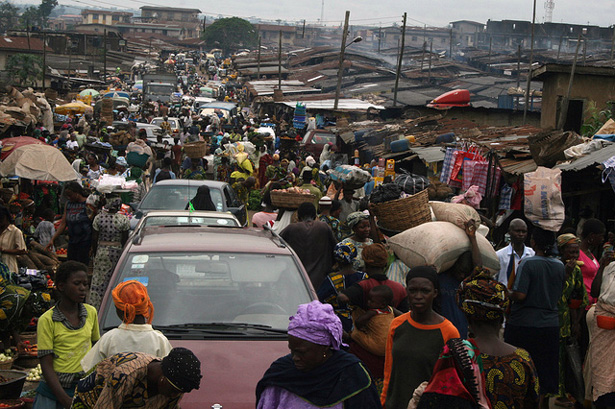
In a recent post on the new United Nations population projections, I discussed the risk in assuming that countries in sub-Saharan Africa will progress through the demographic transition at a pace similar to other regions. Making this assumption is questionable because fertility decline in Africa has generally proceeded more slowly than in other parts of the world, with several cases of “stalls” and even small fertility increases over time.
-
The Farmer’s Dilemma: Climate Change, Food Security, and Human Mobility
›
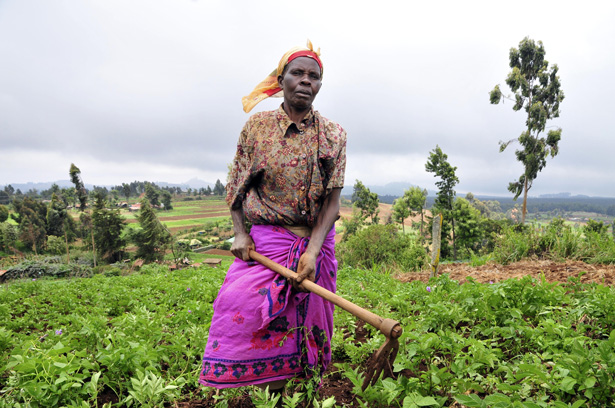
“Most of the world’s poor are farmers; they share the same profession and the same challenges,” said One Acre Fund’s Stephanie Hanson at a recent Wilson Center event on small-scale farming, climate change, food security, and migration. They are tasked with growing enough food to support their families with only tenuous access to land and natural resources, the most basic of tools, and increasingly unpredictable weather patterns to deal with. [Video Below]
-
What Does It Take to Cooperate? Transboundary Water Management Around the World
›Water is the foundation of human society and will become even more critical as population growth, development, and climate change put pressure on already-shrinking water resources in the years ahead. But will this scarcity fuel conflict between countries with shared waters, as some have predicted, or will it create more impetus for cooperation?
-
Wilson Center Premieres ‘Healthy People, Healthy Environment’ and ‘Transcending Boundaries’ at Environmental Film Festival
›Environmental security and international development aren’t typical movie-going fare, but at the 2013 DC Environmental Film Festival, ECSP premiered two short documentaries with unique environmental stories: Healthy People, Healthy Environment: Integrated Development in Tanzania shows how improving health services and environmental conservation can empower coastal communities in Africa; and Transcending Boundaries: Perspectives from the Central Albertine Rift Transfrontier Protected Area Network explores the opportunities for “peace parks” along the shared borders of Uganda, Rwanda, and the Democratic Republic of Congo.
-
Linking Governance and Positive Maternal Health Outcomes in Africa
›Sub-Saharan Africa is perhaps the riskiest place for a woman to give birth. According to the United Nations Population Fund (UNFPA), African women comprise approximately 56 percent of the maternal deaths and 91 percent of HIV-related maternal deaths worldwide every year. In order to bring life into this world, women in Africa literally must put their own lives on the line.
-
Population and Environment in Saadani National Park, and Repositioning Family Planning in Sub-Saharan Africa
›Tanzania’s Saadani National Park is a hotbed of biodiversity and, like other national parks in the region, it’s surrounded by human activity. A report by the BALANCED Project, “Population, Health, Environment Situational Analysis for the Saadani National Park Area, Tanzania,” provides a snapshot of the population, health, and environment situation inside the park to serve as a baseline for future activities of the Tanzania Coastal Management Partnership (TCMP) – a joint initiative of the government of Tanzania, USAID, and the University of Rhode Island’s Coastal Resources Center. A behavioral monitoring system implemented in June 2009 used surveys that reached a total of 437 respondents (54 percent women) from eight villages to analyze the “behaviors that positively and negatively influence the utilization and condition of natural resources.” The surveys found that arable land is scarce, fisheries are being depleted, and people have inadequate access to healthcare, water, sanitation, fuel, and family planning resources. The results suggest a strong case for expanding TCMP’s existing integrated approach – combining HIV/AIDS, conservation, and livelihoods goals – to include promotion of positive behavior changes, particularly as they relate to family planning and the effects of population growth on biodiversity loss and resource depletion.
-
Africa on the Move: The Role of Political Will and Commitment in Improving Access to Family Planning
›Excerpted below is the adapted abstract, by lead authors Eliya Msiyaphazi Zulu and Violet Murunga. The full report is available for download from the Wilson Center’s Africa Program.
Despite commitments to the program of action for the 1994 International Conference on Population and Development and Millennium Development Goal 5 (focused on maternal and reproductive health), little progress has been made in improving access to family planning and slowing rapid population growth in Africa. Lack of political will has been highlighted among the key factors behind the lackluster performance in addressing these sensitive development issues. However, the situation is changing with some African governments embracing family planning as a key tool for improving child and maternal health, slowing population growth, preserving the environment, and enhancing broader efforts to alleviate poverty.
This study examines factors that have propelled the change in attitudes of some political leaders to champion family planning, assesses how such political will has manifested in different contexts, and explores how political will affects the policy and program environment. Mixed policy analysis methods were employed, including desk review of policy and program documents and stakeholder interviews conducted in Ethiopia, Malawi, and Rwanda – three countries that have made phenomenal progress in increasing contraceptive use in the recent past.
Lessons from this study will help galvanize efforts to improve access to reproductive health services in countries where little progress is being made. The results provide useful insights on the dawn of a new Africa where strategic political leadership is playing an increasingly valuable role in overcoming the continent’s longstanding development shackles. The study shows that political will is mainly changing due to increased availability of evidence showing that high population growth undermines efforts to alleviate poverty and hunger as well as investments in the quality human capital that least development countries desperately need in order to transform their economies.
The high sensitivity about childbearing and suspicions regarding the intentions of western development partners in promoting family planning in order to slow population growth are dissipating as more Africans are opting to have fewer children and demanding family planning. This study points to the need for global development partners to be much more cognizant of the drivers of Africa’s emerging success and focus their development assistance on enhancing, nurturing, and highlighting local leadership traits, capacities, and systems that are producing positive results, as well as support governments that have embraced family planning to ensure that no woman has an unwanted pregnancy due to lack of family planning.
Download the full report from the Wilson Center.
Showing posts from category Rwanda.