-
Pope Francis’ Encyclical Calls for Integrated Development – Just Don’t Say “Reproductive Health”
›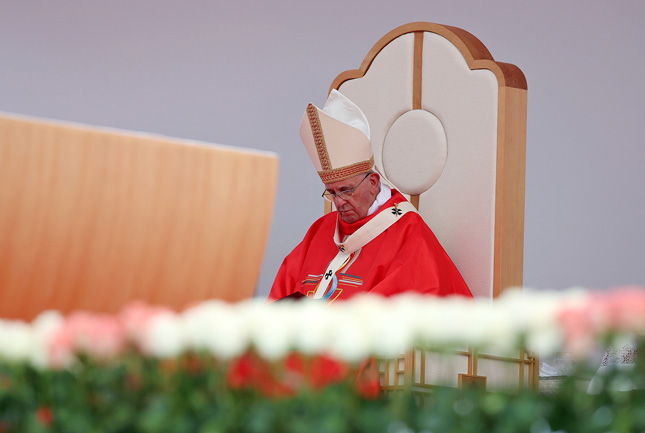
Pope Francis sparked worldwide discussion and jubilation among many green advocates after releasing Laudato Si, the first Papal encyclical to focus directly on the environment. The pontiff touched on everything from pollution and sustainable development, to anthropogenic climate change and water security in his 180-page missive.
-
Adapting to Global Change: Climate Displacement, Mega-Disasters, and the Next Generation of Leaders
›
The world is more connected than ever before, but also more complex. Big, transnational trends like climate change, urbanization, and migration are changing the calculus of geopolitics, while local-level inequalities persist. “[Change] seems to be spinning around us so fast,” said John Hempelmann, president of the Henry M. Jackson Foundation, which honors the legacy of the late senator from Washington State. How can today’s and tomorrow’s leaders adjust to global trends? [Video Below]
-
Cooperation Is Not Enough: Why We Need to Think Differently About Water
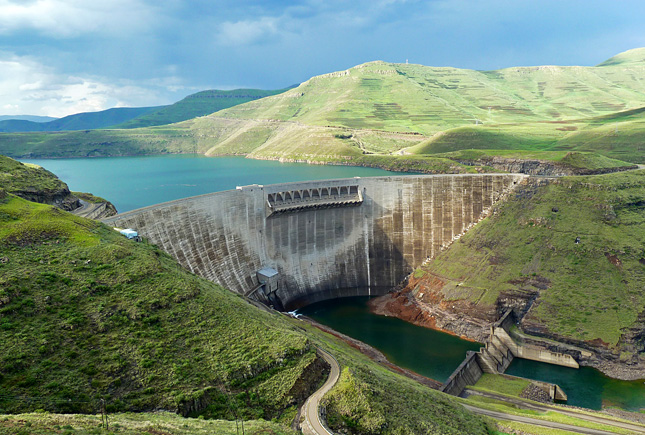
›In 2003, the United Nations General Assembly declared 2005 to 2015 to be the decade of “water for life” as a way to encourage countries to reach their water-related targets under the Millennium Development Goals. In summing up the last 10 years, it was noted that water cooperation had been promoted widely, featuring at international fora and in government initiatives and development agendas. Water cooperation is described as having the potential to enable peace and sustainable development. However, just as focusing on “water wars” might undermine the everyday challenges of securing safe and adequate supplies of water, focusing only on “more cooperation” may well simplify the problem at hand.
-
3 Facets to Relief and Recovery After Nepal’s Earthquake
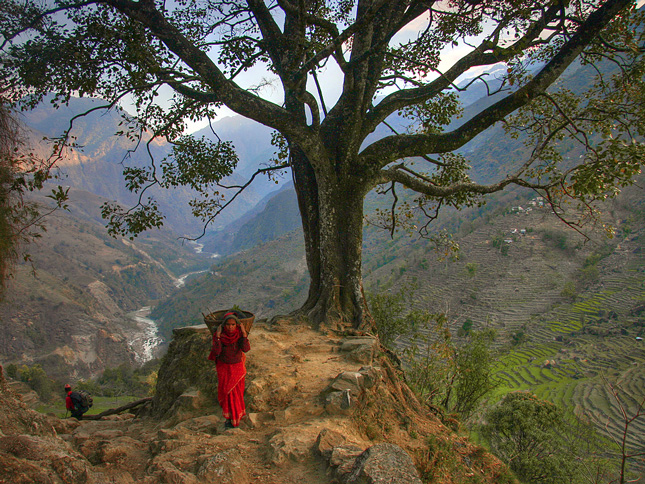
›Nepal’s devastating earthquake last Saturday was both tragic and expected. On September 18, 2011, as colleagues and I were driving through Kathmandu, our car started to shake, buildings began to sway, store fronts cracked, hundreds of people jumped out of windows and streamed into already crowded streets. It was the so-called Sikkim earthquake. There were only a few fatalities and injuries – it was a very minor event compared to last weekend’s disaster. But it validated the rationale for our visit: to help launch a disaster relief dialogue involving U.S. government experts, Nepalese security forces, and their country’s emergency responders.
-
Building Climate Resilience in Conflict-Affected States: A Neglected Agenda
›Climate change adaptation and mitigation efforts face many obstacles in fragile and conflict-affected societies. Instead of writing off these situations, however, International Alert’s Janani Vivekananda, Janpeter Schilling, and Dan Smith suggest approaching aid and development differently to proactively build resilience and simultaneously advance climate, development, and peacebuilding goals.
-
As Glacial Floods Threaten Mountain Communities, a Global Exchange Is Fostering Adaptation
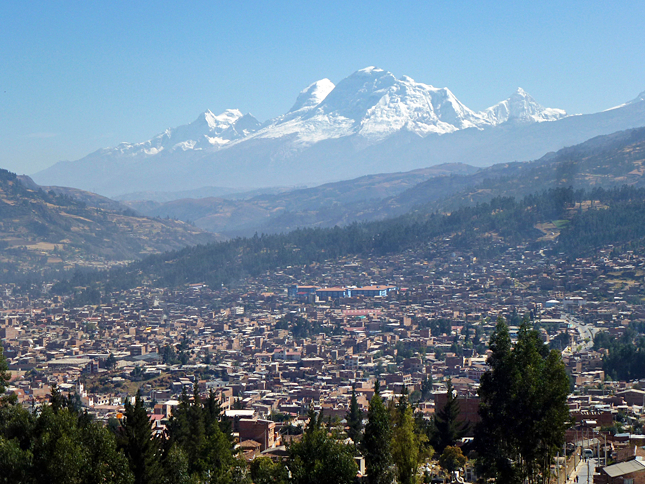
›In 1941, glacial Lake Palcacocha in the Peruvian Andes burst its moraine dam of earth and stones, sending a torrent of water through the city of Huaraz and killing an estimated 5,000 people. Between 1941 and 1950, two more glacial lake outburst floods, or GLOFs, which can occur after enough water fills in behind a glacier’s end moraine, killed another 5,000 people in the Cordillera Blanca. In response, the government set up one of the most effective glaciological units in the world with the goal of preventing future outburst floods. Using drain pipes, reinforced terminal moraine dams, sophisticated tunnels, and valve systems, they drained or contained 34 lakes in the region. As a result, thousands of lives were saved.
-
World Water Day: A Wellspring for Sustainable Development
›This year’s World Water Day is taking on a broader theme than years past: sustainable development. The theme makes sense as two major international processes – the drafting of the Sustainable Development Goals to replace the Millennium Development Goals, and the most anticipated UN Climate Summit in years – are taking place in 2015. Decisions made over the next nine months will play a huge role in relationships between nations and global development priorities going forward.
-
Re-Thinking Climate Interventions in Fragile and Conflict-Affected States: Insights From Nepal
›While much of the debate around climate financing focuses on “how much,” an equally important question is “how?”
Showing posts from category Nepal.