-
The Age of Revolution? Demography Experts Comment on Tunisia’s Shot at Democracy
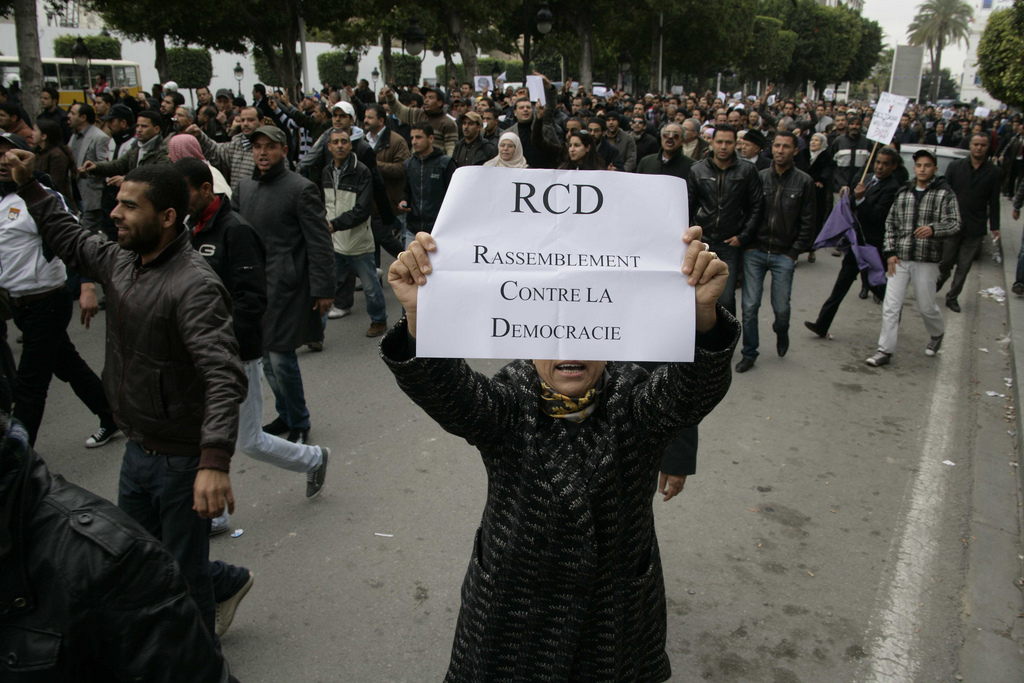
›January 28, 2011 // By Schuyler NullAs unrest continues across several Middle Eastern countries, analysts are scrambling to explain the “arc of revolution.” Richard Cincotta’s recent post on the “Jasmine Revolution” predicts a relatively high chance of Tunisia attaining liberal democracy, based on demographic factors and long-term trends, and it’s drawn some well-thought out and provocative feedback from fellow demographers Elizabeth Leahy Madsen, Jack Goldstone, and Jennifer Sciubba.
Elizabeth Leahy Madsen is a senior research associate at Population Action International and author of The Shape of Things to Come: Why Age Structure Matters to a Safer, More Equitable World:I have two questions. First, have you shifted to a new definition of age structures (intermediate, etc.) based on median population age? In the past, you and other demographic security researchers have measured age structure as the relative proportion of different age groups within the population, either the total population, total adult population, or working-age population. Why did you select median population age for this analysis? A quick review of the figures available on the UN Population Division’s website shows that the relative size of the 15-24 age group within Tunisia’s total population has been vacillating within the range of 19-21 percent since 1975. In 2005, that “youth bulge” was 21 percent, the highest since 1980, but there has been a rapid decline to 19 percent by 2010.
Jack A. Goldstone is the director of the Global Policy Center at George Mason University and author of a number of books on social movements, revolutions, and international politics:
As you say, no matter how age structure is measured, Tunisia is much further through the demographic transition than other countries in the Arab world. I would like to see this highlighted more in media coverage of the revolution, particularly in accounts of similar attempts to provoke uprisings that have taken place in Algeria, Egypt, and Yemen in recent weeks. From a demographic perspective, those attempts are less likely to achieve success (except possibly in Algeria, based on your map).
My second question is for further elaboration on the steps that lead from a dissipating youth bulge to a greater likelihood of attaining democracy (leaving aside the also-difficult question of sustainability). If I understand your description of the mechanisms at work, in an authoritarian regime with a youth bulge, the government is able to keep its hold on power because the presence of a youth bulge either creates volatility or the threat of volatility in the eyes of the commercial elites whose support is critical to the regime. Does this support exist even in situations where volatility is rare, in which case the large youthful population is manipulated or whitewashed by the regime as a threat to stability? Then, as the age structure matures and becomes less youthful, the regime can no longer invoke youth (directly or indirectly) as a danger, and therefore support for the regime from the elites erodes?
You don’t specifically mention economic conditions in Tunisia, apart from Ben Ali’s resource hoarding, but issues such as unemployment rates have been frequently highlighted in media accounts of the revolution. In addition to the unpredictable triggers such as the self-immolation in Tunisia’s case, do deeper-seated structural problems such as high unemployment and/or rampant corruption have to be extant to provoke revolution in an authoritarian context? Or is the dissolution of a youthful age structure combined with an unpredictable trigger sufficient?Richard’s insights into Tunisia’s prospects for democracy are terrific and I agree with him. However, in regard to the causes of the rebellion, I have to disagree with him in one respect – Tunisia in 2010 is very much a youth bulge country, at least as far as political theory would see it. As Henrik Urdal has shown, youth bulge should not be measured as the size of the youth cohort (15-24) against the entire population, but as the fraction of youth in the adult population (those aged 15 and older). The 0-14 group is politically not relevant, and should not be counted in assessing the impact of youth cohorts on the total population’s political mobilization potential.
Jennifer Sciubba is a Mellon Environmental Fellow at Rhodes College and the author of The Future Faces of War: Population and National Security:
For Tunisia, median age may in fact be misleading (as I didn’t realize until I looked at the age pyramids that Richard has posted). Because birth rates fell very rapidly after 1995, median age in 2010 is intermediate, but if you look only at the population aged 15 and up, you still see very large cohorts of youth compared to total adults.
Because Tunisia’s birth rate only started falling sharply after 1995, the large cohorts born in 1986-1995 – now age 15-24 – still make up a very large portion (33 percent) of all adults. While the next cohorts are much smaller, meaning this youth bulge will soon fade, it is still very much present, as Richard’s graphs show.
There is no automatic link between a certain age structure and political rebellion, but the combination of a large youth bulge and economic frustration among youth is a potent force for political instability. That combination is certainly one feature of Tunisia in 2010, although the extreme corruption of the Ben Ali regime and his family was a galling and critical factor in the widespread rejection of his regime.
That points to another bit of misleading data. Many (including me) assumed that because Tunisia’s recent economic growth was strong, at five percent per year, economic grievances could not be so widespread. But that is wrong, because we did not appreciate how much of that growth has been grabbed by Ben Ali’s family (which according to one account had ownership interests in half the businesses in the country) and cronies. Substantial growth from which many have been excluded – especially youth – is in fact a reason for widespread grievances, and that was another key factor behind the mass protests.Like Jack and Liz note, using median age helps us understand Tunisia’s progress along the demographic transition, but it doesn’t really help us understand the protests in Tunisia or in other countries across the “arc of revolution.” Median age obscures the individual experiences of young adults who are putting their lives at risk to speak out in protest or setting themselves on fire in desperation. As Jack points out, from a theoretical point of view, Tunisia is very much experiencing cohort crowding – whether we call it “youth bulge” or “early worker bulge” the outcome is the same. To say that Tunisia is not a youth bulge country misses the point.
Cincotta has promised a reply to the comments is forthcoming, which we can forgive him, frankly, given the length and complexity of these great responses.
Part of the reason we political demographers buy into the link between youth bulge and conflict is the idea of cohort crowding. As Richard Easterlin points out, a cohort’s economic and social prospects tend to have an inverse relationship to the cohort’s size relative to those around it, other things being constant. In Tunisia’s case, those between ages 25-35 are part of a larger cohort than those preceding ones so they are crowded out of the labor market and will tend to have lower relative income compared to preceding generations, which are smaller.
As I note in my book, one study of Tunisians looking for work reported that young adults felt crowded out of benefits in the family, school, and labor markets. In particular, according to a study by M. Bedoui and G. Ridha:“…family and marital problems were common. They became poorer, lost confidence, and became fatalistic and submissive. Over the long run the majority saw unemployment as a source of disequilibrium, humiliation, and even oppression.” (in Hilary Silver, “Social Exclusion: Comparative Analysis of Europe and Middle East Youth,” Middle East Youth Initiative Working Paper p. 30.)
That quotation seems eerily prescient in Tunisia’s case. Mohamed Bouazizi certainly seemed to succumb to fatalism, and the protests started as economic but quickly moved to political. Political, social, and economic marginalization are connected. While there is some diversity in age structure across the Middle East, the populations of those aged 15-24 in Egypt, Lebanon, Tunisia, Jordan, Algeria and Iran, which experienced youth protests in 2009, are all between 27 and 34 percent of all adults ages 15-59, with Lebanon and Tunisia at the lower end of the spectrum and Egypt and Jordan at the higher. As we can see from the population pyramid of each of these states, there is a clear population bulge at these ages.
We also have to think about the cohort effect. The cohort effect describes shared historical experiences of particular age groups. Across the “arc of revolution,” young adults are plugged into Facebook, Twitter, and other internet forums to share experiences of marginalization and revolution. This likely informs their choice of whether or not to speak out.
Sources: Huffington Post, Middle East Youth Initiative, The New York Times, Telegraph.
Photo Credit: “055,” courtesy of flickr user Nasser Nouri. -
Tunisia’s Shot at Democracy: What Demographics and Recent History Tell Us
›January 25, 2011 // By Richard Cincotta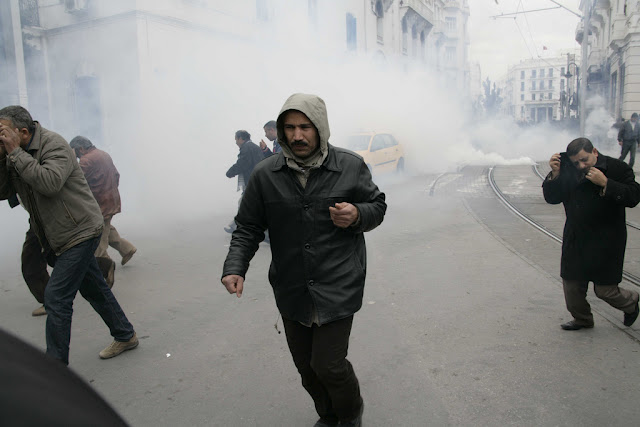
While events in Tunisia, beginning mid-December and leading ultimately to President Ben Ali’s departure within a month, have rocked the Arab world, they leave an open question: Will Tunisia’s “Jasmine Revolution” ultimately lead to the Arab world’s first liberal democracy? [Video Below]
-
Water Security, Nonproliferation, and Aid Shocks in the Middle East
›In a report sponsored by the Stanley Foundation and the Stimson Center, authors Brian Finlay, Johan Bergenas, and Veronica Tessler discuss the implications of what a growing population and dwindling water supply will have on the people and governments of the Middle East. In the report, titled “Beyond Boundaries in the Middle East: Leveraging Nonproliferation Assistance to Address Security/Development Needs with Resolution 1540,” the authors point out that while the Middle East has six percent of the world’s population, it has only 0.7 percent of the world’s fresh water resources. This supply is expected to be halved in the coming decades due to “rapid population growth and increased standards of living in urban areas.” To make up for this shortfall, governments are turning to nuclear-powered desalination technology, which poses risks to the nonproliferation movement and the safety and stability of the region. (Editor’s note: for more on water as a strategic resource in the Middle East, see CSIS’ latest report.)A recent study by Richard Nielsen, Michael Findley, Zachary Davis, Tara Candland, and Daniel Nielson from Bringham Young University examines the relationship of severe decreases in foreign aid to inciting violence among rebels in recipient countries. The study, “Foreign Aid Shocks as a Cause of Violent Armed Conflict”, examines aid shocks in 139 countries from 1981-2005. The authors find that when a donor country cuts off or suddenly limits aid due to economic or political reasons, this volatility upsets the status quo and gives strength to rebel groups who play upon the government’s inability to deliver adequate resources to the population. Instead of a sudden or sharp withdrawal in aid, Nielsen et al conclude that “if donors decide to remove aid, they should do so gradually over time because sudden large decreases in aid could be deadly.” -
Women and Youth in 21st Century Statecraft
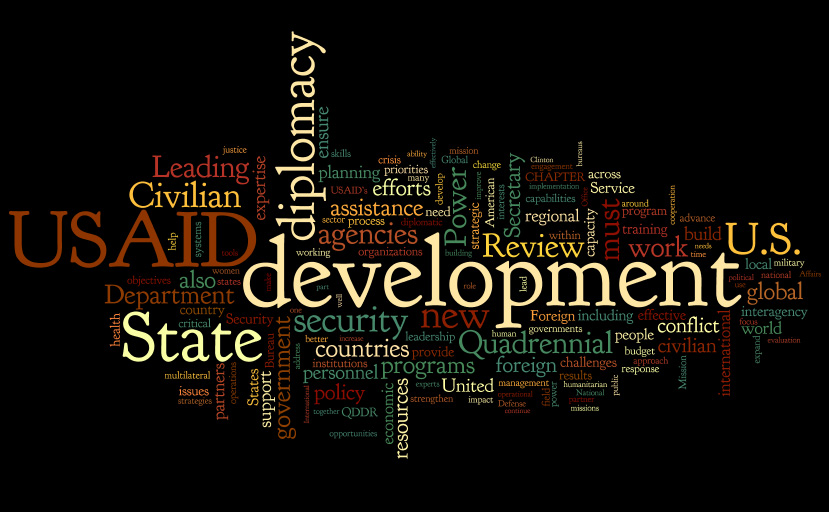
›January 10, 2011 // By Richard CincottaWhether one supports or finds fault with current (and envisioned) U.S. diplomacy and international development processes and practices, most foreign policy analysts and academics will recognize the first Quadrennial Diplomatic and Development Review (QDDR) as a landmark document. In my opinion, the QDDR – titled Leading Through Civilian Power – is essential reading for those who seek a career in government or who otherwise need to understand the nature and purpose of the work that foreign service officers and USAID missions perform overseas.
-
Peter Gleick on Peak Water
›“The purpose of the whole debate about peak water is to help raise awareness about the nature of the world’s water problems and to help drive toward solutions,” says the Pacific Institute’s Peter Gleick. But Gleick asserts that in the same way certain countries have been contending with “peak oil” concerns in recent years, they may soon also have to deal with “peak water” as well.
Unlike oil, water is largely a renewable resource, but countries in Asia, the Middle East, and elsewhere are pumping groundwater faster than aquifers can replenish naturally. Gleick explains “there will be a peak of production in many of those places and eventually the food that we grow with that water or the widgets that we make from the factories that use that water will be nonsustainable and production will have to drop.”
The world’s surface and groundwater resources can be used sustainably even in the face of continued global population growth, says Gleick, but only “if we are careful about the ecological consequences and the efficiency with which we use it.” However, to date, he says, “those issues have not adequately been brought into the discussion about water policy.”
The “Pop Audio” series is also available as podcasts on iTunes. -
Water as a Strategic Resource in the Middle East
‘Clear Gold’ Report From CSIS
›“The real wild-card for political and social unrest in the Middle East over the next 20 years is not war, terrorism, or revolution – it is water,” begins the CSIS Middle East Program’s latest report, Clear Gold: Water as a Strategic Resource in the Middle East, by Jon B. Alterman and Michael Dziuban.
The authors contend that with growing populations, groundwater depletion, not the more traditional questions about transboundary river governance, poses a “more immediate and strategically consequential challenge,” particularly because many Middle Eastern governments have deflated the true cost of water to help spur growth and garner popularity.
In the accompanying video feature above, much-troubled Yemen is outlined as one of the most at-risk countries for water-induced instability. The narrator notes that “with Yemen’s population growing fast and almost half of agricultural water going towards the narcotic leaf qat instead of food, experts think that Sanaa [the capital] could run out of water in seven years or less and the rest of the country may not be far behind.”
In an interview with Reuters in 2008, Yemeni Water and Environment Minister Abdul-Rahman al-Iryani said the country’s burgeoning water crisis is “almost inevitable because of the geography and climate of Yemen, coupled with uncontrolled population growth and very low capacity for managing resources.”
Yemen is a particularly abject example because water availability is only one contributor in a long list of domestic problems, including a large youth population, gender inequity, immigration from the Horn of Africa, corruption, ethnic tensions, and terrorism.
The narrator concludes that “Yemen is the most worrisome example but clearly not the only one.” Alterman and Dziuban also point to Jordan and Saudi Arabia as states vulnerable to groundwater depletion.
For more on the Middle East’s current and future environmental security issues, be sure to check out The New Security Beat’s “Crossroads” series, with features on Iraq, Israel, Jordan, Lebanon, Syria, and Yemen.
Video Credit: “Clear Gold: Water as a Strategic Resource in the Middle East,” courtesy of CSIS. -
Paradise Beneath Her Feet: How Women Are Transforming the Middle East
›Isobel Coleman, senior fellow for U.S. foreign policy at the Council on Foreign Relations, said she believes demographic changes are intensifying the notion that women’s empowerment is key to the growth and prosperity of the economies of Arab and Muslim-majority countries.
Coleman, author of the book Paradise Beneath Her Feet: How Women Are Transforming the Middle East, spoke at the Wilson Center in October, with Haleh Esfandiari moderating.
In addition to the Middle East’s demographics, Coleman also discussed how women in these traditional societies face challenges expanding their roles because women’s rights are often seen in a negative light. Coleman noted that things are changing, however, because women in the Muslim world are turning towards an Islamic discourse, which allows them to expand their rights within society’s religious framework. With this tactical shift and gradual gains in education, Coleman explained how women are slowly yet steadily transforming their societies.Coleman began her talk by focusing on the demographic changes in the region, noting that 50 percent of the Arab world’s population is under the age of 22. Furthermore, education was once the exclusive preserve of men in many Arab and Muslim states (in some cases, only decades ago). Today, however, women often constitute the majority of those enrolled in these countries’ educational institutions: Females outnumber males in Jordan’s secondary schools and constitute 70 percent of all university students in Iran. While the levels of educational attainment and achievement among women are increasing, normative and legal restrictions on their socioeconomic mobility remain. Coleman indicated that this contradictory scenario has led to greater opposition to impediments to women’s equality.
Coleman went on to address the tactics being used by the latest generation of reform-minded women in the Muslim world. She said today’s reformist women are more cognizant of the religious conservatism in their societies and are taking on religion in a way earlier feminists did not. By making feminist arguments from an Islamic perspective they avoid being “slandered” by conservatives and traditionalists as pro-Western or anti-Islamic. Coleman noted that some women adopt such a stance out of deep religious conviction, while others do it in the name of expediency. She indicated this new strategy of compromise has given more women influence in social affairs and led to significant engagement with governments.
With the advent of new social media and technology, women have become more visible and able to express their opinions about previously taboo gender-related issues. Female journalists and bloggers are more stridently supporting feminist discourses. Coleman mentioned Sweet Talk, the Arabic language equivalent of the American television show, The View, on which the female co-hosts have addressed topics such as polygamy, rape, incest, and the Saudi prohibition on women driving.
According to Coleman, these factors of change – demographic transitions, the role of media, and an awareness of growing extremism in society – are contributing to women making strides in the region and a “wearing away” of gender inequality in the Muslim world. Given the gains women have made so far, Coleman said she is “cautiously optimistic” for the future.
Luke Hagberg is an intern with the Middle East Program at the Wilson Center; Haleh Esfandiari is the director of the Middle East Program.
Photo Credit: Yemeni women in computer class, courtesy of flickr user World Bank Photo Collection, and David Hawxhurt/Wilson Center. -
Whither the Demographic Arc of Instability?
›December 14, 2010 // By Richard CincottaAfter the Berlin Wall came down in 1989, the demand for geostrategic mapping went up. Pentagon geographers revised maps almost monthly in order to keep pace with the rapid sequence of events – the toppling of Eastern Europe’s communist regimes, the rise of pro-Western liberal democracies in their place, and the reunification of Germany. Then came more borders, and even more maps: the breakup of the Soviet Union and the withdrawal of forces from former Warsaw-Pact states, the splintering of Yugoslavia and Czechoslovakia, and requests for accession to NATO. When, in the late 1990s, it became apparent that the end of the Cold War would have little effect on the emergence of civil and ethnic conflicts in Africa, Asia, and Latin America, and that a network of militant Islamist organizations had coalesced across Muslim Asia and Africa, strategic mapmaking shifted focus to identifying conditions in the Global South.
Showing posts from category Middle East.