-
New Partnerships for Climate Change Adaptation and Peacebuilding in Africa
›
“There is a huge gap between climate science, policymakers, and the end-users, in terms of understanding climate change and adaptation, and how that relates to conflict or peace,” concluded 26 experts from more than 10 countries across sub-Saharan Africa at the Wilson Center last fall. But “climate change adaptation is crucial to achieving Africa’s aspirations for peace, security, and sustainable development.”
-
‘National Geographic’ Reports on “Water Grabbers” From Mali to India
›
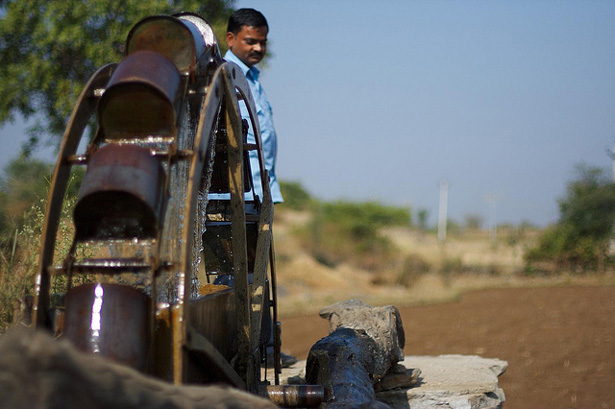
Much ink has been spilled on the growing trend of global land grabs – land purchased en masse in developing countries like Ethiopia by foreigners mainly for agricultural export. But along with land, investors often also gain the right to use local water, and sometimes with little consideration for local livelihoods. Fred Pearce recently looked into these “water grabs” in a series for National Geographic.
-
António Guterres, The New York Times
Why Mali Matters
›September 11, 2012 // By Wilson Center StaffThe original version of this op-ed, by António Guterres, appeared in The New York Times.
For many people, Timbuktu has long represented the essence of remoteness: a mythical, faraway place located on the boundaries of our collective consciousness. But like many of the myths associated with colonialism, the reality is very different.
-
Jill Hagey, Behind the Numbers
Sahel Drought: Putting Malnutrition in the News
›The original version of this article, by Jill Hagey, appeared on the Population Reference Bureau’s Behind the Numbers blog.
Over the past few months, the Sahel drought has sparked attention of news media and concerned citizens around the world. Throughout this media blitz, I have been struck by the sharp contrast between this coverage and how the devastating effects of malnutrition are usually portrayed. Malnutrition is often overlooked in favor of more “newsworthy” diseases, and it takes a crisis to focus our attention on this public health issue. Yet an emergency such as this drought – affecting more than 18 million people, including nearly 2 million children – is difficult to ignore.
-
Nancy Lindborg, The Huffington Post
Chronic Crisis in the Sahel Calls for a New Approach
›July 10, 2012 // By Wilson Center StaffThe original version of this article, by Nancy Lindborg, appeared on The Huffington Post.
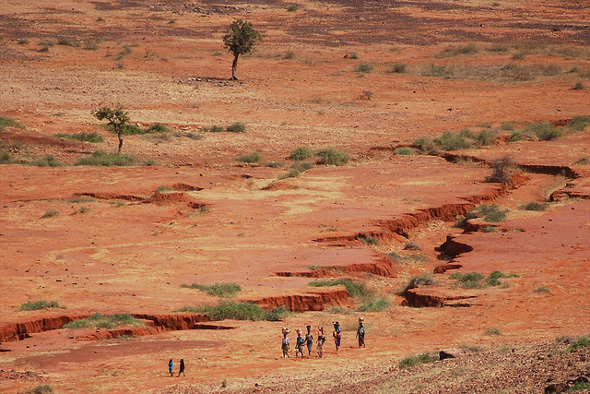
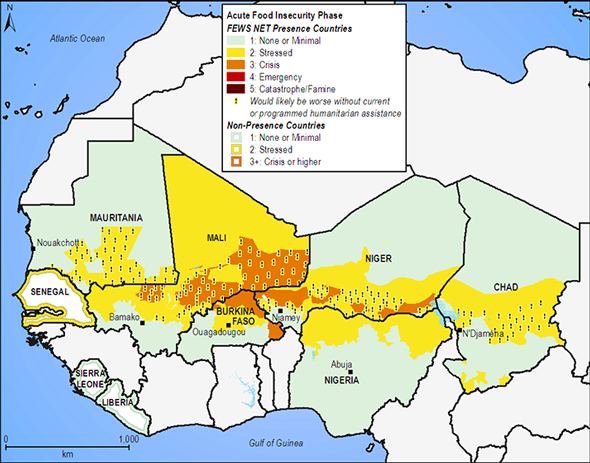
It is the lean season in the Sahel, a spine of arid and dry lands that runs from Senegal to Chad in western Africa, and once again we are seeing the devastating images of children gaunt with hunger. This is a region that faces high childhood malnutrition and underdevelopment even under the best of circumstances so one poor harvest can push millions of the most vulnerable into severe risk. In the aftermath of poor rains, and with food prices stubbornly stuck on high since the food crisis of 2008, some 18.7 million people across eight affected countries in the Sahel are at risk of food insecurity this year alone. At least eight million people are already in need of emergency assistance.
At USAID, we are determined to get ahead of these kinds of chronic crises. We know that millions of Africans living in the dry lands of the Horn and Sahel regions need new solutions. Last year, the worst drought in 60 years ravaged the Horn of Africa, driving 13.3 million people into crisis. And this summer, families in the Sahel are feeling the peril of depleting food supplies, high food prices, and rising malnutrition.
We can’t prevent what appears to be increasing cycles of drought, but we can and are working to create better solutions and build greater resilience among the most vulnerable.
Every crisis is complex, and the Sahel is no exception. A regional drought has been overlaid with instability stemming from the coup in Mali and conflict in the northern part of that country where armed militant groups have forced the suspension of critical relief operations. More than 184,000 refugees have fled to communities in neighboring countries that are already deeply stressed from drought. Though still functioning, local and regional markets have been disrupted, driving food prices even higher. And as of mid-June, swarms of locusts from southern Algeria and Libya had arrived in northern Mali and Niger; now expected to move southward, these infestations could result in crop destruction exacerbating an already worsening situation.
Continue reading on The Huffington Post.
Image Credit: West African medium-term food security outlook, courtesy of the Famine Early Warning Systems Network.
Nancy Lindborg is the assistant administrator of the Bureau for Democracy, Conflict, and Humanitarian Assistance at the U.S. Agency for International Development. -
Responses to JPR Climate and Conflict Special Issue: John O’Loughlin, Andrew M. Linke, Frank Witmer (University of Colorado, Boulder)
›Complexity, in terms of economic, cultural, institutional, and ecological characteristics, weighs heavily on contemporary attempts to unravel the climate change/variability and conflict nexus. The view that local-level complexity can be “controlled away” by technical fixes or adding variables in quantitative analysis does not sit well with many geographers (though some do try to adopt a middle ground position).
Showing posts from category Mali.