Showing posts from category Israel.
-
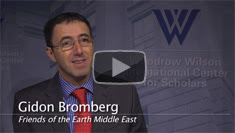
Gidon Bromberg at TEDx on Peacebuilding Through Water in the Middle East
›“Cooperation over water is not a privilege, it’s a necessity,” said Gidon Bromberg, co-director of Friends of the Earth Middle East, in a TEDx talk at Yale. He sees the shortage of water in Jordan, Israel, and Palestine as an opportunity to bring these contentious communities together – even more so during this period of upheaval in the region.
Water woes have long contributed to regional tensions, said Bromberg. Water rights between Israel and Palestine were supposed to be settled during the Oslo accords in 1993, but negotiations were unsuccessful and water discussions were consequently left unfinished. The lack of formal negotiations caused each side to seize whatever resources they could Although Jordan was not part of the negotiations, it does share water resources with Israel and the West Bank and thus has been impacted by the lack of formal allocation processes. Both Jordan and Israel have diverted flow of the Jordan River into dams and irrigation projects. As a result, the Jordan River has lost 98 percent of its historic flow and the Dead Sea has lost one-third of its surface area.
Today, Israel has restricted Palestinian water use such that Palestinians have access to water only once a week in winter and once every three weeks in the summer, leading them to store water in containers on their roofs, Bromberg said. Though mismanagement is as much to blame as conflict, he notes, Palestinians chafe under the limitations.
Yet Friends of the Earth Middle East has used this difficult situation to educate the public, propose reforms, and build trust between Palestinian, Jordanian, and Israeli communities. Bromberg highlighted “fear of a small but vocal minority on both sides” as a key factor in preventing dialogue between the communities, but insists that water can bring people together. Neighboring communities have to work together, he said, “not because they’re best friends,” but to improve their own water situations.
Friends of the Earth provides that opportunity with their Good Water Neighbors project and hopes the trust built between communities extends beyond water issues as well. Since communities have strong motives to solve these problems, they work together more effectively than high-level politicians who may not be as apt to collaborate.
A positive update on the state of the Jordan River given in an interview with ECSP in October suggests that Bromberg may be on to something.
Sources: Amnesty International, Friends of the Earth.
Video Credit: TEDx. -
‘Green Prophet’ Interviews Geoff Dabelko on Water Security in the Middle East
›April 18, 2012 // By Schuyler NullTafline Laylin, managing editor of the Green Prophet blog, recently interviewed ECSP Director Geoff Dabelko about the just-released U.S. intelligence assessment on global water security and what it says about the Middle East.
The conversation touched on regional water scarcity, Palestinian-Israeli water tensions, and the role of the international community.
“We put a lot of faith in the past helping us understand the future and it rests at the center of much of the way we analyze things,” said Dabelko. “But at the same time, we also, especially in the natural world, have established patterns of thresholds and tipping points and sudden changes.”
We’ve excerpted the first few questions below; read the full interview on Green Prophet:Green Prophet: So, for context, can you say a little bit about the National Intelligence report and why it was compiled?
Continue reading on Green Prophet.
Geoff Dabelko: The water and security assessment from the National Intelligence Council was done at the request of Secretary of State Hillary Clinton. The National Intelligence Council has a strong history of looking at long term trends in the environmental, technological, demographic realms and working to understand how trends in these areas are and could be part of larger economic, political, and social dynamics that may pose national security issues for the United States.
Green Prophet: There were seven river basins of particular concern, of which four are located in the MENA region: the Euphrates, Jordan, Nile, and the Tigris. Why do you think these are of particular importance?
Geoff Dabelko: I do not explicitly know the criteria for their selection of the seven basins. But I think these four, like the other three, have some common characteristics. They are basins where the rivers are shared by two or more countries/territories that are heavily dependent on the waters; that have relations among the states that include uncertain, tense, or even overtly hostile relationships; that are now and/or likely to experience big growth in demand for the water resource based on both population growth and consumption growth, that at the same time there is concern that climate change will at least increase variability, timing, and or quantity of that water (both scarcity and abundance i.e. floods).
And then the report focuses on the institutional river basin arrangements and differentiates among their assessed capacities for addressing these current and future stresses. That diversity aside, it is fair to say that the transboundary water institutions remain a priority yet a challenge for addressing the multiple dimensions of the water relationship. I say “multiple” given all the different uses water performs in most of these settings (transport, irrigation, hydropower, culture, industrial, household, etc).
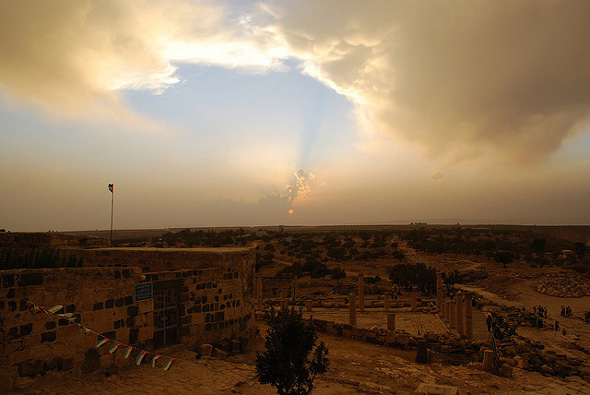
Photo Credit: “Umm Qais – Sunset,” courtesy of flickr user Magh. -
Sanitation and Water MDGs in the Middle East and North Africa: Missing the Target?
›Goal 7, Target 10 of the United Nations Millennium Development Goals (MDGs) is to “halve, by 2015, the proportion of people without sustainable access to safe drinking water and basic sanitation.” The Joint Monitoring Programme (JMP), established by the UN to monitor progress towards this goal, has twice concluded (in 2008 and 2010) that the Middle East and North Africa (MENA) are in good shape to meet this target. However, a new article in Development and Change, “The Politics of Assessment: Water and Sanitation MDGs in the Middle East,” by Neda Zawahri, Jeannie Sowers, and Erika Weinthal, argues that the JMP’s “reliance on classifying ‘improved’ and ‘unimproved’ water and sanitation infrastructure, through infrequent household surveys, has produced misleading assessments that fail to capture the extensive water quality and sanitation problems plaguing the MENA.”
The authors compared the findings of the JMP with a variety of data sources – participatory assessments, reports from other UN agencies, donor projects, domestic ministries and agencies, and academic research – and found major contradictions between the progress reported by the JMP and the situation on the ground. In one example, the authors write that “while the JMP considers piped household water as an improvement in water coverage, it fails to differentiate between ‘full’ coverage and ‘partial’ coverage, that is, household water supplies available only a few hours a week.” And the authors point out that according to UN-Habitat, “the availability of piped water does not necessarily translate into safe drinking water, as water may become contaminated before it reaches the tap.”
As a result of the weakness of the indicators used by the JMP, household surveys conducted by the JMP in the MENA region “[do] not adequately capture the quality of drinking water,” the authors write, and efforts to address this inadequacy through more comprehensive testing of municipal water samples were deemed “too complex to be routinely employed through the world” and “prohibitively expensive.”
“International organizations and national leaderships in the MENA lack substantial incentives to adopt more accurate assessments for safe water and sanitation,” Zawahri et al. conclude. The need to generate comparable data across time and space has trumped the importance of “gauging access, quality, and affordability of water and sanitation.” -
Watch: Gidon Bromberg Gives an Update on Jordan River Rehabilitation Efforts
›October 27, 2011 // By Kate DiamondGidon Bromberg, co-director of Friends of the Earth Middle East (FOEME), says in this short interview with ECSP that his outlook on rehabilitating the Jordan River has changed completely over the last five years. We had been “laughed at” for trying to restore the waterway, he said; now though, “we are very confident that the Jordan River south of the Galilee down to the Dead Sea will be rehabilitated.”
By building a cross-border peace park and encouraging collaboration between Israelis, Palestinians, and Jordanians on water scarcity and quality issues, FOEME aims to improve environmental and security problems that bind the three groups together.
The Jordan River has become so polluted that visitors, many of whom are devout Christians making a pilgrimage to one of the religion’s most sacred sites, have been barred from its waters due to health concerns. Furthermore, more than 98 percent of its fresh water is diverted for agricultural work, meaning that the pollutants that end up in the river are highly concentrated.
But today, Bromberg said, sewerage is being removed on both the Israeli and Jordanian sides and there is a commitment to do the same from the Palestinians. For the first time in 60 years, there are concrete plans to return fresh water to a river that is “so holy to half of humanity.”
Sources: The Age, Friends of the Earth Middle East, The Guardian, U.S. Environmental Protection Agency -
Aaron Wolf on Water Management, Agriculture, and Population Growth in the Middle East
›In terms of groundwater depletion, “Yemen and Gaza are probably the two places worst off in the Middle East,” Aaron Wolf told ECSP in a recent interview. Wolf, a water expert and geography professor at Oregon State University, said population growth across the broader Middle East region has led to intensified groundwater pumping in recent years. This trend has raised the prospects for water-related conflict down the road, as countries drain their groundwater stocks faster than the aquifers can recharge. Potentially complicating matters further, said Wolf, is that most aquifers in the Middle East cross international boundaries.
Despite the region’s history of water tensions, Wolf said the unprecedented level of demographic change currently being experienced across the Middle East is not necessarily a recipe for future confrontations over the resource, in part thanks to the existence of water-sharing agreements in the area. Nevertheless, mounting demand will likely force water-users across the region – especially within the agriculture sector – to change the ways they utilize the resource.
Accounting for 80 to 90 percent of total water usage in some Middle Eastern countries, agricultural operations have already been forced to adjust to the evolving water-access situation. While moving from flood irrigation to drip irrigation represents one policy option if sufficient funds are available, Wolf said doing away with local food production “is a path that a lot of countries are going to have to take” to ensure a relatively stable water supply for their populations’ drinking, cooking, and cleaning needs.
Wolf added that one frequently discussed but not entirely realistic option for addressing the region’s water-supply concerns involves desalination. To date, widespread deployment of the technology has been hampered by high costs and substantial energy requirements, although that hasn’t stopped a few countries in the region – among them the United Arab Emirates, Saudi Arabia, and Israel – from becoming partially reliant on converted fresh water.
Wolf maintained that desalination’s hefty price tag means the technology is useful only for urban population centers near the coast. Moving converted sea water further inland remains a non-starter, he said, because transporting it requires an enormous amount of energy (a cubic meter of water weighs a metric ton).
For the same reasons, Wolf asserted, using desalinated water for agriculture doesn’t seem to be in the cards any time soon. “Right now a cubic meter of desalinated water costs about 40 cents, and you can’t use that for agriculture unless it drops down to about 8 cents a cubic meter,” Wolf said. “So until you can irrigate with desalinated water, it really doesn’t go a long way towards mitigating the larger water crisis.”
The “Pop Audio” series is also available as podcasts on iTunes.
Sources: American University, International Food Policy Research Institute, World Bank. -
Is the Glass Half Full or Half Empty?
›
The much-anticipated Quadrennial Diplomacy and Development Review(QDDR) demands to be taken seriously. Its hefty 250 pages present a major rethink of both American development policy and American diplomacy. Much of it is to be commended:
-
Israel and Lebanon: New Natural Gas Riches in the Levant
›September 17, 2010 // By Russell SticklorThe Middle East is home to some of the fastest growing, most resource-scarce, and conflict-affected countries in the world. New Security Beat’s “Middle East at the Crossroads” series takes a look at the most challenging population, health, environment, and security issues facing the region.
It doesn’t take much to get Israel and Lebanon at each other’s throats these days, given that the two neighbors engaged in a significant war in 2006. That conflict remains an open wound, as the two sides remain technically at war to this day. Periodic cross-border flare-ups — most recently over the cutting down of a tree on their shared border, which left one Israeli and three Lebanese dead — show neither side has to be pushed far to trigger an outbreak of violence.
In recent months, a new wrinkle — and a new source of potential conflict — has been added to bilateral relations, with the discovery of significant natural gas reserves under Mediterranean waters off both countries’ coasts. The find has sparked a scramble from Beirut and Jerusalem, as the two energy-hungry nations look to capitalize on the deposits and exploit the reserves. For both Israel and Lebanon, developing the natural gas potential of this swath of the eastern Mediterranean could augment energy supply, and even pave the way to a greener energy future. But fears of a military stand-off over the resource lurk just around the corner, given that much of the extractable natural gas in question lies under contested waters.
Maritime Border Undefined
The U.S. Geological Survey estimates the recoverable amount of natural gas reserves, which lie in an area known as the Levant Basin Province, to be 122 trillion cubic feet (tcf). While not a huge find by global standards — the world consumed 110 tcf of natural gas in 2008 — the discovery is a potential game-changer in terms of the energy security of both Israel and Lebanon. According to the U.S. Energy Information Administration, in 2007 Israel produced only four percent of the total energy it consumed, while Lebanon generated just three percent of the energy it used. With the natural gas bonanza, not only would the two countries become more self-sufficient in meeting their own domestic energy needs, there is also speculation they could even one day become natural gas exporters.
The question that is only now beginning to be addressed is who controls what. Under the UN Convention on the Law of the Sea, every coastal country has an exclusive economic zone (EEZ) that extends 200 miles off its shoreline. But in certain bodies of water, EEZ territorial claims have overlapped, with one of those areas disputed being the Mediterranean.
At this point, much of the known reserves appear to lie firmly in Israeli territorial waters, one of the reasons Israel has outpaced Lebanon in moving to drill for the resource. But Lebanese leaders — long concerned about the prospect of Israel infringing upon Lebanon’s sovereignty — have sounded the alarm, claiming that a substantial amount of the reserves may lie in Lebanese territorial waters. Further complicating matters is the fact that the two countries’ maritime border has remained unfixed since the end of the 2006 war, meaning that each country could have a legitimate claim that the other is trespassing on its sovereign territory in pursuit of the gas.
Hinting at a Physical Confrontation
The stakes appear high. In a recent interview with The New York Times, Ali Hamdan, an assistant to Lebanese Parliament speaker Nabih Berri, issued a strong-worded statement on potential Israeli drilling in disputed waters. “Lebanon fears that Israel, based on its history of occupying our lands and stealing our water, will drill in Lebanon’s waters and steal its natural resources,” Hamdan asserted. “Lebanon strongly warns Israel from drilling its natural gas. It will not tolerate violations of its sovereignty.”
In recent weeks, the Lebanese government has also taken steps to secure what it can, announcing plans to start doling out contracts for underwater exploration of the Levant Basin Province’s natural gas and oil reserves. Beirut is also putting together documents outlining what it considers to be the actual Israeli-Lebanese maritime border, which it plans to submit to the UN Security Council for consideration.
For its part, Israel has pledged that it will be drilling for natural gas only in waters under its control. At the same time, however, the country has refused to back down to Lebanese threats against its natural gas development activities and infrastructure, warning that it will not hesitate to meet force with force. The posturing reveals how strategically important the exploitation of the gas reserves is for both countries. With Lebanon’s population expected to grow by some 400,000 between 2010 and 2025, and Israel’s population projected to grow by 1.8 million in the same time period, there is an acute awareness in both Beirut and Jerusalem that energy demand will be rising in the near future.
A “Bridge Fuel” to a Cleaner Energy Future?
Despite the very real conflict potential of the new natural gas find, the presence of significant reserves in the eastern Mediterranean has also been the cause for limited optimism. In addition to helping ease the oil- and coal-dependence of Israel, Lebanon, and their neighbors, the heightened integration of natural gas into the region’s energy infrastructure may help substantially cut down on carbon emissions, since natural gas is the cleanest-burning fossil fuel. (In 2008, Israel and Lebanon pumped 70.21 metric tons and 14.37 metric tons of carbon dioxide into the atmosphere, respectively, owing largely to their heavy reliance on coal and petroleum.)
Natural gas is also a versatile energy source for electricity production that can be used by the region’s households, businesses, and factories alike. As a result, not only could natural gas’s rising profile in Israel and Lebanon’s respective energy portfolios help improve air quality, it could also accelerate the development of low-polluting, natural gas–fueled automobiles and public transit.
But even given such environmental benefits, the environmental picture is not all rosy. The underwater extraction of natural gas poses potentially severe risks to the maritime environment, one of the reasons that Israelis living in the northern part of the country have steadfastly opposed any potential drilling. (Another source of local residents’ concern has been that the physical infrastructure needed to harvest, store, and later distribute natural gas overland could prove a highly attractive target for Hezbollah-linked militants based in Lebanon.)
In the end, drilling for natural gas in the eastern Mediterranean by both Israel and Lebanon will undoubtedly move forward. The real question is whether given the controversy already unleashed by the Levant Basin Province reserves, Israel and Lebanon will eventually find it in their own enlightened self-interests to strike an accord on developing the region’s natural gas — or instead unleash missiles to protect what they consider rightfully theirs.
Sources: Center for American Progress, Earth Times, National Public Radio, New York Times, Population Reference Bureau, U.S. Energy Information Administration, U.S. Geological Survey, Washington Post, Yalibnan.com.
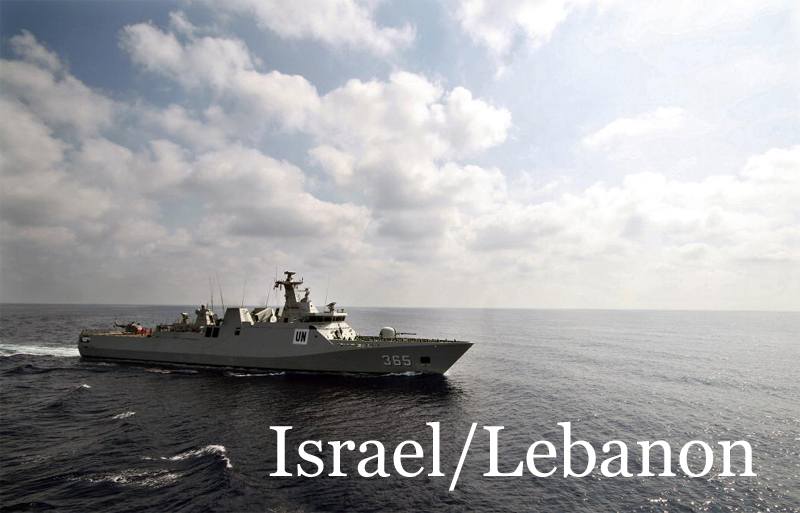
Photo Credit: “UNIFIL Vessel Patrols Lebanese Coast,” courtesy of flickr user United Nations Photo. -
Saleem Ali at TEDxUVM on Environmental Peacemaking
›“The use of the term ‘peace’ is in many circles still considered taboo, because immediately people think you are talking about something that is utopian,” said University of Vermont Professor Saleem Ali at a recent TEDx event on sustainability. “But I’m here to tell you that peace is pragmatic. Peace is possible.”
Ali points out the value of peace to every sector of society and, using an example from Ecuador and Peru, argues for the utility of the environment as a peacemaker. Other longstanding conflict areas like Cyprus, Iraq, Israel, and Korea are also ripe for environmental peacebuilding efforts, he says.
Professor Ali has written for The New Security Beat before on the strengths and weaknesses of viewing conservation and sustainability efforts through a strictly security lens. He points out that environmentalists must tread a fine line when assigning causality between the environment and conflict, but even when natural resources or climate are not central to a conflict, environmental peacebuilding can still play a role in creating shared ground (sometimes literally) between combatants.
“Treasures of the Earth,” Ali’s latest book, examines the thorny subject of how best to balance resource extraction in developing countries with long-term sustainability. Recent examples, such as Angola and Liberia’s blood diamonds, the DRC’s conflict minerals, and concerns over Afghanistan’s potential reserves have shown the difficulty in striking that balance.
“Ultimately, conflict trumps everything else” in terms of what we ought to be concerned with, Ali argues, and therefore, anyone, no matter their profession or capacity, should keep the pursuit of peace in mind – and all options on the table – when making decisions that affect others.