• woodrow wilson center
  • ecsp

New Security Beat

Subscribe:
  • rss
  • mail-to
  • Who We Are
  • Topics
    • Population
    • Environment
    • Security
    • Health
    • Development
  • Columns
    • China Environment Forum
    • Choke Point
    • Dot-Mom
    • Friday Podcasts
    • Navigating the Poles
    • Reading Radar
  • Multimedia
    • Water Stories (Podcast Series)
    • Backdraft (Podcast Series)
    • Tracking the Energy Titans (Interactive)
  • Films
    • Water, Conflict, and Peacebuilding (Animated Short)
    • Paving the Way (Ethiopia)
    • Broken Landscape (India)
    • Scaling the Mountain (Nepal)
    • Healthy People, Healthy Environment (Tanzania)
  • Publications
  • Events
  • Contact Us

NewSecurityBeat

The blog of the Wilson Center's Environmental Change and Security Program
Showing posts from category India.
  • Putting a Price on Reproduction: The Global Surrogacy Market

    ›
    Dot-Mom  //  September 6, 2016  //  By Aimee Jakeman

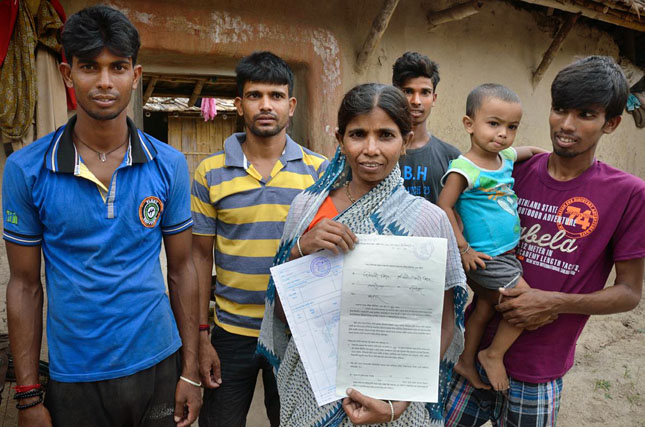
    The first baby conceived through in vitro fertilization (IVF) was born in 1978 and revolutionized alternative family building strategies. As IVF has become more widely available in the years since, the focus of many families who cannot conceive or carry a baby to term – the Centers for Disease Control and Prevention estimates there are 6.7 million such women in the United States alone – has shifted from adoption to surrogacy. However, this endeavor remains very expensive; prohibitively so for many. Commercial surrogacy can cost up to $70,000 in the United States, except in the seven states where it is illegal. Yet if couples are willing to outsource to another country, surrogacy can cost much less.

    MORE
  • Left Out and Behind: Fully Incorporating Gender Into the Climate Discourse

    ›
    August 22, 2016  //  By Cara Thuringer
    LGBTQ-refugees

    More often than not in the discourse around gender and climate change, the word “gender” is used primarily to refer to women. There is no disputing that women are acutely vulnerable to the effects of climate change in ways that are different than men and sometimes hidden. However, this interchangeable use of words neglects other dimensions of gender, sexual orientation, and sexual identity. As a result, we are missing important ways gender impacts people’s experiences with climate change.

    MORE
  • As Cities Grow More Crammed and Connected, How Will We Discourage the Spread of Disease?

    ›
    Guest Contributor  //  August 19, 2016  //  By Nate Berg
    la-paz

    The original version of this article appeared on Ensia.

    Near the corner of Broadwick and Lexington in London’s Soho neighborhood, a single spot on the ground has influenced more than 150 years of urban development. It’s the location of a water pump that in 1854 physician John Snow pinpointed as the source of contamination leading to a widespread outbreak of cholera in the neighborhood that killed more than 600 people.

    MORE
  • Is Shanghai’s Appetite for Sand Killing China’s Biggest Lake?

    ›
    China Environment Forum  //  Guest Contributor  //  August 4, 2016  //  By Vince Beiser
    fishing-boat

    Times are good for Fey Wei Dong. A genial, middle-aged businessman based in Hangzhou, Fey says he is raking in the equivalent of $225,000 a year from trading in the humblest of commodities: sand.

    MORE
  • Geoffrey Dabelko, The Cipher Brief

    Sorting Through the “Water Wars” Rhetoric in South Asia

    ›
    July 22, 2016  //  By Wilson Center Staff
    pakistan-relief

    The original version of this article, by Geoffrey Dabelko, appeared on The Cipher Brief.

    The eye catching headlines are familiar. “Water Wars” are imminent or already underway in the latest drought or dam-building hotspot. Such “wars” often extend to farmers battling over irrigation diversions, but at times countries are the players. Senior leaders are often quoted suggesting transboundary water theft constitutes a casus belli. Security officials are obliged to investigate.

    MORE
  • Family Planning and Environmental Sustainability: Assessing the Evidence

    ›
    From the Wilson Center  //  July 18, 2016  //  By Cara Thuringer
    fp-and-environment

    “There are truly global-scale environmental challenges, and they need to be dealt with by thinking of solutions at the same scale,” said Thomas Lovejoy, a senior fellow at the United Nations Foundation, at the Wilson Center on June 29. The interaction between human population and environmental degradation is one of these challenges. [Video Below]

    MORE
  • Christian Holmes, Global Waters

    USAID Effort Joins Women’s Groups to Improve Sanitation in Vizag, India

    ›
    July 14, 2016  //  By Wilson Center Staff
    Vizag

    The original version of this article, by Christian Holmes, appeared on USAID’s Global Waters.

    At USAID we recognize the threat poor sanitation combined with rapid urbanization presents to human health, dignity, and prosperity. This is why we have made urban sanitation a global priority for the Agency. During a recent visit to India, I was able to see some of the work being done to bring sanitation services to urban areas, and had the good fortune to meet some inspiring women who are advancing these efforts in their communities.

    MORE
  • Military Leaders Urge South Asian Countries to Put Aside Animosities in Face of Common Climate Threat

    ›
    July 6, 2016  //  By Sreya Panuganti
    Climate-Change-S-Asia-Pic

    Despite a long history of confrontation and simmering tensions, three senior retired military leaders from Pakistan, Bangladesh, and India urge the nations of South Asia to unite around a common rising threat in a new report.

    MORE
Newer Posts   Older Posts
View full site

Join the Conversation

  • RSS
  • subscribe
  • facebook
  • G+
  • twitter
  • iTunes
  • podomatic
  • youtube
Tweets by NewSecurityBeat

Trending Stories

  • unfccclogo1
  • Pop at COP: Population and Family Planning at the UN Climate Negotiations

Featured Media

Backdraft Podcast

play Backdraft
Podcasts

More »

What You're Saying

  • Volunteers,At,The,Lagos,Food,Bank,Initiative,Outreach,To,Ikotun, Pan-African Response to COVID-19: New Forms of Environmental Peacebuilding Emerge
    Rashida Salifu: Great piece 👍🏾 Africa as a continent has suffered this unfortunate pandemic.But it has also...
  • A desert road near Kuqa An Unholy Trinity: Xinjiang’s Unhealthy Relationship With Coal, Water, and the Quest for Development
    Ismail: It is more historically accurate to refer to Xinjiang as East Turkistan.
  • shutterstock_1779654803 Leverage COVID-19 Data Collection Networks for Environmental Peacebuilding
    Carsten Pran: Thanks for reading! It will be interesting to see how society adapts to droves of new information in...

What We’re Reading

  • Rising rates of food instability in Latin America threaten women and Venezuelan migrants
  • Treetop sensors help Indonesia eavesdrop on forests to cut logging
  • 'Seat at the table': Women's land rights seen as key to climate fight
  • A Surprise in Africa: Air Pollution Falls as Economies Rise
  • Himalayan glacier disaster highlights climate change risks
More »
  • woodrow
  • ecsp
  • RSS Feed
  • YouTube
  • Twitter
  • Facebook
  • Home
  • Who We Are
  • Publications
  • Events
  • Wilson Center
  • Contact Us
  • Print Friendly Page

© Copyright 2007-2021. Environmental Change and Security Program.

Woodrow Wilson International Center for Scholars. All rights reserved.

Developed by Vico Rock Media

Environmental Change and Security Program

Woodrow Wilson International Center for Scholars

Ronald Reagan Building and International Trade Center

  • One Woodrow Wilson Plaza
  • 1300 Pennsylvania Ave., NW
  • Washington, DC 20004-3027

T 202-691-4000