-
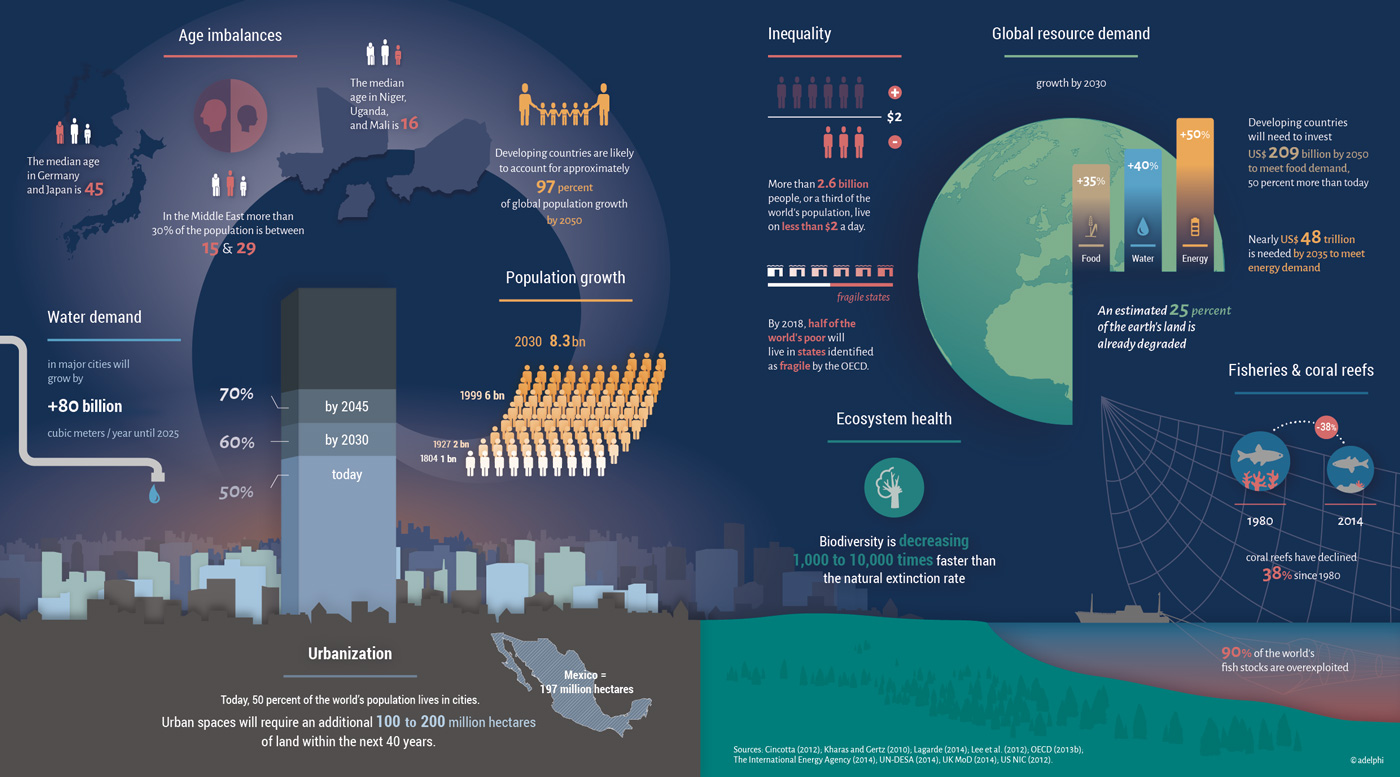
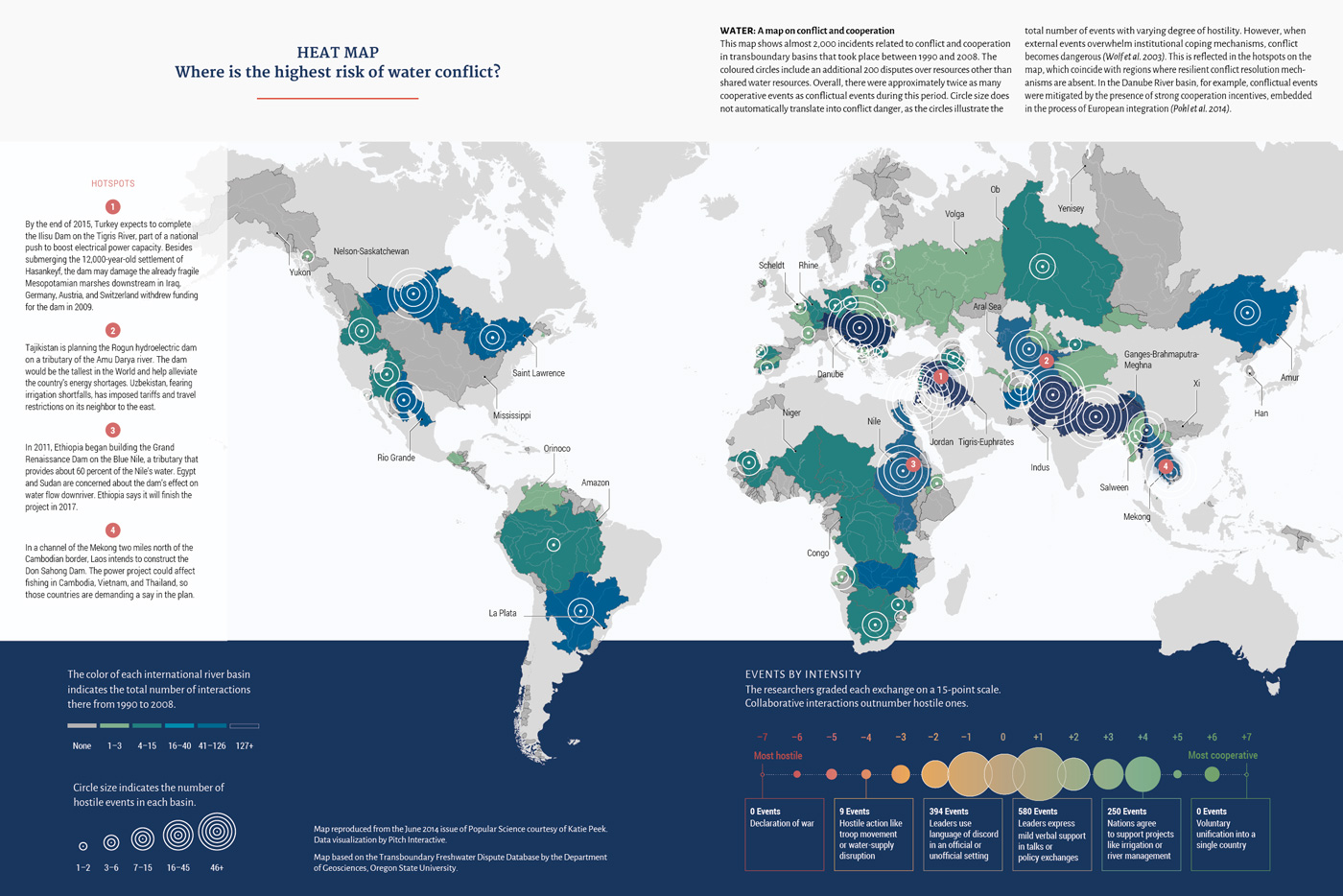
The World’s Most Hostile International Water Basins [Infographic]
›
At the launch of A New Climate for Peace, a new report on climate-fragility risks produced for the G7 by a consortium of international partners including the Wilson Center, USAID Deputy Assistant Administrator Christian Holmes called water a common denominator for climate risk.
-
How to Create a New Climate for Peace: Preventing Climate Change From Exacerbating Conflict and Fragility
›June 19, 2015 // By Lauren Herzer Risi
When the leaders of the G7 countries – Canada, France, Germany, Italy, Japan, the United Kingdom, and the United States – met earlier this month, they agreed to make fossil fuels a thing of the past by 2100. At the same time the G7 is also taking steps to make climate change’s connection to conflict a priority in the present.
-
European Parliament Passes Conflict-Minerals Bill; UN Releases Report on Money Flows in DRC
›A new report prepared by the UN Environment Program and UN peacekeeping operation in the Democratic Republic of Congo (known as MONUSCO) found that just two percent of the total value of illicit natural resources smuggled from the country comes back to armed groups. Still, these funds, which amount to around $13 million a year, allow some 25 to 49 groups to continue operating in the country’s war-torn eastern provinces. Much more, as much as 50 percent, ends up in the hands of transnational criminal networks with the remaining profits flowing to individuals or companies elsewhere in the DRC or in Uganda, Rwanda, and Burundi. -
What Paul Ehrlich Missed (and Still Does): The Population Challenge Is About Rights
›In 1968, Stanford University biologist Paul Ehrlich predicted hundreds of millions would starve to death over the next decade, many of them Americans, and the world would generally decline into chaos in his book The Population Bomb.
-
The Environmental Democracy Index: Ranking Access to Information and Justice
›June 2, 2015 // By Carley ChavaraConventional wisdom has been that wealthier countries have better environmental protections than poorer countries. However, a new annual report launched this year, the Environmental Democracy Index, reveals that a strong economy does not necessarily ensure strong environmental rights.
-
The Role of the Private Sector in Solving Asia’s Environmental Emergency: Interview With Mark Clifford
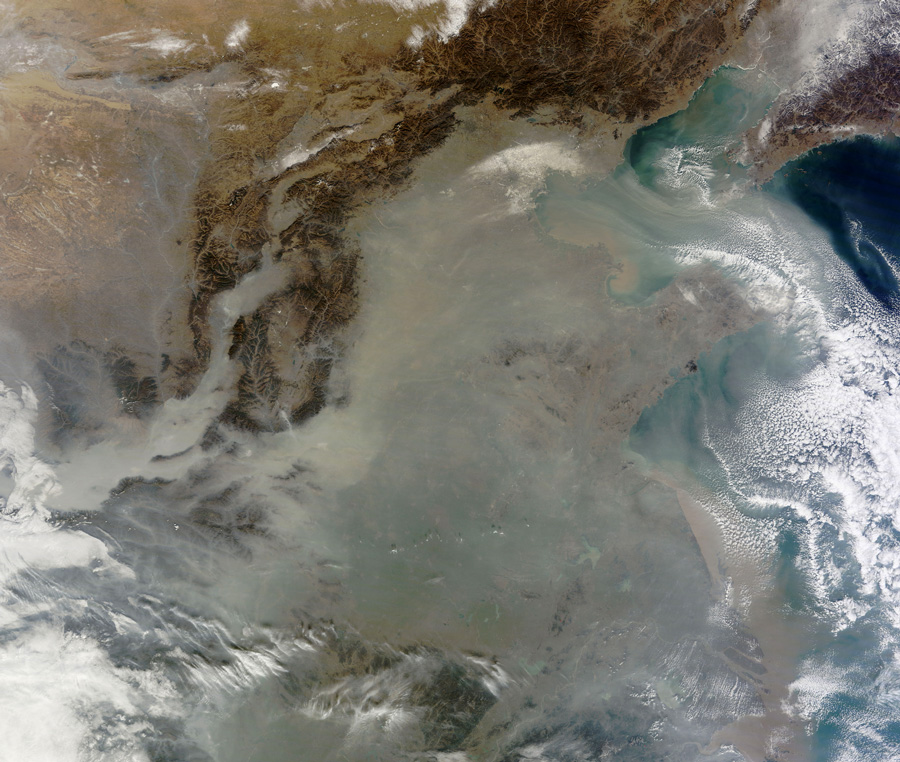
›From smoggy skies to rancid rivers and staggering slums, environmental challenges loom large for Asia. While much has been said about the role of government and NGOs in achieving a sustainable future, Mark Clifford, executive director of the Asia Business Council, believes companies are an indispensable but often overlooked part of the solution.
-
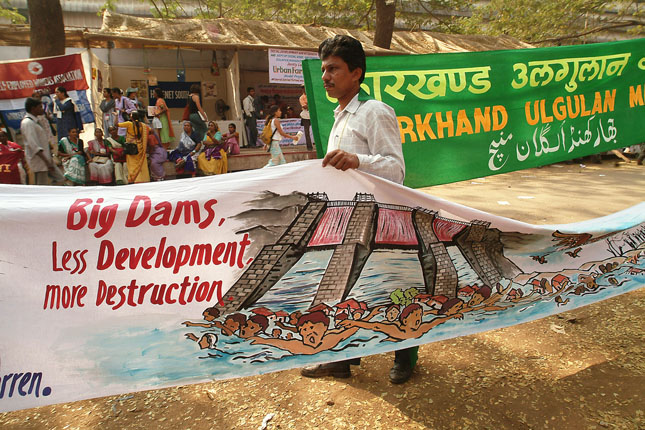
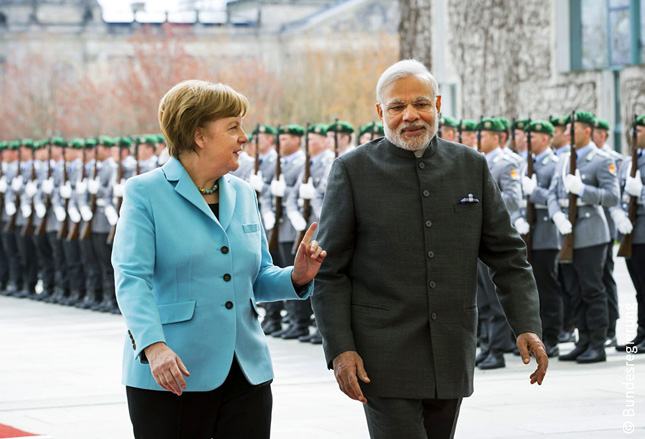
Under Modi, India’s Climate Goals Tied to Clean Energy Development
›India occupies a precarious position in the global climate change order. It trails only China, the United States, and the European Union in total emissions, but per capita emissions are far lower. India’s Prime Minister Narendra Modi won the 2014 elections on a strong pro-development platform and continues to wave this flag at all levels, making energy security a major priority and pledging to expand the country’s coal mining industry. But he also insists he will work with the international community on mitigating climate change. During a recent visit to France, Germany, and Canada, he declared, “India will set the agenda for the upcoming Conference of Parties” in Paris this fall.
-
Roger-Mark De Souza Talks Global Population Dynamics on ‘Radio Times’
›From aging populations in East Asia, Europe, and the United States to youth in sub-Saharan Africa, changing demographics have implications for the entire global community, said Roger-Mark De Souza, director of population, environmental security, and resilience at the Wilson Center in an April 20 interview for WHYY’s Radio Times in Philadelphia.
Showing posts from category Europe.