-
Environmental Security Weekly Watch: January 19-23, 2026
›
A window into what we’re reading at the Stimson Center’s Environmental Security Program
Community Forests Are the Frontline of a Minerals Race in the DRC (Mongabay)
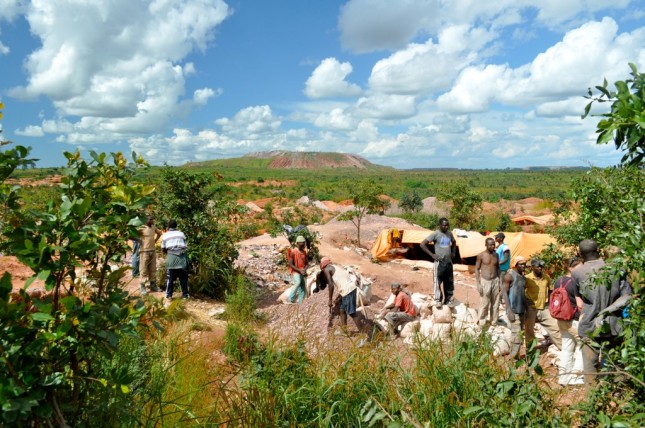
In the Democratic Republic of Congo’s copper-cobalt belt, local communities are establishing community forest concessions to secure land titles and prevent eviction by mining companies. Sparked by previous displacement incidents, these concessions allow communities to hold up to 50,000 hectares in perpetuity. This region holds approximately 70% of the world’s cobalt reserves, which has attracted intense competition from Chinese companies, the United States, and the DRC state-owned Gécamines to obtain minerals essential to high-tech, weapons, and clean energy industries. Between 2001 and 2024, 1.38 million hectares of tree cover in Lualaba and Haut-Katanga provinces were lost due to mining activities.
-
Environmental Security Weekly Watch: December 1-5, 2025
›
A window into what we’re reading at the Stimson Center’s Environmental Security Program
Deforestation and Flooding Turns Fallen Timber into Projectiles in Indonesia (The New York Times)
When Cyclone Senyar struck in late November, its death toll numbered 800 people across Indonesia, Malaysia, and Thailand. The Indonesian island of Sumatra saw a particular sort of damage as the storm unleashed sixteen inches of rain in parts of the island, wiped out four villages, and triggered flash floods and landslides. Decades of razing and converting natural forests into palm oil plantations, pulpwood farms, and gold mines drastically increased the region’s vulnerability to floods and landslides to the point that timber was transformed into projectiles that destroyed residences and infrastructure.
-
Going Beyond “Conflict-free”: Transition Minerals Governance in DRC and Rwanda
›Resource-rich nations such as the Democratic Republic of Congo (DRC) and Rwanda—which produce minerals ranging from coltan, cobalt, gold, tungsten, and tantalum, to tin (3TG)—hold tremendous importance in the global supply chains. The DRC produces 70% of global cobalt production, while its neighbor, Rwanda, generates around 30% of Tantalum.
-
Why Securing Youth Land Rights Matter for Agriculture-Led Growth in Africa
›Africa’s “youth bulge” represents both an enormous challenge and a tantalizing opportunity for the continent. With over 60 percent of Africans under the age of 35, governments are under increasing pressure to grasp the “demographic dividend” youth represent to boost agricultural productivity, enhance food security, and expand economic opportunities for young men and women. Each year, about 10-12 million young Africans aged 15-24 enter the labor market, but only 3.1 million formal wage jobs are generated, pushing millions of youth into low paying and precarious informal employment.
-
Sharon Guynup, Mongabay
Landed by the thousands: Overfished Congo waters put endangered sharks at risk
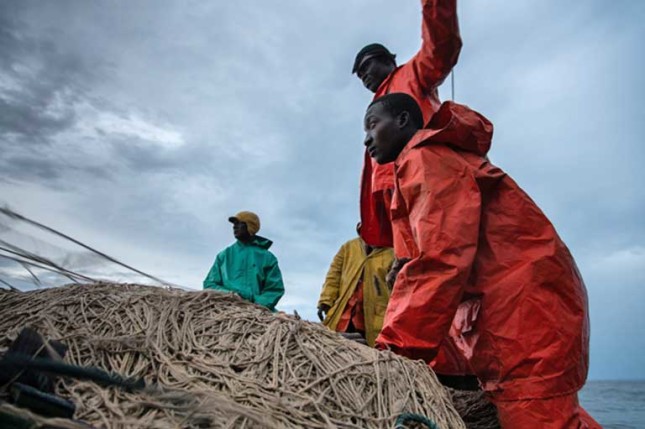
›October 27, 2020 // By Wilson Center StaffIn a video clip, seven fishermen climb into a wooden “Popo” boat that’s beached on the Republic of the Congo’s sandy shoreline. They start up the motor of the 40-foot, limo-length motorized canoe and head out into the Atlantic. The men aboard the weathered craft — its blue paint chipped and faded by years of salt and sun — could be out for a week.
-
In Sub-Saharan Africa, Community Health Workers Support Sustainable Health Systems and COVID-19 Response
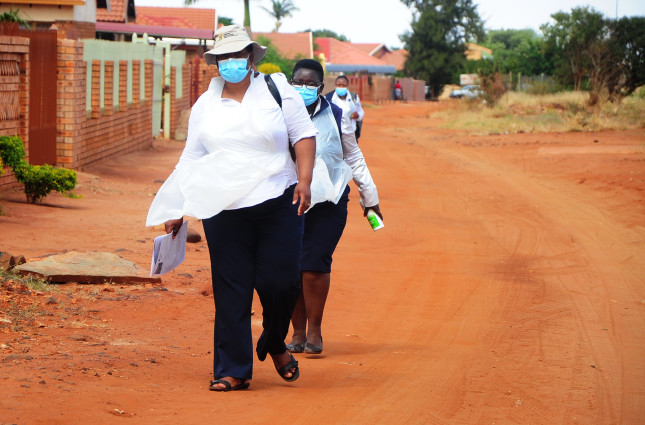
›“If there’s one message, it’s health systems need to be resilient, agile, and equitable,” said Uzma Alam, a researcher at the Africa Institute for Health Policy Foundation and Senior Program Officer of the Africa Academy of Sciences. “No one person, no one community, no one minority can be left behind. After all, your health system is as agile, as resilient as your weakest link.” She spoke at a recent Wilson Center event co-sponsored with the Population Institute, “Lessons from Africa: Building Resilience through Community-Based Health Systems.” The event focused on how locally led interventions improved the resilience and responsiveness of health systems in sub-Saharan Africa.
-
Many Companies Struggle to Comply with Conflict Mineral Reporting Rules
›“The exploitation of the mining and trade of conflict minerals in the eastern DRC [Democratic Republic of the Congo] has contributed to instability, violence, displacement of people, and severe human rights abuses,” says the Government Accountability Office (GAO) in its annual report, Conflict Minerals: Actions Needed to Assess Progress Addressing Armed Groups’ Exploitation of Minerals. The report examines a sample of filings from 1,083 companies that submitted conflict mineral disclosures required by the Securities and Exchange Commission (SEC) in 2019.
-
Cobalt is Critical to the Renewable Energy Transition. How Can We Minimize its Social And Environmental Cost?
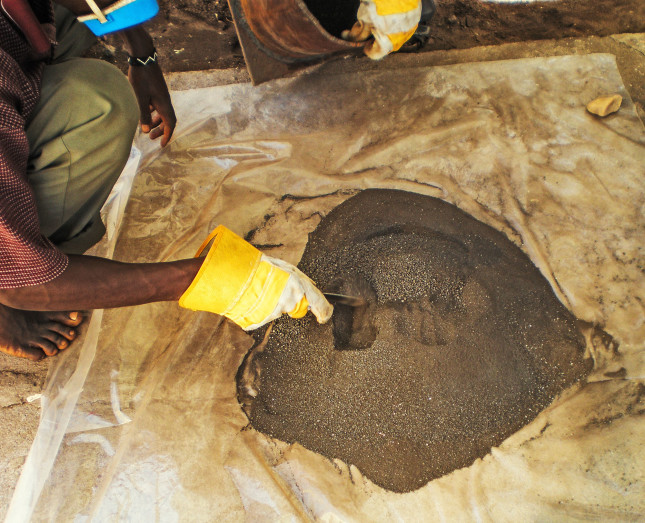
›Its name conjures an image of vivid deep blues. But when cobalt is dug out of the ground in ore form, there’s barely a hint of the rich hue it lends its name to. In the Democratic Republic of the Congo, which produces more than half of the world’s supply, it takes the form of heterogenite, a dull brownish mineral that could easily be mistaken for small clods of dirt.
But people die for this mineral. Children suffer for it. Livelihoods, educations, neighborhoods, environments and personal safety are sacrificed for it.
Showing posts from category Democratic Republic of Congo.