-
Tapping the Power in China’s Municipal Sludge
›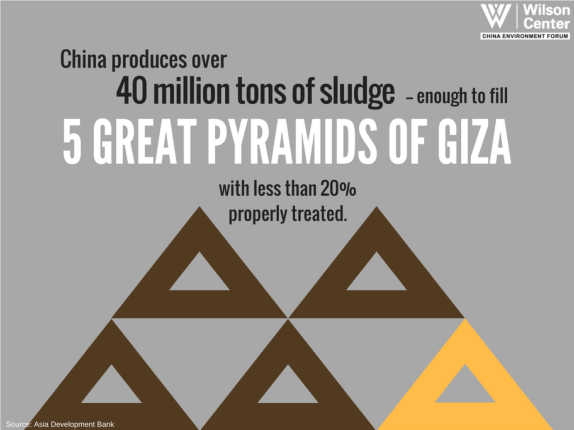
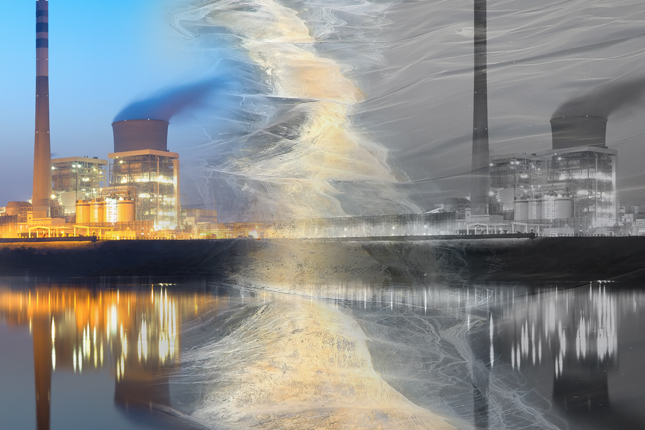
In September 2018, the Jinghu District People’s Court in Wuhu, Anhui Province sentenced 12 people from the Pol Shin Fastener Company between four months and six years in prison for committing serious interprovincial environmental crimes in Jiangsu and Anhui in 2016 and 2017. The court also fined the automobile hardware manufacturer 10 million yuan ($1.48 million). The crime? Dispatching ships and trucks to illegally dump 2500+ metric tons of highly acidic pickling sludge from steel production. Sludge—semi-solid waste emissions from industries and municipal water treatment plants—is yet another tough water and solid waste pollution challenge China faces.
-
Coal Communities Struggle to Diversify
›
Blanketed by freshly fallen snow, mountains of the Teton Range loomed above as I explored the picturesque town of Jackson, Wyoming. A native Bostonian, I had no experience in the heart of the country, but that week I wasn’t the only outsider wandering Jackson’s icy streets. In November 2018, experts from all over the world gathered in Jackson to attend the Jackson Hole Center for Global Affairs Forum with one common goal: to identify the challenges and opportunities for coal communities worldwide as they transition their economies away from coal.
-
Chinese Solar Shines at Home and on the Road
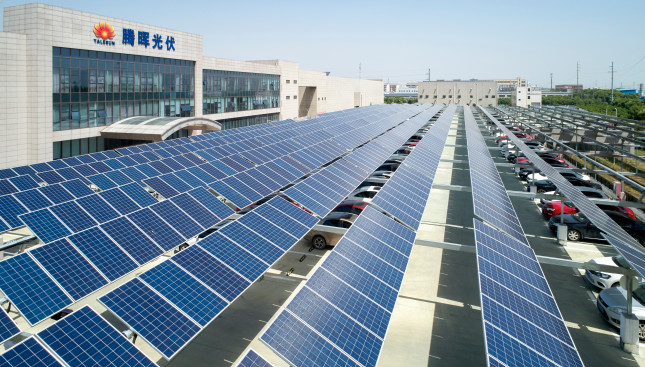
›For solar industry professionals in China, May 31, 2018, is a day that will live in infamy. At the beginning of 2018, Chinese domestic solar developers were riding a high after reaching a record 53 GW of newly installed solar capacity the previous year. Most sources projected this breakneck pace of new solar construction would continue through 2018. On June 1, 2018, however, the National Development and Reform Commission, Ministry of Finance, and National Energy Agency announced a new policy to lower the solar feed-in-tariff, halt subsidized utility-scale development, and implement a quota for distributed projects. Industry professionals refer to the infamous policy as “531” for May 31, 2018, the day that the solar industry ground to a temporary halt or “freezing point.”
-
China’s Race to Develop Autonomous Vehicles
›Autonomous vehicles (AVs) are revving up in China. As part of the 2018 CCTV Spring Festival Gala, more than one hundred AVs swerved perfect 8’s on the Hong Kong-Zhuhai-Macao Bridge, showcasing Baidu Apollo’s latest AV technology. China is a latecomer to the automotive industry, but it is taking the wheel in autonomous driving technologies and electric and hydrogen cars, viewing the sector as an unprecedented opportunity to play catchup with the rest of the world (See China Environment Forum webinar on China’s new energy vehicle trends below). Companies in China and around the world want to tap into the lucrative autonomous technology market that could reach $2.3 trillion by 2030.
-
On Tap: Seeking a Game Changer to Stop China’s River Pollution
›In Wuxi, a city 84 miles west of Shanghai, nearly 2 million residents had foul smelling green water coming out of their taps for a week in May 2007. Wuxi sits on the shores of Lake Tai, China’s third largest freshwater lake. And on that week in May, it experienced a perfect cocktail of industrial effluents, agricultural runoff, and sewage, which created a toxic cyanobacterial bloom, leaving 70 percent of the city’s water undrinkable. The Lake Tai incident was not an anomaly. Poor oversight and enforcement of water pollution regulations and standards has long left between 30 and 50 percent of China’s surface and groundwater undrinkable.
-
Choke Point Solutions: Can Western China Lower its Coal-Water Risk?
›China’s war on pollution and goals to lower carbon emissions are noteworthy as the United States takes a back seat in the global energy transition. Cleaner air and low carbon efforts in China could significantly change the country’s environmental health story and contribute to global efforts to lower greenhouse gas emissions. However, China’s energy reforms look less green now than they seemed after Paris in 2015. While China’s rate of increase in CO2 emissions has slowed and the share of renewables in its energy mix continues to grow, the Chinese government’s pursuit of clean air along its east has shifted more polluting and water-intensive coal-fired power development into the country’s west. To continue to lead the way in this “Asian Century,” China must further incorporate water-saving reforms into its energy and environment plans.
-
China’s Demand for Raw Materials Harms Communities Around the World
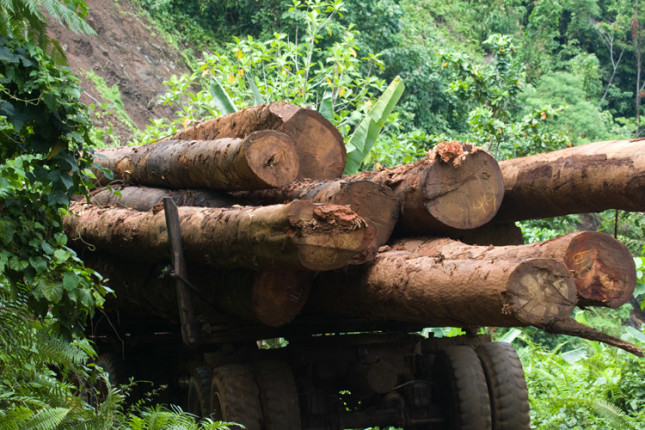
›The Solomon Islands’ “commercially available forests will be gone in about 15 years” due to deforestation, said Lela Stanley, a Policy Advisor for Global Witness’ Asia Forests team at the Wilson Center’s recent China Environment Forum event. It looks like they are logging about 20 times faster than they should for the logging to be sustainable, she added. While timber from the islands is exported to China—the world’s largest importer and consumer of timber products—local residents and communities bear the brunt of the environmental cost of lost ecosystem services suffered at the hands of the timber trade. And they aren’t alone. China’s insatiable demand for raw materials and its harmful resource extraction practices wreak havoc on the ecosystems of its many producer countries.
-
More than Just a BRI Greenwash: Green Bonds Pushing Climate-Friendly Investment
›From the cultural hub of Lahore down to the bustling ports of Karachi, smog is king in Pakistan, with citizens enduring unhealthy air quality for much of the year. The smog, generated mostly by crop and garbage burning and diesel emissions from furnaces and cars, could get worse by the end of this year when Pakistan opens five new Chinese-built coal power plants, funded by a $6.8 billion venture under the China-Pakistan Economic Corridor (CPEC) initiative. These five plants are just the beginning of the Pakistan government’s planned 7,560 MW expansion in coal power, which are CPEC-energy priority projects. “It’s a perfect storm for a pollution crisis,” said Michael Kugelman of the Wilson Center’s Asia Program. “The poor will continue to burn a variety of polluting materials to produce fuel, and now you’re also going to be introducing dirty coal into the mix. Combine that with crop burning in the countrywide and car exhaust fumes in rapidly growing cities, and you’ve got a really smoggy mess on your hands—and in your lungs.”
Showing posts from category China.