• woodrow wilson center
  • ecsp

New Security Beat

Subscribe:
  • rss
  • mail-to
  • Who We Are
  • Topics
    • Population
    • Environment
    • Security
    • Health
    • Development
  • Columns
    • China Environment Forum
    • Choke Point
    • Dot-Mom
    • Friday Podcasts
    • Navigating the Poles
    • Reading Radar
  • Multimedia
    • Water Stories (Podcast Series)
    • Backdraft (Podcast Series)
    • Tracking the Energy Titans (Interactive)
  • Films
    • Water, Conflict, and Peacebuilding (Animated Short)
    • Paving the Way (Ethiopia)
    • Broken Landscape (India)
    • Scaling the Mountain (Nepal)
    • Healthy People, Healthy Environment (Tanzania)
  • Publications
  • Events
  • Contact Us

NewSecurityBeat

The blog of the Wilson Center's Environmental Change and Security Program
Showing posts from category Brazil.
  • Michael Kugelman, Sustainable Security

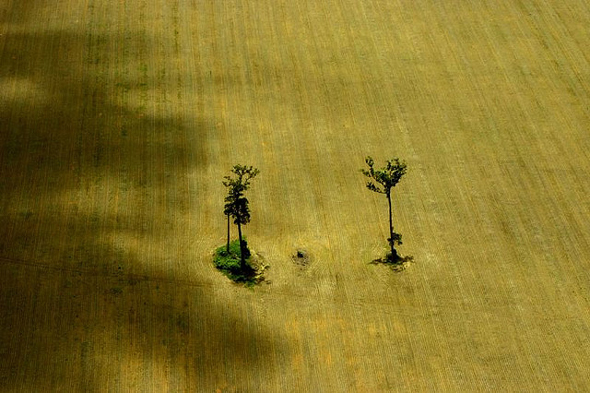
    The Global Land Rush: Catalyst for Resource-Driven Conflict?

    ›
    July 31, 2012  //  By Wilson Center Staff
    The original version of this article, by Michael Kugelman, appeared on SustainableSecurity.org.

    On May 11, the UN approved new international rules to govern how land is acquired abroad. These Voluntary Guidelines (VGs), the outcome of several years of protracted negotiations, are a response to growing global concern that nations and private investors are seizing large swaths of overseas agricultural land owned or used by small farmers and local communities for food, medicinal, or livelihood purposes. FAO head Jose Graziano da Silva describes the VGs as “a starting point that will help improve the often dire situation of the hungry and poor.”

    It’s hard to quibble with the intent of the guidelines. They call for, among other things, protecting the land rights of local communities; promoting gender equality in land title acquisition; and offering legal assistance during land disputes.

    Unfortunately, however, any utility deriving from the VGs will be strictly normative. As their name states explicitly, they are purely optional. A toothless set of non-obligatory rules will prove no match for a strategy that is striking both for its scale and for the tremendous power of its executioners.

    Oxfam estimates that nearly 230 million hectares of land (an area equivalent to the size of Western Europe) have been sold or leased since 2001 (with most of these transactions occurring since 2008). According to GRAIN, a global land rights NGO, more than two million hectares were subjected to transactions during the first four months of 2012 alone. One of the largest proposed deals – an attempt by South Korea’s Daewoo corporation to acquire 1.3 million hectares of farmland in Madagascar – failed back in 2009. Still, even larger investments are being planned today, including a Brazilian effort to acquire a whopping six million hectares of land in Mozambique to produce corn and soy (Mozambique offered a concession last year).

    Continue reading on SustainableSecurity.org.

    Sources: BBC, Food and Agriculture Organization, GRAIN, MercoPress, Oxfam, Reuters.

    Photo Credit: “Garde armé,” courtesy of flickr user Planète à vendre.
    MORE
  • Jennifer Dabbs Sciubba, The Huffington Post

    Global Threats Exist, But Also Many Global Demographic Opportunities for the United States

    ›
    July 3, 2012  //  By Wilson Center Staff
    The original version of this article, by Jennifer Dabbs Sciubba, appeared on The Huffington Post.

    Events like the Arab Spring gave birth to a generation of demographic converts in the national security community. Many are now convinced that demography matters because demographers today can clearly show how youthful population profiles in the developing world could lead to conflicts over the next 20 years – a major concern for policymakers.

    Too much focus on demography and conflict, though, means policymakers miss opportunities for cooperation.

    We are used to thinking of the wealthy and stable “Global North” and the poor and tumultuous “Global South,” but a demographic divide within the developing world is emerging, a third category of states that are growing older, more urban, more prosperous, more peaceful, and active in international affairs. These states – particularly India, Brazil, and South Africa – represent opportunities for building U.S. and world security.

    Even as it maintains its longstanding relationships in Europe and elsewhere in the developed world, the U.S. should be more assertive in seeking partnerships with India as both a counterbalance to China and as a global security partner in addressing piracy and terrorism and in distributing international aid.

    Continue reading on The Huffington Post.

    Photo Credit: Tahrir 2011, courtesy of flickr user Denis Bocquet.
    MORE
  • Laurie Goering, AlertNet

    Pop at Rio+20: Brazil a Model for Slowing Population Growth, Say Experts

    ›
    June 21, 2012  //  By Wilson Center Staff
    The original version of this article, by Laurie Goering, appeared on AlertNet.

    Rosimere Lopes knows what she does not want in life.

    The 23-year-old, who lives in Cachoeirinha, a hillside slum in Rio’s gritty North Zone, was born when her mother was just 16, and grew up taking care of her five younger brothers and sisters while her mother worked.

    As a result of missing so much education, she’s still trying to finish high school. But she has accomplished one important thing – she has no children of her own yet, despite having a regular boyfriend.

    “My mother got pregnant at 16 so I know the consequences. I don’t want that,” she said. “I want to do better.”

    In the last decade, Brazil has undergone a family planning revolution. In 2000, the country’s birthrate was 2.4 children per woman, already dramatically down from decades past. Today it has dropped to 1.9 children, below replacement level and on a par with many developed countries.

    That slowdown, built on making available better information and contraceptives, and on growing urbanization, is increasingly looked at as a model by experts around the world trying to find ways to dampen population growth and consumption – both linked to accelerating climate change and resource scarcity.

    Continue reading on AlertNet.

    Sources: UN Population Division.

    Photo Credit: A grandmother, mother, and child in Brasilia, courtesy of flickr user babasteve (Steve Evans).
    MORE
  • Vicky Markham, RH Reality Check

    Pop at Rio+20: Favelas and Protests

    ›
    June 20, 2012  //  By Wilson Center Staff
    The original version of this article, by Vicky Markham, appeared on RH Reality Check.

    This morning I ventured the opposite direction from Rio Centro where the UN Rio+20 negotiations are taking place, and travelled with colleagues to the Cachoeirinha (I was told it means “waterfall”) favela in Rio de Janeiro. These shantytowns are quite common in Rio, well over one million strong, located within and around the city limits. This particular one has 37,000 residents.

    We made the trip to visit the Brazilian Society for Family Welfare (BEMFAM) reproductive health and family planning clinic there, and were treated to a gathering of youth already discussing the facts of life, and more, with a BEMFAM counselor. This is especially poignant because youth in Brazil, similar to youth worldwide, are key to the issues we are debating here at the UN Rio+20 meetings just a few miles away. The Brazilian youth demographic, and the world’s, is the largest ever in history – it’s called the “youth bulge” – and from favelas, to cities, suburbs and rural areas everywhere, they represent the decision makers for the world’s future at all levels.

    Here at the BEMFAM clinic, an affiliate of the International Planned Parenthood Federation’s array of family planning clinics worldwide, youth have weekly meetings and can come in daily if needed for their reproductive health needs. We entered to find about 25 adolescents sitting in a circle in very animated discussion about how they viewed sexuality, reproductive health, being young, their feelings and emotions about this period in their life. Through translators we learned so much from these adolescents and young adults, and once revealed I can’t help but feel how similar they are to our own youth. They cared about their friends, family, (how much their parents don’t know), going to college, getting jobs, raising families, school, and having fun. One glaring difference that emerged however is accessibility to many of their hopes and dreams – resources to come by any of their plans are scarce, and few will likely see college or even jobs from what they told us. This however did not make them dour or negative; they were bright, committed, compelling, cheerful, very well-spoken, and passionate about all they relayed to us.

    Continue reading on RH Reality Check.

    Photo Credit: “Riocinha Favela – Rio de Janeiro Brazil,” courtesy of flickr user David Berkowitz.
    MORE
  • Pop at Rio+20: Cairo, Rio, and Beyond

    ›
    June 18, 2012  //  By Sandeep Bathala
    Greetings from Rio de Janeiro! I will be blogging from the UN Conference on Sustainable Development throughout the week, tracking the inclusion of reproductive health and rights in the agenda.

    Population dynamics have significant influence on sustainable development but the two have not always been seen as connected.

    This year’s conference is the follow-on to the original UN Earth Summit held in Rio in 1992 (thus Rio+20). The resulting documents from that conference – Agenda 21, the Rio Declaration on Environment and Development, and the Statement of Principles for the Sustainable Management of Forests – were adopted by more than 178 governments and have done much to set the sustainable development agenda over the last two decades. Population dynamics were largely left off the table and instead were taken on separately, and in parallel, at the International Conference on Population and Development in Cairo in 1994.

    This year, watchers from across the spectrum are eager to see these two issues talked about in a more integrated fashion. The official proceedings don’t start until the 20th, but side events have already begun.

    At the first of Population Action International’s side events, appropriately named “From Rio to Cairo to Rio…and Beyond,” Eliya Zulu, executive director of the African Institute for Development Policy, said that virtually all development policies in sub-Saharan Africa cite population growth as an inhibitor to sustainable development and efforts to alleviate poverty, ensure food security, and preserve the environment. Furthermore, climate change is increasingly seen as a major threat to sustainable development in Africa. Policymakers in the region recognize the linkages between population, climate change, and sustainable development; however, little integration of these issues – operationally or conceptually – has been achieved.

    Michael Herman, a technical adviser on population and economic development at the United Nations Population Fund, reminded audience members that demographic projections, like those predicting 10 billion by mid-century, are not destiny: population growth or decline is affected by policies, which should include human rights-based access to voluntary family planning.

    Doris Mpoumou, an international policy officer at International Planned Parenthood Federation’s Western Hemisphere Regional Office, concluded the event by describing efforts to ensure that the Rio+20 outcome document being negotiated recognizes several key points. First, that population dynamics influence production and consumption rates; second, that population dynamics are relevant to the management of resources and sustainable development planning; and third, that population dynamics should be carefully integrated into development strategies and environmental planning with a focus on human rights.

    Stay tuned here for more updates from Rio+20 and follow us on Twitter. I’ll be at every population-environment event I can get to and will also be visiting a favela with IPPF to see first-hand the ways Brazilians cope with the challenges of sustainable development.

    Photo Credit: View of Rio de Janeiro from a mountain in Tijuca National Forest, courtesy of Michos Tzovaras/UN Photo.
    MORE
  • Natural Resource Management, Climate Change, and Conflict

    ›
    Reading Radar  //  April 4, 2012  //  By Kate Diamond
    In Climate Change and Conflict: Lessons From Natural Resource Management, a new report from the Danish Institute for International Studies, authors Mikke Funder, Signe Marie Cold-Ravnkilde, Ida Peters Ginsborg, and Nanna Callisen Bang, review literature on how natural resource management, climate change, and conflict interact on the local, national, and transboundary levels, from which they offer lessons for development policymakers and programmers. Since natural resource management is “strongly related” to how climate change and conflict interact, they write, a better understanding of how natural resource management has taken conflict prevention and resolution into account would benefit development work aimed at mitigating climate change’s “multiplier effect” on conflict. Recommendations include working on as local a level as possible; working with and strengthening existing customary and legal conflict resolution frameworks; and coordinating development efforts across sectors so that policymakers and programmers can minimize the risk of unintentionally causing or aggravating conflict.

    In his March 2012 Transatlantic Academy paper, “The Geostrategic Implications of the Competition for Natural Resources: The Transatlantic Dimension,” François Heisbourg analyzes the strategic implications of emerging trends affecting the global energy marketplace, including climate change and scarcity. Whereas Europe and the United States shaped energy markets in the 19th and 20th centuries, respectively, there is no comparable leader in the 21st century marketplace, writes Heisbourg, nor is it clear that one will emerge. Instead, there will be a growing number of influential countries, like Brazil, India, and China, that will have an impact as both consumers and producers. That said, the Persian Gulf will remain geopolitically important given its dominance of the oil market, giving reason for the United States, Europe, India, and China to actively pursue cooperation in the Gulf in order to minimize the risk of future energy crises, Heisbourg concludes.
    MORE
  • More People, Less Biodiversity? The Complex Connections Between Population Dynamics and Species Loss

    ›
    March 8, 2012  //  By Laurie Mazur

    “For if one link in nature’s chain might be lost, another and another might be lost, till this whole system of things should vanish by piece-meal.”

    ~ Thomas Jefferson, 1799

    This much is clear: As human numbers have grown, the number of species with whom we share the planet has declined dramatically. While it took about 200,000 years for humanity to reach one billion people around 1800, world population has grown sevenfold since then, surpassing seven billion last year.

    MORE
  • The Unconquered: In Search of the Amazon’s Last Uncontacted Tribes

    ›
    From the Wilson Center  //  December 29, 2011  //  By Kayly Ober
    In the far west of the Brazilian Amazon reside some of the last indigenous tribes on Earth untouched by modern society. In 2002, writer and photographer Scott Wallace, on assignment for National Geographic magazine, undertook a three month journey through the Javari Valley Indigenous Land on an expedition to map and protect the territory of the flecheiros, or Arrow People, named for the poison-tipped arrows they use. Wallace turned the chronicles of his adventure into a book while in residence as a Public Policy Scholar at the Wilson Center.

    On November 21, Wallace returned to the Center to present his finished book, The Unconquered: In Search of the Amazon’s Last Uncontacted Tribes.

    Over the past 40 years, Brazil’s policies towards indigenous tribes have changed dramatically, said Wallace – from initially wanting to “civilize” tribes through contact, to a modern hands-off approach. He explained that globalization and demand for rubber in the twentieth century meant more contact with indigenous tribes and, ultimately, more upheaval. As a result, many tribes took up hostile attitudes towards outsiders and retreated as far into the wilderness as possible.

    Today, the Brazilian Department of Isolated Indians is attempting to map out the extent of uncontacted peoples’ lands in order to better protect them from intrusion. Over the last eight years since the book was written, the official number of uncontacted tribes has increased from 17 to 26. Javari Valley alone hosts eight distinct ethnic groups, making it the largest concentration of uncontacted tribes in the world.

    The leader of Wallace’s expedition, Sydney Possuelo, is an explorer who was formerly the head of the Department of Isolated Indians and once one of Brazil’s most famous sertanistas (“agents of contact”). Possuelo is now a champion of the vision that we should no longer contact tribes, said Wallace, but only “identify them and get legal protection for [their] lands and erect control posts to keep intruders out.”

    Old Tensions, New Threats

    Although Wallace holds up Brazil as one of the countries with the most enlightened policies for native Indians in the Americas, he said there is cause for concern as intrusions continue. As Wallace notes on his blog, isolated Indians are known to travel extensively by foot during the dry season, appearing along the riverbanks as they search for turtle eggs buried in nests along the sandy beaches of the western Amazon. Mounting pressure from logging crews, wildcat gold prospectors, and seismic teams exploring for oil and gas are flushing these isolated indigenes out of the forests.

    During their trek to map the flecheiros, Wallace’s group ran into an illegal gold mining operation, and, although they managed to take the dredge to the local authorities, Wallace said he fears corruption may have stymied justice.

    Rights-Based Conservation

    On the positive side, Wallace pointed out that by protecting indigenous tribes, the government is also protecting tens of thousands of acres of virgin rainforest in what is a mutually beneficial intersection of conservation and human rights. “Indians are the rightful owners of the land and the most efficacious guardians of the rainforest,” he said.

    While there are many obstacles threatening the survival of uncontacted tribes, Wallace said that the situation is not hopeless and that conservation through protecting indigenous-rights in Brazil is a good starting point. “When there is a commitment to do something and resources are made available,” he said, “what seems like inevitable development, like the overrunning of forests, can be stopped.”

    Event Resources
    • Photo gallery
    • Video
    Photo Credit: “Brazil Amazon adventure,” courtesy of jonrawlinson.
    MORE
Newer Posts   Older Posts
View full site

Join the Conversation

  • RSS
  • subscribe
  • facebook
  • G+
  • twitter
  • iTunes
  • podomatic
  • youtube
Tweets by NewSecurityBeat

Trending Stories

  • unfccclogo1
  • Pop at COP: Population and Family Planning at the UN Climate Negotiations

Featured Media

Backdraft Podcast

play Backdraft
Podcasts

More »

What You're Saying

  • Volunteers,At,The,Lagos,Food,Bank,Initiative,Outreach,To,Ikotun, Pan-African Response to COVID-19: New Forms of Environmental Peacebuilding Emerge
    Rashida Salifu: Great piece 👍🏾 Africa as a continent has suffered this unfortunate pandemic.But it has also...
  • A desert road near Kuqa An Unholy Trinity: Xinjiang’s Unhealthy Relationship With Coal, Water, and the Quest for Development
    Ismail: It is more historically accurate to refer to Xinjiang as East Turkistan.
  • shutterstock_1779654803 Leverage COVID-19 Data Collection Networks for Environmental Peacebuilding
    Carsten Pran: Thanks for reading! It will be interesting to see how society adapts to droves of new information in...

What We’re Reading

  • Rising rates of food instability in Latin America threaten women and Venezuelan migrants
  • Treetop sensors help Indonesia eavesdrop on forests to cut logging
  • 'Seat at the table': Women's land rights seen as key to climate fight
  • A Surprise in Africa: Air Pollution Falls as Economies Rise
  • Himalayan glacier disaster highlights climate change risks
More »
  • woodrow
  • ecsp
  • RSS Feed
  • YouTube
  • Twitter
  • Facebook
  • Home
  • Who We Are
  • Publications
  • Events
  • Wilson Center
  • Contact Us
  • Print Friendly Page

© Copyright 2007-2021. Environmental Change and Security Program.

Woodrow Wilson International Center for Scholars. All rights reserved.

Developed by Vico Rock Media

Environmental Change and Security Program

Woodrow Wilson International Center for Scholars

Ronald Reagan Building and International Trade Center

  • One Woodrow Wilson Plaza
  • 1300 Pennsylvania Ave., NW
  • Washington, DC 20004-3027

T 202-691-4000