-
Managing the Planet: The Road to Rio+20
›“We still see people thinking about the environment as if it is something apart. The idea of a synergy, a balance of development still, I think, eludes us both in theoretical, but especially in practical terms. And that is what Rio+20 is about,” said Ambassador Luiz Alberto Figueiredo Machado, under-secretary for environment, energy, science, and technology at the Brazilian Ministry of Foreign Affairs.
The Rio+20 conference next year, marks the 20th anniversary of the 1992 UN Earth Summit. It will be an opportunity to generate new answers to the question of how to collectively develop in a more sustainable and balanced way, said Figueiredo. Jacob Scherr, director of strategy and advocacy at the Natural Resources Defense Council, Richenda Van Leeuwen, senior director for energy and climate at the UN Foundation, and Thomas Lovejoy, biodiversity chair at the Heinz Center for Science and professor of environmental science and policy at George Mason University, joined the ambassador at the Wilson Center on November 16 for a discussion about preparations for the upcoming conference. The event was part of the Managing the Planet seminar series, coordinated jointly by George Mason University and the Wilson Center.
Sustainable Development Goals
Rio+20 should reaffirm the sustainable development vision of the first Earth Summit, said Scherr, “of our ability to deal with all of these issues at once: to move forward on economics, and dealing with poverty, of being equitable, and protecting and preserving the environment for future generations.”
Figueiredo said he sees the concept of a “green economy” as an “instrument to promote sustainable development and eradicate poverty. And in that sense, it seems clear that we will not find one green economy as such, but probably as many green economies as countries in the world, because each country will find its way of using that kind of tool.”
One proposal for the conference, supported by Brazil, is to devise a set of sustainable development goals, which would “embrace the Millennium Development Goals and instill a certain sustainability viewpoint to all of them,” Ambassador Figueiredo said. Furthermore, they would be global in nature, rather than geared towards developing countries, providing a vision for collective development.
“The Millennium Development Goals were good in some ways [but] they were fairly weak on the environmental side,” said Thomas Lovejoy. “This is a chance to actually improve on that, to really bring these elements together.”
Action and Accountability
Through “sustainable development dialogues,” Brazil is working to provide a new mechanism for civil society input at the conference. According to Figueiredo, Brazil hopes to “create a bridge between those who understand the issues, those who have a deep knowledge of the issues, and those who have the power again to do something about it.”
“We have been talking about these issues for 40 years, what we really need is a meeting that, as the Secretary General recently said, is a conference about implementation…to really start moving us down the path towards a sustainable future,” said Scherr.
“You might argue that everything that happened 20 years ago was an absolute failure, but of course it was not, because an awful lot has happened in the interim, it’s just that it hasn’t happened on a big enough scale or fast enough,” Lovejoy said.
“What gives me a lot of reason for hope going into Rio+20 is there are a lot of very practical, very pragmatic efforts involved,” he said.
Richenda Van Leeuwen pointed to the UN Secretary General’s Sustainable Energy for All initiative as a potential agenda to follow. The initiative has three objectives: ensuring universal access to modern energy services; doubling the rate of improvement in energy efficiency; and doubling the share of renewable energy in the global energy mix.
“We are using Rio, and the seminal opportunity that it represents, as a mechanism to be able to bring these new commitments together…to show that there is an opportunity for concrete actions,” Van Leeuwen said.
A robust accountability framework is vital to that effort, Van Leeuwen said. “It’s easy to make a pledge at a pledging conference, but really what we are looking at is a whole new way of doing business, a whole new action agenda,” she said. “So we are very optimistic and very excited about the opportunity for Rio, but Rio not as an end really, but as a beginning and as an opportunity to be a springboard to get much further global action.”
Photo credit: “Brazil!,” courtesy of Flickr user sparktography.
Event Resources -
7 Billion: Reporting on Population and the Environment
›“It’s an issue – population – that is immensely diverse in its effects and repercussions, and it’s a great opportunity for reporting,” said Jon Sawyer, executive director of the Pulitzer Center on Crisis Reporting at a November 1 roundtable discussion at the Wilson Center. The session, reporting on population and the environment connections, also featured Dennis Dimick, executive environment editor at National Geographic; Kate Sheppard, environment reporter for Mother Jones; and Heather D’Agnes, foreign service environment officer at USAID.
“It’s an issue – population – that is immensely diverse in its effects and repercussions, and it’s a great opportunity for reporting,” said Jon Sawyer, executive director of the Pulitzer Center on Crisis Reporting at a November 1 roundtable discussion at the Wilson Center. The session, reporting on population and the environment connections, also featured Dennis Dimick, executive environment editor at National Geographic; Kate Sheppard, environment reporter for Mother Jones; and Heather D’Agnes, foreign service environment officer at USAID.The PBS NewsHour segment on “seven billion” featuring collaboration with the Pulitzer Center and National Geographic.
A Cumulative Discussion
“I ended up covering reproductive rights and health issues because I saw a need and a gap in coverage,” said Kate Sheppard. “I had been an environmental reporter for years…and so it sort of became this add-on beat for me.” But, she emphasized, they are actually very related issues.
“It’s a cumulative discussion,” said Dennis Dimick, speaking about National Geographic’s “7 Billion” series this year. “[Population] really hasn’t been addressed that much in media coverage over the past 30 years, in this country at least, and I think that the idea was that it wasn’t really just a discussion about the number seven billion, which is a convenient endline and easy way to get into something, but really to talk about the meaning of it, and the challenges and the opportunities that means for us as a civilization living on this planet.”
The series has had stories on ocean acidification, genetic diversity of food crops, the transition to a more urban world, as well as case studies from Brazil, Africa’s Rift Valley, and Bangladesh. “What we are trying to do in this series is really paint a broad picture to try to unpack all these issues and try to come at this question in sort of broad strokes,” Dimick said. “It’s sort of like we are orchestrating a symphony. Even though it’s a printed magazine, it’s a multimedia project – more than just words and more than just pictures.”
Collaborative Reporting
The Pulitzer Center, a non-profit journalism organization that seeks to fill gaps in coverage of important systemic issues, was able to commission pieces for PBS NewsHour that complemented the National Geographic series. This population collaboration launched the Center’s own initiative on population. “Our hope was that by having that platform, and the visibility of National Geographic and NewsHour, that it would bring attention to the rest of our work,” Sawyer said. The Pulitzer Center has gateways on water, food insecurity, climate change, fragile states, maternal health, women and children, HIV/AIDS in the Caribbean, and Haiti, in addition to population.
Playing off a story that was already making world headlines, the Pulitzer Center supported reporting by freelance journalist Ellen Knickmeyer on the demographic dimensions of the Arab Spring, and particularly the role of young people. The stories explored youth’s frustration at high unemployment and lack of prospects, their roles in the revolutions, and their expectations for the future.
“Of course, we had the advantage that the world was interested in North Africa because of the amazing events that were taking place, but it was an opportunity to get them to look at the other dimension to it,” Sawyer said.
Based on a model developed to cover water and sanitation in West Africa, the Pulitzer Center also created a partnership with four African journalists to produce reporting on reproductive health that will be distributed in both international and African media outlets. “They have important things to say to American audiences, to international audiences,” Sawyer said. “And so we see this project as an opportunity to bring them into the international media discussion.” The journalists will be reporting from the upcoming International Conference on Family Planning in Dakar, Senegal, later this month.
Advocating Discussions
“It’s really a nuanced discussion, and that is why covering these topics, and looking at all the different aspects of it, is really important,” said USAID’s Heather D’Agnes. Furthermore, speaking as a development practitioner, she emphasized the importance of offering solutions, such as family planning, as part of an integrated development approach.
“In our journalism we don’t pretend not to have arguments, or ideas, or thoughts about the issues we are covering,” said Sheppard, speaking of Mother Jones. “I think that the value is that you tell the story well and you do solid reporting – that gives people a more informed perspective.” Especially with complicated issues, like population and the environment, “people find it more accessible if you have a perspective…they can associate better with a story if you walk them through the process you have gone through as a reporter.”
“What we are really trying to do is to advocate a discussion of issues that aren’t getting well-aired in other media,” said Dimick. Sometimes you need to find an interesting or counterintuitive framework, such as the National Geographic story about rural electrification and TV novelas in Brazil. It started as a story about the booming popularity of soap operas, but also created the opportunity to talk about gender equity, family planning, and other complex issues. While the magazine does not advocate a position, like the editorial page of a newspaper might, Dimick said, they do use case studies to guide readers through the range of risks, choices, and opportunities and to help them understand their implications.
Event ResourcesVideo Credit: “World’s Population Teeters on the Edge of 7 Billion — Now What?,” courtesy of PBS NewsHour; “7 Billion, National Geographic Magazine,” courtesy of National Geographic. -
Book Review: ‘Plundered Nations? Successes and Failures in Natural Resource Extraction’
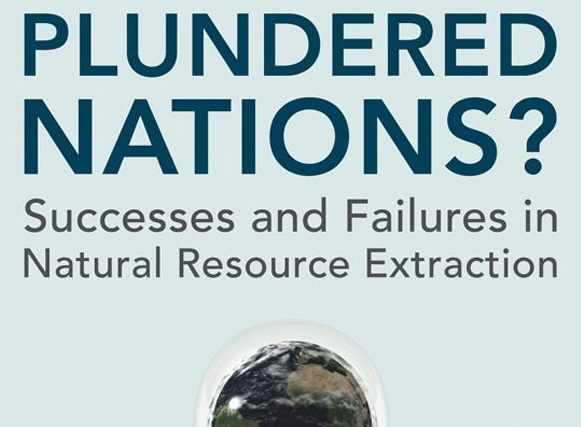
›The principal argument of Plundered Nations? Successes and Failures in Natural Resource Extraction is highlighted by the question mark in the title. In many resource rich countries, natural assets have not led to development. The book advances the hypothesis that “for the depletion of natural assets to be converted into sustained development, a series of decisions has got to be got sufficiently right” (p. 1). That series of decisions is examined in detail through case studies on Cameroon, Chile, Iran, Kazakhstan, Malaysia, Nigeria, Russia, and Zambia, produced by a diverse group of academic and practicing economists under the auspices of the Center for the Study of African Economies and the Oxford Center for the Economics of Resource Rich Countries (OxCarre).
-
Watch: Scott Wallace on the Amazon’s Last Uncontacted Tribes and the Intersection Between Human Rights and Conservation
›October 19, 2011 // By Wilson Center StaffIn the far west of the Amazon, some of the last uncontacted indigenous tribes on Earth live untouched by modern society. Scott Wallace, frequent contributor to National Geographic and former public policy scholar at the Wilson Center, spoke to New Security Beat about his new book, The Unconquered: In Search of the Amazon’s Last Uncontacted Tribes, which chronicles his harrowing trip through the Javari Valley Indigenous Land. Wallace accompanies former sertanista (“agent of contact”)-turned-native rights advocate Sydney Possuelo as he attempts to map and protect the territory of the flecheiros, or Arrow People, named for the poison-tipped arrows they use.
The Brazilian government and activists are trying to protect the areas where these native groups live and allow them to choose for themselves if they want contact. “It’s not that hard to find us,” Wallace said. For the moment, however, “it’s clear that they do not want that contact.”
By protecting these people, the government is also protecting thousands, if not millions, of acres of virgin rainforest, said Wallace, creating a mutually beneficial intersection between human rights and environmental conservation.
“The assumption is that there is now a global village, everyone’s connected…no one of us is separated from anyone else on the planet by more than six degrees of separation,” said Wallace. But that assumption breaks down in the face of these people who live in complete isolation from the rest of the world.
We have to decide whether to leave them alone and let them live their lives or try to make lasting contact, said Wallace. Contact would open up the tribe’s land and resources to development but come at great risk to their society, their lives (due to vulnerability to disease), and the Amazonian ecosystem, as the example of India’s Adavasi tribes demonstrates. -
Scott Wallace, National Geographic
A Death Foretold
›June 23, 2011 // By Wilson Center StaffThe original version of this article, by Scott Wallace, appeared on National Geographic News Watch.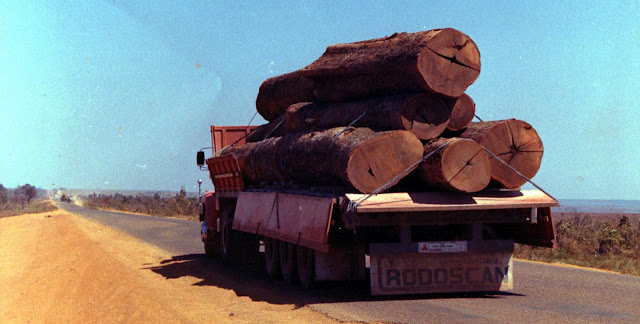
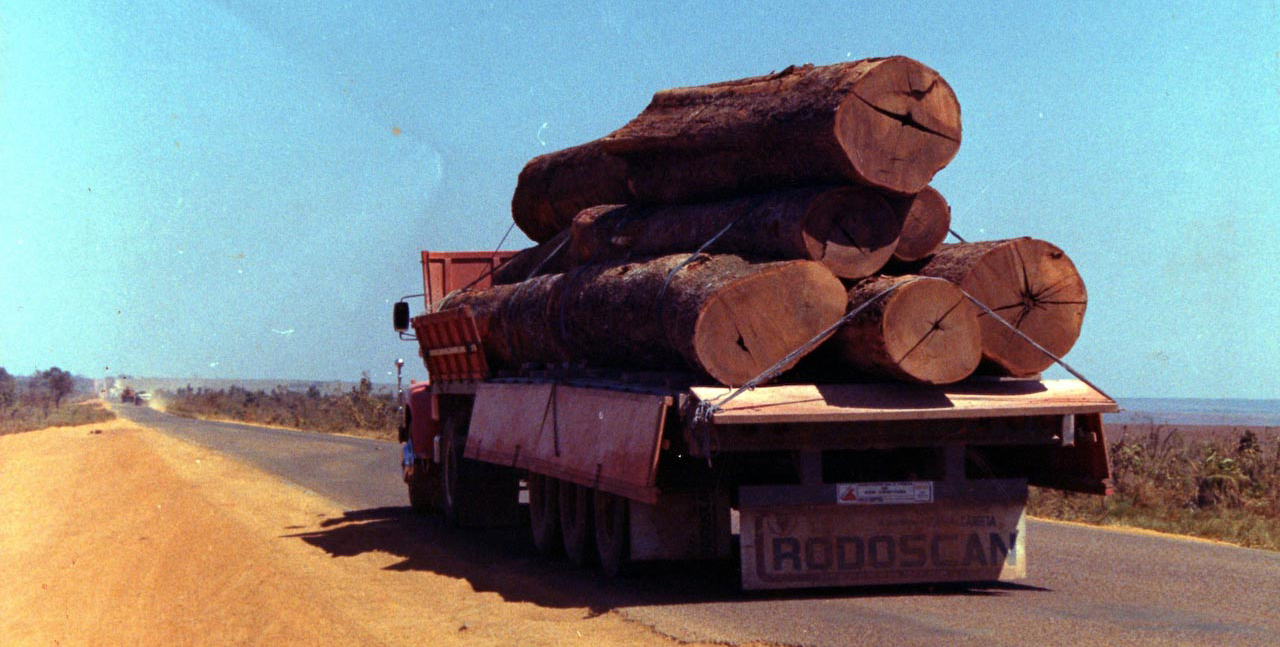
Late last month the Brazilian Congress passed a bill that if it becomes law would ease restrictions on rain-forest clearing and make it easier than ever to mow down the Amazon. That same day, 800 miles north of the parliamentary chamber in Brasilia, assailants ambushed and killed a married couple whose opposition to environmental crimes had placed them in the crosshairs of those who most stand to gain from the new legislation.
It’s a nauseatingly familiar story. Over the past 20 years, there have been more than 1,200 murders related to land conflict in Brazil’s Amazon region. Most of the victims, like the married activists Zé Claudio Ribeiro and Maria do Espírito Santo, were defenders of the rain forest – people seeking sustainable alternatives to the plunder-for-profit schemes that characterize much of what passes for “development” in the Amazon.
The state of Pará – where Zé Claudio and Maria were ambushed on their motorbike as they crossed a rickety bridge – holds an especially notorious reputation for environmental destruction and organized violence. Pará is the bloodiest state in Brazil, accounting for nearly half of all land-related deaths in recent decades. It sprawls across an area larger than the states of Texas, Oklahoma, and New Mexico combined. Picture a tropical version of the Wild West, stripped of the romance, where loggers and ranchers muscle their way onto public land as though they own the place and impose a law of the jungle with their hired thugs. Those who have the nerve to protest soon find themselves the targets of escalating threats. If they persist, they find themselves staring down the gun barrels of those come to make good on the threats.
Continue reading on National Geographic.
Photo Credit: “Toras,” courtesy of flickr user c.alberto. -
Annie Murphy, International Reporting Project
Mozambique Coal Mine Brings Jobs, Concerns
›May 31, 2011 // By Wilson Center StaffThe original version of this article, by Annie Murphy appeared on the International Reporting Project and NPR (follow the links for the accompanying audio track as well). Murphy appeared with three other IRP fellows at the Wilson Center on April 28 to talk about their experiences reporting abroad.
As developing countries grow, their need for raw materials grows, too.
This is the case for Brazil, a country that has much in common with the nation of Mozambique: Both have a mix of African and Portuguese influences; both are rich in natural resources; and both fought long and hard to throw off European colonialism.
Today, however, a Brazilian coal mine in Mozambique has some wondering what the energy demands of growing economies like Brazil really mean for African countries like Mozambique.
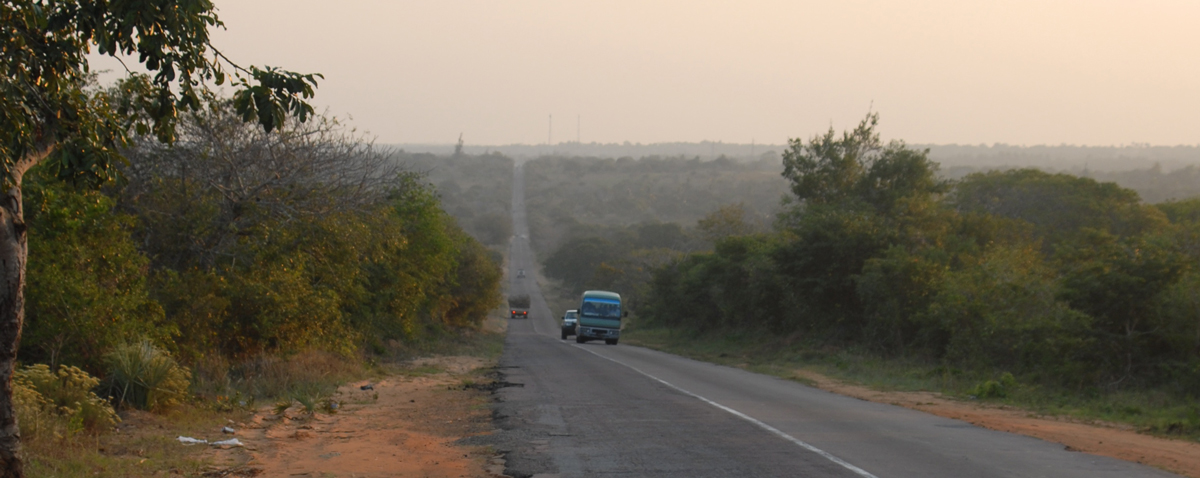
This coal mine in northwestern Mozambique is owned by the Brazilian company Vale — it’s a gaping, dark gray pit in the middle of a green, windswept savannah. Still under construction, it currently employees about 7,500 people.
Jose Manuel Guilengue, 23, a machine operator, says that he and a friend traveled 1,000 miles from the capital to get there, where they were both hired. That was a year ago. He now makes around $400 a month — which is more than four times the average salary in Mozambique.
According to the general manager overseeing construction, Osvaldo Adachi, this mine will produce about 11 million tons of coal each year, for at least three decades.
Continue reading and listen to the audio at the International Reporting Project.
Annie Murphy reported this story during a fellowship with the International Reporting Project (IRP). To hear more about Murphy and the IRP program, see the event summary for “Reporting on Global Health: A Conversation With the International Reporting Project Fellows.”
Photo Credit: Adapted from Mozambique, courtesy of flickr user F H Mira. -
Dividend or Deficit? The Economic Effects of Population Age Structure
›According to the latest projections, the global population will hit the seven billion mark later this year and perhaps nine billion by 2050. Yet, while the global population is growing, it is also aging, due to falling fertility rates and longer life expectancies. By 2050 the number of people aged 60 and over will reach two billion. At an event at the Wilson Center on April 1, Andrew Mason of the University of Hawaii at Manoa and the East-West Center and Ronald Lee of the University of California, Berkeley, discussed their research on the economic effects of an aging world with discussant Dalmer Hoskins of the Social Security Administration. [Video Below]
Changing Age Structures and Economic LifecyclesThere are three phases of age transition, Mason explained: during the first phase, high fertility rates and declining infant and child mortality rates increase the share of children in the population. In the second phase, the proportion of the working age population (those aged 15-64) increases, potentially providing a boost to production and consumption, and in the third phase, the elderly proportion increases due to lower fertility rates, decreasing production and increasing the burden on state support systems.
From 2010-2015, 85 countries are projected to witness the largest absolute increase in history of their populations aged 60 and over. This increase in elder populations is significant, Mason said, because it may mean slower economic growth.
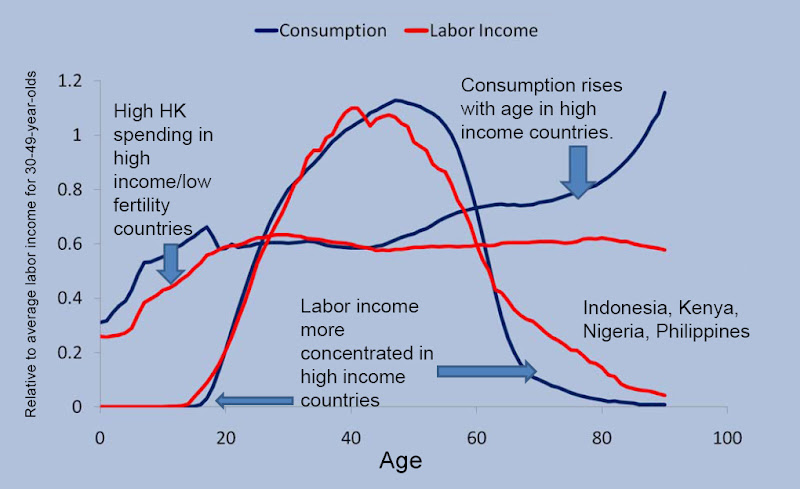
Based on data collected through National Transfer Accounts, Mason and Lee’s economic lifecycle tracks the labor income and consumption rates of a population at a given age. In high income countries, consumption increases around the teen years as a result of investments in education, then dips slightly, and, finally, sharply rises around the age of 80 due to high health care expenditures. The consumption rate remains relatively flat in low income countries, with consumption differing the most in the older ages.
The support ratio measures the number of workers relative to the number of consumers, while taking into account age-specific variances in number of hours worked and level of consumption. Mason explained that China, after four decades of rapid growth, has reached the peak of its support ratio, with many workers relative to the number of consumers. However, China is rapidly aging, like much of Northeast Asia, and also because of its one-child policy. The resulting decline in its support ratio will likely limit its economic growth; however, Mason cautioned that it would be “rash” to say that its growth will bottom out completely.
The United States has an age structure that is “quite a bit more favorable” than other industrial countries, Mason said. Higher fertility, lower life expectancy, and a higher rate of immigration mean that aging is coming more slowly to the United States than other developed countries.
The Second Demographic Dividend: An Investment OpportunityDuring the first demographic dividend, the labor force grows more rapidly than the dependent population, thus allowing more resources to be spent on economic growth. But what happens after that? As populations age, there is a “semi-automatic” increase in investment in human, physical, or financial capital, Lee explained; for example, as fertility falls, the amount invested per child increases. This second demographic dividend, said Lee, can help somewhat offset the decline in support ratio that comes in the third phase of the age transition – aging.
One response to the increased costs of an aging population, said Lee, is to reduce consumption in proportion to the decline in the support ratio. Another option would be adding more hours to the work day or pushing the retirement age back. In the United States, Lee said that to offset the declining support ratio entirely by postponing retirement would require postponement by eight years up to 2050, and 10 years by 2085.
Brazil, Lee said, is the “world champion” of pension generosity, where pensions make up 12 percent of the GDP. The United States, by contrast, relies on asset income from physical or financial investments for about two-thirds of its retirement income. Brazil’s challenge, when it begins to feel the effects of aging (it is still relatively young), will therefore be much greater than in the United States.
A “New Lens” on Aging
Aging, Hoskins said, is not the “catastrophe” that it has been portrayed to be in the media. Supporting an aging population is “something we can plan for and handle,” he said. It is possible “to do the right thing to make sure citizens have a decent life.” The problems come when a country waits too long or does not plan at all, such as in Nigeria and the Philippines where, Hoskins said, they have very underdeveloped social protection systems and the elderly have little to no income. Mason and Lee’s analysis of the work/consumption ratio, said Hoskins, offers a “new lens” into how the world will deal with aging.
Sources: Los Angeles Times, National Transfer Accounts, UNFPA, World Bank.
Image Credits: “Elderly couple – Meiji-jingu,” courtesy of flickr user Tom Spender. Chart courtesy of Ronald Lee and Andrew Mason, National Transfer Accounts. -
Deforestation, Population, and Development in a Warming World: A Roundtable on Latin America
›“Rural development and MCH [maternal child health] in the most remote, rural areas are going to largely explain the future of Latin American conservation, development, population, and urbanization,” said David Lopez-Carr, associate professor of geography at the University of California, Santa Barbara, at a recent Wilson Center roundtable on “Deforestation, Population, and Development in Latin America.”
Nearly 80 percent of Latin America’s people live in urban areas, yet the continent’s rural populations have a disproportionate effect on its forests. Panelists Liza Grandia, assistant professor of international development and social change at Clark University, and Jason Bremner, director of population, health, and environment at the Population Reference Bureau, argued that meeting the needs of these communities is therefore key to conserving Latin America’s forests. [Video Below]
Rural Populations Have Disproportionate Impact on Deforestation
“There are two Latin Americas,” said Carr. Countries like Argentina, Chile, and Uruguay are 90 percent urban, while countries like Guatemala, Ecuador, and Bolivia are about 50 percent urban. However, despite this rapid urbanization and declining population growth at the national level, rural areas in Latin America are still experiencing high fertility rates and significant forest loss. So how are these trends related?
In his analysis of more than 16,000 municipalities in Latin America, Carr found “no statistical significance between population change at the municipal level and woody vegetation change at the municipal level.” Yet this lack of connection does not mean population growth and deforestation are unrelated, but instead indicates “a problem of place and scale,” he said. Within countries or even within municipalities, there are huge variations in fertility rates. Rural areas, which generally have larger families, more agricultural expansion, higher population growth, and lower population density, account for higher impact per capita on forests.
“Less than one percent of the population of Guatemala moves to any rural frontier at all,” said Carr, “yet that small, tiny fraction of the population has a disproportionate impact on the forests, and that is true throughout Latin America.” Carr also distinguished between the private sector primarily converting secondary forest for corporate agriculture and subsistence farmers clearing old growth forest.
Indigenous Lands Are Key to the Future
There are generally two groups of people on the frontier: indigenous people and “colonists,” who move in to take advantage of undeveloped land. Indigenous people, by and large, act as “stewards of the forests,” exhibiting lower rates of deforestation and forest fragmentation then colonists, Bremner said. “They do have a very protective effect, largely because they are excluding others from those lands.”
Indigenous communities tend to be “common property institutions” with an informal or cultural set of rules and traditions facilitating land use, said Bremner. They are “really good at mobilizing against external threats,” he said, which results in a protective effect over the forest. In the Amazon, for example, “indigenous lands, in the context of all of this colonization and deforestation that is happening, are now seen as key to the future,” he said.
However, as indigenous population growth and growing agricultural and industrial expansion change indigenous communities and livelihoods, more formal rules must be developed to govern land use. If indigenous communities “are the protective factor, then we need to know how to protect them,” said Bremner.
There are few demographic surveys of rural communities, but one of nearly 700 women in the Ecuadorian Amazon found the total fertility rate of indigenous women to be seven to eight children per woman. “Fifty percent of indigenous women didn’t want to have another child…of that 50 percent, 98 percent were not using a modern method of contraception,” Bremner said. “Responding to these women’s needs, I think, would go a long way in terms of changing the future of these communities.”
Guatemala: Reducing Fertility By Thinking Outside the Box
Grandia, with support from Conservation International and ProPeten, conducted a study of population and environment connections as part of the Demographic and Health Survey (DHS) of Peten, a sparsely populated and highly biodiverse municipality of Guatemala. The 90,000 people living in the protected area in this park had “literally no family planning services,” said Grandia, and their population was on track to double within 20 years.
Using the DHS data, Grandia and ProPeten created a “somewhat eclectic population and environment program” that integrated many of the concerns of indigenous Maya communities in Peten, called Remedios. Remedios focused on a diverse set of issues, including agriculture, education, maternal and child health, family planning, and gender issues, and included projects like a “traveling education-mobile” and Between Two Roads, a bilingual radio soap opera in Spanish and Q’eqchi’ Maya, which used the story of a conflict between midwife and cattle rancher in a frontier community “to touch on a whole range of social and environmental issues.”
“As a result of our efforts…the total fertility rate dropped from 6.8 in 1999 to 5.8 in 2002, and in the most recent DHS it had fallen to 4.3,” said Grandia. She credited this success in part to the fact that the programs were “so cross-cutting across many of those schools of thought.” Yet the integration of a diverse range of issues also caused a split between the field-based ProPeten and the DC-based Conservation International, who wanted a more “narrow focus” on family planning and conservation, she said.
“Sometimes working outside the box can have unexpected results,” said Grandia. The population-environment movement could learn from the American environmentalist movement’s evolution from “an elite movement” into a “broader-based socially dynamic movement that involved new constituencies,” she said.
“Population and environment has often begged the articulation of a third field,” said Grandia. “How you fill in that blank often reflects the kind of development interventions you deem appropriate.” Perhaps “justice” should be considered “a new critical third paradigm,” she said.
Sources: Population Reference Bureau, World Bank.
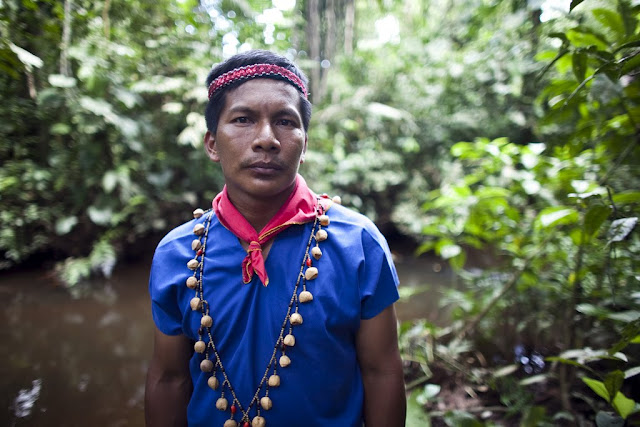
Photo Credit: “Chevron’s Toxic Legacy in Ecuador’s Amazon,” courtesy of flickr user Rainforest Action Network.
Showing posts from category Brazil.