-
Candido Pastor, Human Nature
From Machetes to Maps: How a “Red Line” Eased Conflict in Bolivia’s Amazon
›August 24, 2016 // By Wilson Center StaffI remember the first time I made the four-day trek into the heart of Bolivia’s Carrasco National Park (CNP) 12 years ago like it was yesterday. I knew it would be a challenge to help communities agree on the boundaries of the protected area, given the high level of tension between indigenous communities, illegal migrant farmers, and park authorities over land rights, but I was unprepared for just how intense our first meeting would be.
-
Zika Virus Prompts El Salvador and Others to Discourage Pregnancy – What Are the Potential Consequences?
›The government of El Salvador took a truly extraordinary step in an attempt to control the rapidly spreading Zika virus last week by asking its citizens to avoid getting pregnant from now until 2018. Yes, you read that right.
-
Backdraft: Flipping the Frame on Conflict and Climate Change
›Fire needs oxygen to burn. When a fire starts inside a building, the floors, ceilings, walls, doors, and windows can constrict the flow of air. Breaking in to fight the fire thus carries the risk of opening a new airway. If that happens, a smoldering fire can expand explosively, bursting into roaring flames as it sucks air in through the new passageway. This sudden inrush of air to fuel a burst of fire has a name: backdraft.
-
Managing Mountains for Ecological Services and Environmental Security
›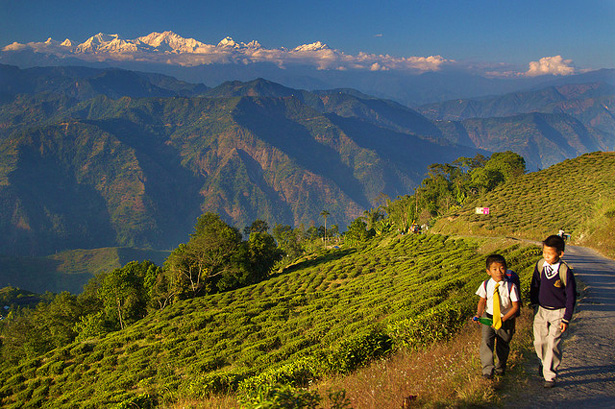
High mountain regions face grave environmental challenges with climate change impacts already as severe as any place on earth. Temperature increases are expected to be greater at higher altitudes than at sea level, and glaciers and snowfields are retreating in many areas, increasing the risk of catastrophic glacial lake outburst floods, affecting fresh water supplies for hundreds of millions of people, and exacerbating territorial and natural resource disputes.
-
Feminized Development in Latin America: Understanding the Confluence of Gender Equity and Cultural Tensions
›
Poverty in Latin America has become increasingly “feminized,” said John Coonrod, executive vice president of The Hunger Project, at the Wilson Center on October 22. As a result, many governments and NGOs are starting to focus on the needs of women, especially indigenous women. [Video Below]
-
Al Jazeera Maps Water Flashpoints Around the World
›Historically, the concept of “water wars” – inter-state wars fought solely over water – has been fairly unsubstantiated. But continued population growth, accelerating development, and environmental changes are making water more scarce and in turn increasing the chances of related tensions and violence. To illustrate the growing role water plays in tensions around the world, Al Jazeera has put together a map linked to a series of stories they’ve done on water “flashpoints.”
-
Counting the World: UNFPA Highlights the Challenges of Census-Taking
›The United Nations biannual population projections are some of the most (if not the most) widely used numbers in demography. Researchers and policymakers alike rely on the figures to plan for present and future challenges. But few consider the story behind the statistics. Where does the data come from? The United Nations Population Fund (UNFPA) recently released a short documentary on conducting censuses in challenging environments, with a spotlight on Indonesia, Chad, the Palestinian Territories, Belarus, and Bolivia.
-
Avoiding Adding Insult to Injury in Climate Adaptation Efforts
›Climate change is expected to produce winners and losers – for example, melting ice-caps may open up new economic opportunities for Greenland at the same time as sea-level rise threatens Asia’s bourgeoning coastal mega-cities. The same can be said about plans to address climate change, from both the mitigation and adaptation perspectives. A special issue of Global Environmental Change, “Adding Insult to Injury: Climate Change, Social Stratification, and the Inequalities of Intervention,” takes on this topic, with two case studies providing particularly compelling evidence.Betsy Beymer-Farris and Thomas Bassett argue in their contribution, “The REDD Menace: Resurgent Protectionism in Tanzania’s Mangrove Forests,” that efforts to ensure REDD readiness in Tanzania have placed local communities at risk of forced evictions, shattered livelihoods, and persecution by both the state and conservation community. Contrary to dominant narratives that “portray local resources users, the Warufiji, in negative terms as recent migrants who are destroying the mangrove forests,” the authors say that they in fact depend upon “allow[ing] the mangroves to regenerate naturally while preparing new rice fields.” “To carbon traders, however, an uninhabited forest greatly simplifies the logistical tasks of monitoring and paying for ecosystem services,” assert the authors. This has resulted in declaration of local communities as squatters, illegally invading the forest. Government officials have repeatedly voiced threats of eviction. As well as increasing the potential for social tension, the study concludes that, “it is difficult to reconcile Tanzania REDD’s participatory and benefit sharing goals with the rhetoric, practices, and plans of the Tanzanian state.”In “Accessing Adaptation: Multiple Stressors on Livelihoods in the Bolivian Highlands Under a Changing Climate,” Julia McDowell and Jeremy Hess present evidence about how specifically-tailored adaptations to climate change risk increasing vulnerability to a complex web of other, less obvious stressors. The study draws evidence from the livelihoods of historically marginalized indigenous farmers in highland Bolivia. The authors, who see “adaptation as part of ongoing livelihoods strategies,” use the case to “explore the tradeoffs that households make when adjustments to one stressor compromise the ability to adjust to another.” For instance, socio-economic stressors have forced many farmers to more closely couple their livelihoods with the market economy by growing more cash crops, intensifying land use, participating in off-farm laboring, and relying on irrigated agriculture. However, the shift to more market-orientated livelihoods has also increased their sensitivity to climatic stress. “As stressors compounded, the ability to mobilize assets became constrained, making adaptation choices highly interdependent, and sometimes contradictory,” the authors write. Avoiding these sorts of lose-lose situations, requires “ensuring sustained access to assets, rather than designing interventions solely to protect against a specific stressor.”
Showing posts from category Bolivia.