Showing posts from category Bangladesh.
-
UNiTE To End Violence Against Women
›November 25, 2011 // By Schuyler NullToday is the International Day to End Violence Against Women, an awareness and advocacy campaign organized by a host of UN agencies and offices “to galvanize action across the UN system to prevent and punish violence against women.”
Gender equity and inequity play a role in a myriad of international development, health, security, and even environmental issues, from rape as a weapon of war; demography’s effects on political stability; maternal health and its impact on child development; women’s rights as a social stability issue; and the disproportionate effect of climate change on rural women.
The numbers around gender-based violence are staggering. According to the UN:
Here are some of New Security Beat’s posts on gender-based violence and inequity and their intersection with development, the environment, and security:- 70 percent of women experience physical or sexual violence from men in their lifetime.
- Approximately 250,000 to 500,000 women and girls were raped in the 1994 Rwandan genocide, and in the eastern Democratic Republic of Congo (DRC), at least 200,000 cases of sexual violence, mostly involving women and girls, have been documented since 1996, though the actual numbers are considered to be much higher.
- In the United States, one-third of women murdered each year are killed by intimate partners; in South Africa, a woman is killed every six hours by an intimate partner; in India, 22 women were killed each day in dowry-related murders in 2007; and in Guatemala, two women are murdered, on average, each day.
- Over 60 million girls worldwide are child brides, married before the age of 18, primarily in South Asia (31.1 million) and sub-Saharan Africa (14.1 million).
Gender-Based Violence in the DRC: Research Findings and Programmatic Implications:
Dr. Lynn Lawry, senior health stability and humanitarian assistance specialist at the U.S. Department of Defense, presented findings from the first cross-sectional, randomized cluster study on gender-based violence in the DRC at the Wilson Center this year. The first of its kind in the region, the population-based, quantitative study covered three districts in the DRC and a total of 5.2 million adults, comprehensively assessing gender-based violence, including its prevalence, circumstances, perpetrators, and physical and mental health impacts.
Pop Audio: Judith Bruce on Empowering Adolescent Girls in Post-Earthquake Haiti: “The most striking thing about post-conflict and post-disaster environments is that what lurks there is also this extraordinary opportunity,” said Judith Bruce, a senior associate and policy analyst with the Population Council. Bruce spent time last year working with the Haiti Adolescent Girls Network, a coalition of humanitarian groups conducting workshops focused on the educational, health, and security needs of the country’s vulnerable female youth population.
The Walk to Water in Conflict-Affected Areas: Constituting a majority of the world’s poor and at the same time bearing responsibility for half the world’s food production and most family health and nutrition needs, women and girls regularly bear the burden of procuring water for multiple household and agricultural uses. When water is not readily accessible, they become a highly vulnerable group. Where access to water is limited, the walk to water is too often accompanied by the threat of attack and violence.
Weathering Change: New Film Links Climate Adaptation and Family Planning: “Our planet is changing. Our population is growing. Each one of us is impacting the environment…but not equally. Each one of us will be affected…but not equally,” asserts the new documentary, Weathering Change, launched at the Wilson Center in September. The film, produced by Population Action International, explores the devastating impacts of climate change on the lives of women in developing countries through personal stories from Ethiopia, Nepal, and Peru.
Sajeda Amin on Population Growth, Urbanization, and Gender Rights in Bangladesh:
The Population Council’s Sajeda Amin describes the Growing Up Safe and Healthy (SAFE) project, launched in Dhaka and other Bangladeshi cities last. The initiative aims, to increase access to reproductive healthcare services for adolescent girls and young women, bolstering social services to protect those populations from (and offer treatment for) gender-based violence, and strengthen laws designed to reduce the prevalence of child marriage – a long-standing Bangladeshi institution that keeps population growth rates high while denying many young women the opportunity to pursue economic and educational advancement.
No Peace Without Women: On October 31, 2000, the UN Security Council adopted Resolution 1325, which called for women’s equal participation in all efforts to maintain and promote peace and security; however, little progress has been made over these last 10 years and women remain on the periphery when it comes to post-conflict reconstruction and development. A report from the humanitarian organization CARE concedes that “much of the action remains declarative rather than operational.”
Addressing Gender-Based Violence to Curb HIV: At last year’s International AIDS Conference in Vienna an astonishing development in the campaign to stem the spread of HIV/AIDS was unveiled – a microbicide with the ability to reduce the risk of transmission of HIV. This welcome development coincides with an intensified focus on women’s health and security needs among donors, especially the United States.
The Future of Women in the MENA Region: A Tunisian and Egyptian Perspective: Lilia Labidi, minister of women’s affairs for the Republic of Tunisia and former Wilson Center fellow, joined Moushira Khattab, former minister of family and population for Egypt, this summer at the Wilson Center to discuss the role and expectations of women in the Egyptian and Tunisian revolutions, as well as issues to consider as these two countries move forward.
Sources: UN Secretary-General’s Office. -
Jotham Musinguzi on Investing in Family Planning for Development in Uganda
›“What we are seeing is not adequate, but we think we are seeing very good positive movement, and we want to build on that,” said Jotham Musinguzi, director of the African regional office for Partners in Population and Development (PPD) in Kampala, Uganda. Musinguzi is a public health physician by training who previously advised the government of Uganda on population and reproductive health issues. “We think that [the government] is now on a firm foundation to continue investing properly in family planning,” he said.
Family Planning for Development
Uganda’s high population growth rate (the country has a total fertility rate of 6.4 children per woman, according to the UN) presents a number of challenges, said Musinguzi, exerting pressure on education and health systems, as well as on basic infrastructure, particularly for housing and transportation. Additionally, high levels of poverty and unemployment can become a source of instability.
Policymakers in Uganda are beginning to recognize the urgency of the issue, however, particularly in regards to young people, said Musinguzi. “They don’t have access to jobs, they don’t have the skills, and therefore the challenges of poverty eradication become even more important.”
Nonetheless, the country’s contraceptive prevalence rate is low, at 24 percent, with 41 percent of married women expressing an unmet need for family planning services, according to the 2006 Demographic and Health Survey (DHS) for Uganda. Low levels of investment and lack of government involvement remain the primary obstacles, according to Musinguzi, in addition to socio-cultural and religious barriers.
Uganda historically depended primarily on donor finance, rather than government funding, to support family planning and reproductive health services, Musinguzi said. However, over the past two years, the Ugandan government has increased investment due to concerted efforts by PPD, as well as USAID, the UN Population Fund, and civil society groups. “Our point was that if the government does not fund family planning, then they are going to find that achievement of the Millennium Development Goals…is going to be very challenging,” he said.
“I think the low investment in family planning in Uganda is a thing of the past, and we are now looking forward to really better investment in this field,” Musinguzi said. “I am sure we are going to witness quite a big change [in the 2011 DHS] in terms of access as a result of the proper social investment that the government is trying to do now.”
South-South Collaboration
“I have a keen and strong interest in South-South collaboration in the field of reproductive health, family planning, population, and development,” Musinguzi said. Countries in the South have experience linking programming on population and development, and may face similar challenges, he said. For instance, Bangladesh and Vietnam had successful family planning programs that helped blunt rapid population growth rates.
“Countries, like Uganda, and others which haven’t gotten there yet, could learn from these other countries,” said Musinguzi, by sharing best practices and lesson learned, and replicating applicable solutions.
PPD also has a regional project reaching out to policymakers to increase commitment and accountability for family planning and reproductive health services. For instance, parliamentarians may not realize that they can play a significant role, but they have a unique function in providing government and budget oversight, Musinguzi said. Furthermore, they can create legal and administrative frameworks that prioritize family planning programs.
“We continue to make the case for more investment in family planning and reproductive health, but also making sure we hold leaders accountable, to show more commitment, and make sure they improve on the welfare of the people that they represent,” Musinguzi concluded.
The “Pop Audio” series is also available as podcasts on iTunes.
Sources: MEASURE DHS, UN Population Division. -
Michael Kugelman for Seminar
Safeguarding South Asia’s Water Security
›November 4, 2011 // By Wilson Center StaffThe original version of this article, by Michael Kugelman, appeared in the public policy journal Seminar.
In today’s era of globalization, the line between critic and hypocrite is increasingly becoming blurred. Single out a problem in a region or country other than one’s own, and risk triggering an immediate, yet understandable, response: Why criticize the problem here, when you face the same one back home?
Such a response is particularly justified in the context of water insecurity, a dilemma that afflicts scores of countries, including the author’s United States. In the parched American West, New Mexico has only 10 years-worth of drinking water remaining, while Arizona already imports every drop. Less arid areas of the country are increasingly water-stressed as well. Rivers in South Carolina and Massachusetts, lakes in Florida and Georgia, and even the mighty Lake Superior (the world’s largest fresh-water lake) are all running dry. According to the U.S. Environmental Protection Agency, if American water consumption habits continue unchecked, as many as 36 states will face water shortages within the next few years. Also notable is the fact that America’s waterways are choked with pollution, and that nearly twenty million Americans may fall ill each year from contaminated water. Not to mention that more than thirty U.S. states are fighting with their neighbors over water.
Such a narrative is a familiar one, because it also applies to South Asia. However, in South Asia, the narrative is considerably more urgent. The region houses a quarter of the world’s population, yet contains less than five percent of its annual renewable water resources. With the exception of Bhutan and Nepal, South Asia’s per capita water availability falls below the world average. Annual water availability has plummeted by nearly 70 percent since 1950, and from around 21,000 cubic meters in the 1960s to approximately 8,000 in 2005. If such patterns continue, the region could face “widespread water scarcity” (that is, per capita water availability under 1,000 cubic meters) by 2025. Furthermore, the United Nations, based on a variety of measures – including ecological insecurity, water management problems and resource stress – characterizes two key water basins of South Asia (the Helmand and Indus) as “highly vulnerable.”
These findings are not surprising, given that the region suffers from many drivers of water insecurity: high population growth, vulnerability to climate change, arid weather, agriculture dependent economies, and political tensions. This is not to say that South Asia is devoid of water security stabilizers; indeed, its various trans-national arrangements, to differing degrees, help the region manage its water constraints and tensions. This paper argues that such arrangements are vital, yet also incapable of safeguarding regional water security on their own. It asserts that more attention to demand-side water management within individual countries is as crucial for South Asian water security as are trans-national water mechanisms.
Continue reading on Seminar.
Michael Kugelman is a program associate for the Asia Program at the Woodrow Wilson Center.
Sources: The American Prospect, Jaitly (2009), The New York Times, UNEP, UN Population Division, Washington Post.
Video Credit: “Groundwater depletion in India revealed by GRACE,” courtesy of flickr user NASA Goddard Photo and Video. For more on the visualization, see the story on NASA’s Looking at Earth. -
Silent Suffering: Maternal Morbidities in Developing Countries
›Maternal morbidities – illnesses and injuries that do not kill but nevertheless seriously affect a woman’s health – are a critical, yet frequently neglected, dimension of safe motherhood. For every woman who dies, many more are affected acutely or chronically by morbidities, said Karen Hardee, president of Hardee Associates at the Global Health Initiative’s September 27 panel discussion, “Silent Suffering: Maternal Morbidities in Developing Countries.” Hardee was joined by Karen Beattie, project director for fistula care at EngenderHealth, and Marge Koblinsky, senior technical advisor at John Snow, Inc., for a discussion moderated by Ann Blanc, director of EngenderHealth’s Maternal Health Task Force.
-
Perfect Storm? Population Pressures, Natural Resource Constraints, and Climate Change in Bangladesh
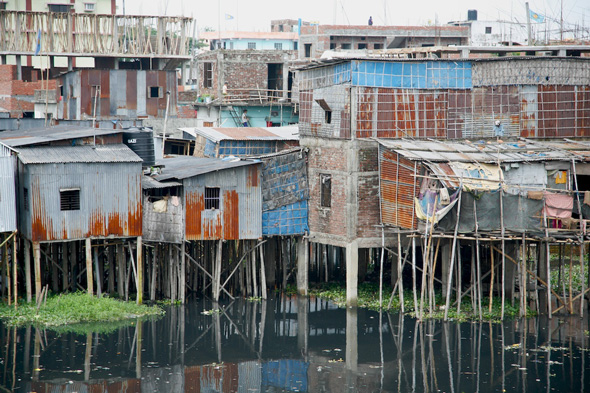
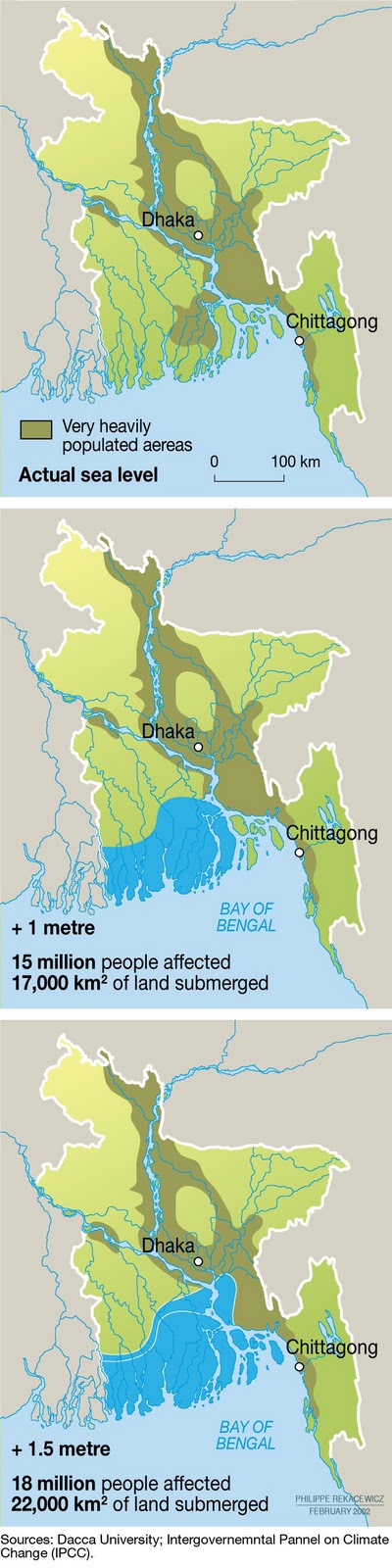
›Few nations are more at risk from climate change’s destructive effects than Bangladesh, a low-lying, lower-riparian, populous, impoverished, and natural disaster-prone nation. The UN Intergovernmental Panel on Climate Change estimates that by 2050, sea levels in Bangladesh will have risen by two to three feet, obliterating a fifth of the country’s landmass and displacing at least 20 million people. On September 19, the Wilson Center’s Asia Program, with assistance from ECSP and the Comparative Urban Studies Project, hosted a conference that examined Bangladesh’s imperiled environmental security.
Climate Change and PopulationThe first panel focused on manifestations, drivers, and risks. Ali Riaz addressed the threat of climate refugees. Environmental stress, he said, may produce two possible responses: fight (civil conflict or external aggression) or flight (migration). In Bangladesh, the latter is the more likely outcome. Coastal communities, overwhelmed by rising sea levels and flooding, could migrate to Bangladesh’s urban areas or into neighboring India. Both scenarios pose challenges for the state, which already struggles to provide services to its urban masses and has shaky relations with New Delhi.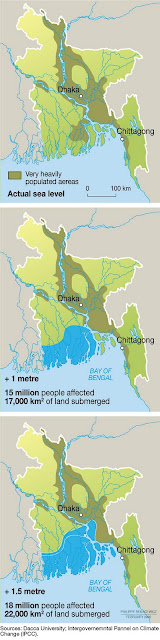
Mohamed Khalequzzaman examined Bangladesh’s geological vulnerability in the context of climate change. In a deltaic nation like Bangladesh, he explained, sedimentation levels must keep up with rates of sea level rise to prevent the nation from drowning. However, sediment levels now fall below 5 millimeters (mm) per year – short of the 6.5 mm Khalequzzaman calculates are necessary to keep pace with projected sea level rises. He lamented the nation’s tendency to construct large dams and embankments in the Bengal Delta, which “isolate coastal ecosystems from natural sedimentation,” he said, and result in lower land elevations relative to rising sea levels.
Adnan Morshed declared that Bangladesh’s geographic center – not its southern, flood-prone coastal regions – constitutes the nation’s chief climate change threat. Here, Dhaka’s urbanization is “destroying” Bangladesh’s environment, he said. Impelled by immense population growth (2,200 people enter Dhaka each day) and the need for land, people are occupying “vital wetlands” and rivers on the city’s eastern and western peripheries. “Manhattan-style” urban grid patterns now dominate wetlands and several rivers have become converted into land. Exacerbating this urbanization-driven environmental stress are highly polluting wetlands-based brickfields (necessary to satisfy Dhaka’s construction needs) and city vehicular gas emissions.
Adaptation Responses
The second panel considered possible responses to Bangladesh’s environmental security challenges. Roger-Mark De Souza trumpeted the imperative of more gender-inclusive policies. Environmental insecurity affects women and girls disproportionately, he said. When Bangladesh is stricken by floods, females must work harder to secure drinking water and to tend to the ill; they must often take off from school; and they face a heightened risk of sexual exploitation – due, in great part, to the lack of separate facilities for women in cyclone shelters. He reported that such conditions have often led to early forced marriages after cyclones.
Shamarukh Mohiuddin discussed possible U.S. responses. On the whole, American funding for global climate change adaptation programs has lagged and initiatives that are funded often focus more on short-term mitigation (such as emissions reductions) rather than adaptation. She recommended that Washington’s Bangladesh-based adaptation efforts be better coordinated with those of other donors.
Mohiuddin also suggested that to convey a greater sense of urgency, Bangladesh’s climate change threats should be more explicitly linked to national security – and particularly to how America’s strategic ally, India, would be affected by climate refugees fleeing Bangladesh.Philip J. DeCosse highlighted Bangladeshi government success stories in the famed Sundarbans – one of the world’s largest mangrove forests. Officials have banned commercial harvesting in some areas of the forests and shut down a highly polluting paper mill. He also praised civil society and the media for bringing attention to the Sundarban’s environmental vulnerability. As a result of efforts such as these, the Sundarbans are “coming back,” he said, with mangrove species growing anew. Thanks to a range of actors – from the forestry department to civil society – these forests are also now being “governed more than managed,” said DeCosse.
The Sundarbans – click to view larger map.
DeCosse’s fellow panelists identified additional hopeful signs. Morshed shared a photograph of a green, pristine park in Dhaka. De Souza underscored how family planning programs have worked in Bangladesh in the past, with fertility rates declining considerably in recent years, and several speakers spotlighted efforts by civil society and the media to bring greater attention to Bangladesh’s environmental security imperatives.
Nonetheless, major challenges remain, and panelists offered a panoply of recommendations. Khalequzzaman called for a major geological study of soil loss and siltation. De Souza implored Bangladesh to ensure that women’s roles and family planning considerations are featured in climate change negotiations and adaptation policies. Morshed advocated for imposing urban growth boundaries and enhancing public transport in cities. And several speakers spoke of the need to pursue more effective natural-resource-sharing arrangements with India. Ultimately, in the words of De Souza, it may not be possible to eliminate Bangladesh’s “perfect storm” – but much can be done to calm it.
Event ResourcesMichael Kugelman is a program associate with the Wilson Center’s Asia Program.
Sources: UN.
Photo/Image Credit: “Precarious Living, Dhaka,” courtesy of flickr user Michael Foley Photography; “Impact of Sea Level Rise in Bangladesh,” courtesy of UNEP; and the Sundarbans courtesy of Google Maps. -
Sajeda Amin on Population Growth, Urbanization, and Gender Rights in Bangladesh
›“One of the reasons why population grows very rapidly in Bangladesh is women get married very early and have children very early,” the Population Council’s Sajeda Amin told ECSP in a recent interview. “So even though they are only having two children, they are having them at an average age of around 20. As demographers would say, women ‘replace’ themselves very rapidly.”
Largely through the promotion of contraceptive use, family planning programs implemented over the past 35 years by the Bangladeshi government and a variety of NGOs have helped lower the country’s total fertility rate to 2.7 from 6.5 in the mid-1970s. To build on this progress, the Population Council has joined a consortium of other organizations – including the Bangladesh Legal Aid and Services Trust, Marie Stopes International, and We Can End All Violence Against Women – to launch the Growing Up Safe and Healthy (SAFE) project in Amin’s native Dhaka and other Bangladeshi cities.
Currently nearing the completion of its first year, the four-year initiative has several aims, among them increasing access to reproductive healthcare services for adolescent girls and young women and bolstering social services to protect those populations from (and offer treatment for) gender-based violence. The project also looks to strengthen laws designed to reduce the prevalence of child marriage – a long-standing Bangladeshi institution that keeps population growth rates high while denying many young women the opportunity to pursue economic and educational advancement.
A Focus on Gender and Climate
Amin says the SAFE project boasts several qualities that collectively set the initiative apart from similar-minded programs in Bangladesh dealing with gender and poverty. These include a strong research component incorporating quantitative and qualitative analysis; the holistic nature of the program, which incorporates educational outreach, livelihood development, and legal empowerment; a commitment to working with both male and female populations; and an emphasis on interventions targeting young people, with the hope that such efforts will allow adolescents to make better-informed decisions about future relationships and reproductive health, thus reducing the likelihood of gender-based violence.
Finally, while many existing gender-based programs focus exclusively on rural communities, Amin points out that the SAFE project also stands apart because of its focus on the country’s rapidly expanding urban areas. To date, the initiative is focusing many of its early interventions in a Dhaka slum that has seen an influx of rural migrants in recent years due to climate-change impacts in the country’s low-lying coastal areas.
“A lot of the big problems in Bangladesh now are climate-driven in the sense of creating mass movements out of areas that are particularly vulnerable or have been hit by a major storm,” Amin said. “Usually these are people who, once they lose their homes and their livelihoods, will have no choice but to move to urban areas, and that’s a process that is kind of a big outstanding issue in Bangladesh now.”
By building programming around girls and young women in such communities, the SAFE project is looking to spark change from the bottom up, prioritizing the unmet health and social needs of some of Bangladesh’s most vulnerable populations.
The “Pop Audio” series is also available as podcasts on iTunes.
Sources: Global Post, Ministry of Health and Family Welfare (Bangladesh), Shaikh and Becker (1985). -
USAID: Maternal Deaths in Bangladesh Decline by 40 Percent in Less Than 10 Years
›The original version of this article, by the USAID Global Health Bureau, appeared on the USAID Impact blog.
Bangladesh is on track to meet the 2015 deadline for UN Millennium Development Goal 5 (50 percent reduction in maternal deaths). The Bangladesh Maternal Mortality and Health Service Survey, jointly funded by the Government of Bangladesh, USAID, Australian Aid (AusAID) and the United Nations Population Fund (UNFPA), found that maternal deaths in Bangladesh fell from 322 per 100,000 in 2001 to 194 in 2010, a 40 percent decline in 9 years.
The decline in direct obstetric deaths is most likely the consequence of better care seeking practices and improved access to and use of higher-level referral care. The decline in total fertility rate due to the successful family planning program has reduced exposure to high risk pregnancies and has thus prevented a large number of maternal deaths.
Continue reading on USAID’s Impact blog.
Sources: Directorate General of Health Services – Bangladesh, UN.
Photo Credit: Adapted from “Mother & Son,” courtesy of flickr user Anduze traveller.