-
Environmental Security: A Guide to the Issues (Book Preview)
›
I remember the first moment when my interest in national security came crashing into ecological reality. I was on a U.S. government trip to Central Asia to inspect uranium mines in the newly-independent states of the former Soviet Union. The Cold War security imperative to achieve nuclear superiority had done a number on the environment there: Uranium was leached from the ground with sulfuric acid, transformed into a uranium oxide powder called yellowcake, and shipped off to be enriched for nuclear reactor fuel or weapons. The generals in Moscow who issued these orders did not see the collateral damage that their idea of security wreaked on the environment in Central Asia. In their attempt to out-weaponize the United States, they laid waste to the groundwater, agriculture, and public health of their own citizens.
-
New UN Population Projections Released: Pockets of High Fertility Drive Overall Increase
›June 26, 2013 // By Elizabeth Leahy Madsen
October 31, 2011, was notable not only for the annual ritual of candy and costumes, but also for its designation by the United Nations as the date when global population reached seven billion. Although just an estimate – demographers are not able to count individuals in real time on such a large scale – the event was an important opportunity to present population trends to the media and public dialogue. Several babies born that day were named the “seven billionth;” in Russia, where various incentives have been implemented to try to boost an ultra-low fertility rate, Vladimir Putin visited a maternity ward to greet one of them.
-
Carl Haub, Demographics Revealed
What Does “Urbanization” Really Mean?
›The original version of this article, by Carl Haub, appeared on Demographics Revealed.
Few terms in demography can cause more confusion than “urbanization.” News stories reporting projections of world urbanization are nearly always accompanied by photographs of places such as London or Shanghai, and it does seem rather natural to think of urbanization in those terms.
-
Michael Kugelman, The Diplomat
Can Pakistan Avert Demographic Doom?
›June 7, 2013 // By Wilson Center StaffThe original version of this article, by Michael Kugelman, appeared on The Diplomat.
On May 11, Pakistan’s Election Day, approximately 60 percent of eligible voters went to the polls. This figure far exceeded the 44 percent who turned out for Pakistan’s previous election in 2008. Media reports have featured moving accounts of the elderly being carried to the polls, and of women standing in the heat for hours to cast their ballots.
-
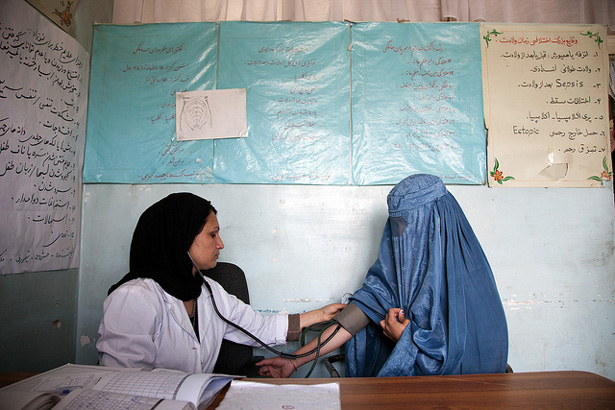
Midwives, the Frontline and Backbone of Maternal Health, Face Insecure Working Environments
›Midwives play a critical but unheralded role in maternal health. Their skills are sometimes marginalized in otherwise well-meaning discussions about professionalizing care, or even worse, they are subject to abuse, as was discussed at the Wilson Center earlier this month. So when I found the room overflowing at a Women Deliver panel yesterday on the disempowerment of midwives and how much it undermines global efforts to increase access to care, I took that as a good sign that midwives will not be overlooked much longer.
-
It’s Not a Drug, It’s Not a Device – It’s Women Working Together
›“Cooperative nurturing is the natural state of humans,” said Anthony Costello, director of the University College London’s Institute for Global Health, during a side event yesterday here at the Women Deliver conference in Kuala Lumpur. Children and mothers are healthier when they have a support network, so the Institute for Global Health has partnered with a number of NGOs over the last two decades to form thousands of community-based women’s groups in Bangladesh, India, Nepal, and Malawi.
-
Can Coffee Make Yunnan a Model for Chinese Agricultural Reform?
›Yunnan province is a microcosm of the intertwined natural resource challenges facing China. Dams, development, deforestation, drought, and climate change threaten China’s most biodiverse province – all while it increases its exports of agricultural products and electricity to China’s coastal provinces. These competing demands bring into question the sustainability of China’s development paradigm and the country’s environmental security.
-
Jay Gribble, Behind the Numbers
Four Steps to Thailand’s Demographic Dividend
›April 4, 2013 // By Wilson Center StaffThailand often is held up as a model of success for its efforts in family planning, but it’s amazing how quickly the country has transformed from rural and very poor to the modern economic powerhouse it is today in a matter of a few decades. Yet Dr. Kosit Panpiemras, former minister of finance and industry of Thailand, laid out the story of Thailand’s success in four succinct points. It wasn’t easy for Thailand to accomplish its goals, but the policies and investments the country made were strategic and targeted.
Showing posts from category Asia.