-
Steven Philip Kramer on ‘The Other Population Crisis’
›
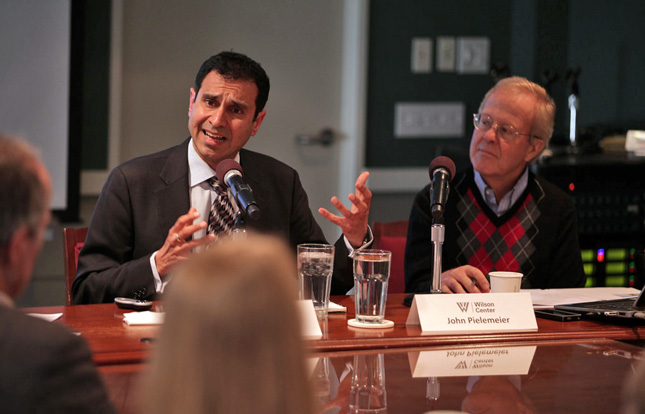
Ever since Thomas Malthus’ 18th-century treatise linked overpopulation with conflict and poverty, population growth has been a subject of concern and controversy. But does population decline warrant similar attention? According to Steven Philip Kramer, the subject of this week’s podcast and author of The Other Population Crisis: What Governments Can Do About Falling Birth Rates, it does.
-
China’s Coal-to-Gas Plants Trade Urban Air Quality for Higher Carbon Emissions
›Last September, facing a growing public outcry to ease smog, China’s State Council called for the accelerated development of a new energy industry that turns coal into methane gas. Piped to Beijing and other cities, this gas could help cut down on smog by replacing dirtier fuels now used to cook meals, heat homes, and produce electricity. But embracing it involves a major environmental trade-off in overall carbon emissions.
-
Russell Sticklor, CGIAR
Can Underground Water Storage Mitigate Cross-Basin Tensions?
›May 16, 2014 // By Wilson Center Staff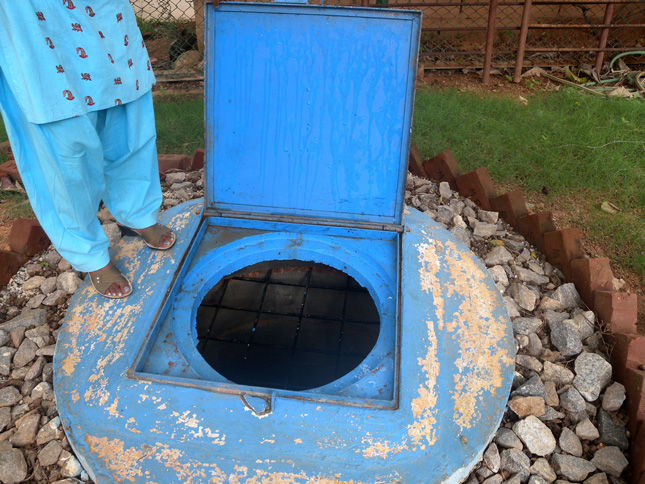
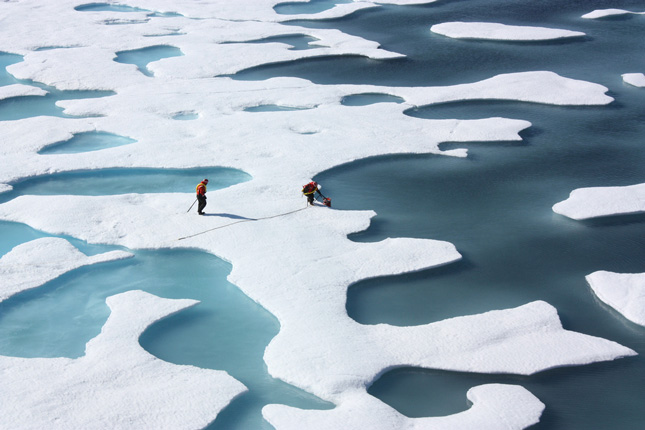
As the earth’s surface grows hotter and precipitation becomes more variable due to the impacts of climate change, the world is in need of solutions to more effectively store water supplies. One potential solution is deceptively simple: store water in aquifers below the ground.
-
Time to Get Creative: Cold War Lessons for Climate Negotiators
›You might wonder what the Cold War has to do with climate change, but as I listened last month to historian James Graham Wilson talk about the “triumph of improvisation” that ended the nearly 50-year stare-down between the United States and the U.S.S.R., I was struck by the parallels. The idea of individual leaders escaping the momentum of conventional approaches and adapting on the fly to solve a major global issue deeply resonated with me. It’s exactly what international climate change negotiations desperately need.
-
Make It Count: Evaluating Population, Health, and Environment Development Programs
›Evaluation is the lifeblood of any development effort – it’s how implementers know if they’re making a difference, determine what to do more or less of, and enables funders to evaluate cost-effectiveness. But it’s also an inexact science, no more so than when it comes to complex interventions that cut across sectors. [Video Below]
-
Surf and Turf: The Environmental Impacts of China’s Growing Appetite for Pork and Seafood
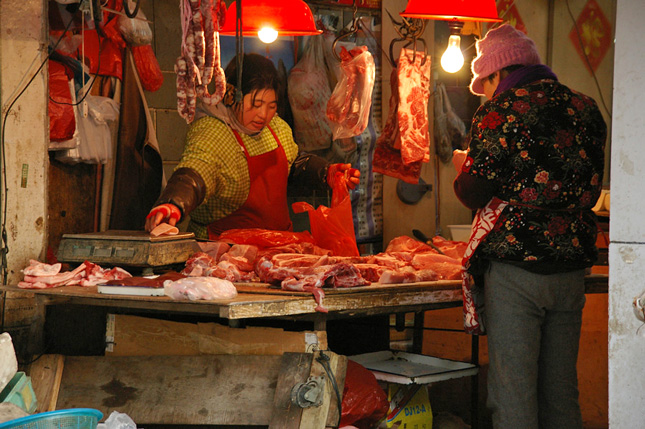
›Half the world’s pigs – 476 million – reside in China. Increasingly prosperous consumers are eating fewer grains and demanding a more protein-rich diet, ballooning the pork industry to 15 times its 1960s-era size. In the last 30 years, Chinese demand for meat has quadrupled and China is now the largest consumer of seafood in the world.
-
Violent Straw Men? Sex Ratios, Conflict, and a Methodological Disconnect
›The emerging subfield of “security demographics” is interested in how demographic trends, such as youth bulges, high or low fertility rates, and sex ratios affect the security and stability of nation-states and regions. In our research, Andrea Den Boer and I have attempted to show that abnormally high sex ratios – situations where there are significantly more men than women – have been a security concern in the past and may affect security and stability in the future.
-
Not There Yet: Burma’s Fragile Ecosystems Show Challenges for Continued Progress
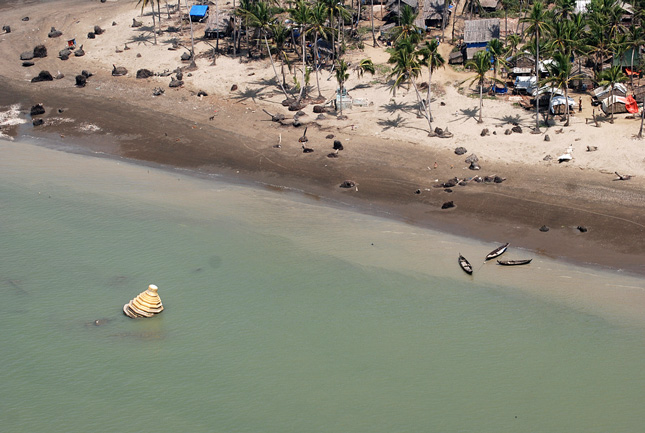
›Political and economic changes in Burma have been as rapid as they are surprising. In just three years, the country has gone from an isolated military dictatorship to a largely open country that is at least semi-democratic and has formally adopted a market economy. Both the European Union and the United States have eased economic sanctions, and dozens of foreign firms have moved in. Foreign direct investment increased by 160 percent in 2013 alone.
Showing posts from category Asia.