-
The Future of Political Demography and Its Impact on Policy
›March 9, 2015 // By Schuyler Null
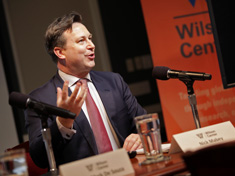
“Political demography is a discipline whose time has come,” said Rob Odell of the National Intelligence Council at a gathering of demographers and researchers in New Orleans. “You can sense this inherent dissatisfaction” with a lot of analytical and predictive tools in international relations, he said, and “political demography provides policymakers a way to think about long-term trends.”
-
In Critical Year for Climate Change, Lack of Urgency is Worrying, Says Nick Mabey
›“After Ukraine, ISIS, terrorism…there are a lot of distractions in 2015,” says Nick Mabey, founder and chief executive of the environmental NGO E3G, in this week’s podcast. “Short term issues are important, but they’re not everything.”
-
In Food Riots, Researchers Find a Divide Between Democracies and Autocracies
›
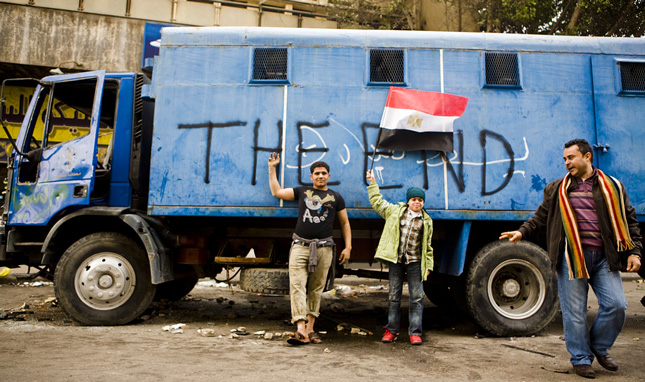
Though the bull market for metals and energy may be ending, global food prices remain stubbornly high. The inflation-adjusted FAO Food Price Index is down from the near historic heights of 2007-08 and 2011 but still higher than at any point in the previous 30 years, putting a brake on several decades of progress in reducing world hunger.
-
Combination of Climate Change and Youth Puts Some Countries at Risk of Fragility
›Climate change and youthful demographics can combine to create security risks in already fragile contexts, according to a new report commissioned by UNICEF UK and co-authored by the London-based research organizations International Alert and the International Institute for Strategic Studies.
-
Eric Chu on Translating Climate Adaptation Theory to Action on the Local Level
›“Adaptation is very theoretical. When you talk about ‘resilience,’ you draw these Venn diagrams and you draw these really complex issues, but at least at the IPCC level, we didn’t spend a lot of time thinking about what people were actually doing,” says Eric Chu in this week’s podcast.
-
Are We Keeping up With Asia’s Urbanization?
›There is widespread agreement, and untold publications, that argue urbanization is the defining issue of our time. There are more cities, both large and small, and more people living in those cities than anytime in human history.
-
Reporting on the Spaces Between: How to Cover Climate, Population, and Health Connections
›In his 2007 best-seller, The World Without Us, Alan Weisman explored what would happen to the planet if the human race suddenly vanished – the gradual deterioration of the built environment, the geologic fossilization of our everyday stuff, and the ecological processes that would rebound and thrive without continual and growing human pressure. [Video Below]
-
UN Report Highlights Women’s Roles in Natural Resource Management During and After Conflict
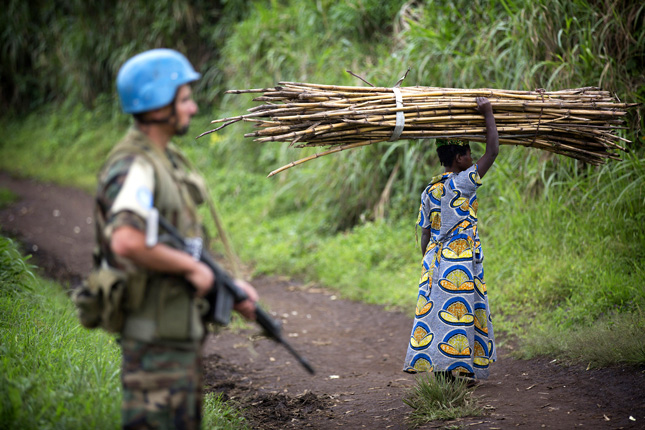
›It’s been 14 years since the UN Security Council adopted Resolution 1325 acknowledging women as important agents of change in recovery from conflict and peacebuilding generally. But between 1992 and 2011, only four percent of signatories in 31 major peace processes around the world were women, and only 12 out of 585 peace agreements referred to or made provisions for women’s needs in the reconstruction process.
Showing posts from category Asia.