-
Introducing “Navigating the Poles”
›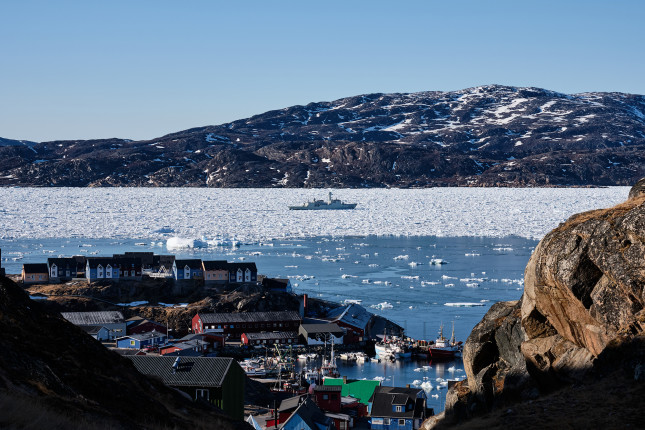
The polar regions of Antarctica and the Arctic have long captured the world’s imagination as seas and continents covered in unending ice. But the reality of the two regions is quickly shifting, with cascading consequences for the globe.
-
Our Ocean and Cryosphere Under Threat
› Evidence of the effects of climate change continues to mount. We see it in extreme weather events, including droughts and intense hurricanes and cyclones, in biodiversity loss, and in erratic weather patterns around the globe. While many of these impacts rightfully make it into front-page news, climate change is also profoundly affecting parts of our planet that we do not understand well—the ocean and the cryosphere.
In September 2019, the International Panel on Climate Change issued a Special Report on the Ocean and Cryosphere in a Changing Climate (SROCC). The report provides a new and sobering analysis of current conditions, as well as projections into the future. Produced by more than 100 authors from 36 countries, the SROCC painstakingly reviews the latest scientific literature, referencing some 7,000 scientific publications in all.
-
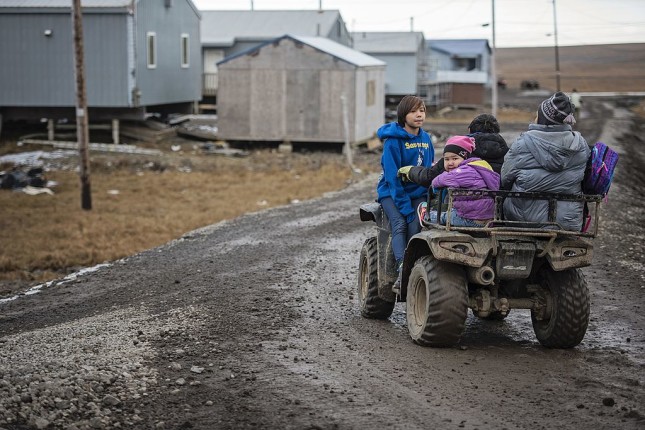
Permafrost Melt, Rising Seas, and Coastal Erosion Threaten Arctic Communities
›November 5, 2019 // By Shawn Archbold“In 1959, he knew it was coming,” said Delbert Pungowiyi, a Yupik native of Savoonga, Alaska, on St. Lawrence Island in the Bering Sea in an interview at the Wilson Center’s 8th Syymposium on the Impacts of an Ice-Diminishing Arctic on Naval and Maritime Operations. “He prepared me my whole life for this. It is a crisis.”
-
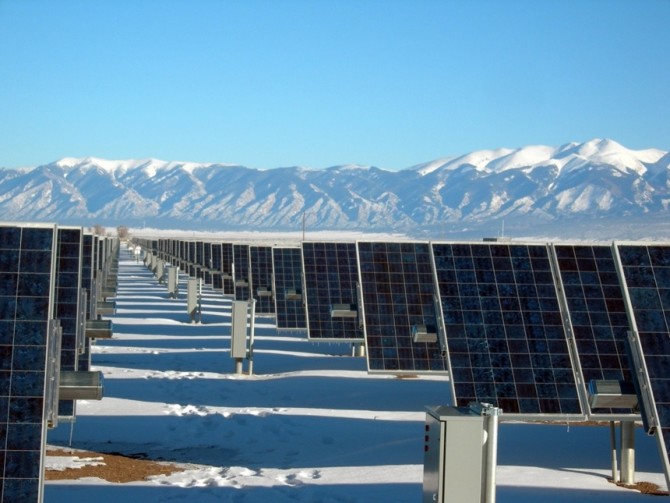
Energy Innovation in Remote Arctic Communities
›Without connections to wider electrical grids, communities in the remote, rural Arctic depend on diesel generators for power—which makes electricity “ten times more expensive” than in the rest of Canada or the United States, said Martha Lenio of the World Wildlife Fund-Canada Arctic Team during a recent Wilson Center Ground Truth Briefing. In addition, spilled diesel “can harm wildlife, impact food and water security, and compromise permafrost integrity,” said Lenio. These challenges have led some communities in the Arctic to seek cheaper, safer, and more innovative energy solutions, said panelists during the briefing organized by the Wilson Center’s Polar Initiative and Canada Institute.
-
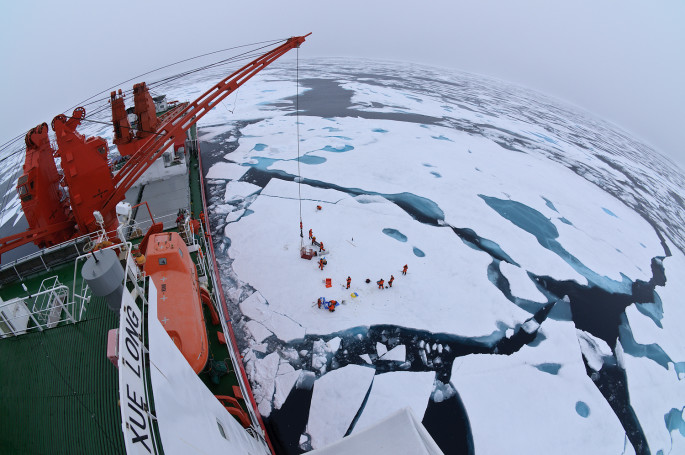
China Has Arrived in the Arctic: Q&A With Sherri Goodman
›To further its goals to strengthen the global economy, China has already invested $300 billion of its pledged $1 trillion towards its Belt and Road Initiative—a massive infrastructure investment plan that spans 60 countries across Southeast Asia, Central Asia, Africa, South Asia, the Middle East, and Eastern Europe. China’s initiative will shift the world’s political, environmental, and economic landscape.
-
Safe Passage: China Takes Steps to Protect Shorebirds Migrating From Australia to the Arctic
›Every year, millions of shorebirds migrate to the Arctic to breed—some coming from as far away as Australia and New Zealand—and then head back again. Nearly all of the birds making this journey spend time in the food-rich intertidal mudflats of the Yellow Sea ecoregion, on the east coast of China and the west coasts of the Korean peninsula. But as China’s economy has grown, around 70 percent of the intertidal mudflats in the Yellow Sea area have disappeared—the land drained and “reclaimed” for development. All of the more than 30 species of shorebirds that rely on the mudflats are declining, and those that stop there twice a year are declining at a faster rate than those that stop only once. If the current trajectory continues, the Yellow Sea—once known as the cradle of China—will become the epicenter of extinction.
-
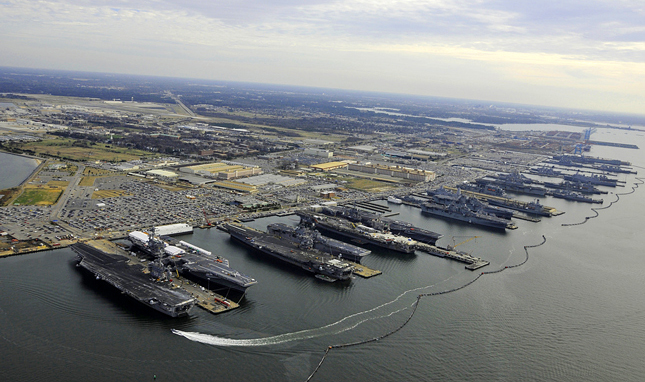
Former Defense Officials, Officers Discuss Climate Change and National Security on Capitol Hill
›“There’s a lot you can do to mitigate risk once you acknowledge the risk exists,” said John Conger, senior advisor at the Center for Strategic and International Studies at a June 5th briefing on Capitol Hill. Convened by the Environmental and Energy Study Institute, Center for Climate and Security, and the Henry M. Jackson Foundation, the panel of former Department of Defense (DOD) officials and retired military officers included Sherri Goodman, senior fellow at the Wilson Center, and three members of the Military Advisory Board: Brigadier General Gerald Galloway, General Ron Keys, and Rear Admiral Ann C. Phillips.
-
Roger-Mark De Souza on the Paris Climate Agreement, With or Without the U.S.
›“A lack of U.S. government support for the Paris climate agreement will mean that the United States will further isolate itself from international collaboration and cooperation on multiple fronts. It will affect U.S. security, the provision of jobs; U.S. business operations, and U.S. diplomatic efforts. The agreement, because it has a broad basis of support, will continue with or without the United States.”
Showing posts from category Arctic.
 Evidence of the effects of climate change continues to mount. We see it in extreme weather events, including droughts and intense hurricanes and cyclones, in biodiversity loss, and in erratic weather patterns around the globe. While many of these impacts rightfully make it into front-page news, climate change is also profoundly affecting parts of our planet that we do not understand well—the ocean and the cryosphere.