-
Reducing Urban Poverty: A New Generation of Ideas
›Download Reducing Urban Poverty: A New Generation of Ideas from the Wilson Center.
In 2008 the global population reached a remarkable turning point; for the first time in history, more than half of the world’s people were living in cities. Moving forward into the 21st century, the world faces an unprecedented urban expansion with projections for the global urban population to reach nearly five billion by the year 2030. Virtually all of this growth will occur in the developing world where cities gain an average of five million residents every month, overwhelming ecosystems and placing tremendous pressure on the capacity of local governments to provide necessary infrastructure and services. Failure to incorporate urban priorities into the global development agenda carries serious implications for human security, global security, and environmental sustainability.
Recognizing a need to develop and strengthen urban-focused practitioner and policymaking ties with academia, and disseminate evidence-based development programming, the Wilson Center’s Comparative Urban Studies Project, USAID’s Urban Programs Team, the International Housing Coalition, the World Bank, and Cities Alliance teamed up to co-sponsor an academic paper competition for graduate students studying urban issues. The first competition took place in the months leading up to the 5th World Urban Forum, held in Rio de Janeiro in March 2010.
This publication, Reducing Urban Poverty: A New Generation of Ideas, marks the second annual academic paper competition. “Reducing urban poverty” was chosen as the theme with each author focusing on one of three topics: land markets and security of tenure; health; and, livelihoods. A panel of urban experts representing the sponsoring institutions reviewed 70 submitted abstracts, from which 16 were invited to write full length papers. Of these, six were selected for this publication. We congratulate the graduate students who participated in this competition for their contribution to our understanding of the complex relationship between urbanization and poverty.
These papers highlight the new research and innovative thinking of the next generation of urban planners, practitioners, and policymakers. It is our hope that by infusing the dialogue on these issues between the academic and policy worlds with fresh perspectives, we will foster new and innovative strategies to reduce global urban poverty.
Sources: UNFPA, UN-HABITAT. -
Food Security, the Climate-Security Link, and Community-Based Adaptation
›In “The Causality Analysis of Climate Change and Large-Scale Human Crisis,” published in last month’s Proceedings of the National Academy of Sciences, authors David Zhang et al. write that changes in food supply are key indicators for the likelihood of climate change-induced conflict. Adding to the debate on the links between climate and conflict, the authors write that their purpose was to discover the specific causal mechanisms behind the relationship by analyzing various climate- and crisis-related variables across several periods of peace and conflict in pre-industrial Europe. They found that “climate-induced agricultural decline,” as opposed to resource scarcity caused by rapid population growth, was the clearest indicator of impending crises. “Malthusian theory emphasizes increasing demand for food as the cause,” write the authors, “whereas we found the cause to be shrinking food supply” – a distinction with “important implications for industrial and postindustrial societies.” In “Using Small-Scale Adaptation Actions to Address the Food Crisis in the Horn of Africa: Going beyond Food Aid and Cash Transfers,” published in Sustainability, authors Richard Munang and Johnson Nkem advocate for community-based adaptation programs to increase resilience to food crises in the Horn of Africa. “Given that hunger and poverty are concentrated in rural areas,” the authors write, “targeting local food systems represents the single biggest opportunity to increase food production, boost food security, and reduce vulnerability.” The authors present a joint UNEP-UNDP adaptation initiative undertaken in Uganda as a framework for potential adaptation interventions in the Horn. They conclude that the initiative’s approach – pairing locally-focused sustainable farming techniques with a national-level emphasis on adaptation programs, and upscaling lessons learned from one level to the other – “will increase local buffering capacity against droughts, make communities more independent from direct aid, etc., build resilience and improve livelihoods overall.”
 -
Emily Puckart, MHTF blog
Maternal Health in Kenya: New Research Unnecessary, Time to Address Existing Gaps
›The original version of this article, by Emily Puckart, appeared on the Maternal Health Task Force blog.
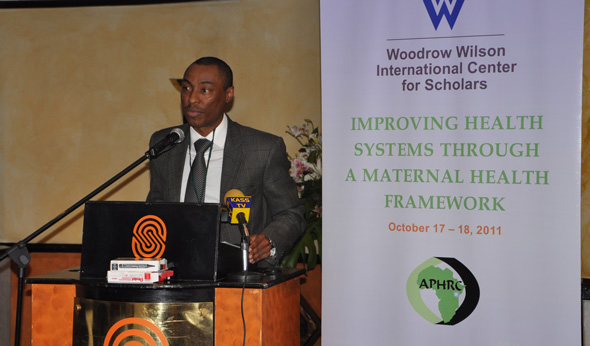
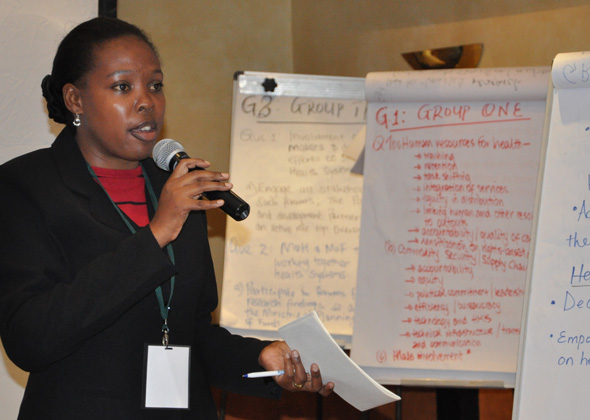
During the recent Wilson Center/African Population and Health Research Center meeting in Nairobi on improving health systems through a maternal health framework, participants focused on knowledge gaps in the Kenyan health system that can negatively affect maternal healthcare. This focus on gaps sparked discussion around research needed (or not needed) in the maternal health field, supply gaps, and gaps between addressing technical, medical issues of maternal health (like preeclampsia or postpartum hemorrhage), and larger society-wide gaps like gender equity. The gaps highlighted by participants at the Nairobi dialogue included:- Gaps in knowledge: During the dialogue, members of the Kenyan maternal health community discussed the possibility of strengthening community health workers as an information delivery platform. Participants wondered about the possibility of using community health workers to distribute information both downward to the end user (patients), and then again to gather information from end users and distribute it upwards through the system to reflect the opinions of the direct users of the healthcare system.
- Supply gaps: Participants argued that while there is a large body of information in terms of maternal health supplies at the national level in Kenya, there is not as much data on supplies at the actual health facility level, where it is much needed and would be very helpful to successfully treat patients.
- Gaps in healthcare delivery: There is a strong need to address inequality in the distribution of health services as there are unequal services in rural and urban areas. Within those broad areas there may be further inequalities, as even in urban areas, slum areas or neighborhoods on the edges of cities may have less access to quality healthcare than populations that live in wealthier areas of the city or closer to the city center. Further there are broader questions of gender and access to care. Where women are not able to control household finances, they may be unable to access and pay for lifesaving care. Participants framed the question in a rights framework, “Do we value the lives of women less than men?”
- Health workforce gaps: There is a mismatch between the supply of health workers and the absorption of those trained health workers in Kenya. Many of them are not incentivized professionally or financially to stay in the system where they are trained. These health workers may leave for other countries or prefer to stay in urban areas depriving rural areas of a surplus of trained health workers.
- Gaps between words and actions: Several of the small working groups pointed to accountability as a serious issue, as there are gaps between the words of politicians on health issues and actual actions. The gap between the government promised funding for health and the actual lower amount of spending was consistently highlighted during the Nairobi dialogue as a serious gap in holding governments accountable for their promises.
The lively conversation provoked by a broad discussion of gaps in the Kenyan health system provided fertile ground to develop action points on maternal healthcare that participants then presented on the second day of the meeting to several Kenyan members of parliament. Ideally, this will be the first discussion of many as maternal health advocates, field workers, and researchers coalesce around ways to address the gaps in maternal healthcare in Nairobi and elsewhere.
Emily Puckart is a senior program assistant at the Maternal Health Task Force (MHTF).
Photo Credit: Jonathan Odhong, African Population and Health Research Center. -
Twin Challenges: Population and Climate Change in 2050
›With global population reaching 7 billion, a lot of attention has been paid to the question of how to sustainably support so many people, much less the 9 billion expected by 2050, or the 10 billion possible by 2100. Add in the environmental variability projected from climate change and the outlook for supporting bigger and bigger populations gets even more problematic. Two new maps – one by the Population Reference Bureau (PRB), the other by McGill University PhD candidate Jason Samson – show how the world might change over the next 40 years in the face of these twin challenges.
Nine Billion in 2050
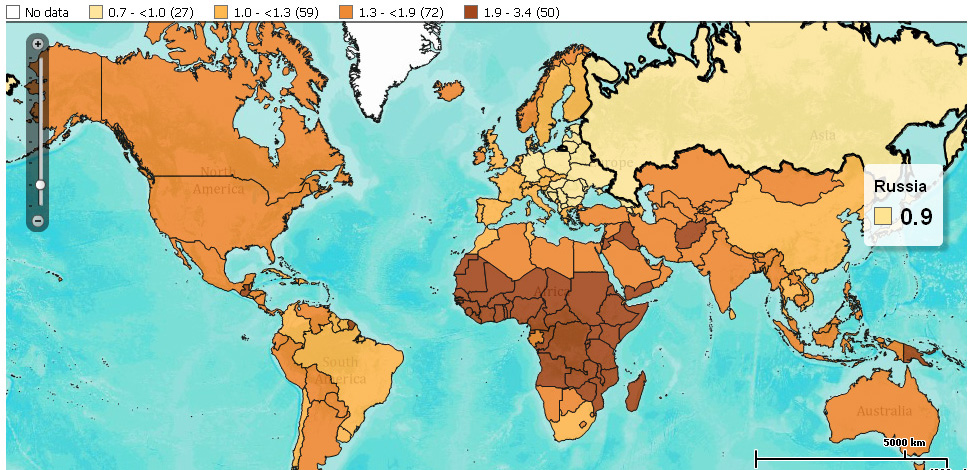
PRB’s map, built using their DataFinder tool, shows the world in 2050 in terms individual country growth rates between now and then. Japan, Russia, and countries in Eastern Europe are set to grow more slowly than anywhere else, and some of that group will actually shrink by 10 to 20 percent of their current size. Western, Central, and Eastern Africa will be home to the highest increases. Niger’s 2050 population is expected to be 340 percent its 2011 size – the largest growth of any country.
The map is based on country-level data pulled from a number of sources: the UN Population Division’s latest “World Population Prospects,” the UN Statistics Division’s “Demographic Yearbook 2008,” the U.S. Census Bureau’s International Database, and PRB’s own estimates. It’s unclear what numbers come from which sources, though it is clear that PRB’s 2050 estimates span the UN’s range of medium, high, and constant-fertility variants. In spite of these variations, none of PRB’s estimates come anywhere near the UN Population Division’s low variant estimates.
PRB’s map, echoing its 2011 World Population Data Sheet, shows a world where sub-Saharan Africa will bear the brunt of population growth. The average country in Africa in 2050 is projected to be slightly more than twice its 2011 size; the average European country is expected to barely break even. Africa is home to more countries whose populations are estimated to least double (34) or triple (4) than any other continent. Europe, meanwhile, is home to more countries whose populations will stagnate (8), or even shrink (19), than anywhere else. Interestingly, the Caribbean is a close second in terms of countries whose populations are projected to stay the same (seven to Europe’s eight), and Asia is second to Europe in terms of countries whose populations are projected to shrink (Georgia, Japan, Armenia, South Korea, and Taiwan).
More People, More Climate Change, More Vulnerability
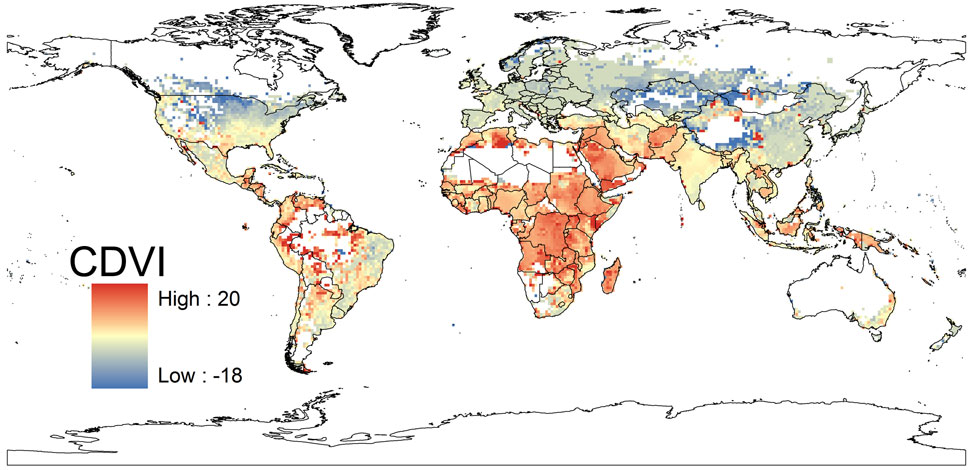
Samson’s map takes on the same time period but projects where people will be most vulnerable to the effects of climate change. Since his map takes into account population growth (measuring where people are most vulnerable, remember), unsurprisingly, Africa, the Middle East, Southeast Asia, and central South America are covered in bright red dots, indicating high vulnerability. Conversely, North America, Europe, and much of Central Asia are in shades of blue.Samson built his index using four environmental predictors – annual mean temperature, mean temperature diurnal range, total annual precipitation, and precipitation seasonality – taken from WorldClim’s 2050 forecasts, and 2005 sub-national population data from Columbia’s Center for International Earth Science Information Network. In spite of the sub-national population data, Samson makes a point to justify his use of supranational climate data in order to best reflect “the scale at which climate conditions vary.” He writes that localized issues like urbanization and coastal flooding “are probably best investigated with targeted regional models rather than by attempting to modify global models to include all factors of potential regional importance.”
Samson’s research shows that, generally, people living in places that are already hot will be more vulnerable to climate change over time, while people in more temperate climates will feel a negligible impact. Though he projects the largest real temperature changes will happen in temperate climates like North America and Europe, the comparatively smaller changes in Africa, the Middle East, Southeast Asia, and central South America are expected to have a greater impact because those regions are already very hot, their natural resources are stressed, and they are expected to bear the brunt of population growth over the next few decades.
These findings reflect a disparity between those responsible for climate change and those bearing the brunt of it, which, although not surprising, “has important implications for climate adaptation and mitigation policies,” said Sampson, discussing the map in a McGill press release.
Sub-National Data “Present a Very Different Picture”
Though they offer a useful approximate glimpse at what the world might look at in 2050, both of these maps fall prey to over-aggregation. By looking at national rather than sub-national data, we miss how nuanced population growth rates can be within a country. Stimson Center Demographer-in-Residence Richard Cincotta wrote in a recent New Security Beat post that “national level comparisons of total fertility rates tend to communicate the false impression of a world with demographically homogeneous states.” Sub-national data, including differences between urban and rural areas and minority-majority fertility rates, “present a very different picture.”
And that difference matters. When it comes to looking at how population interacts with other issues, like the environment, poverty, and conflict, the importance of a sub-national approach becomes evident. In its 2011 data sheet, PRB writes that “poverty has emerged as a serious global issue, particularly because the most rapid population growth is occurring in the world’s poorest countries and, within many countries, in the poorest states and provinces.”Edward Carr, an assistant geography professor at the University of South Carolina currently serving as a AAAS science fellow with USAID, argues that national-level data obscures our ability to understand food insecurity as well. The factors that drive insecurity “tend to be determined locally,” writes Carr in a post on his blog, and “you cannot aggregate [those factors] at the national level and get a meaningful understanding of food insecurity – and certainly not actionable information.”
The same is true when it comes to climate vulnerability. In a report from The Robert S. Strauss Center’s Climate Change and African Political Stability Program, authors Joshua Busby, Todd Smith, and Kaiba White write that “research announcing that ‘Africa is vulnerable to climate change,’ or even ‘Ethiopia is vulnerable,’ without explaining which parts of Ethiopia are particularly vulnerable and why, is of limited value to the international policy community.”
“It is of even less use to Africans themselves, in helping them prioritize scarce resources,” add Busby et al.
Understanding the joint problems of climate change and population growth on a global level helps frame the challenges facing the world as it moves toward 8, 9, and possibly 10 billion. But knowing the ins and outs of how these issues interact on a local level will be a necessary step before policymakers and others can hope to craft meaningful responses that minimize our vulnerability to these challenges over the coming decades.
Sources: Center for International Earth Science Information Network at Columbia University, Climate Change and African Political Stability Program at the Robert S. Strauss Center, McGill University, Population Reference Bureau, UN Population Division, UN Statistics Division, U.S. Census Bureau, University of South Carolina, WorldClim.
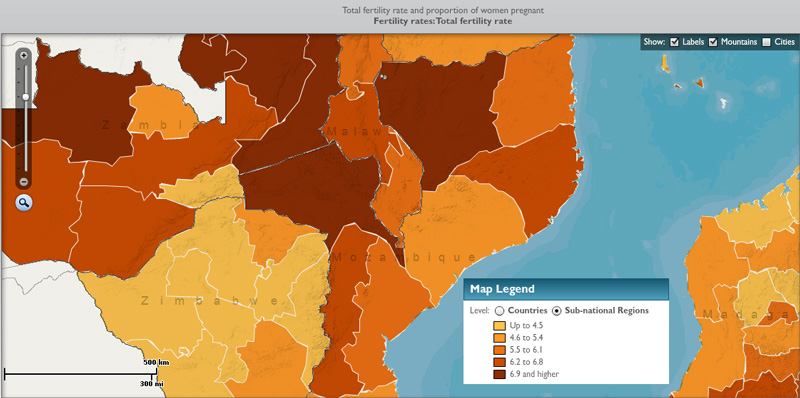
Image Credit: “2050 Population As a Multiple of 2011,” courtesy of PRB; CDVI map used with permission, courtesy of McGill University; Sub-national total fertility rates in Southern Africa, courtesy of MEASURE DHS, arranged by Schuyler Null. -
Rwanda: Dramatic Uptake in Contraceptive Use Spurs Unprecedented Fertility Decline
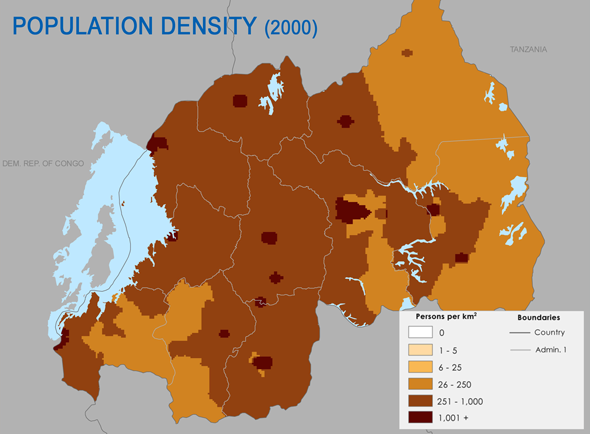
›November 8, 2011 // By Elizabeth Leahy MadsenWith over 400 people per square kilometer, the highest rate on the African mainland, population density is perhaps the most widely-discussed factor of Rwanda’s demography. Some scholars, notably Jared Diamond, have argued that it played a primary role in sparking the 1994 genocide through competition for land (although others present a more complex theory based in policies and governance).
-
Improving Maternal Health: A Conversation With Kenyan Field Workers and Policymakers
›“The traditional strategies for improving the health system include the horizontal approach, which prioritizes non-communicable diseases, and the vertical approach which prioritizes communicable diseases such as HIV/AIDS,” said John Townsend, vice president of reproductive health programs at Population Council, during a webcast discussion – the second in a series – between the Woodrow Wilson Center in Washington, DC, and maternal health experts in Nairobi, Kenya. [Video Below]
Recently, a third strategy, called the “diagonal approach,” was developed to more clearly define health system priorities and guide general system-wide improvements. Participants in both locations discussed this new approach and other structural improvements that can be made to better integrate maternal health indicators into developing country health systems on October 17.
The meeting was part of the 2011 Advancing Dialogue on Maternal Health series, with the Wilson Center’s Global Health Initiative and the African Population and Health Research Center. Participants in Nairobi were assigned to three topical groups and asked to identify challenges and opportunities related to their themes.
The Role of Policymakers and Funders“We must engage [policymakers and donors] in forums like this one to share findings and share lessons learned,” said participant Sylvia Bushuru of Kenya as she reported back from the policymakers and funders working group. The group focused on steps required to hold politicians accountable to commitments made to maternal health, such as the Abuja Declaration, which requires the Ministry of Finance to dedicate 15 percent of the budget to health. Currently, only 5.5 percent of the Kenya budget is dedicated to the health sector.
Identifying strategic partners will help in reaching ambitious goals, the group agreed; however, they noted that it’s important to ensure that these partnerships and policies extend to an operational level. Besides the overall budget pledge, important steps like ensuring 24-hour emergency health facilities in rural areas and implementing a results-based financing plan based on maternal health indicators have yet to be completed.
A Definition of Priorities through a Diagonal Approach
James Wariero, a regional health advisor with the MDG Centre for East and South Africa, served as the representative for the group discussing the “diagonal approach,” which focused on how maternal health indicators can best set priorities to improve the overall health system. They identified antenatal care visits as a priority because they also serve as an entry point to other health services, including HIV/AIDS treatment.Discussing gender, he said that “male involvement in maternal health will have benefits for child health and other issues…it is an area with little headway here in Kenya and other similar countries in Africa.” Additionally, Wariero discussed how the diagonal approach could be used to link maternal health indicators with other sectors such as technology and information systems.
The group said that improving the health system should start at the district level to ensure the most vulnerable populations at the community level have proper access. However, they said that ideally district-level programming should be evaluated and funded through results-based financing and structured on clear maternal health indicators.
Knowledge Gaps and Research Needed
“We initially began our discussion surrounding the [World Health Organization’s] six health system blocks,” reported Dr. Kristine Kisaka, a program officer with Deutsche Stiftung Weltbevoelkerung and representative from the “knowledge gaps and research needed” group. This group identified access to mobile phones for maternal health data collection as a major resource gap. Instead of calling for additional research they said they would prefer better implementation of existing, evidence-based programming.
Utilizing the World Health Organization’s health system framework, the group identified existing knowledge gaps to improve maternal health in Kenya and six recommendations:- Strengthen community strategies through a national synchronization of information
- Harmonize planning and implementation of the provisioning of supplies and commodities at the community level
- Address inequalities in the distribution and delivery of health services, ensuring distribution to urban and rural centers, including slums
- Centralize health financing in order to reach both national and community levels
- Empower households in financing, including both women and men, so they plan and save for maternal health
- Address the imbalance in supply and demand of healthcare workers
Linkages: Key To Improving Maternal Health Systems
“It’s really about linkages,” said John Townsend, giving closing remarks after the presentations from Nairobi. Maternal health indicators can be a catalyst for change, due to their strong cross-cutting links to other development systems, such as transportation, the economy, and education. “I think the call to action that the Kenyan working groups made is quite valuable,” he said, but the question is, “How do we get intelligent decision alternatives in front of our leaders to figure out what are the best investments given the critical resources?”
“The private sector [presents] an opportunity,” said Townsend. “I think we need to be more explicit about how we want to engage with them and what we would like to see from them.” He pointed out that the national maternal health strategy in Kenya is explicit and promising, but there needs to be stronger links between the national strategy and the operational aspects of actually implementing it.
Event Resources:- Photo gallery
- Presentation: “Improving Health Systems Through a Maternal Health Framework,” African Population and Health Research Center
- Video
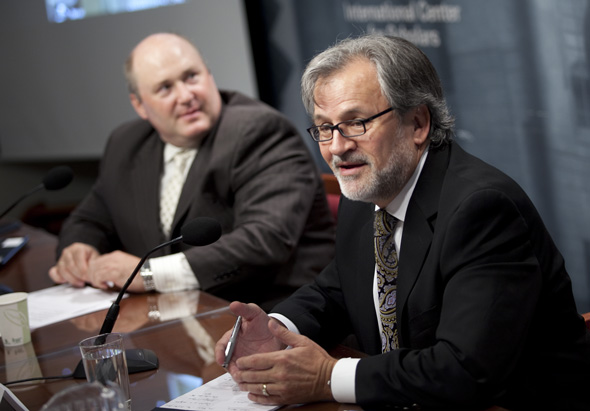
Photo Credit: #1 and #3, courtesy of Jonathan Odhong, African Population and Health Research Center; #2 courtesy of David Hawxhurst/Wilson Center. -
Pascal Gakwaya Kalisa, PHE Champion
Coffee Farmer and Extension Manager Promotes Improved Health and Livelihoods in Rwandan Coffee Communities
›This PHE Champion profile was produced by the BALANCED Project.
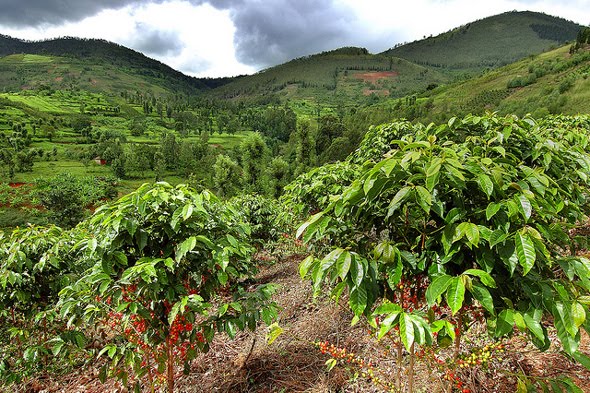
Mr. Pascal Gakwaya Kalisa has produced coffee in the densely populated country of Rwanda for the past nine years. A proud member of the 1,200 member Maraba Coffee Cooperative in Huye District in the Southern Province of Rwanda, Kalisa knows that a larger income alone does not ensure a better quality of life for his fellow coffee farmers and their families. He also knows that a successful coffee growing/exporting enterprise depends on preserving the fragile Rwandan soils, as well as on the health and well-being of farming families and communities. Therefore, Kalisa and other cooperative members treat the land and trees with a level of personal care that is necessary for optimum organic production and soil preservation.
Kalisa and the community have set up small, garden-sized coffee farms that are more productive than usual. Cooperative washing stations have enabled the small-scale farmers to improve product quality, and the cooperatives themselves are learning to negotiate better coffee prices with international buyers. Through such efforts and the support of many international donors and industry partners, Rwanda has become a producer of high quality specialty coffee since 2005, and its coffees are being marketed through renowned coffee roasters and importers in the United States, Europe, and Japan. In just six short years, Rwandan farmers have doubled their incomes and created 2,000 jobs, and the first renowned specialty coffee competition Cup of Excellence in Africa was held in Rwanda in 2008.
SPREAD: A Community Partnership
Recognizing the broad-based health, social, and economic needs of coffee farmers and their families in this part of East Africa, the U.S Agency for International Development initiated the Sustaining Partnerships to Enhance Rural Enterprise and Agribusiness Development project (SPREAD) to provide rural cooperatives and enterprises involved in high-value commodity chains with both appropriate technical assistance and access to health-related services and information. It is this combination of technical assistance and health-related outreach and services that has resulted in increased and sustained incomes and improved livelihoods.
Kalisa and other members of various cooperatives that SPREAD supports recognize that not only should farmers and their families preserve the land, but they must also preserve their own health in order to perform the labor needed to farm the crop that will produce the steady stream of high quality coffee upon which their livelihoods depend. Initiating community dialogues around issues such as protected sex, gender roles, and how coffee revenue is spent within households has also been crucial to project success among both youth and adults.
In his role as coffee zone coordinator for the SPREAD project, Kalisa works with coffee cooperatives to implement improved agricultural practices that improve the quality of their crop. This includes using cleaner environmental practices during coffee processing, such as introducing composting of coffee cherry pulp. Kalisa also helps disseminate integrated health and coffee messages through a weekly coffee talk-show produced by the National University of Rwanda’s Radio Salus, called Imbere Heza (“Bright Future”). In one show, for example, a man explained to a fellow farmer that to get good coffee cherries, he should thin his trees to renew his plantation.
Integrating Healthy Lives
Kalisa has also helped the SPREAD project’s health team deliver integrated messages on family planning, maternal and child health, alcohol, nutrition, gender issues, and the linkages between these. He uses examples such as the one about tree thinning to explain that families that space their children tend to be healthier, as they can plan the number of children to better fit with the financial and natural resources at hand.
Kalisa sees the benefits of using community agents to deliver integrated health, environment, and livelihood messages. This includes training extension agents to discuss environmental and human health issues in the context of coffee growing. Also, having coordinators from the coffee program and the health program go hand-in-hand to the field saves time, fuel, and other project costs. Kalisa believes that this campaign to educate coffee farmers and their families on the linkages between human health, a healthy environment, and strong livelihoods will lead to long-term change in their behavior, attitudes, and knowledge – change that will help them live better lives today and into the future.
This PHE Champion profile was produced by the BALANCED Project. A PDF version can be downloaded from the PHE Toolkit. PHE Champion profiles highlight people working on the ground to improve health and conservation in areas where biodiversity is critically endangered.
Photo Credit: “Rwanda photos 060,” courtesy of David Dewitt/counterculturecoffee. -
How Did We Arrive at 7 Billion – and Where Do We Go From Here? [Part Two]
›October 26, 2011 // By Elizabeth Leahy MadsenThe world’s women will determine whether the global population in 2050 is as low as 8 billion or as high as 11 billion through their choices (or lack thereof) about the number and timing of their children. Women in developing regions of the world will have the greatest effect on these potential population trajectories. Even if fertility rates remain constant at current levels (which is unlikely), developing regions would grow from 5.7 billion in 2010 to 9.7 billion in 2050, but the total population of developed countries would remain essentially unchanged.The UN estimates that the seven billionth person alive today will be born on October 31. Demographer Elizabeth Leahy Madsen explains how we got to that number, its significance, and where our demographic path might take us from here. Read part one here.
The world’s women will determine whether the global population in 2050 is as low as 8 billion or as high as 11 billion through their choices (or lack thereof) about the number and timing of their children. Women in developing regions of the world will have the greatest effect on these potential population trajectories. Even if fertility rates remain constant at current levels (which is unlikely), developing regions would grow from 5.7 billion in 2010 to 9.7 billion in 2050, but the total population of developed countries would remain essentially unchanged.
The way that people decide the timing and number of their children is not easily distilled into a simple formula with a single solution. Still, some basic and important facts are known. In the developing world, where more than 80 percent of the world’s population lives, women in rural areas, those who have little or no education, and those who are poor, have larger families. As demographers have shown in modeling the determinants of fertility, women tend to seek contraception once they are confident that their children will survive to adulthood and when socioeconomic development increases the “costs” of having children, for example by motivating parents to send them to school rather than to work.
One of the most direct reasons for past declines in fertility rates was the rapid expansion of family planning and reproductive health programs, supported by country governments and international donors, that enabled women and men to more effectively choose the size of their families. But today, about 215 million women across the developing world would like to delay or avoid pregnancy but are using ineffective contraception or none at all. Funding programs to meet the family planning needs of these women, which would cost about $3.6 billion annually, would both empower them and help fertility rates continue to decline.
Beyond Access: Gender Inequality Inhibits Contraceptive Use
While increasing support for family planning programs tops the list of demographers’ recommended policies, ensuring that contraceptives are available and accessible will not alone achieve the fertility declines projected in most of the UN’s range of possibilities. Many women who are having or planning to have large families know about family planning and where to find it, but are choosing not to use contraception for cultural reasons that are often deeply engrained.
In sub-Saharan Africa, the region with the highest global fertility rate, only 16 percent of married/partnered women of reproductive age are using effective contraception. In comparison, between 62 and 75 percent of their peers in Ireland, the United States, and Uruguay – countries whose fertility rates are almost exactly at replacement level – are using it.
Logically, sub-Saharan Africa needs similar levels of contraceptive use to bring its average fertility rate towards replacement level as the UN projects, so the region’s average prevalence rate for modern contraception would need to rise by at least 10 percentage points in each of the next four decades. However, contraceptive use in the region has grown by only 0.5 percentage points or less over the past 30 years.
What is inhibiting the use of contraception? Demographic and health surveys find in Nigeria, for example, that 10 percent of married women are using an effective contraceptive method, while twice as many have an unmet need for family planning. This low use of family planning demonstrates high potential for change in the country’s demographic future, which, as the most populous in Africa, will greatly influence global and regional trends. Yet among women who do not intend to use contraception, 39 percent report that they or their family members are opposed to family planning, and another 16 percent fear side effects or have other health-related concerns. If Nigeria’s fertility rate remains unchanged, the country will be home to 500 million people by 2050.
In Pakistan, where 24 percent of births are unintended, surveys show similar barriers. Ninety-six percent of married women know about effective contraceptive methods, but only 22 percent are using one. More than one-quarter of women who do not plan to use contraceptives report that their fertility is “up to God” and 23 percent report that they or their family members are opposed to family planning. Pakistan’s population would more than double from 174 million to 379 million by 2050 if current fertility trends hold constant.
Peak Planet? Population Growth and Consumption Strain Environmental Resources
Because Nigeria, Pakistan, and other countries’ demographic trajectories may not follow the path laid out in population projections, we can’t take a world of nine billion for granted. While human ingenuity and technological advancements have improved standards of living in many countries, scientists caution that the combination of rising human numbers and growing consumption has serious environmental implications. Already, the quantity and quality of fresh water supplies are under strain, and forests in many developing countries are being rapidly depleted.
Population projections are much more than wonkish speculation – they foreshadow the serious problems that lie ahead if health, environment, and development policies aren’t strengthened. If the UN projections of our demographic future are to bear any semblance of reality, we must move beyond the status quo. While improving physical access to family planning should remain a top priority, meeting unmet need will also require addressing the deep-seated challenges of women’s education and empowerment.
Elizabeth Leahy Madsen is a consultant on political demography for the Wilson Center’s Environmental Change and Security Program and former senior research associate at Population Action International.
Sources: Bongaarts and Sinding (2009), Bongaarts (2006), Futures Institute, Guttmacher Institute and UN Population Fund, Measure DHS, O’Neill, Dalton, Fuchs, Jiang, Shonali Pachauri, and Katarina Zigova (2010), UN Population Division, Washington Post.
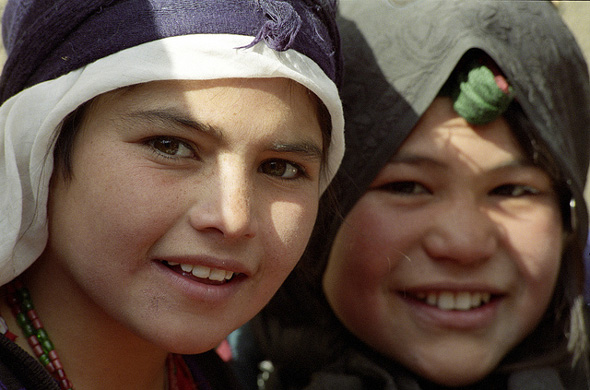
Photo Credit: “Afghan Internally Displaced Persons,” courtesy of flickr user United Nations Photo.
Showing posts from category Africa.