• woodrow wilson center
  • ecsp

New Security Beat

Subscribe:
  • rss
  • mail-to
  • Who We Are
  • Topics
    • Population
    • Environment
    • Security
    • Health
    • Development
  • Columns
    • China Environment Forum
    • Choke Point
    • Dot-Mom
    • Friday Podcasts
    • Navigating the Poles
    • Reading Radar
  • Multimedia
    • Water Stories (Podcast Series)
    • Backdraft (Podcast Series)
    • Tracking the Energy Titans (Interactive)
  • Films
    • Water, Conflict, and Peacebuilding (Animated Short)
    • Paving the Way (Ethiopia)
    • Broken Landscape (India)
    • Scaling the Mountain (Nepal)
    • Healthy People, Healthy Environment (Tanzania)
  • Publications
  • Events
  • Contact Us

NewSecurityBeat

The blog of the Wilson Center's Environmental Change and Security Program
Showing posts from category World Bank.
  • What’s in a Name? States of Fragility and Adjusting Aid to Conflict Zones

    ›
    April 13, 2015  //  By Lauren Herzer Risi
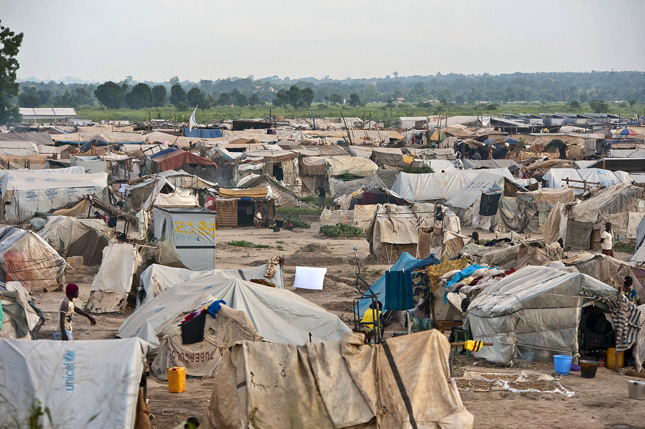
    mpoko camp

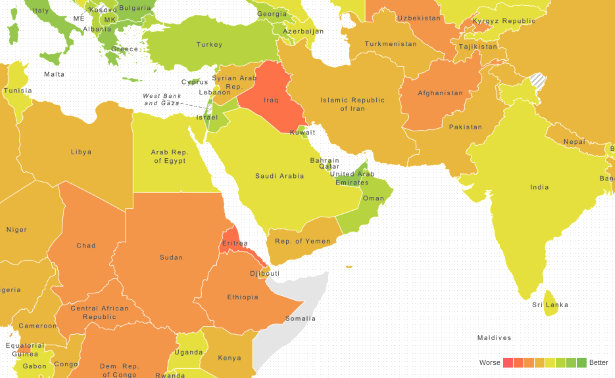
    Depending on how closely you pay attention to the OECD, you may have picked up on a subtle but meaningful change in this year’s States of Fragility report. Whereas previous reports were titled Fragile States, the Organization for Economic Cooperation and Development has shifted its framing to focus less on states and more on conditions, less on the binary status of a “fragile state” and more on fragility as a universal condition that can impede development in all countries.

    MORE
  • Next Stop, Lima: Building Momentum for a New Global Agreement on Climate Change

    ›
    December 1, 2014  //  By Kathleen Mogelgaard
    Lima_circle

    This fall, a series of significant events signaled what many see as a shift toward meaningful collective action on climate change.

    MORE
  • Babatunde Osotimehin: “The Youth Agenda Has Never Been More Important”

    ›
    Friday Podcasts  //  July 25, 2014  //  By Moses Jackson
    Osotimehin_small

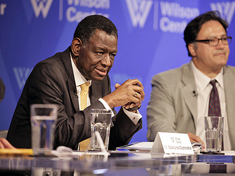
    More than 1.8 billion people – nearly a third of the global population – are between the ages of 10 and 24, comprising the largest-ever generation of young people. According to Babatunde Osotimehin, executive director of the United Nations Population Fund (UNFPA), “how we meet the needs and aspirations of these young people will define the world’s future.”

    MORE
  • Climate Change Will Test Water-Sharing Agreements

    ›
    July 15, 2014  //  By Thomas Curran
    red-deer-river

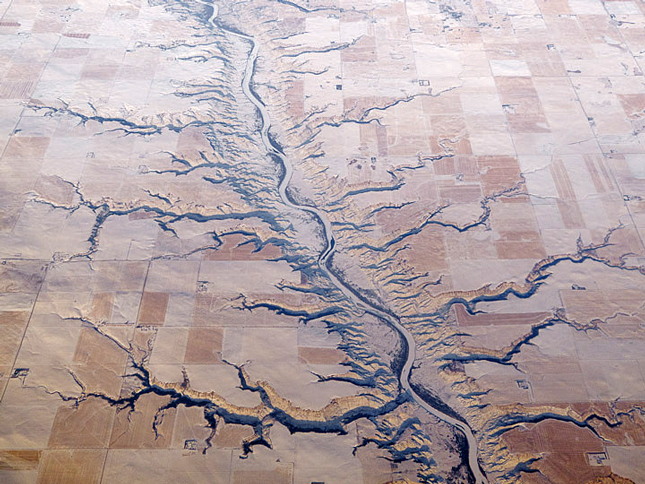
    Many existing water-sharing treaties should be re-assessed in the context of climate change, write Shlomi Dinar, David Katz, Lucia De Stefano, and Brian Blakespoor in a World Bank working paper.

    MORE
  • Kathleen Mogelgaard, Aspen Institute

    Hungry, Hot, and Crowded: The Importance of Multi-Dimensional Strategies for Resilience

    ›
    May 6, 2014  //  By Wilson Center Staff

    The original version of this article, by Kathleen Mogelgaard, appeared on the Aspen Idea Blog.

    In a world faced with rising temperatures, increasingly severe droughts and floods, and a rapidly growing population, how can people adapt to this new way of life – and even thrive? Leading experts discussed this question in-depth during an Aspen Institute Global Health and Development Program event titled, “Building Resiliency: The Importance of Food Security and Population.” The panel took place as part of the Civil Society Policy Forum at the 2014 IMF/World Bank Spring Meetings in Washington, DC.

    MORE
  • Oil in South Sudan: Turning Crisis Into Opportunity

    ›
    Guest Contributor  //  May 5, 2014  //  By Jill Shankleman
    abyei_south_sudan

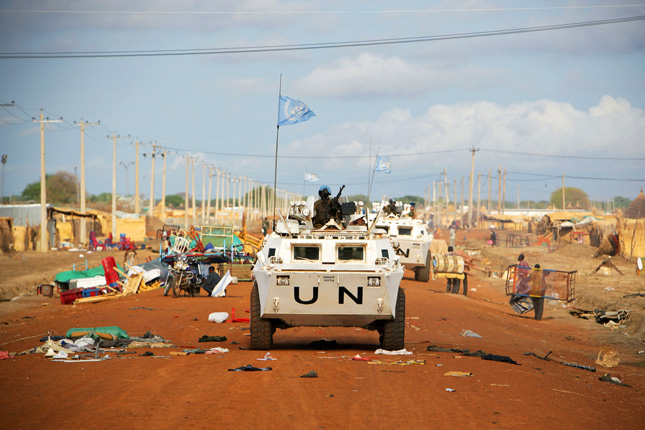
    Outside of donor and humanitarian aid, South Sudan’s economy is almost entirely dependent on the oil sector – and that sector is in crisis.

    MORE
  • Ready for Change: Notre Dame Launches the Global Adaptation Index

    ›
    From the Wilson Center  //  January 27, 2014  //  By Laura Henson
    ND-GAIN-screen

    In 2008 and 2010, the price of many basic food stuffs soared, sparking a series of riots and food crises around the world. People in the poorest countries – those living with the smallest margins – were most affected, while the economies of developed nations were able to absorb the price changes. According to Notre Dame’s Global Adaptation Index, how climate change will impact different countries depends not only on their vulnerability to physical changes, but also their ability to absorb these impacts. [Video Below]

    MORE
  • Harry Verhoeven, ChinaDialogue

    China Shifting Balance of Power in Nile River Basin

    ›
    China Environment Forum  //  July 12, 2013  //  By Wilson Center Staff
    Tekeze Dam, Ethiopia

    The original version of this article, by Harry Verhoeven, appeared on ChinaDialogue.

    The growing intensification of economic, political and social ties between China and Africa in the last 15 years is often told as a story of copper, petrodollars, emerging Chinatowns, and bilateral visits by heads of state.

    MORE
Newer Posts   Older Posts
View full site

Join the Conversation

  • RSS
  • subscribe
  • facebook
  • G+
  • twitter
  • iTunes
  • podomatic
  • youtube
Tweets by NewSecurityBeat

Trending Stories

  • unfccclogo1
  • Pop at COP: Population and Family Planning at the UN Climate Negotiations

Featured Media

Backdraft Podcast

play Backdraft
Podcasts

More »

What You're Saying

  • Volunteers,At,The,Lagos,Food,Bank,Initiative,Outreach,To,Ikotun, Pan-African Response to COVID-19: New Forms of Environmental Peacebuilding Emerge
    Rashida Salifu: Great piece 👍🏾 Africa as a continent has suffered this unfortunate pandemic.But it has also...
  • A desert road near Kuqa An Unholy Trinity: Xinjiang’s Unhealthy Relationship With Coal, Water, and the Quest for Development
    Ismail: It is more historically accurate to refer to Xinjiang as East Turkistan.
  • shutterstock_1779654803 Leverage COVID-19 Data Collection Networks for Environmental Peacebuilding
    Carsten Pran: Thanks for reading! It will be interesting to see how society adapts to droves of new information in...

What We’re Reading

  • Rising rates of food instability in Latin America threaten women and Venezuelan migrants
  • Treetop sensors help Indonesia eavesdrop on forests to cut logging
  • 'Seat at the table': Women's land rights seen as key to climate fight
  • A Surprise in Africa: Air Pollution Falls as Economies Rise
  • Himalayan glacier disaster highlights climate change risks
More »
  • woodrow
  • ecsp
  • RSS Feed
  • YouTube
  • Twitter
  • Facebook
  • Home
  • Who We Are
  • Publications
  • Events
  • Wilson Center
  • Contact Us
  • Print Friendly Page

© Copyright 2007-2021. Environmental Change and Security Program.

Woodrow Wilson International Center for Scholars. All rights reserved.

Developed by Vico Rock Media

Environmental Change and Security Program

Woodrow Wilson International Center for Scholars

Ronald Reagan Building and International Trade Center

  • One Woodrow Wilson Plaza
  • 1300 Pennsylvania Ave., NW
  • Washington, DC 20004-3027

T 202-691-4000