• woodrow wilson center
  • ecsp

New Security Beat

Subscribe:
  • rss
  • mail-to
  • Who We Are
  • Topics
    • Population
    • Environment
    • Security
    • Health
    • Development
  • Columns
    • China Environment Forum
    • Choke Point
    • Dot-Mom
    • Friday Podcasts
    • Navigating the Poles
    • Reading Radar
  • Multimedia
    • Water Stories (Podcast Series)
    • Backdraft (Podcast Series)
    • Tracking the Energy Titans (Interactive)
  • Films
    • Water, Conflict, and Peacebuilding (Animated Short)
    • Paving the Way (Ethiopia)
    • Broken Landscape (India)
    • Scaling the Mountain (Nepal)
    • Healthy People, Healthy Environment (Tanzania)
  • Publications
  • Events
  • Contact Us

NewSecurityBeat

The blog of the Wilson Center's Environmental Change and Security Program
Showing posts from category USAID.
  • 5 Focal Points for U.S. Global Water Strategy (And Submit Your Own Too)

    ›
    November 3, 2016  //  By Ken Conca
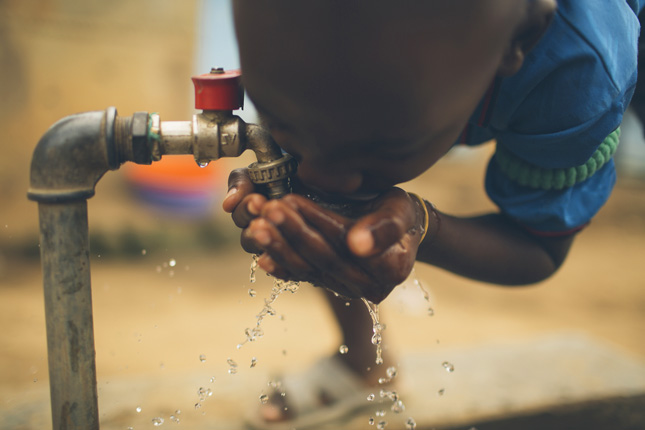
    USAID-water

    Have something to say about the U.S. government’s approach to water around the world? Here’s your chance. The Department of State has issued a public call for comment on its global water strategy. An open session was held in Washington last Friday, but written comments can be submitted until November 12.

    For inspiration, here are points made by our own (and American University’s own) Ken Conca, edited for space:

    MORE
  • Necessity Is the Mother of Invention: Islands as the Vanguard of Climate Adaptation

    ›
    From the Wilson Center  //  October 25, 2016  //  By Lynae Bresser

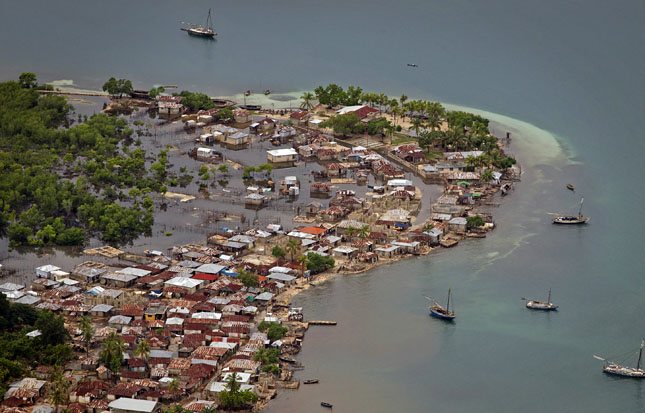
    “Climate change is one of the greatest challenges of our time and it calls for a comprehensive and cooperative international approach like we’ve never seen,” said Jainey Bavishi, associate director for climate preparedness at the White House Council on Environmental Policy, at the Wilson Center on October 5. “The leadership of the island nations is essential; they punch well above their weight on this issue.”

    MORE
  • Pathways to Climate-Smart Agriculture in Africa

    ›
    From the Wilson Center  //  October 17, 2016  //  By Anam Ahmed
    Rwanda-rice-paddies

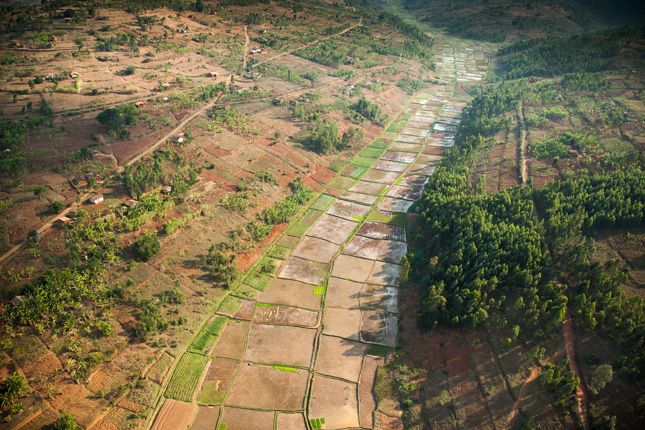
    “Climate change and food insecurity are the twin crises that may define Africa’s future,” said the World Bank’s Ademola Braimoh at the Wilson Center on September 13. One proposed solution is so-called “climate-smart agriculture” (CSA), an approach to farming that aims to mitigate the negative impacts of climate change while increasing agricultural production and income. But according to a panel of experts, smallholder farmers around the world have either been slow to adopt CSA practices or failed to sustain their usage over time.

    MORE
  • Assessing Feed the Future in Bangladesh: Production Gains, Nutrition Challenges

    ›
    September 30, 2016  //  By Anam Ahmed
    rice-field

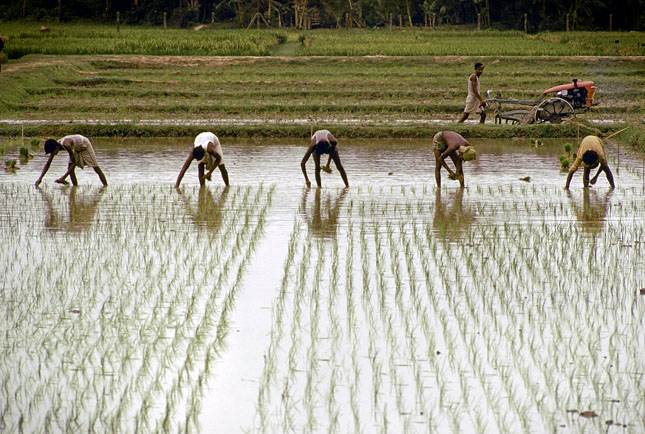
    Among all the countries receiving agriculture and nutrition assistance through the U.S. government’s Feed the Future initiative, Bangladesh receives the third most, at approximately $50 million a year ($55 million has been requested for 2017). Yet Bangladesh’s population is larger than that of the two countries ahead of it, Tanzania and Ethiopia, combined.

    MORE
  • Building a Case for Integrated Development: A New Research Agenda and Examples From the Field

    ›
    From the Wilson Center  //  September 20, 2016  //  By Sreya Panuganti

    Zunilda Arce (center) and young women from the Ita Guasu indigenous community in Paraguay, participate in the development of their community development plan. This activity is part of USAID’s efforts to strengthen civil society participation in municipal governance. Through its local partner Federation of Production Cooperatives (FECOPROD), USAID also works with indigenous communities to help them identify and advocate for their needs within a political context. /Luciano González, FECOPROD

    With the Sustainable Development Goals nearing their one-year anniversary, the global community continues to strive toward eradicating poverty by 2030. In order to achieve this ambitious target, many international development practitioners are embracing a more holistic approach to development, combining traditionally single-sector programming, like health or environment work, into more comprehensive efforts. But such integrated development is sometimes easier said than done.

    MORE
  • Seeing Around the Corner: Contemporary Challenges for Foresight and Futures Analysis

    ›
    Guest Contributor  //  September 13, 2016  //  By Steven Gale
    connections

    Most citizens of democratic nations expect their governments to do their very best to make society more egalitarian, productive, adaptive, and resilient. To do so requires governments to track not just today’s headlines but grapple with long-term underlying trends, like globalization and demographic change. Governments must also make assumptions about the future course of these trends and examine how they might collide or build on one another.

    MORE
  • At the Eye of the Storm: Women and Climate Change

    ›
    From the Wilson Center  //  July 26, 2016  //  By Aimee Jakeman
    zam-zam

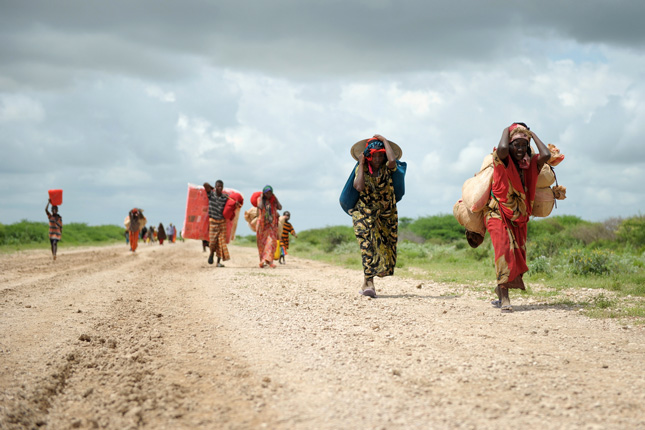
    Struggling to save their failing crops. Walking farther afield to fetch clean water. Protecting their families from devastating storms and violent conflicts. “Women are usually the support systems for our family…we are the last to leave in the event of a catastrophe, which is why women and families are disproportionately hurt by climate catastrophes,” said Wilson Center President, Director, and CEO Jane Harman on June 23 during a conference on women and climate change. [Video Below]

    MORE
  • Inside a Data-Driven Attempt to Fight Spoilage in U.S. Food Aid

    ›
    Guest Contributor  //  July 19, 2016  //  By Mark Brennan
    mark2-food-aid

    Today, as El Niño-related droughts impact communities across East and Southern Africa, food aid shipment and distribution networks have shifted into high gear. From the U.S. Agency for International Development to the United Nations World Food Program and NGOs like CARE and Save the Children, food aid providers are stocking port warehouses in Djibouti and South Africa, as well as inland warehouses in countries like Ethiopia, Zimbabwe, and Lesotho.

    MORE
Newer Posts   Older Posts
View full site

Join the Conversation

  • RSS
  • subscribe
  • facebook
  • G+
  • twitter
  • iTunes
  • podomatic
  • youtube
Tweets by NewSecurityBeat

Trending Stories

  • unfccclogo1
  • Pop at COP: Population and Family Planning at the UN Climate Negotiations

Featured Media

Backdraft Podcast

play Backdraft
Podcasts

More »

What You're Saying

  • Volunteers,At,The,Lagos,Food,Bank,Initiative,Outreach,To,Ikotun, Pan-African Response to COVID-19: New Forms of Environmental Peacebuilding Emerge
    Rashida Salifu: Great piece 👍🏾 Africa as a continent has suffered this unfortunate pandemic.But it has also...
  • A desert road near Kuqa An Unholy Trinity: Xinjiang’s Unhealthy Relationship With Coal, Water, and the Quest for Development
    Ismail: It is more historically accurate to refer to Xinjiang as East Turkistan.
  • shutterstock_1779654803 Leverage COVID-19 Data Collection Networks for Environmental Peacebuilding
    Carsten Pran: Thanks for reading! It will be interesting to see how society adapts to droves of new information in...

What We’re Reading

  • Rising rates of food instability in Latin America threaten women and Venezuelan migrants
  • Treetop sensors help Indonesia eavesdrop on forests to cut logging
  • 'Seat at the table': Women's land rights seen as key to climate fight
  • A Surprise in Africa: Air Pollution Falls as Economies Rise
  • Himalayan glacier disaster highlights climate change risks
More »
  • woodrow
  • ecsp
  • RSS Feed
  • YouTube
  • Twitter
  • Facebook
  • Home
  • Who We Are
  • Publications
  • Events
  • Wilson Center
  • Contact Us
  • Print Friendly Page

© Copyright 2007-2021. Environmental Change and Security Program.

Woodrow Wilson International Center for Scholars. All rights reserved.

Developed by Vico Rock Media

Environmental Change and Security Program

Woodrow Wilson International Center for Scholars

Ronald Reagan Building and International Trade Center

  • One Woodrow Wilson Plaza
  • 1300 Pennsylvania Ave., NW
  • Washington, DC 20004-3027

T 202-691-4000