-
Harvesting Peace: Food Security, Conflict, and Cooperation (Report Launch)
›
In the wake of food riots in more than 30 countries in 2008 and the Arab Spring, in which food prices played an instigating role, the relationship between food security and instability demands a closer examination. “There is a lot of data on conflict, and a lot of data on food security, but it’s rarely brought together,” said Emmy Simmons, the author of the latest edition of ECSP Report. [Video Below]
-
Complicated Causality: Edward Carr on Food Security and Conflict
›
“It seems to me the food security linkage suffers from the same problem that an awful lot of the environment and conflict literature suffers from: There are more negative cases than positive cases,” says Edward Carr in this week’s podcast. “In other words, you have a lot of cases where there is a [food] price spike and no violence or no conflict.”
-
Harvesting Peace: Food Security, Conflict, and Cooperation
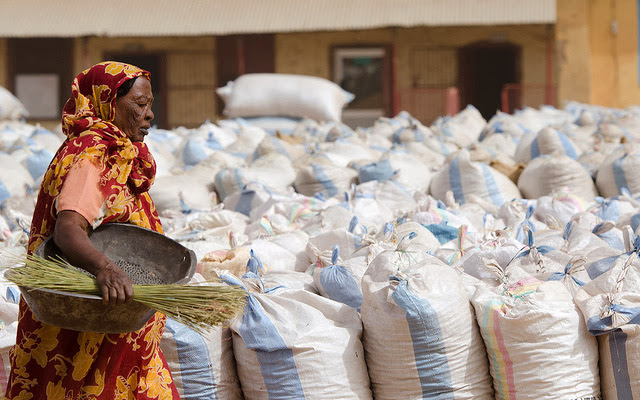
›Since 2008 – a year in which rapid increases in the global prices for major grains helped to trigger outbreaks of civil unrest in more than 40 countries – scholars and policymakers have paid increased attention to the potential influence of global food prices on social and political instability. Since that time, spiking prices have periodically sparked public protests and governments have struggled to respond.
-
A Season for Motherhood: The Role of Family Planning in Improving Maternal Health
›Ensuring access to family planning is not only a matter of human rights, but can also play a key role in protecting the health of mothers and children. Maternal health experts and program directors met at the Wilson Center on July 31 to discuss the role family planning takes in women’s health in developing countries, what successes family planning programs worldwide have had so far, and what can be done to expand services. Sarah Craven, chief of the UN Population Fund’s Washington office, moderated the event.
-
Faster-Than-Expected Population Growth in Many “Feed the Future” Countries
›August 1, 2013 // By Kathleen MogelgaardCambodia to grow by nearly one-third by 2050; Kenya to more than double; Mali to swell to three times its current size. These were the population projections available when Feed the Future, President Obama’s global hunger and food security initiative, was beginning implementation in 19 focus countries around the globe in 2010.
-
Natalia Machuca, USAID
New Demographic and Health Survey Shows Positive Results in Haiti
›July 30, 2013 // By Wilson Center StaffThe original version of this article, by Natalia Machuca, appeared on USAID’s Impact blog.
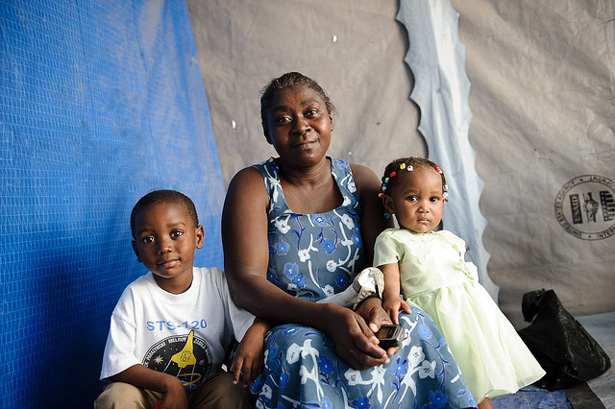
A newly released nationwide health survey of Haiti shows continuing positive trends on key health-care indicators in particular those of Haitian women and children. The latest survey, undertaken by the Haitian Ministry of Public Health and Population, was conducted in 2012 and compares with the prior survey done in 2006. It shows steady improvements among key indicators despite significant health challenges in Haiti due to the 2010 earthquake and cholera outbreak. Of note were improved indicators for child vaccination and malnutrition, infant and child mortality, women’s health, and contraception use. The report indicated no increase in HIV prevalence, which remained steady.
-
In Afghanistan, Women’s Health May Be Marker for Taliban Resurgence [Part Two]
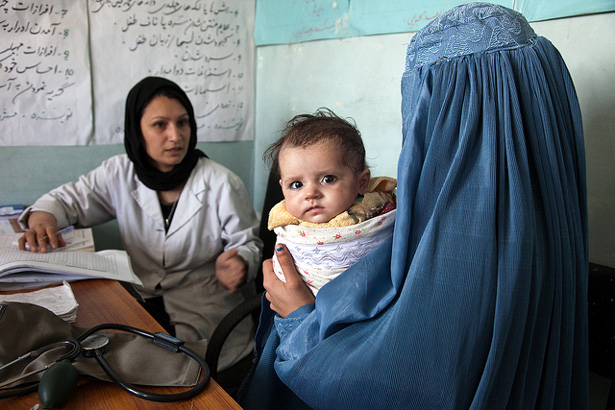
›Afghanistan’s youth, including more than seven million girls currently in school, are leading the call for new leadership, but many Afghans fear the chilling effect of a resurgent Taliban, said panelists at the Wilson Center during the second half of “Afghanistan Beyond the Headlines.” As the United States prepares to withdraw its forces over the next year, a halt in the country’s progress on women’s health may be the first sign of backsliding on many of the gains made over the last decade. [Video Below]
-
From Ethiopia to Egypt, Girls’ Education Programs Combat Child Marriage
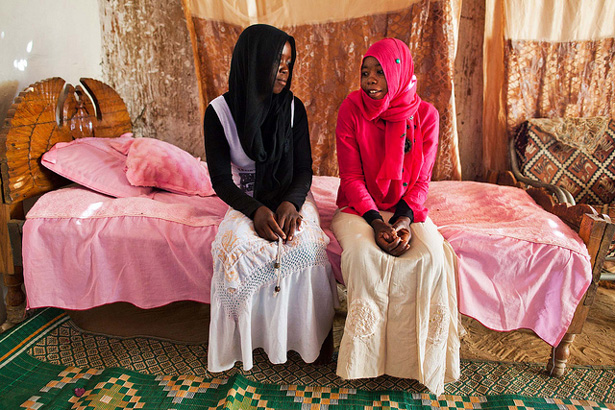
›According to the UN Population Fund, more than 140 million girls will become child brides between 2011 and 2020 – an estimated 14.2 million young girls marrying too young every year or 39,000 daily. The majority of these girls do not receive access to education or reproductive health services. [Video Below]
Showing posts from category USAID.