-
Breaking the Fragility Trap: What Role for the World Bank?
›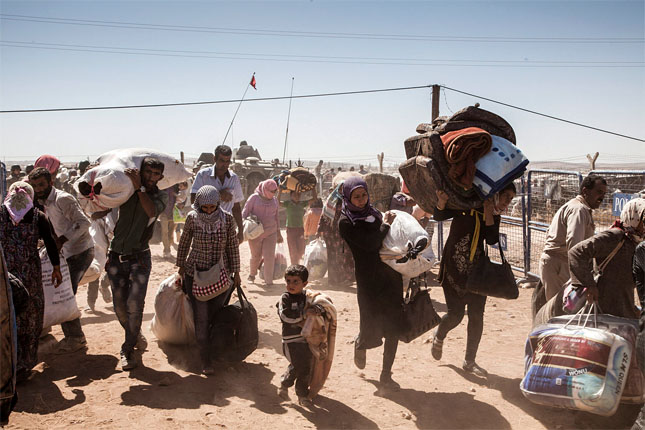
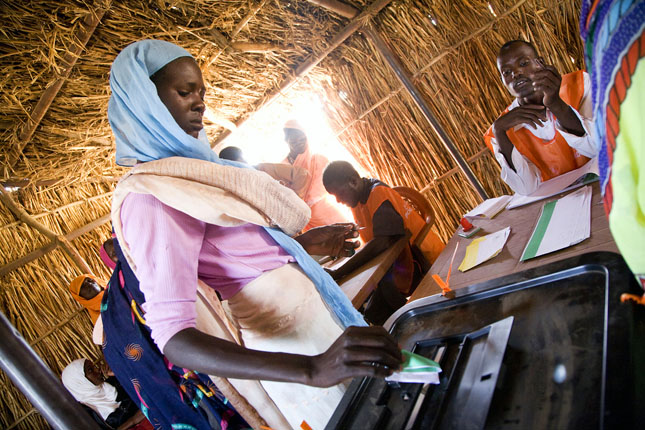
Last month, the World Bank’s Fragility Forum in Washington, DC, brought together some 600 participants to discuss how to advance sustainable development in the context of increasing conflicts and violence. World Bank President Jim Yong Kim opened the forum by emphasizing that we are at a critical moment.
-
A More Extreme Sea-Level Rise Scenario, and the Global Environmental Burden of Disease
› Though governments have agreed to try to limit global warming to no more than two degrees Celsius above pre-industrial levels, a paper by James Hansen et al. in Atmospheric Chemistry and Physics finds that goal may not prevent major changes on an irreversible and unadaptable scale. Studying the last interglacial period, about 120,000 years ago, when the temperature was less than one degree Celsius warmer than today, Hansen et al. estimate sea level was six to nine meters higher than today.
 -
Can Better Data Lead to More Women in Environmental Leadership Positions?
›The saying goes, what hasn’t been counted doesn’t count. Our latest datasets for the Environment and Gender Information (EGI) platform are proving this true.
-
What Next? Climate Adaptation After Paris
›In December 2015, representatives from 195 nations gathered in Paris for the 21st Conference of the Parties (COP-21) to the UN Framework Convention on Climate Change. After two weeks of intensive negotiations, countries approved an agreement that charts new territory for global cooperation to address climate change. [Video Below]
-
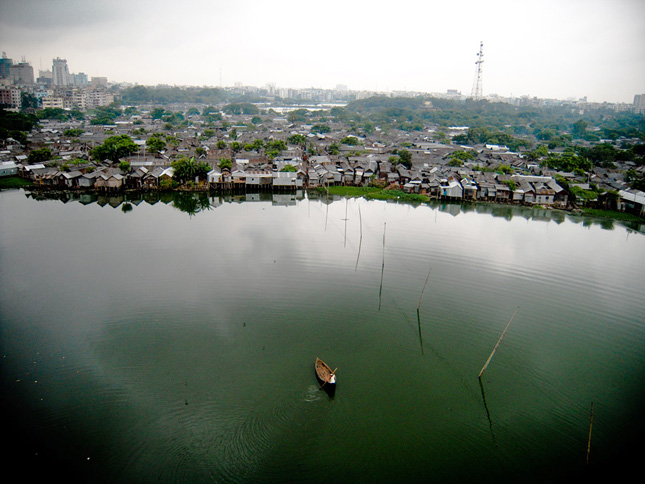
What Happens When You Can’t Build Back? Addressing Climate Change Loss and Damage
›The world is entering a new phase of climate change defined by “failure to mitigate sufficiently and failure to adapt sufficiently,” said Saleemul Huq, director of the Bangladesh-based International Center for Climate Change and Development, at the Wilson Center on March 16. [Video Below]
-
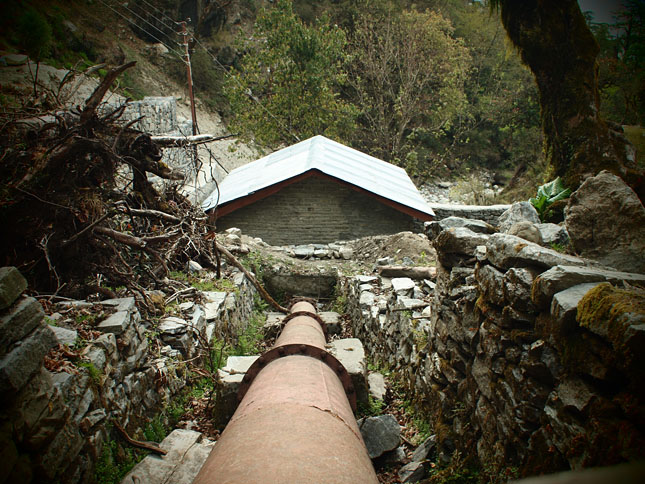
Community Empowerment vs. State Stability? Lessons From Nepal’s Micro-Hydropower Projects
›Post-war countries are among the most difficult policy arenas. The challenge is not only to stop violence and prevent violence from rekindling, but moreover to help countries reset their internal relations on a peaceful path. Increasingly, researchers and practitioners are interested in the potential of natural resources in post-war settings in the hope that good governance and sustainable management can contribute to this reset. Indeed, the international community acknowledged the relevance of the link between peaceful societies and environmental issues by including both in the Sustainable Development Goals.
-
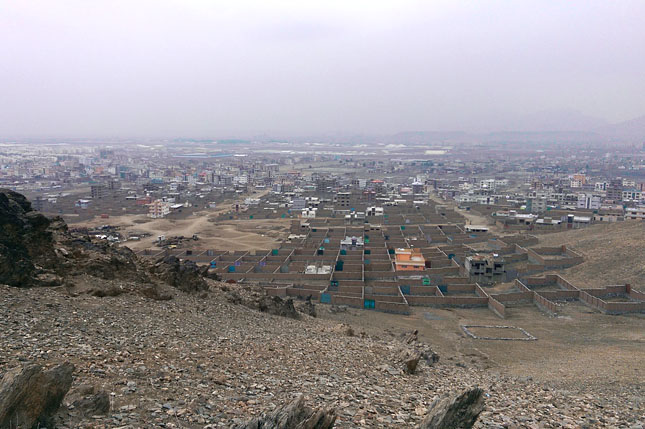
Kabul Greenbelt Project Aims to Restore Some Luster to War-Ravaged Capital – and Resilience Too
›It’s hard to imagine today, but Kabul was once ringed with grassy areas and shrubs, a few trees in areas too. Some of my husband’s favorite recollections of early 1970s Afghanistan are of simple family picnics in picturesque parks. Hours of lounging, grilling kebab, preparing rice, and conversing were a respite from the oppressive heat of the capital. Sometimes a picnic would become an all-night, extended family gathering. The Gardens of Paghman were a favorite destination with rows of pine trees, roses, and cool fountains. Pre-war family photos reveal neatly trimmed trees, bushes, and ample grassy areas for impromptu games. The family picnic is still popular among the Afghan diaspora. In the United States, Afghan community events are often held in parks, and involve large, multi-family picnics.
-
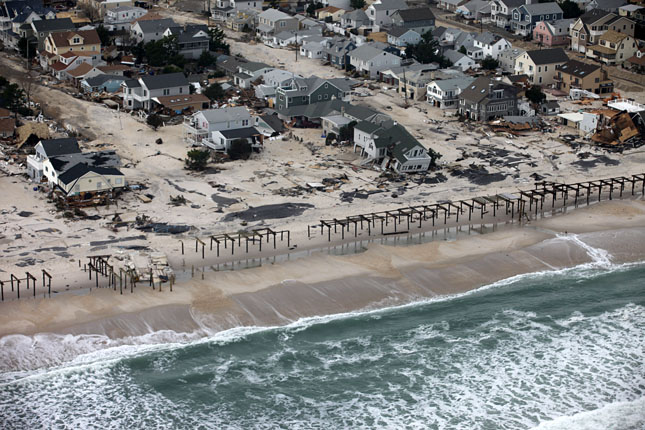
1.3 Meters of Sea-Level Rise By 2100, and the Effects of Belo Monte’s Forced Displacement
›A study published by the Proceedings of the National Academy of Sciences projects future sea-level rise with a new model, providing crucial information for coastal planning and further impetus to cut carbon emissions. Sifting through data on thermal expansion and retreating glaciers, the two leading causes of sea-level rise in the past century, the authors confirm that sea level is rising at an unprecedented rate.
Showing posts from category UN.