-
QDDR Coverage Wrap-up: Institutional Shifts, Development-as-Security, Women’s Empowerment, and Complex New Threats
›February 23, 2011 // By Schuyler Null
Somewhat lost in the wake of turmoil in the Middle East and the budget battle in Congress has been the State Department’s most aggressive attempt yet to reshape itself for the dynamic foreign policy challenges of the 21st century.
-
USAID’s Role in National Security: Development Matters and It’s Cheaper Than You Think
›February 22, 2011 // By Ramona Godbole“Development is not and cannot be a sideshow,” said U.S. Agency for International Development (USAID) head Rajiv Shah, in a speech at the Center for Global Development on January 19. This year marks the 50th anniversary of USAID, and there are some promising changes in the works for the agency as it transforms itself into a “modern development enterprise.”
Over the past year, the Obama administration launched the Quadrennial Diplomacy and Development Review (the QDDR – see our full set of reviews on this first-of-its-kind document), Feed the Future, and the Global Health Initiative. In accordance with these new strategic initiatives, USAID has launched USAID Forward to implement a series of reforms to strengthen its capacity to meet the world’s development challenges effectively and efficiently. The agency has tried to foster a “spirit of innovation, science, technology, and smarter strategic thinking to each of [its] areas of core focus: gender, education, water, and climate,” said Shah. In his speech at CGD, he announced a new, re-worked evaluation policy and outlined a number of cost-saving actions, including graduating countries that no longer need aid, promoting procurement and contracting reform, and eliminating some costly senior positions in the agency.
Value to Shareholders
Moving forward, USAID is working to further reduce inefficiencies and increase transparency, said Shah, and is “focused on delivering the highest possible value for our shareholders – the American people and the congressional leaders who represent them.” He added that “like an enterprise, we’re relentlessly focused on delivering results and learning from success and failure.”
These are exciting changes for the development community. But, if Congress significantly cuts funding, by, for example, passing a plan similar to one endorsed by 165 Republican representatives a few weeks ago, these changes might not see the light of day – the plan proposed to save $1.39 billion by eliminating agency operating expenses. Putting that in perspective, the USAID operating budget for the past fiscal year was $1.69 billion. (Strangely, while the plan all but eliminates the agency that administers them, it does little to cut actual outgoing foreign assistance monies.)
The plan, however, may reflect the views of much of the American public. A World Public Opinion poll showed that Americans believe the government spends up to 25 percent of its budget on foreign aid and want to cut back to 10 percent, while in fact, aid represents just one percent of the federal budget (compared with more than 20 percent for defense).
What the proposed plan fails to take into account is development’s role in promoting peace, security, and prosperity globally. Said Shah at CGD, “as the President and the Secretaries of State, Treasury, and Defense have all made abundantly clear, development is as critical to our economic prospects and our national security as diplomacy and defense.”
A More Efficient Investment
Shah elaborated on this idea in an interview with Foreign Policy last month: “In the military they call us a high-value, low-density partner because we are of high value to the national security mission but there aren’t enough of us and we don’t have enough capability,” he said. “This is actually a much, much, much more efficient investment than sending in our troops, not even counting the tremendous risk to American lives when we have to do that.”
Chad Briggs, a professor for the USAF Air University, pointed out the multiple benefits to the military that increased State and USAID agency in the field could provide in his review of the QDDR:Considering the existing responsibilities of the United States overseas and the potential for future risks and crises that will need to be addressed, the QDDR’s recommendations to strengthen engagement abroad can only be a positive step for U.S. interests. If the various hurdles enumerated above and elsewhere can be addressed, the QDDR’s focus on emerging risks may also ease the burden on DOD resources and force deployments, recognizing that not every engagement abroad should be resolved by the military alone.
If done right, development can provide both economic growth and democratic governance and help stabilize countries before, during, and after conflict or crisis in a cost-effective way while simultaneously addressing transnational human and environmental security issues like hunger, poverty, disease, and climate change (see Yemen for an example where the application of soft power now could reduce the chance of deploying more hard power later).
Policymakers should support USAID’s current efforts to make smarter investments, “which over time will save hundreds of millions of dollars, as opposed to trying to save a little bit now by cutting our capacity to do oversight and monitoring,” said Shah in Foreign Policy.
Sources: Center for Global Development, The Economist, Foreign Policy, USAID, U.S. Department of State, World Public Opinion.
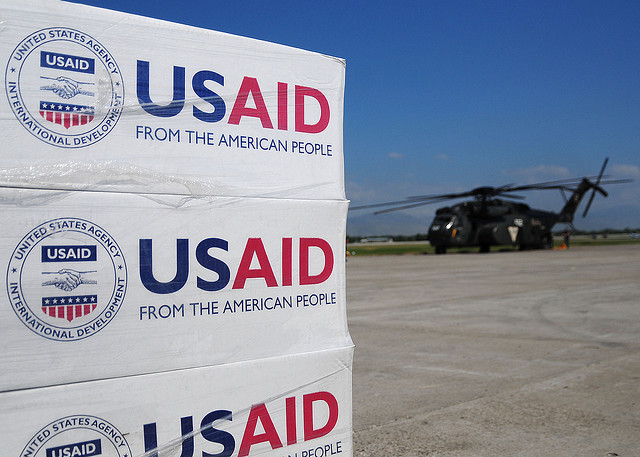
Photo Credit: “Pallets of food, water and supplies staged to be delivered,” courtesy of flickr user USAID_Images. -
Civilian Power in a Complex, Uncertain World
›Leading Through Civilian Power: The First Quadrennial Diplomacy and Development Review (QDDR) initiates an encouraging process of rethinking and restructuring that is long overdue. It explicitly links itself to the 2010 National Security Strategy and echoes the latter’s commitment to “national renewal and global leadership.” It refers briefly to the obvious companion document, the Quadrennial Defense Review, although it resists engaging with some key aspects.
-
Can Women Help Make Peace Agreements Sustainable?
›The role of women in civil society and their involvement in peace negotiations has been notable, though women have often been overlooked as mediators in peace talks.
On January 20, the Wilson Center’s Middle East Program and the Institute for Inclusive Security (IIS) hosted a meeting titled “Can Women Help Make Peace Agreements Sustainable?” with Luz Mendez, member of the Advisory Council of the Global Fund for Women, Guatemala; Jacques Paul Klein, former United Nations Secretary General’s special representative and coordinator of United Nations operations, Liberia; Alice Nderitu, National Cohesion and Integration Commission, Kenya; and Suaad Allami, director, Sadr City Women’s Center and Legal Clinic, Iraq. Carla Koppell, director of the Institute for Inclusive Security, moderated the event.
Mendez recounted her experiences at the negotiating table during the peace process that ended a 36-year war in Guatemala. She described the shift in that process when the United Nations went from observer to mediator once participants realized the original format was not producing results. Mendez emphasized the challenges she faced when trying to address women’s rights concerns in talks, being the only woman present for four years of the five-year process. She also described the satisfaction she felt when the UN moderator consulted her on the inclusion of particular women’s rights provisions. Mendez also highlighted the ongoing challenges in Guatemala, such as weak implementation mechanisms for the accords, the ubiquity of femicide, and the persistence of socioeconomic grievances.
Klein, who served the UN aiding victims in Bosnia-Herzegovina and Liberia, denounced the violence and hatred that often erupts when a state is too weak to implement rule of law and is unable to turn its human capital into a source of strength. He described the prevalence of human trafficking witnessed throughout his career and the programs implemented to rescue kidnapped and exploited women. He concluded by emphasizing the responsibility and ability that each individual has to foster tolerance and take action against violence and repression.
Nderitu reviewed the origins of ethnic tensions in Kenya, which erupted into violence following elections in 2007-2008, as well as the role of women in the subsequent peace negotiations. She referred to the Kenya National Dialogue and Reconciliation agreements mediated by Kofi Annan, which involved women throughout the peace process. These agreements focused on ending violence and the humanitarian crises while also addressing longstanding issues such as poverty, inequality, and unemployment.
Allami described the rise of the conservative movement in Iraq since the fall of Saddam Hussein, which has effectively limited women’s rights and freedoms codified in the existing Iraqi personal status law. She stated that coalition forces in Iraq helped to limit this trend, but the situation was still contentious because Iraqi leadership tends to not work with women’s groups even though women are mandated to comprise no less than 25 percent of parliament. Allami indicated that female leadership is ultimately weakened if the general female population’s rights are repressed. She also discussed the commitment the international community and the United States have made to Iraqi women.
Koppell concluded by discussing how there are plenty of models throughout the world where women in civil society have been brought into negotiations and peacemaking; policymakers can no longer justify the exclusion of women by claiming there are no proven strategies of inclusion.
Sara Girgis is an intern with the Middle East Program at the Wilson Center.
Photo Credit: “070905-A-5406P-024,” courtesy of flickr user The U.S. Army. Sgt. Yasser Ahmed, a soldier from the Iraqi Army’s 3rd Battalion, 1st Brigade, 11th Infantry Division, talks with a local woman during a patrol in the Graya’at area of Baghdad’s Adhamiyah District Sep. 5. -
Portraits of Women From Afghanistan to the DRC
A Conversation on Art and Social Change
›“At the core of human rights and artistic behavior is respect for human dignity. It is this that unites art and justice,” said Jane M. Saks, executive director of the Institute for the Study of Women and Gender in the Arts and Media, speaking at an event cosponsored by the Environmental Change and Security Program and the Africa Program at the Woodrow Wilson Center. Lynsey Addario, MacArthur-winning photographer and former Institute fellow, joined Saks to share striking photographs highlighting the effects of conflict on women and girls around the world. [Video Below]
The Power of Art
“Art is inherently political because it has the power to really engage in social justice,” Saks said. The Institute that she helped found promotes art that pushes boundaries and creates conversations about peace and war, so as to “add to the accepted canon of understanding of conflict.” As part of this effort, the Institute created the exhibition, “Congo Women: Portraits of War,” composed of photographs by Addario and others about violence against women in the eastern Democratic Republic of Congo (DRC).
Saks hopes that these “photographs saturated with human dignity” will create awareness and, ultimately, influence policy about the conflict in the DRC. The exhibition has traveled to more than 20 locations since its opening. In May 2009 it was installed at the Senate Rotunda during the Senate Foreign Relations Committee hearings on violence against women in conflict.
Addario, who said her work is drive by a desire to “give the people a voice,” has spent 15 years traveling deep into conflict zones all over the world, including Iraq, Sudan, and Afghanistan.
Women and Childbirth
Addario’s images reveal the often shocking conditions in which women around the world give birth. In Sierra Leone, she documented 18-year old Mamma Seesay, “one of thousands of women who die in childbirth.” Due to a shortage of doctors, lack of transportation, and high rates of child marriage, one in eight women in Sierra Leone die in childbirth. Afghanistan has the second highest rate of maternal mortality in the world, partly because “an Afghan woman will be pregnant up to 15 times in her life,” she said. “When you watch someone who in most other developed nations would survive without question, it’s just not fair.”
Throughout a decade of covering women in Afghanistan, Addario has sought to provide a “balanced picture” of their lives to American audiences. Her photographs show the milestones women have achieved since the fall of the Taliban: graduating college; driving cars; becoming actors, producers, or police officers; getting married; and giving birth.But her coverage of Afghanistan also contains stories like that of Fariba, an 11-year-old girl who doused herself with petrol and set herself on fire after being abused by her parents. The burn ward at the hospital in Kabul is full of such women who commit self-immolation “to escape their lives,” said Addario. An Afghan woman’s life “is worse than a donkey…there is no release for these women.”
“Give Us Your Guns”
In 2009, she went to the tribal areas of Pakistan to meet the Taliban. “Wrapped up like a cigar,” she posed as the wife of former New York Times correspondent Dexter Filkins and went into a room of 30 Taliban fighters “armed to the teeth.” The two spent the day with the Taliban and “by the end, they loved us,” she said. “The whole time they just laughed at us: ‘You Americans, you give money to the Pakistani government and they give it to us!”
While covering the conflict in Darfur, Addario had to convince UN peacekeepers to drive into a Janjaweed-occupied village so that she could verify how many people had been killed. “Every time we would go towards the village, the Janjaweed would shoot at us and so [the peacekeepers] would turn the cars around and go,” Addario said. To convince the peacekeepers to go in anyway, she said to the commander: “Just give us your guns. We’re gonna go in ourselves if you don’t.” When they finally drove towards the village, “the Janjaweed set it on fire right in front of us, and we just kept driving, and when we got there they had left,” she said.
Addario has spent years as a single woman traveling around the world and throughout conflict zones. “Women in Afghanistan think I’m insane,” she said. “They think I have a lonely, miserable life.” But she believes that as a woman working in conflict zones, she has a unique ability to access places that a man could not and a mission to tell the stories that she hears. “For me it’s about showing the greater American public what’s happening.”
Sources: Institute for the Study of Women and Gender in the Arts and Media, National Geographic, The New York Times, Public Radio International, Slate, UNICEF, and the U.S. Senate Committee on Foreign Relations.
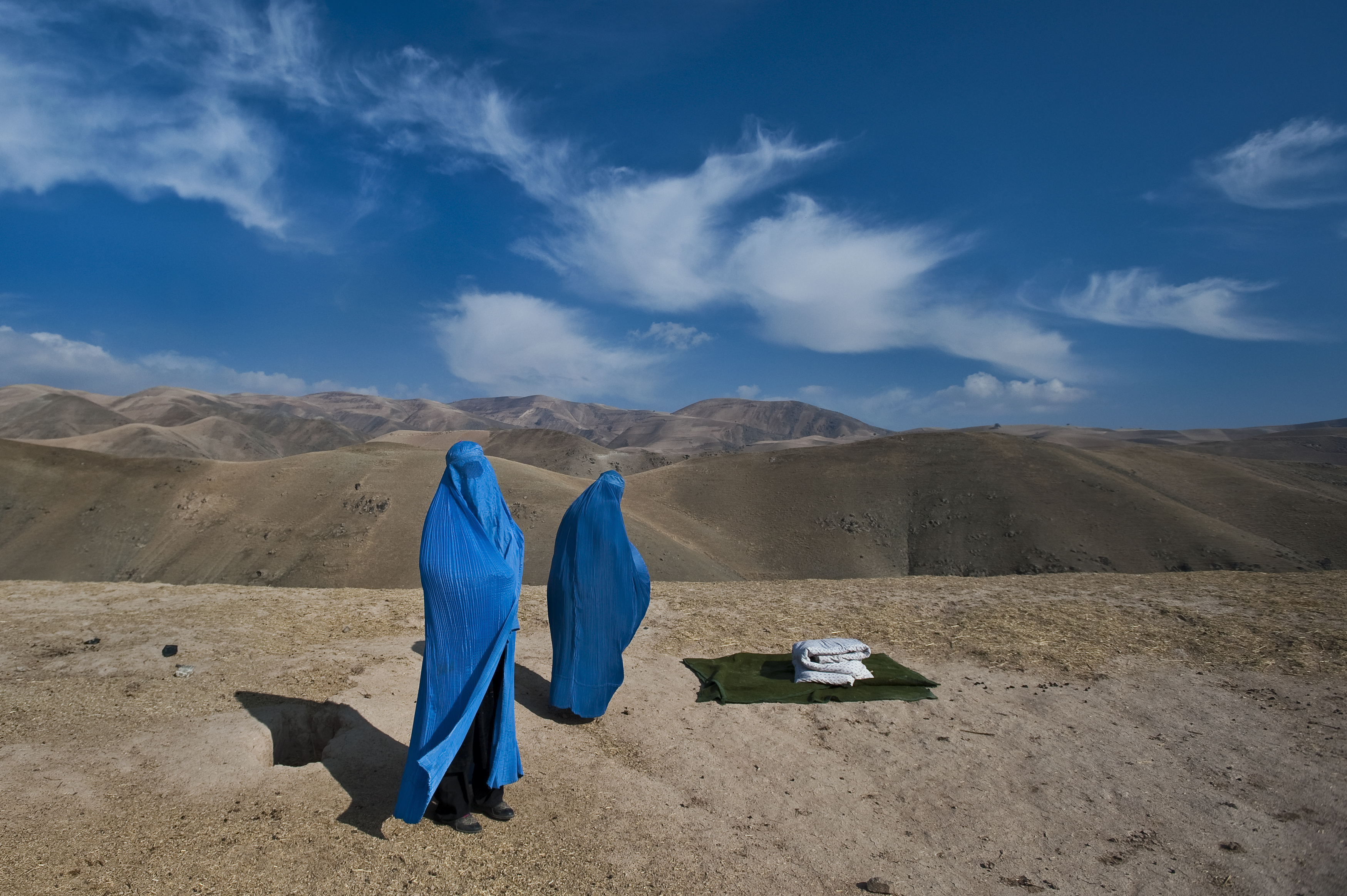
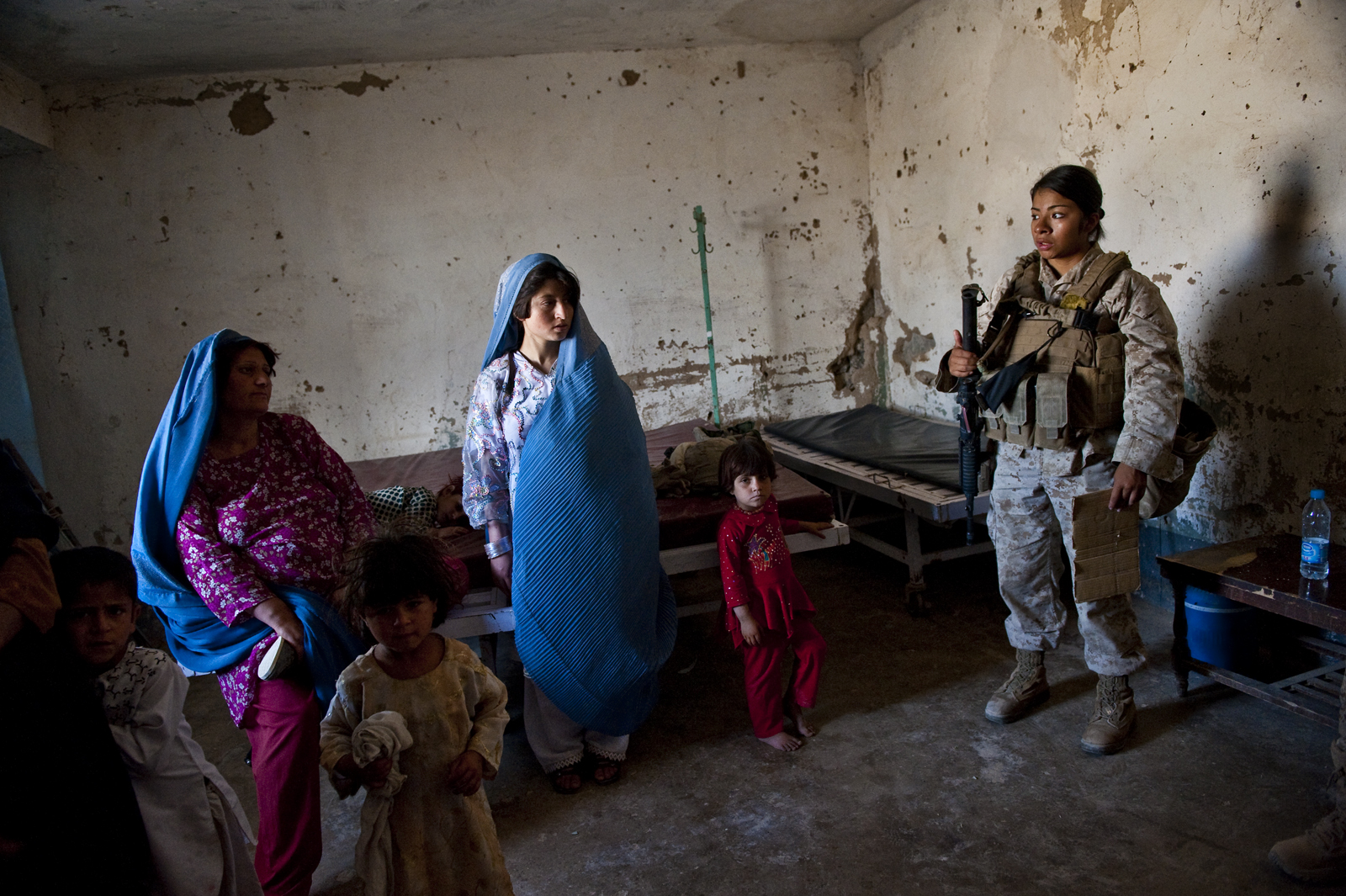
Photo Credit: Woman in labor with her mother on the way to the hospital in Afghanistan and a U.S. Marine in Afghanistan, used with permission courtesy of Lynsey Addario and the VII Network. -
First Steps on Human Security and Emerging Risks
›The 2010 Quadrennial Development and Diplomacy Review (QDDR), the first of its kind, was recently released by the State Department and USAID in an attempt to redefine the scope and mission of U.S. foreign policy in the 21st century. Breaking away from the Cold War structures of hard international security and an exclusive focus on state-level diplomacy, the QDDR recognizes that U.S. interests are best served by a more comprehensive approach to international relations. The men and women who already work with the U.S. government possess valuable expertise that should be leveraged to tackle emerging threats and opportunities.
-
Andrew Morton, UNEP
Haiti 2011: Looking One Year Back and Twenty Years Forward
›January 14, 2011 // By Wilson Center StaffThis piece first appeared on the website of the Haiti Regeneration Initiative – a new collaborative venture between the UN, the government of Haiti, the Earth Institute at Columbia University, Catholic Relief Services, and a wide range of other implementing partners.
In 2010, Haiti endured a year like no other. The country was struck by a devastating earthquake, a cholera epidemic, floods, violence, and political uncertainty. At the same time, Haiti witnessed heroic rescue and relief efforts and an enormous demonstration of international goodwill. Today, recovery and reconstruction are taking place, albeit at a frustratingly slow pace and not currently at the scale of existing needs.
Just as importantly, 2010 brought a renewed awareness of the need for lasting solutions and improvements in the design and delivery of international aid. During the next few days, we will look back on the tragic events of January 12th, 2010, while at the same time, we must look forward, not just one year, but 20.
A Failed Recovery in a Fragile State
Already before the earthquake, Haiti was a fragile state trapped in a slow but vicious negative spiral. A tightly interconnected trio of chronic environmental, political, and socio-economic crises has gradually ensured that Haiti has had the lowest human development indicators in the Western Hemisphere, with life-long poverty, chronic hunger, and violence. Catastrophic events, such as natural disasters, epidemics, and political violence, have simply steepened the descent. Moreover, disaster recovery efforts to date have systematically failed to bring the country back to pre-disaster levels.
In spite of this depressing analysis and forecast, we should not resign ourselves to failure. The situation can be turned around but only with great effort and by foregoing “business as usual.”
The first step towards change is full recognition of the situation. In the case of Haiti, this means recognizing the marked failure of foreign recovery and development assistance to date. It is pointless to blame any particular institution or individual for this: The current state of Haiti is the culmination of generations of efforts and decisions, good and bad, combined with rapid population growth and an inherent vulnerability to natural hazards. (Editor’s note: according to the UN, Haiti’s fertility rate tripled in the immediate aftermath of the earthquake last year.)
The second step is planning. While relatively solid recovery plans have been developed by the government of Haiti with international assistance, their implementation has not so far met with success, due to four interlinked problems.
First, the humanitarian imperative for urgent and chronic relief is overrunning all good intentions for recovery and development – it is politically impossible, inhumane, and simply unwise to ignore the basic resource needs of a cholera epidemic and a million people living in tents.
Second, nothing suppresses development investments like political violence and uncertainty: Few donors, and even fewer companies, will invest while riots and political uncertainty paralyze the country and destroy its reputation.
Third, the planning process is necessarily democratic and participatory; as a result, however, virtually all of the country’s needs are listed with no reliable process of thematic or geographic prioritization.
Finally – and perhaps most importantly – although the plans are official and uncontested, they generally lack broad credibility and commitment. Weary aid workers, government officials, donors and the general public look back at the fate of previous plans and, not surprisingly, expect these latest efforts to fail just as others have before.
Regenerating Haiti
Unlike virtually all other aid organizations I have met in Haiti, the team behind the Haiti Regeneration Initiative (HRI) has fortunately been given the vital time and seed funding to reflect on these issues and try something really different. After two years of preparation, on January 4, 2010, we launched a long-term rural sustainable development initiative for the southwestern tip of Haiti. The Côte Sud Initiative aims to transform the lives and the degraded environment of 200,000 people living in one of the poorest yet most beautiful parts of Haiti.
This specific initiative will only directly assist two percent of the population of Haiti, but just as importantly, we aim to demonstrate that sustainable development is truly possible in this country. Because national-scale issues require national-scale efforts, we also aim to promote change through dialogue and assisting the government of Haiti to develop and deliver on sustainable development plans that work. This is the primary mission of the HRI.
We must arrest the long-term decline as soon as possible. This includes, but is not limited to, basic recovery from the earthquake. At the same time, we need to establish the foundations for the long-term radical changes that are an absolute prerequisite to achieving sustainable development in Haiti. We must prepare to turn the vicious circles into virtuous ones.
So what are the short- to medium-term priorities?
The first is political stabilization, as vital foreign aid and direct foreign investment will simply not arrive in the face of such negative news and uncertainty.
Second, a massive aid investment in potable water and sanitation is required to suppress cholera in the longer term. No country can develop in the midst of recurrent major epidemics. This investment needs to be designed for sustainability; in other words, infrastructure needs to be accompanied by realistic, locally financed mechanisms for maintenance. Otherwise it will become useless within weeks of installation.
Third, persistence is needed on the current debris clearance and rebuilding efforts; we know from many other countries that such efforts can take years to be completed.
Finally, development aid should move out of Port-au-Prince and into the regions. In 2010, the massive influx of earthquake relief and reconstruction aid actually increased the economic pull of the capital and exacerbated existing urban problems.
What to do to prepare for the long term? Implementing radical change requires political support and even cultural reform, so in addition to good ideas, the HRI partnership will work hard to develop a sense of national ownership of the solutions as well as the problems.
Many of the ideas are not new: mildly decentralized development, diversified and value-added agriculture, niche tourism, improved aid coordination, public-private partnerships, etc.
Many, however, are radical, including a proposed paradigm change on migration and remittances, education, food security and import policies, widespread privatization, harsh revisions and rebuttals of traditional development models and assumptions, and adaptation to the new types of religious NGOs. These are just a few of the concepts and opportunities we have identified and will work to make a reality in Haiti.
Over the next few years, the HRI hopes to foster an intelligent and useful dialogue on sustainable development in Haiti. We look forward to having all of those who are concerned about and interested in helping Haiti join us in the debate.
Andrew Morton is the Haiti Regeneration coordinator and a senior staff member at UNEP. For more information on the Haiti Regeneration Initiative please see www.haitiregeneration.org.
Sources: BBC, Haiti Regeneration Initiative, United Nations Development Programme.
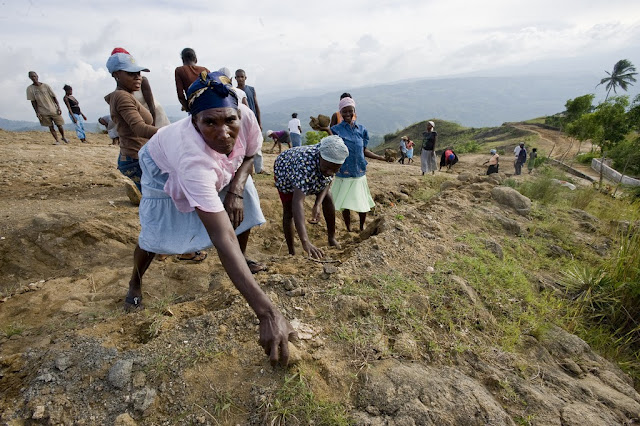
Image Credit: “Rebuilding as a community,” courtesy of flickr user Save the Children. -
Civil-Military Interface Still Lacks Operational Clarity
›The Quadrennial Diplomacy and Development Review (QDDR) is an important first step in redefining civilian roles and capacities in crises, conflict, and instability. After the expensive failures of both the military and USAID in Vietnam during the 1960s and 70s, Congress set new guidelines governing military interventions and assistance to foreign governments. Foreign assistance staff was cut from 15,000 to 2,000 people. When modern-day conflicts arose and USAID found itself understaffed and under-funded, the military was called upon to fill a gap and became overnight, in essence, our primary development agency.
Showing posts from category zz Organizations.