-
Family Planning and Results-Based Financing Initiatives
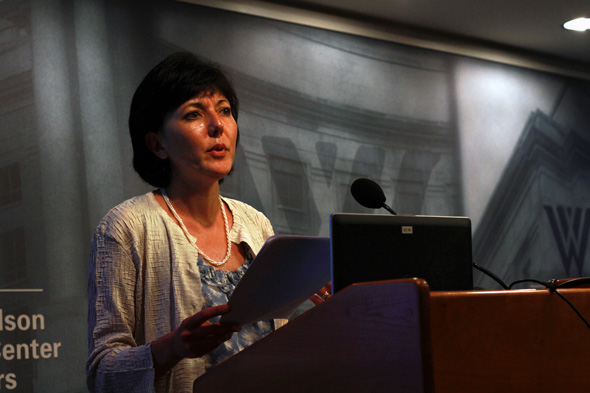
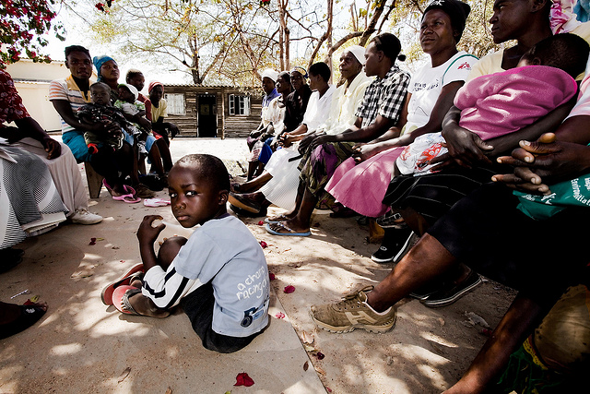
›“Family planning means healthier moms and kids – and it’s good for development too,” said Lindsay Morgan, a senior health analyst at Broad Branch Associates, a healthcare advocacy group. But any number of hurdles can keep women from accessing family planning services. Morgan spoke at a May 21 discussion about results-based financing (RBF) programs, which aim to address hurdles on both the supply and demand sides of the equation in developing countries by incentivizing the provision of a variety of quality services while removing barriers to access for women in need of those services.
Removing Barriers to Providing and Using Family Planning Services
Incentives in RBF programs can come in a variety of forms – like subsidies or fees paid to clinics or vouchers sold to women, said Morgan. In Burundi, for example, under a pilot program rolled out across three provinces in 2006, health facilities receive payments for each patient that uses a modern method of contraception. In 2009, the government and international partners began scaling up the program to a nationwide level. In addition to expanding the program’s geographic reach, the scale-up incorporated new payment criteria to better incentivize quality of care (as opposed to just quantity) and longer-lasting methods of contraception.
Since the RBF pilot began, maternal and child health indicators have improved. The number of children being fully immunized is up, as is contraceptive prevalence, said Morgan. Additionally, those immediate results can lead to a slew of additional benefits down the line. For instance, improving modern contraceptive prevalence is one of the most cost-effective interventions available for reducing maternal death, she said.
In nearby Kenya, the health ministry leads a voucher system across four districts and two Nairobi slums to help some of the country’s poorest women afford maternal healthcare, family planning, and gender-based violence services.
The program is “written into large policy documents [and] strategic pieces,” including Vision 2030, a long-term government-wide strategy document “unveiled in 2008 as a way to reach middle-income country status by 2030,” said Ben Bellows, a reproductive health associate at Population Council Kenya. The government’s emphasis on the voucher program as more than just a health initiative is an acknowledgment of the downstream impact that improved maternal and reproductive health can have on the country’s development, he said.
“An Equity Gap in Family Planning”
However, the fact that the voucher program is needed at all is evidence of “an equity gap in family planning,” Bellows said. Access to family planning services can be significantly skewed depending on a woman’s income level, he said, pointing to a recent article in The Lancet assessing health inequalities in 12 different maternal and child health services across 54 priority Millennium Development Goal countries.
The equity gap reflects “an interesting problem with development,” said Bellows: Though low-income countries are converging with higher income countries, in terms of economic growth rates and income levels “the benefits of growth aren’t being evenly distributed.” The Africa Progress Panel’s annual report, released last month, echoes that point, he said.
“Governments are failing to convert the rising tide of wealth into opportunities for their most marginalized citizens,” the report concludes, and “unequal access to health, education, water and sanitation is reinforcing wider inequalities.”
Kenya’s voucher system is designed to help shrink that gap. Among the poorest of the poor – those benefitting from the system – inequalities are dropping, even if on a broader scale, inequity still exists between poor and wealthy Kenyans. “We’re seeing lower inequalities of service in areas exposed to the voucher,” said Bellows.
“RBF supports progress on a path towards universal health coverage,” said Beverly Johnston, the senior policy advisor at USAID’s Office of Population and Reproductive Health. And within the context of family planning “the whole idea is to level the playing field” so that all contraceptive methods are equally readily available to the women seeking them.
“A Catalyst for Change” in Family Planning
In addition to addressing equal access concerns, RBF programs can serve as “a catalyst for change…to stimulate quality of care and quality of family planning counseling in particular,” said Johnston.
A commonly cited hurdle to better family planning access is social norms that support large family sizes or otherwise limit a woman’s ability to space or limit her pregnancies. Given community health workers’ unique roles within their communities – “often on the front lines…where many of these social taboos and barriers exist,” as Morgan described – simply strengthening their training, and in turn improving the quality of care that women receive, can help counter norms that might otherwise prohibit access to family planning.
As more women receive higher quality care, norms dissipate even further, said Morgan. “There is evidence that [quality of care] is strongly associated with a woman’s decision to choose a method to use, to continue to use it, and to recommend it to others.”
“Rights Are Tantamount”
One trap RBF programs need to be aware of is over-incentivizing expansion of coverage to the detriment of quality or individual women’s concerns about what makes sense for them, said Johnston.
“Rights are tantamount,” she said. In order to ensure that rights are upheld, programs must reflect and be sensitive to local histories and local needs – particularly given the fact that some countries have had “a history of coercive programs and policies.”
Ultimately, “we really look at RBF as just one tool,” said Johnston. “RBF is not for every place and every context,” and neither is family planning’s place in RBF programming.
As one tool of many, RBF programs are gaining prominence as a way to meet MDGs related to maternal and child health. Bellows sees RBF’s importance lasting long past that 2015 deadline, though.
“The high inequity that we witness across many low-income countries, and the ability of targeted mechanisms [like Kenya’s voucher program] to address that, suggest that this may be a kind of generalized solution,” he said. “Obviously it will be context specific in the way in which it is rolled out, but the strategy of incentivizing clients and providers suggests that there’s some sort of globalized solution that could be considered for this widespread challenge.”
Event Resources
Photo Credit: Sean Peoples/Wilson Center. -
USAID’s New Global Health Framework and Delivering Equity in Health Interventions
›USAID’s new Global Health Strategic Framework, Better Health for Development, lays out the agency’s major health priorities for the next five years. “Core global health priorities” include reducing maternal mortality, ensuring child survival and nutrition, fostering an “AIDS free generation,” and fighting infectious diseases. Family planning and reproductive health is listed as a key area for bilateral engagement. In particular, the strategy hopes to continue to “graduate” countries from the agency’s family planning program, which since the 1980s has transitioned 21 countries into local ownership of family planning support. The strategy also takes stock of the shifting global health environment, noting the rise of the “BRICS” countries as new donors and the need to strengthen public health systems in developing countries. “Already, private payments account for 50-80 percent of total health spending in Africa and Asia, leading to system inefficiencies, inequitable access, and health costs that prove catastrophic to individuals and families,” the report reads. In order to achieve its priorities within this context, the document sets out a number of strategies, including a focus on program sustainability, the empowerment of women, and integrated approaches to development. Health, it says, “cannot be isolated from other development challenges.”Speaking of health interventions, a team of researchers led by Aluisio Barros of the Federal University of Pelotas, Brazil, recently compared coverage data from more than 50 countries against an index of household wealth to estimate the most and least equitable interventions. The study, “Equity in Maternal, Newborn, and Child Health Interventions in Countdown to 2015: A Retrospective Review of Survey Data From 54 Countries,” published in The Lancet, found that “interventions with similar levels of overall coverage often have very different degrees of inequality.” According to the data, “the most inequitable indicator was skilled birth attendant, followed by four or more antenatal care visits, whereas the most equitable was early initiation of breastfeeding.” For example, though the average for attendance by a skilled birth attendant was 53.6 percent across the entire sample, the wealthiest fifth had an 84.4 percent coverage rate and the poorest stood at 32.3 percent. “Interventions that are usually delivered in fixed health facilities…tend to be the most inequitably distributed,” write the authors, with geographical access, financial barriers, and discrimination appearing as likely obstacles for the poor. The authors conclude that, although “concern about inequalities in maternal and child health in poor countries was conspicuously absent from the global agenda in the past,” the availability of new, intervention-specific data provides a means of targeting equity issues in health delivery more successfully. -
Environment, Natural Resource Guidelines for Peacekeepers Moves UN Closer to ‘Greening the Blue Helmets’
›May 30, 2012 // By Stuart KentUN peacekeepers not only operate in conflicts where land and natural resources are a component of the fighting but their own bases and operations can also impact the local environment. As well as documenting practical steps to minimize the footprint of field missions, a new report from the United Nations Environment Program (UNEP) reviews the relationship between natural resources and conflict and what it means for peacekeeping.
While there’s been talk about “greening” UN peacekeeping for years, the details about the economic, environmental, and mission benefits contained in Greening the Blue Helmets: Environment, Natural Resources and UN Peacekeeping Operations suggest that this talk is getting closer to reality.
As of December 2011, the UN’s Department of Peacekeeping Operations was responsible for 121,591 personnel, 17,000 vehicles, and 257 aircraft across 16 different operations worldwide. These forces account for more than half of the entire UN system’s carbon emissions and can significantly strain the resources of fragile host communities, according to the report.
Building on the 2009 Environmental Policy for UN Field Missions, the UNEP report provides a dozen best practice examples from ongoing missions.
Field cases serve as evidence of how increasing water and energy efficiency, safely discarding solid and hazardous wastes, protecting cultural and historical sites, and ensuring a limited footprint after the closing down of camps, can save environmental and financial resources. These measures, the report claims, also reduce the risk of tension with host communities, such as occurred in Haiti when an outbreak of Cholera was traced to unsanitary water management practices at a UN camp.
Technologies recommended include better waste management systems, improved water systems, energy efficient buildings, and green energy capacities. However, some improvements can be made by simply encouraging behavioral changes; the UN mission in Timor-Leste reduced energy consumption by 15 percent over 12 months using a “CarLog” system to encourage fuel efficiency. With a 2009 global fuel bill of $638 million, even a 15 percent margin relates to a significant figure (much like the logic behind similar efficiency efforts within the U.S. military).
However, uncertain mission lengths are a major barrier to the adoption of more efficient technologies. Despite UN operations lasting an average of seven years and evidence indicating that capital investments could be recovered within one to five years in some cases, year-to-year mandates complicate long-term planning.
Natural Resource Nexus
Conceptually, the nexus of natural resources, conflict, and peacebuilding must be a central concern of peacekeeping operations, asserts the report.
In Africa alone, 13 operations have been conducted in response to conflicts associated with natural resources, at a cost of around $32 billion. Exploitation of natural resources such as diamonds, timber, and oil has financed and fueled conflicts in Sierra Leone, the Democratic Republic of the Congo, and Liberia. Communal tensions over access to scarce land and water resources are also considered an exacerbating influence on conflict dynamics in much of Sudan and now South Sudan, according to the report.
Addressing this nexus can also provide opportunities to reduce and redress conflict. In Darfur, firewood collection is a dangerous task for women and girls. By making “firewood patrols” a regular feature of the UN forces’ protection, the prevalence of sexual violence has been limited.
The UN Assistance Mission in Afghanistan is cited in the report for its efforts to hire ex-combatant and vulnerable populations to aid in the reforestation of extensively degraded pistachio woodlands from 2003 to 2009.
“Natural resources can provide opportunities for emergency employment and…sustainable livelihoods for former combatants,” write the authors.
Countries recovering from episodes of violence tend to have a low capacity to effectively and equitably manage a natural resource base that itself may have been degraded by conflict. Recent attention, however, is being paid to the peacebuilding potential of managing shared resources.
According to the report, “while only 54 percent of peace agreements reached between 1989 and 2004 contained provisions on natural resources, all of the major agreements concluded between 2005 and 2010 included such provisions.” This includes the renovation of land tenure systems, management of valuable extractive industries, and reallocation of resource rents.
Preventing Predatory Extraction
As peace begins to take hold, “access to land may be a key determining factor affecting the successful reintegration of a former combatant into a community.”
According to interview data from Northern Uganda, 93 percent of male LRA ex-combatants were unable to access land after demobilization. Often due to the death of an elder relative, sale of land by a family member, or land grabs by other members of the community.
While shared resources can build trust between communities, spoiler groups that use aggressive means to secure resource rents in the aftermath of conflict can endanger a fragile peace. The report identifies a role here for peacekeeping forces – and in particular for their civilian contingent – to identify these potential risks and opportunities for action.
In particular, the report recommends a higher level of clarity about the relationship between peacekeeping forces and so called “expert panels” – groups of civilian specialists called upon by the Security Council to provide advice on an official basis about natural resources in the aftermath of conflict.
The UN mission in the Democratic Republic of Congo, for instance, was given a direct mandate in 2008 to work with the DRC expert panel and to “use its monitoring and inspection capacities to curtail the provision of support to illegal armed groups derived from illicit trade in natural resources.”
UNEP Program Officer Matti Lehtonen, in an email interview, called the panels a “tremendous asset that is not yet used up to its full potential.” However, he noted, “expert panels and peacekeeping missions are different tools with different objectives so there is also a need to maintain a degree of independence.”
The report identifies a set of key recommendations for the UN moving forward:- Ensure that pre-deployment and in-mission training includes instruction on environment and natural resource management
- Aid and encourage disarmament, demobilization, and reintegration programs to look closely at emergency employment and sustainable livelihoods related to natural resources and the environment
- Support and encourage civil affairs personnel to seek ways to capitalize on peacebuilding opportunities around natural resources and the environment
- Systematically inform the Security Council of linkages between natural resources and conflict in states where the Council may be considering action
- Where natural resources have fueled or financed conflict, provide peacekeepers with a more systemic mandate to act on these issues
- Effectively implement best practices identified in the 2009 environmental policy
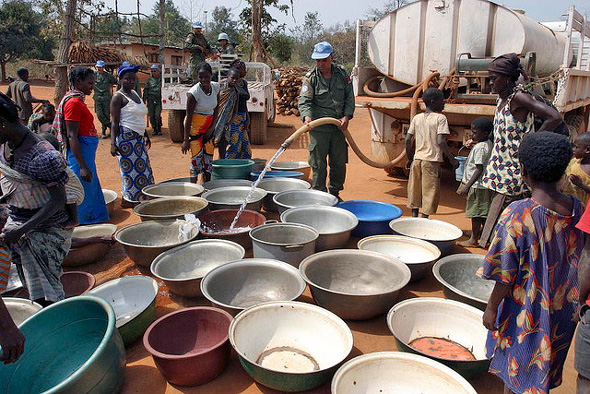
Photo Credit: UN peacekeepers in Côte d’Ivoire distribute water during a 2007 mission, courtesy of United Nations Photo. -
Poor Land Tenure: A Key Component to Why Nations Fail
›The murder of five land rights campaigners during the last two months – one in Colombia, three in Brazil, and one in Cambodia – have not captured many headlines, but they are a reminder of the central role land tenure plays not just in rural economic development but also in sparking broadly distributed economic gains throughout a society.
-
The Global Water Security Assessment and U.S. National Security Implications
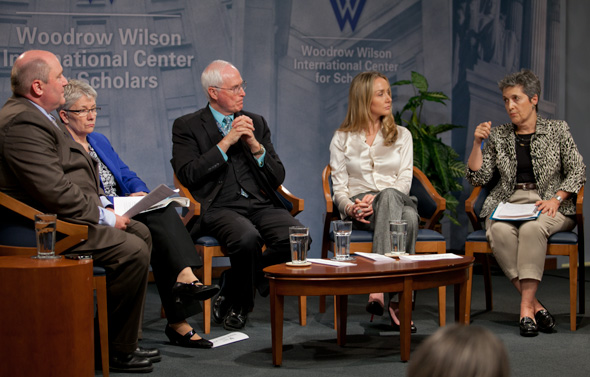
›“Water security is about much more than access to H2O,” said Jane Harman, director, president, and CEO of the Wilson Center at the May 9 meeting, “Global Water Security: The Intelligence Community Assessment.” The event – part of the Wilson Center’s National Conversation Series – brought together a number of experts to discuss a recently released intelligence community assessment of global water security. [Video Below]
-
A Northern View: Canada’s Climate Claims and Obligations
›Reneging on Kyoto, Keystone pipeline drama, pain at the pump, re-aligned Arctic sovereignty, melting outdoor hockey rinks – all these aspects of climate change are being discussed in Canada.
However, Canadians, as potential citizens of the next energy superpower, need a more comprehensive and enriching debate. Climate change adaptation measures, at home and abroad, are inevitable, but the issue has largely been ignored by the federal government thus far.
To many Americans, it may seem that Canada has equated energy production with national prosperity, but Canadians are increasingly concerned about the human security and eco-justice implications of ongoing climate change as well. Lack of leadership at the federal level on Kyoto-related energy efficiency and emissions mitigation has been partially offset by actions at the provincial and municipal levels, but climate change is occurring now and it demands a coordinated response from the federal government, the only political apparatus capable of channeling the resources necessary for making a solid contribution to global climate change adaptation.
A moderate predictive scenario suggests that the regional impacts of climate change will be very expensive: the UN projects the global Green Climate Fund will require up to $100 billion a year by 2020. Water stress – too little, too much, or the perception of either – may be the most common theme. Coastal flooding, shoreline erosion, glacier retreat, chronic water shortages, loss of biodiversity and habitat, increased spread of invasive species, extreme weather events; taking preventive action against these (beyond the obvious call for reduced emissions) will be prohibitively expensive for most communities around the globe, including the coastal and northern regions of Canada.
The UN Convention to Combat Desertification has become a conduit for the argument that drought and land degradation related to climate change justifies southern demands for northern investment in initiatives in Africa and elsewhere. As a high emissions per capita nation, Canada has an obligation to contribute to such international efforts.
But I also don’t see why the indigenous peoples of the circumpolar north should be denied claims as permafrost thaws and ice-cover vital for subsistence hunting disappears. Citizens of small island states, to whom adaptation may well mean the abandonment of their homeland, have charged willful ignorance or purposeful negligence of their plight; so too might riparian communities along Canada’s many ocean shorelines, lakes, and rivers. Farmers, fishers, First Nations communities: all will need to adapt. We need to start seriously planning ahead to meet climate change scenarios, instead of burying the issue under the tar sands.
Of course, people will adapt to shifting conditions; such is the imperative of survival. And there are many ingenious ways this will materialize. Indeed many mitigation and adaptation strategies blend together as hybrids today. Building more effective alternative energy systems can be seen as much as responses to climate change as preventive measures and involve both public and private sector funding, for example.
However, paying for adaptation is another matter, and here it is vital in my view to stress the potential role of infrastructure spending by the federal government. Much of Canada’s current fiscal restraint is indeed a welcome development if the government cuts back on waste and redundancy, but not if it serves as a veil for sacrificing principles of eco-justice – the idea that those who made the least contributions to and benefit the least from environmental problems should not bear disproportionately higher risks.
Of course there will be nasty disputes ahead about the accounting, accountability, legitimacy, and purpose of climate change adaptation funding for Canada, in or out of the UNFCCC process, but let me draw just a few general conclusions at this stage:- There is an ethical imperative to contribute to international adaptation funding, perhaps just as great an imperative as traditional efforts to help former colonized countries. It’s not just about money, at least not directly: Canadian technical, policy, and financial expertise should be harnessed for this purpose as well.
- Unlike in other policy areas, there is no way to unload or pass the buck on climate change adaptation efforts: they demand the utilization of centralized resources redistributed throughout the country and through multilateral funding mechanisms.
- Adaptation funding should not, however, supplant more traditional emergency, humanitarian, or environmental funding. It should be seen as a supplement, albeit one with increasing importance, but not as a new form of dependency or gold-rush of aid-with-obligations opportunities. The current government is right to worry about accountability issues.
- But accountability goes both ways: we need at least to get the accounting and communications right on this, thus the need for open dialogue and ongoing consultation. Killing the well-respected National Roundtable on the Environment and the Economy, which consulted various Canadian stakeholders on key environmental questions, was not a good start.
Peter Stoett is the Fulbright Research Chair in Canada-U.S. Relations at the Wilson Center’s Canada Institute and professor in the Department of Political Science at Concordia University, Montreal.
Sources: CBC, The Catholic Register, The Huffington Post, International Institute for Sustainable Development, UNFCCC.
Photo Credit: “City, Suburb, Ocean, Mountain,” courtesy of flickr user ecstaticist (Evan Leeson). -
Learning From Success: Ministers of Health Discuss Accelerating Progress in Maternal Survival
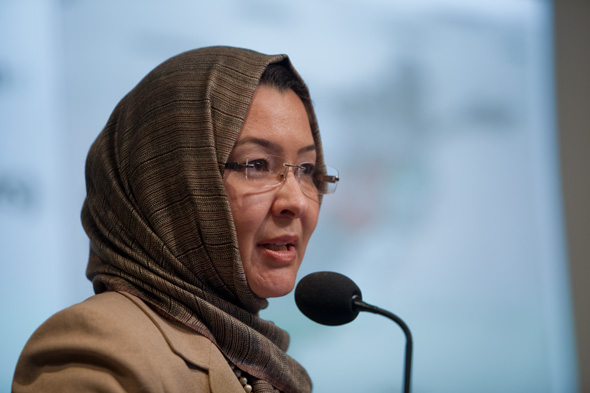
›“The gains we have made [in reducing maternal mortality rates] are remarkable; however, gains are fragile and donor resources are declining. Substantial investments must be maintained to safeguard these hard-wins,” said Afghan Minister of Health Suraya Dail at the Wilson Center on April 23. [Video Below]
As part of the Wilson Center’s Global Health Initiative, the Advancing Dialogue to Improve Maternal Health series partnered with the U.S. Agency for International Development to co-host Minister Dail, along with Honorable Dr. Mam Bunheng, Minister of Health, Cambodia; Honorable Dr. Bautista Rojas Gómez, Minister of Health, Dominican Republic; and Dr. Fidele Ngabo, Director of Maternal and Child Health, Ministry of Health, Rwanda.
These ministers spoke about the lessons learned in countries where there has been tremendous progress under challenging circumstances.
In the Dominican Republic, Bautista Rojas Gomez said the first challenge was to address the “Dominican paradox,” where maternal mortality rates were high despite the fact that 97 percent of women received prenatal care and delivered in hospitals. The government created a zero tolerance policy that included a comprehensive surveillance system, mandatory maternal death audits, and community oversight of services, which assured better quality services.
Similar political commitment improved indicators in Cambodia, where maternal mortality rates dropped from 472 to 206 per year from 2005 to 2010. “It takes a village…and the prime minister has inspired the country to act,” said Mam Bunheng. Through increased access to contraception the number of children per woman went from seven to three and commitment to family planning, education, technology, infrastructure, and community have been the key drivers of success.
“In Rwanda, the big challenge we are having is education,” said Fidele Ngabo. “Many of the maternal health indicators depend on education.” When women and girls are educated they are twice as likely to utilize modern contraception. The efforts of Rwanda’s government have been instrumental in facilitating positive change, he said, particularly the efforts of First Lady Jeannette Kagame, who he called a “champion” for women and girl’s health.
As witnessed throughout the Advancing Dialogue to Improve Maternal Health series – and reiterated by the ministers of health – the interventions to improve maternal mortality rates exist, what’s left is to generate the needed political willpower.
Event Resources
Photo Credit: David Hawxhurst/Wilson Center. -
New Surveys Generate Mixed Demographic Signals for East and Southern Africa
›May 8, 2012 // By Elizabeth Leahy MadsenThe pace of fertility decline in sub-Saharan Africa will be the single most important factor in whether the global population reaches the UN’s high projection of nearly 11 billion in 2050, or remains closer to the low projection of 8 billion. In recent years, the high projection has seemed more likely, as sub-Saharan Africa has been marked by stalled fertility declines and stagnant rates of contraceptive use. Survey results released over the past year showing dramatic increases in contraceptive use in Ethiopia, Malawi, and Rwanda therefore set demographers and the family planning community abuzz, signaling that concerted efforts to improve health services had paid off and fertility rates were on the decline. But in recent months, additional surveys from Mozambique, Uganda, and Zimbabwe have shown that those positive trends are not universal.
Showing posts from category zz Organizations.