-
What Does It Take to Cooperate? Transboundary Water Management Around the World
›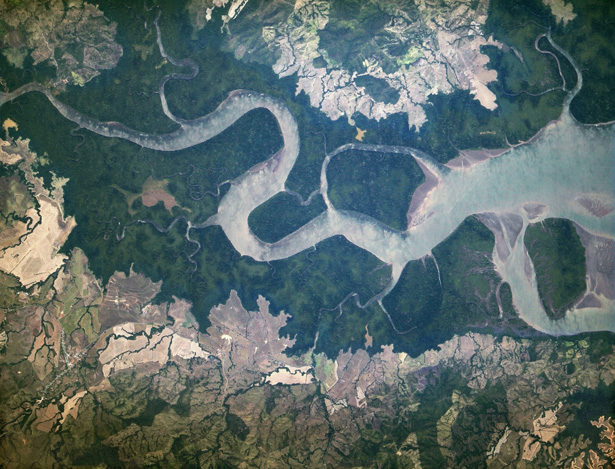
Water is the foundation of human society and will become even more critical as population growth, development, and climate change put pressure on already-shrinking water resources in the years ahead. But will this scarcity fuel conflict between countries with shared waters, as some have predicted, or will it create more impetus for cooperation?
-
Band of Conflict: What Role Do Demographics, Climate Change, and Natural Resources Play in the Sahel?
›
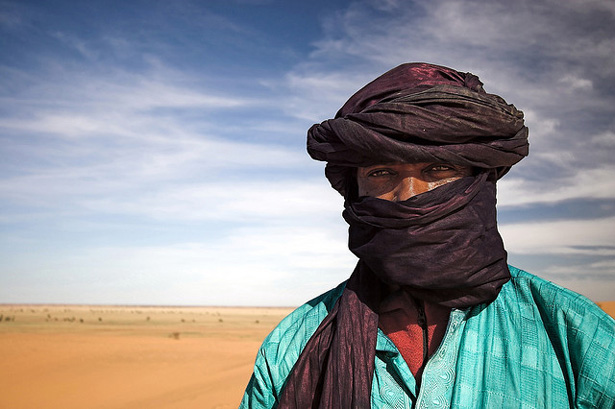
Stretching across northern Africa, the Sahel is a semi-arid region of more than a million square miles covering parts of nine countries. It is home to one of the world’s most punishing climates; vast expanses of uncharted and unmonitored desert; busy migration corridors that host human, drug, and arms trafficking; governments that are often ineffective and corrupt; and crushing poverty. It is not surprising then that the area has experienced a long history of unrest, marked by frequent military clashes, overthrown governments, and insurgency.
-
Addressing Urban Environmental Health and Maternal Mortality in Developing Countries
›Although climate change is a global phenomenon, developing countries – especially urban centers – are the most vulnerable to the negative health impacts of climate change. In “Urban Governance of Climate Change and Health,” a working paper for the Norwegian Institute for Urban and Regional Research, author Siri Bjerkreim Hellevik reviews the existing literature on governments’ responses to climate change and health in developing urban centers. Overall, Hellevik concludes that there is a substantial need for more research specifically linking the two. She offers several recommendations for urban policymakers to consider, including developing an integrated and multi-level approach, and recognizing that human health and urban development are issues of global justice. -
Maternal Health in India: Making Progress in a Key Arena
›Maternal mortality causes 56,000 deaths every year in India, accounting for 20 percent of maternal deaths around the world, said John Townsend, vice president and director of the Population Council’s reproductive health program. It is a key battleground for maternal health advocates. But maternal health is sometimes eclipsed by other major health and development issues on the sub-continent. For example, nearly five times as many people suffer from HIV/AIDS and more than 400 million people live on less than $1.25 a day. [Video Below]
-
Steven Gale on Futures Analysis at USAID
›There’s renewed interest in looking at future trends at USAID, said Steven Gale, a senior advisor at the agency. But “we’re always asking ourselves, ‘what is the development goal that [USAID] wants to achieve, and how is this megatrend going to increase or decrease the actual probability’” of that goal will be met?
In this week’s podcast, Gale describes the role of futures analysis at USAID, including the history of past efforts and similarities to other forward-looking projects, like the National Intelligence Council’s quadrennial Global Trends reports.
-
Once-in-a-Species Opportunity: For a World Free of Poverty, Seize the Demographic Dividend in Africa
›April 11, 2013 // By Laurie MazurA world “free from the stain of poverty” is within our grasp, declared World Bank President Jim Yong Kim in a speech at Georgetown University last week. Kim then announced a plan to virtually eradicate extreme poverty by 2030.
-
New Partnerships for Climate Change Adaptation and Peacebuilding in Africa
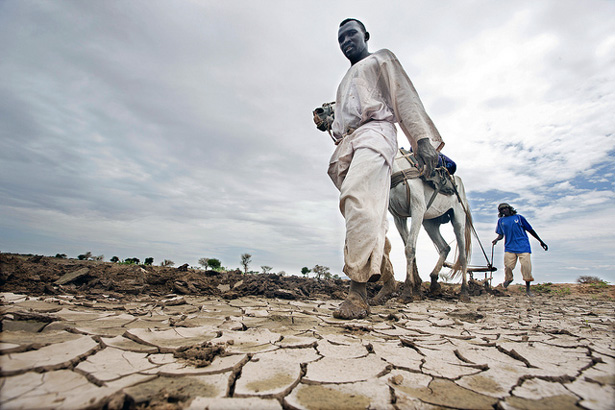
›“There is a huge gap between climate science, policymakers, and the end-users, in terms of understanding climate change and adaptation, and how that relates to conflict or peace,” concluded 26 experts from more than 10 countries across sub-Saharan Africa at the Wilson Center last fall. But “climate change adaptation is crucial to achieving Africa’s aspirations for peace, security, and sustainable development.”
-
Stewart M. Patrick, The Internationalist
Environmental Security Goes Mainstream: Natural Resources and National Interests
›March 29, 2013 // By Wilson Center StaffThe original version of this article, by Stewart M. Patrick, appeared on the Council on Foreign Relations’ The Internationalist blog.
Not long ago, concerns about environmental degradation were marginal in U.S. national security deliberations. What a difference climate change has made. Foreign policy officials and experts are starting to recognize profound linkages between planetary health, economic prosperity, and international security. These connections were on full view last Wednesday, when the Council on Foreign Relations (CFR) teamed up with Conservation International (CI) to convene a symposium, “Global Resources, the U.S. Economy, and National Security.”
Showing posts from category zz Organizations.