

-
Did Paris Address the Climate Challenges Faced by African Communities?
›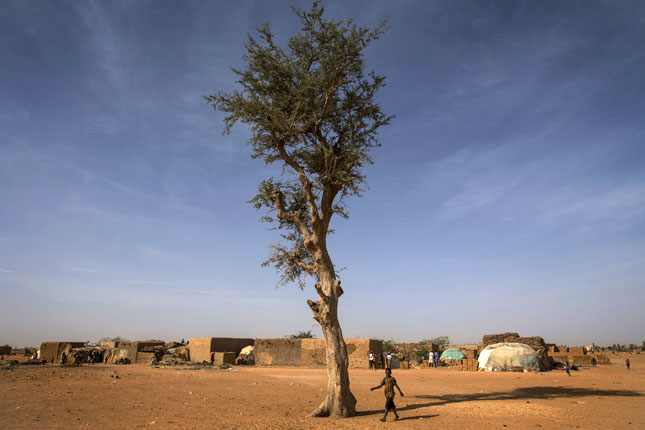
Since its adoption after COP-21 in December 2015, the Paris Agreement has received mixed reviews. Some stakeholders, mostly industrialized countries, see the climate deal as a success. Developing countries have generally been more cautiously optimistic, welcoming the agreement as the best option under the circumstances.
-
Ellen Starbird on the Allure of the Demographic Dividend and How to Achieve It
› “It has always surprised me actually how powerful this ‘demographic dividend’ framework seems to be,” says Ellen Starbird, director of USAID’s Office of Population and Reproductive Health, in this week’s podcast. But “for a lot of countries it’s a long way off.”
 -
The Commander in Chief, Congress, and Climate Security: Who Has the Authority?
›Climate change is the world’s greatest environmental threat. It is also increasingly understood as a threat to domestic and international peace and security – recognized by the Department of Defense as a “threat multiplier,” by Secretary of State John Kerry as “perhaps the world’s most fearsome weapon of mass destruction,” and by President Obama, in an address to graduates of the United States Military Academy, as “a creeping national security crisis.” The Supreme Court’s temporary blocking of the Clean Power Plan highlights the Federal-State divide over how to address climate change, but because of its national security dimension, climate change also raises unique separation of powers issues between the president and Congress with regard to how the military can respond.
-
Ethan Zindler on Clean Energy in Emerging Markets: “The Private Sector Sees the Opportunity”
›“The good news is clean energy has gotten much cheaper,” says Ethan Zindler, head of the Americas for Bloomberg New Energy Finance, on this week’s podcast. “The amount of stuff getting built for the same number of dollars has been going up. You’re getting more ‘bang for your buck’ when it comes to actual deployment.” -
Prized Natural Resources Are Rarely Addressed in Peace Agreements
›February 10, 2016 // By Haodan "Heather" ChenDespite evidence that natural resources play a major role in many conflicts – 40 percent of all civil wars since the end of the Cold War, according to an estimate by the UN Environment Program – a study conducted by Arthur G. Blundell and Emily E. Harwell for the NGO Forest Trends reveals that most ceasefire and peace agreements do not address natural resources.
-
Climate Change, Disasters, and Security: Unconventional Approaches to Building Stability
›It is “not sufficient to look at history for lessons on how we should prepare for and prevent future security risks in a climate change world,” said Swathi Veeravalli, research scientist at the U.S. Army Corps of Engineers’ Geospatial Research Laboratory, at the Wilson Center on January 14. Climate change and the extreme weather events it brings pose an “unprecedented” threat to human security. [Video Below]
-
Jagdish Upadhyay: Don’t Wait for the Demographic Dividend, Seize It
›“The demographic dividend is about inclusive growth, not just economic growth,” says Jagdish Upadhyay, chief of commodity security at the United Nations Population Fund (UNFPA), in this week’s podcast. “If it’s not inclusive, achieving the demographic dividend will be difficult.” -
Kate Gilmore on Protecting Sexual and Reproductive Rights in the “Toughest of Times, in the Hardest of Places”
›“Right now, 1.5 billion people are living in humanitarian crisis – living in conflict-afflicted regions,” says Kate Gilmore, deputy executive director of the United Nations Population Fund (UNFPA), in this week’s podcast.
Showing posts from category zz Organizations.
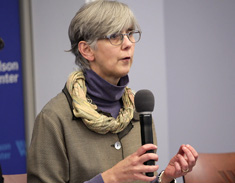 “It has always surprised me actually how powerful this ‘demographic dividend’ framework seems to be,” says Ellen Starbird, director of USAID’s
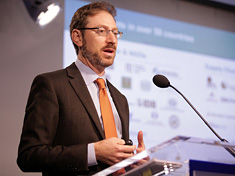 “The good news is clean energy has gotten much cheaper,” says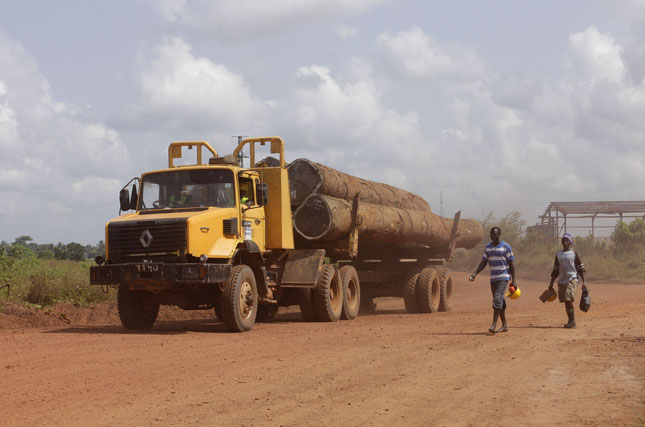
 “The demographic dividend is about inclusive growth, not just economic growth,” says Jagdish Upadhyay, chief of commodity security at the United Nations Population Fund (UNFPA), in this week’s podcast. “If it’s not inclusive, achieving the demographic dividend will be difficult.”
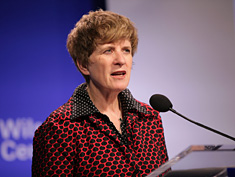 “Right now, 1.5 billion people are living in humanitarian crisis – living in conflict-afflicted regions,” says Kate Gilmore, deputy executive director of the United Nations Population Fund (UNFPA), in this week’s podcast.

