-
Turning the Climate-Security Problem on Its Head: Geoff Dabelko Talks G7 ‘Climate for Peace’ Report
› Conversations around climate change often take place at the “30,000-foot level,” said Ohio University Professor and ECSP Senior Advisor Geoff Dabelko in a recent radio interview with WOUB Public Media, based out of Athens, Ohio. Emission reductions, carbon concentrations, global temperatures. But a certain amount of change is already baked into the system and impacts are playing at in different ways around the world already.
 -
A New Climate for Peace: Taking Action on Climate and Fragility Risks (Report Launch)
›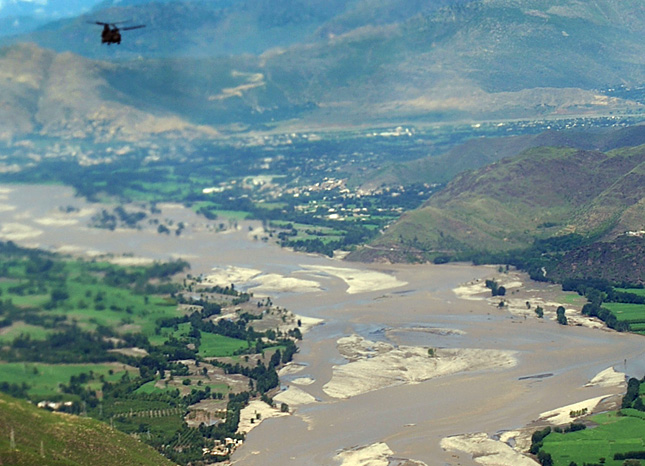
As momentum builds towards the negotiation of the Sustainable Development Goals and UN climate change summit later this year, the G7 countries – France, Germany, Italy, Japan, Canada, the UK, and the United States – have made a strong statement about the importance of climate security risks. A New Climate for Peace: Taking Action on Climate and Fragility Risks, an independent report commissioned by G7 foreign ministers and authored by a consortium of international organizations including the Wilson Center, analyzes the security and stability risks posed by climate change and offers concrete policy options for addressing them. [Video Below]
-
European Parliament Passes Conflict-Minerals Bill; UN Releases Report on Money Flows in DRC
›A new report prepared by the UN Environment Program and UN peacekeeping operation in the Democratic Republic of Congo (known as MONUSCO) found that just two percent of the total value of illicit natural resources smuggled from the country comes back to armed groups. Still, these funds, which amount to around $13 million a year, allow some 25 to 49 groups to continue operating in the country’s war-torn eastern provinces. Much more, as much as 50 percent, ends up in the hands of transnational criminal networks with the remaining profits flowing to individuals or companies elsewhere in the DRC or in Uganda, Rwanda, and Burundi. -
New G7 Report Highlights Climate Change and Fragility as a Foreign Policy Priority
›At the close of a meeting of G7 foreign ministers in Lübeck today, ministers announced a stronger collective commitment to tackling climate-related risks in states experiencing situations of fragility.
-
What’s in a Name? States of Fragility and Adjusting Aid to Conflict Zones
›April 13, 2015 // By Lauren Herzer RisiDepending on how closely you pay attention to the OECD, you may have picked up on a subtle but meaningful change in this year’s States of Fragility report. Whereas previous reports were titled Fragile States, the Organization for Economic Cooperation and Development has shifted its framing to focus less on states and more on conditions, less on the binary status of a “fragile state” and more on fragility as a universal condition that can impede development in all countries.
-
As Humanitarian Crises Multiply, Maternal Health and Safety of Women Becoming a Focus
›Accessing maternal health care is already a challenge in many countries, and when conflict erupts or a disaster strikes, it can get even worse, leaving millions of women on their own while at their most vulnerable, said Ugochi Daniels, chief of humanitarian response for the UN Population Fund (UNFPA). Women and girls also become more vulnerable to violence during times of crisis, she said, by virtue of nothing but their gender. [Video Below]
-
Gerald Stang, European Union Institute for Security Studies
Climate Change and EU Security: When and How Do They Intersect?
›December 3, 2014 // By Wilson Center StaffThe potential security challenges linked with climate change can make for great headlines. While sensationalist claims about water wars, states collapsing in chaos, or the forced migration of hundreds of millions cannot be completely discounted for the long term, intelligent mitigation and adaptation efforts can help avoid the worst of these – and manage the rest.
-
Next Stop, Lima: Building Momentum for a New Global Agreement on Climate Change
›December 1, 2014 // By Kathleen MogelgaardThis fall, a series of significant events signaled what many see as a shift toward meaningful collective action on climate change.
Showing posts from category European Union.
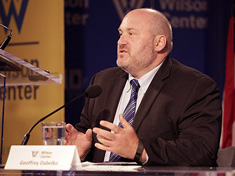 Conversations around climate change often take place at the “30,000-foot level,” said Ohio University Professor and ECSP Senior Advisor Geoff Dabelko in a recent