

-
President Joyce Banda Talks About Her Time in Office & Sensitizing African Leaders to Maternal Health Challenges
›Joyce Banda, Malawi’s first female vice president, became Malawi’s first female president in 2012 after the sudden death of Bungu wa Mutharika in office. From day one, maternal health and girls’ education were a priority in her administration, she tells the Maternal Health Initiative’s Roger-Mark De Souza in an interview at the Wilson Center.
-
State of the World Population 2016, and Fostering Development Through Family Planning
› The United Nations Population Fund’s 2016 State of the World Population report calls for investment in a very specific demographic: 10-year-old girls. At age 10, young girls are at a “pivotal” stage in their lives, the report says. They face a world of limitless possibilities, yet far too many end up thwarted in their ambitions by sexual violence, forced marriage, female genital mutilation, child labor, and other “systematic disadvantages.”
 -
Reproductive Health Care in Crises Has Come a Long Way, Says Sandra Krause, But There’s More to Be Done
›There may be more women and girls at risk of maternal health complications in fragile and conflict-affected settings today, but attention to the issue is not new and the international community has made important strides over the last 20 years, says Sandra Krause, program director for reproductive health at Women’s Refugee Commission, in this week’s podcast. -
Displaced and Disrupted: Closing the Gaps in Maternal Health in Conflicts and Crises
›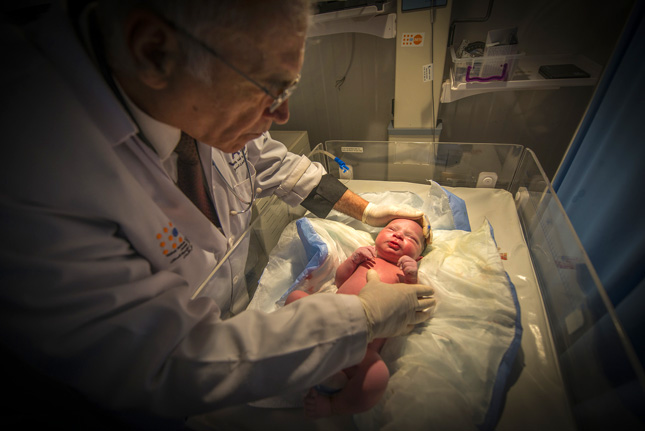
Where violent conflict displaces people and disrupts societies, maternal and child health suffers, and such instability is widespread today. According to the UN Refugee Agency, there are 65.3 million forcibly displaced people, 21.3 million refugees, and 10 million stateless people over the world. In addition, more than 65 million people who are not displaced are affected by conflict.
-
Somini Sengupta, The New York Times
Heat, Hunger, War Force Africans Onto a “Road on Fire”
›December 16, 2016 // By Wilson Center StaffAGADEZ, Niger — The world dismisses them as economic migrants. The law treats them as criminals who show up at a nation’s borders uninvited. Prayers alone protect them on the journey across the merciless Sahara.
-
Planet at the Crossroads: Insights From IUCN’s World Conservation Congress
›At this year’s International Union for Conservation of Nature (IUCN) World Conservation Congress, more than 10,000 scientists, activists, and leaders from around the world committed to finding “nature-based solutions” to reversing environmental declines and securing a healthy, livable planet.
-
Land Privatizations, Not Just Climate Change, Are Costing Rural Kenyans
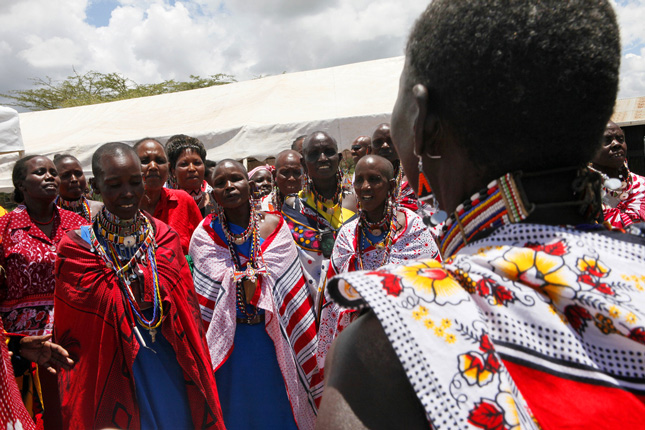
›Eddah Senetoi lives with her son in the small pastoralist community of Elangata Waus. They keep cows, goats, sheep, and donkeys to buy food and pay school fees. For her and other pastoralists living in southern Kenya’s Kajiado County, climate change is compounding challenges from land subdivision and privatization, and magnifying social tensions and community conflicts over access to resources.
-
To Be Young, Libyan, and Female: Alaa Murabit on Building Civil Society After Gaddafi
›In the turbulent days following the 2011 fall of Colonel Muammar Gaddafi’s government, Dr. Alaa Murabit found herself in Libya’s fragile capital, Tripoli, observing exchanges between parliamentarians and civil society over the future of the country. For over 40 years, this kind of discussion was unthinkable – not the least, for a young woman.
Showing posts from category youth.
 There may be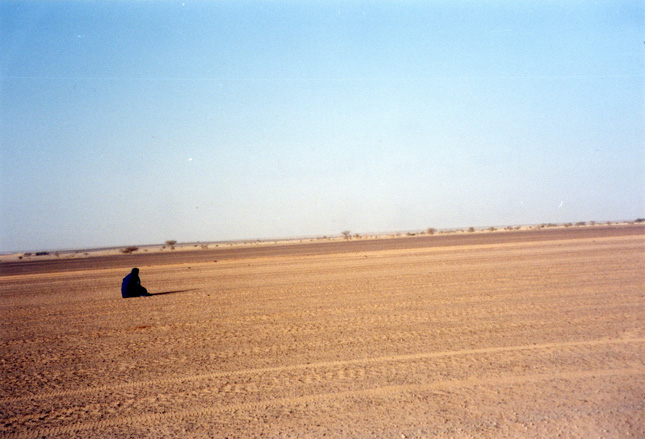

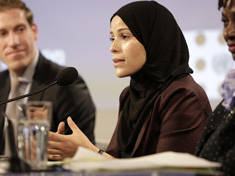 In the turbulent days following the 2011 fall of Colonel Muammar Gaddafi’s government, Dr. Alaa Murabit found herself in Libya’s fragile capital, Tripoli, observing exchanges between parliamentarians and civil society over the future of the country. For over 40 years, this kind of discussion was unthinkable – not the least, for a young woman.

