

-
Close Quarters: Population-Climate Panel Draws Crowd at Society of Environmental Journalists’ Annual Conference
›October 23, 2008 // By Rachel WeisshaarAt “Close Quarters: Could an End to Population Growth Help Stabilize the Climate?,” the only panel on population at the annual Society for Environmental Journalists (SEJ) conference, Steve Curwood, host and executive producer of Public Radio International’s “Living On Earth,” pointed out that while it’s “something we don’t talk about at all in America,” U.S. population growth increases emissions faster than developing-country population growth, due to our larger per capita consumption. Curwood discussed the major connections between population and climate change, such as water use; food production and consumption; economic growth; and migration. Hypothesizing that climate change will lead to great demographic shifts not only in developing countries, but also in the United States, he noted that historically, “we haven’t dealt with them well.”
The panelists explored environmental reporters’ relative silence on the impact of population growth and other demographic dynamics on environmental issues. According to moderator Constance Holden of Science, the possible barriers to coverage—listed below—should be “irrelevant” to working journalists:- Population’s association with controversial issues like contraception;
- Fear of appearing anti-immigration;
- The widespread belief that population growth is necessary for economic growth; and
- The difficulty of researching and writing about the complex issues related to population and demographics.
Robert Engelman, vice president for programs at the Worldwatch Institute, criticized journalists for not delving into population’s significant, albeit complex, impacts on the environment. Reporters may wish to avoid writing about problems they believe have no easy solutions, but it is just as important for them to explore these thorny topics as more straightforward subjects, he said.
As an example of a potential story angle, Engelman displayed a graph showing that U.S. carbon emissions and population grew by the same percentage between 1990 and 2004. Yet when the data are disaggregated by state, they reveal a very different, surprisingly diverse picture. Some states’ populations and emissions increased roughly equally, but others, like Delaware, managed to decrease their emissions even while their populations grew. Engelman suggested that reporters could explore which factors had influenced the population-emissions relationship in their state.
Freelance writer Tom Horton explained how population growth has helped foil attempts to clean up the Chesapeake Bay. As he wrote recently in Growing! Growing! Gone! The Chesapeake Bay and the Myth of Endless Growth, “[I]t seems questioning the expansion of the economy and the population are off the table, either because they are considered sacred cows, or they are just too hard to deal with. It is assumed we can cure the symptoms while vigorously expanding their root causes.” In an interview following the panel, Horton lauded the efforts of integrated population-environment programs in the Philippines, saying Filipinos “are far more advanced than we are” in their understanding of the relationships between coastal management and population growth.
While “Close Quarters” was the only SEJ panel to directly address population, Dennis Dimick, executive editor of National Geographic Magazine, noted the importance of population in a panel he moderated on agriculture and climate change. In addition, keynote speaker Rajendra K. Pachauri, chair of the Intergovernmental Panel on Climate Change, briefly mentioned the opportunities presented by India’s youthful population and the “demographic dividend.” However, he did not use the opportunity to discuss global population growth’s implications for climate change. -
Weekly Reading
›In an open letter on water policy to the next U.S. president, Peter Gleick of the Pacific Institute urges the next presidential administration to develop a national water policy; highlight national security issues related to water; expand the United States’ role in addressing global water problems; and integrate climate change into all federal planning and activity on water.
A recent survey conducted by Liberia’s Truth and Reconciliation Commission found that land disputes are a key threat to peace in Liberia, reports BBC News.
Mikhail Gorbachev, former president of the former Soviet Union, called for a global glasnost, or openness, on environmental problems. “This financial turmoil, which will heavily affect the real economy, was absolutely predictable, and it is only one aspect of the wider crisis of all the current development systems,” said Gorbachev. “In fact, there are connected simultaneous crises that are rapidly emerging. These relate to energy, water, food, demography, climate change and the ecosystem devastation.”
The World Health Organization has developed a plan for research on the health impacts of climate change, reports the Science and Development Network. -
The New U.S. Army Field Manual on Stability Operations: Visionary Shift or Missed Opportunity?
›October 17, 2008 // By Will Rogers Last week, the U.S. Army released its new field manual on stability and reconstruction operations, FM 3-07, the 10-month interagency brainchild of the Army, State Department, and U.S. Agency for International Development (USAID). Some have hailed the doctrine as a fundamental shift in Army policy that recognizes the significance of non-military threats to U.S. national security, while others have criticized it as a missed opportunity to critically re-examine notions of what constitutes security.
The new doctrine aims to shift the burden of fostering stability in fragile states from the Army to the State Department and USAID, which are better prepared to address non-military threats. To paraphrase Lieutenant General William Caldwell IV at an October 8, 2008, event sponsored by the Center for Strategic and International Studies: The Army is up against non-military threats that can cause widespread destabilization—such as, access to basic necessities like food, water, and shelter—and with its traditional mandate to win wars with overwhelming military force, the Army does not have the expertise to address these threats.
Instead, a new Civilian Response Corps under the State Department and USAID will receive crisis training from the Army to prepare for managing conflict scenarios. The Army hopes that this interagency effort will expand civilian agencies’ capacity to prevent instability from devolving into state failure, which increases the chances of the Army being deployed. Sustainability and human security are clearly viewed as ways to achieve stability and prevent costly military deployments, not as goals in and of themselves.
According to Geoff Dabelko, director of the Environmental Change and Security Program, it is important “to distinguish whether addressing sustainability needs is a tactic or a goal or both. It can be both for militaries but at times it is merely a tactic to achieve stability rather than a fundamental rethink of how security should be defined.”
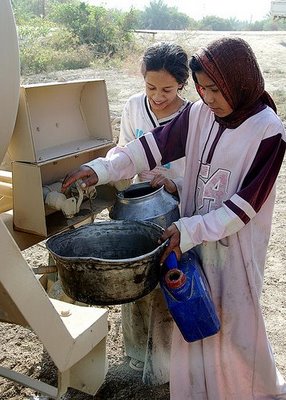
Tad Davis, the Army’s deputy assistant secretary for environment, safety, and occupational health, recently said, with respect to military operations and access to water in Iraq, “You can get out there…and deploy to an area for conducting operations, but if water’s not there for drinking purposes and for cooking, showering, laundry, things like that, then you’re not going to be able to sustain the force.” Clearly, Davis views environmental sustainability as key to the Army’s operations, but not necessarily as a critical component of a lasting peace.
Yet others argue that the Army would be wise to adopt long-term environmental sustainability and human security as immediate goals, as they would reduce the frequency with which the Army is dragged into conflicts. Dabelko wonders whether the War on Terror might be more successful “if part of a diversified response to the attacks of 9/11 would have included an aggressive effort to address poverty as an underlying source of grievances around the world rather than having just a uni-dimensional strategy of use of force. The symbolic and the real impact of such a strategy might have been quite tangible.” Nonetheless, the Army’s recognition that security is broader than military force is a laudable step—hopefully not the last—in the right direction.Photo: Two Iraqi girls from Al Buaytha, Iraq, pump water from a U.S. Army-supplied portable water tank. Courtesy of flickr user James Gordon. -
Weekly Reading
›In Poverty: Combating the Global Crisis, a paper for the Better World Campaign, Wilson Center Senior Scholar John Sewell urges the next U.S. president to focus on promoting open political and economic systems; universal education; better health systems and disease prevention; and equitable trade liberalization in order to reduce poverty.
“Somebody recently said water’s the new oil and there’s a lot to be said for that,” Tad Davis, the Army’s deputy assistant secretary for environment, safety, and occupational health, told Reuters. “If we don’t have water, then we don’t have the ability to perform,” said Davis.
Scientists attending the World Conservation Congress in Barcelona this week released The World’s Protected Areas, a book that examines past progress and continuing challenges in the struggle to protect some of the world’s most biodiverse places.
An Encyclopedia of Earth article examines the important role of forest-derived environmental income in the lives of the rural poor in developing countries. -
A Roadmap for Future U.S. International Water Policy
›When I tell people I have been working on a report about U.S. international water policy, they usually respond with the same sardonic question: “The United States has an international water policy?” The answer, of course, is complicated. Yes, we have localized approaches to water challenges in parts of the developing world, and we have more than 15 government agencies with capacities to address water and sanitation issues abroad. And yes, the State Department and the U.S. Agency for International Development published a joint strategic framework this year for action on water issues in the developing world.
However, the U.S. government (USG) does not yet have an overarching strategy to guide our water programs abroad and maximize synergies among (and within) agencies. Furthermore, the 2005 Senator Paul Simon Water for the Poor Act—which calls for increased water and sanitation assistance to developing countries—has yet to be funded and implemented in a fashion that satisfies lawmakers. In fact, just last week, legislation was introduced in both the House and the Senate to enhance the capacity of the USG to fully implement the Water for the Poor Act.
Why has implementation been so slow? An underlying problem is that water still has no institutional home in the USG, unlike other resources like agriculture and energy, which have entire departments devoted to them. In the current system, interagency water coordination falls on a small, under-resourced (yet incredibly talented and dedicated) team in the State Department comprised of individuals who must juggle competing priorities under the broad portfolio of Oceans, Environment, and Science. In part, it is water’s institutional homelessness that hinders interagency collaboration, as mandates and funding for addressing water issues are not always clearly delineated.
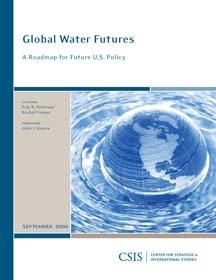
So, what should be done? For the last year and a half, the Center for Strategic and InternationalStudies’ (CSIS) Global Strategy Institute has consulted with policy experts, advocates, scientists, and practitioners to answer this million-dollar question. In our report, Global Water Futures: A Roadmap for Future U.S. Policy, we conclude that if we are serious about achieving a range of our strategic national interests, water must be elevated as a priority in U.S. foreign policy. Water is paramount to human health, agricultural and energy production, education, economic development, post-conflict stabilization, and more—therefore, our government’s organizational structure and the resources it commits to water should reflect the strategic importance of this resource.
We propose the creation of a new bureau or “one-stop shop” for water policy in the State Department to lead in strategic planning, implementation, and evaluation of international water programs; mobilize resources in support of water programming overseas; provide outreach to Congress and important stakeholders; and serve as a research and information clearinghouse. This would require significant support from the highest levels of government, increased funding, and greater collaboration with the private and independent sectors.
The current economic crisis means we are likely to face even greater competition for scarce foreign aid resources. But I would argue—paraphrasing Congressman Earl Blumenauer at our report rollout—that relatively little funding toward water and sanitation can have a significant impact around the world. As we tighten our belts during this period of financial instability, it is even more important that we invest in cross-cutting issues that yield the highest returns across defense, development, and diplomacy. Water is an excellent place to start.
Rachel Posner is a research associate at the Center for Strategic and International Studies’ Global Strategy Institute.
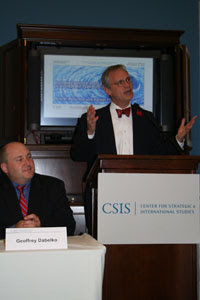
Photo: Environmental Change and Security Program Director Geoff Dabelko and Congressman Earl Blumenauer (D-OR) at the launch of Global Water Futures: A Roadmap for Future U.S. Policy. Courtesy of CSIS. -
‘Time’ Honors Friends of the Earth Middle East With “Heroes of the Environment 2008” Award
›October 3, 2008 // By Rachel WeisshaarThe leaders of Friends of the Earth Middle East (FoEME), a joint Israeli, Jordanian, and Palestinian environmental organization that uses environmental advocacy as a peacebuilding tool, were recently recognized as “Heroes of the Environment 2008” by Time magazine. FoEME understands that “the road to sustainability, like the road to peace, is going to be a slow, messy human project of community organizing, education and trust-building,” says Time correspondent Andrew Lee Butters.
FoEME’s projects include Good Water Neighbors, which uses joint water management to strengthen ties between Israeli and Arab communities on opposite sides of the Jordan River; as well as a plan to build a transboundary peace park on an island in the Jordan River that would attract ecotourism. “We share the same environment, particularly the same water resources,” says Gidon Bromberg, Israeli director of FoEME. “And if we don’t start working together, we’re not going to have an environment.”
For more information on FoEME’s environmental peacebuilding activities, see “Rehabilitating the Jordan River Valley Through Cross-Border Community Cooperation” (May 8, 2006) and “Good Water Makes Good Neighbors: A Middle East Pilot Project in Conflict Resolution” (January 22, 2003), two events hosted by the Environmental Change and Security Program. -
Weekly Reading
›The Intergovernmental Panel on Climate Change has released a paper examining climate change’s likely effects on water resources, as well as how these changes in water resources could affect ecosystems, agriculture, human health, and the economy.
In “Warfare Ecology” (abstract), an article published in the September issue of BioScience, Gary Machlis and Thor Hanson argue that a new, holistic approach to the ecological study of warfare is needed, encompassing preparations for war, combat, and post-conflict activities.
Investing in economic development and education—both at home and abroad—is a more efficient way to prevent violence than investing a similar amount in weaponry or defense infrastructure, argue Representative Danny Davis (D-IL) and Michael Shank of George Mason University’s Institute for Conflict Analysis and Resolution in The Hill.
This year’s Clinton Global Initiative Annual Meeting featured a panel devoted exclusively to water and sanitation issues.
“UN demographers projected in 2002 that the population of the Philippines in 2008 would reach between 75 and 85 million. But the population has already overshot the high projection and now stands at 89 million, up from 60 million in 1990. And the country’s forests, as well as its people, are paying the price in terms of urban overcrowding and rural deforestration [sic],” writes Henrylito Tacio.
Economist environment correspondent Edward McBride moderates an online debate over whether water should be priced according to its market value. -
In Kashmir, Diplomacy Soothes Friction Over Water Resource Management
›October 3, 2008 // By Will RogersThe conflict over resource-rich Kashmir has sparked renewed tension between India and Pakistan, this time over access to one of Asia’s most indispensable commodities: water. The latest dispute erupted on September 13, 2008, with allegations by Pakistan that India had violated a 2005 World Bank agreement over the operational schedule of the Baglihar Dam, which lies on the Chenab River, just inside Indian-administered Kashmir. That agreement “required that filling [of the dam] should take place between June 21 and Aug 31 with prior consent of Pakistan and subject to a condition that river flows should not drop below 55,000 cusec inside Pakistan at any time,” according to Dawn. India continued to fill the dam well into September, provoking outrage from Pakistan, despite guarantees that water flow into Pakistan would not diminish. Pakistani officials reported that “Pakistan had been losing up to 15,000 cusec of water every day because of India’s action.”
Regional water disputes are no anomaly in Central, East, and South Asia, where population growth and increases in per capita consumption have led to competition over water resources. In recent years, Indiahas invested in hydroelectric projects—such as the Baglihar Dam, projected to generate 450-900 megawatts of electricity—to satisfy a burgeoning middle class hungry for energy. With the dam just up the river from the Pakistani border, Pakistanis have long worried that the dam would severely limit the region’s water and curtail farmers’ ability to irrigate crops. Since construction began in 1999, Pakistani officials have objected to the project, arguing that the more energyIndia attempts to generate from the dam, the less water will reachPakistan.
Last week, Pakistanissued a formal protest to the Permanent Indus Commission, a body formed by the 1960 treaty, over the reduction of Chenab River flows and asked for an emergency meeting with the governing body in order to address the danger posed to Pakistani rice farmers who rely on water flow to irrigate their crops. Since then, prospects for diplomatic resolution have warmed: Pakistani President Asif Zardari and Indian Prime Minister Manmohan Singh met on the “sidelines of the United Nations General Assembly” last week to discuss the issue. Meanwhile, the Permanent Indus Commission is schedule to meet this month, following an invitation from India to Pakistan’s Indus Water Commissioner to meet to resolve the issue.
Fortunately, water disputes have been one area where Pakistan and India have been able to manage their grievances and find resolution through diplomacy rather than force. By working together on environmental issues—whether water resource management, transboundary forest conservation, or endangered species protection—where cooperation is often possible, even longtime foes can move closer to resolving their larger conflict.
Photo: The Chenab River, flowing here through Himachal Pradesh in the Indus Basin, provides farmers and local populations with the water required to meet their sustainable needs. Courtesy of flickr user Motographer.
Showing posts from category water.
 Last week, the U.S. Army released its new
  When I tell people I have been working on a report about U.S. international water policy, they usually respond with the same sardonic question: “The United States has an international water policy?” The answer, of course, is complicated. Yes, we have localized approaches to water challenges in parts of the developing world, and we have
  Studies’ (CSIS)
  The conflict over resource-rich Kashmir has sparked renewed tension between India and Pakistan, this time over access to one of Asia’s most indispensable commodities: water. The latest dispute erupted on September 13, 2008, with allegations by Pakistan that India had violated a 2005 World Bank agreement over the operational schedule of the Baglihar Dam, which lies on the Chenab River, just inside Indian-administered Kashmir. That agreement “required that filling [of the dam] should take place between June 21 and Aug 31 with prior consent of Pakistan and subject to a condition that river flows should not drop below 55,000

