Showing posts from category urbanization.
-
Mapping Demographics in WWF Priority Conservation Areas
›February 25, 2011 // By Hannah Marqusee“The developing world is urbanizing at a dizzying pace,” yet rural populations living in developing countries are also rapidly increasing, threatening many of the planet’s most biodiverse regions, says a new study, Mapping Population onto Priority Conservation Areas, by David López-Carr, Matthew Erdman, and Alex Zvoleff.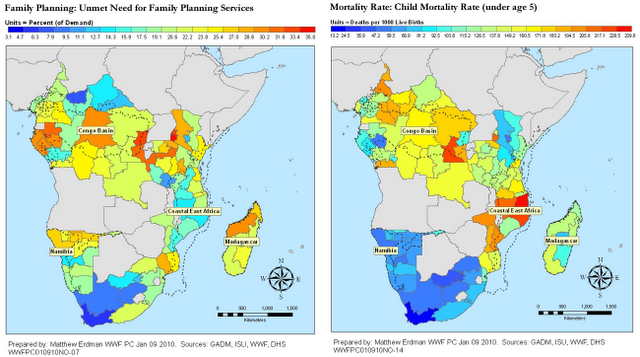
Using comprehensive data from the USAID-sponsored Demographic Health Surveys (DHS), the researchers analyzed population, mortality, and fertility indicators for 10 of the 19 priority places for conservation identified by the World Wildlife Foundation (WWF). These biological hotspots represent parts of 25 countries throughout South Asia, sub-Saharan Africa, and South America, including the Democratic Republic of the Congo, Colombia, Guatemala, Indonesia, Kenya, Nepal, Madagascar, and Thailand.
Urban vs. Rural
The findings confirmed the researchers’ hypothesis that rural areas within WWF priority regions are at a lower state of demographic transition than their urban counterparts, meaning they have higher fertility and infant mortality rates and a younger age structure due to poor access to primary health care, including family planning. Furthermore, women in these regions desire more children than those in urban, non-priority areas, but experience a greater difference between ideal and actual number of children.
For many of the indicators, the differences between urban and rural, and priority and non-priority, regions of the developing world are striking. In urban Asia, the mean predicted population doubling time is 86.1 years; in rural Africa it is only 24.6 years. Urban Asia and South America also have total fertility rates of 1.8 children per woman, while rural Africa’s is 5.2. Infant mortality also ranged from a low of 20 deaths per every 1,000 births in some developing urban areas, to over 100 in rural parts of Coastal East Africa. In the developed world it is less than 10.
There is also consistently less desire among women in priority areas to limit their childbearing. Worldwide, 49.4 percent of women living within priority areas want to limit childbearing, compared to 56.2 percent outside priority areas.
Rural areas in all regions had the highest unmet need for family planning, with the exception of the Congo Basin, where high infant mortality has persisted and dampened women’s desire to limit childbearing. “If much needed health services were provided in the Congo Basin, along with family planning services, child survival rates would increase, and couples would be more inclined to limit overall births,” the study says.
Lower demand for family planning in priority areas is consistent with Caldwell’s theory of intergenerational wealth flows, the paper noted, which explains how in rural agricultural societies, children are economic assets who move wealth to their parents. As countries develop and people gain access to education, healthcare and female empowerment, wealth flows reverse and children become financial burdens. This transition decreases fertility and increases demand for family planning.
Setting Priorities
As WWF plans to scale up its population, health and environment (PHE) programs, this study will help to prioritize places within priority areas that are most in need of PHE intervention and “are most likely to help alleviate negative environmental and social impacts of rapid population growth.” The results of this study show that many areas are ripe for such intervention:Nearly a quarter of households in Coastal East Africa and the Mesoamerican Reef wish to have access to contraception yet their desire remains unfulfilled. Similarly, households within priority places in Coastal East Africa, the Mesoamerican Reef, Amazon and the Guianas, and the Eastern Himalayas wish to have nearly one child fewer than they currently have.
The findings of this study have already informed the planning of several of WWF’s projects in Madagascar and Namibia.
The limited availability and detail of the DHS data was the primary limitation of the study, the researchers noted. The 25 countries examined did not fully cover all WWF’s priority areas – 17 other countries within the priority areas lacked sufficiently comprehensive data for the study. Furthermore, the district or municipality was the smallest unit of analysis possible with DHS data, making it difficult to exactly pinpoint priority communities.
“Geography matters,” write the authors. “Only with further refined data accompanied by qualitative on-the-ground field research can we credibly answer remaining questions.”
Image Credit:“Family Planning: Unmet Need for Family Planning Services” and “Mortality Rate: Child Mortality Rate (Under Age 5)” courtesy of World Wildlife Fund.
Sources: Population Council, World Wildlife Fund. -
Deforestation, Population, and Development in a Warming World: A Roundtable on Latin America
›“Rural development and MCH [maternal child health] in the most remote, rural areas are going to largely explain the future of Latin American conservation, development, population, and urbanization,” said David Lopez-Carr, associate professor of geography at the University of California, Santa Barbara, at a recent Wilson Center roundtable on “Deforestation, Population, and Development in Latin America.”
Nearly 80 percent of Latin America’s people live in urban areas, yet the continent’s rural populations have a disproportionate effect on its forests. Panelists Liza Grandia, assistant professor of international development and social change at Clark University, and Jason Bremner, director of population, health, and environment at the Population Reference Bureau, argued that meeting the needs of these communities is therefore key to conserving Latin America’s forests. [Video Below]
Rural Populations Have Disproportionate Impact on Deforestation
“There are two Latin Americas,” said Carr. Countries like Argentina, Chile, and Uruguay are 90 percent urban, while countries like Guatemala, Ecuador, and Bolivia are about 50 percent urban. However, despite this rapid urbanization and declining population growth at the national level, rural areas in Latin America are still experiencing high fertility rates and significant forest loss. So how are these trends related?
In his analysis of more than 16,000 municipalities in Latin America, Carr found “no statistical significance between population change at the municipal level and woody vegetation change at the municipal level.” Yet this lack of connection does not mean population growth and deforestation are unrelated, but instead indicates “a problem of place and scale,” he said. Within countries or even within municipalities, there are huge variations in fertility rates. Rural areas, which generally have larger families, more agricultural expansion, higher population growth, and lower population density, account for higher impact per capita on forests.
“Less than one percent of the population of Guatemala moves to any rural frontier at all,” said Carr, “yet that small, tiny fraction of the population has a disproportionate impact on the forests, and that is true throughout Latin America.” Carr also distinguished between the private sector primarily converting secondary forest for corporate agriculture and subsistence farmers clearing old growth forest.
Indigenous Lands Are Key to the Future
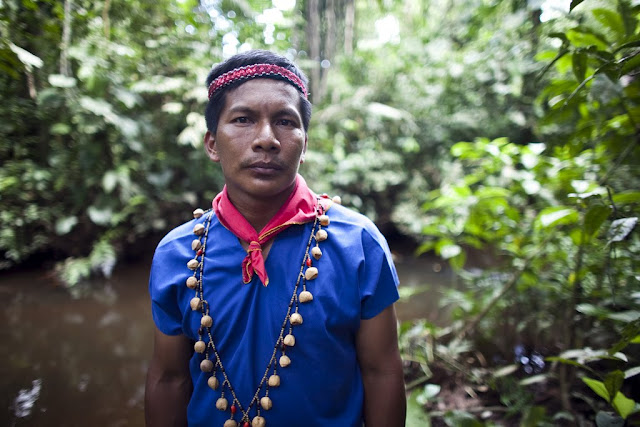
There are generally two groups of people on the frontier: indigenous people and “colonists,” who move in to take advantage of undeveloped land. Indigenous people, by and large, act as “stewards of the forests,” exhibiting lower rates of deforestation and forest fragmentation then colonists, Bremner said. “They do have a very protective effect, largely because they are excluding others from those lands.”
Indigenous communities tend to be “common property institutions” with an informal or cultural set of rules and traditions facilitating land use, said Bremner. They are “really good at mobilizing against external threats,” he said, which results in a protective effect over the forest. In the Amazon, for example, “indigenous lands, in the context of all of this colonization and deforestation that is happening, are now seen as key to the future,” he said.
However, as indigenous population growth and growing agricultural and industrial expansion change indigenous communities and livelihoods, more formal rules must be developed to govern land use. If indigenous communities “are the protective factor, then we need to know how to protect them,” said Bremner.
There are few demographic surveys of rural communities, but one of nearly 700 women in the Ecuadorian Amazon found the total fertility rate of indigenous women to be seven to eight children per woman. “Fifty percent of indigenous women didn’t want to have another child…of that 50 percent, 98 percent were not using a modern method of contraception,” Bremner said. “Responding to these women’s needs, I think, would go a long way in terms of changing the future of these communities.”
Guatemala: Reducing Fertility By Thinking Outside the Box
Grandia, with support from Conservation International and ProPeten, conducted a study of population and environment connections as part of the Demographic and Health Survey (DHS) of Peten, a sparsely populated and highly biodiverse municipality of Guatemala. The 90,000 people living in the protected area in this park had “literally no family planning services,” said Grandia, and their population was on track to double within 20 years.
Using the DHS data, Grandia and ProPeten created a “somewhat eclectic population and environment program” that integrated many of the concerns of indigenous Maya communities in Peten, called Remedios. Remedios focused on a diverse set of issues, including agriculture, education, maternal and child health, family planning, and gender issues, and included projects like a “traveling education-mobile” and Between Two Roads, a bilingual radio soap opera in Spanish and Q’eqchi’ Maya, which used the story of a conflict between midwife and cattle rancher in a frontier community “to touch on a whole range of social and environmental issues.”
“As a result of our efforts…the total fertility rate dropped from 6.8 in 1999 to 5.8 in 2002, and in the most recent DHS it had fallen to 4.3,” said Grandia. She credited this success in part to the fact that the programs were “so cross-cutting across many of those schools of thought.” Yet the integration of a diverse range of issues also caused a split between the field-based ProPeten and the DC-based Conservation International, who wanted a more “narrow focus” on family planning and conservation, she said.
“Sometimes working outside the box can have unexpected results,” said Grandia. The population-environment movement could learn from the American environmentalist movement’s evolution from “an elite movement” into a “broader-based socially dynamic movement that involved new constituencies,” she said.
“Population and environment has often begged the articulation of a third field,” said Grandia. “How you fill in that blank often reflects the kind of development interventions you deem appropriate.” Perhaps “justice” should be considered “a new critical third paradigm,” she said.
Sources: Population Reference Bureau, World Bank.
Photo Credit: “Chevron’s Toxic Legacy in Ecuador’s Amazon,” courtesy of flickr user Rainforest Action Network. -
Health, Demographics, and the Environment in Southeast Asia
›“Health and Health-Care Systems in Southeast Asia: Diversity and Transitions,” launches a series in The Lancet on health in Southeast Asia. While social, political, and economic development have paved the way for substantial health improvements in some countries, demographic transitions are taking place at among the fastest rates in the world, including reductions in fertility, population aging, and rural-to-urban migration. An epidemiological shift is occurring as well, from infectious to chronic diseases. Rapid urbanization and population movement can not only affect the emergence and spread of new infectious diseases directly, but can also exacerbate environmental changes that indirectly contribute to the burden of waterborne and vector-borne diseases. The series, available early online, addresses these concerns in more detail. Moving forward, the authors advocate for “enhanced regional cooperation in the health sector to share knowledge and rationalize health systems operations, leading to further public health gains for the region’s diverse populations.”In “A Stormy Future for Population Health in Southeast Asia,” author Colin D. Butler responds to the series, stressing that the health of the future generation is dependent on actions today. Environmental change will likely bring sea-level rise that threatens urban centers and food bowls, causing regional food scarcity, exacerbating diseases like dengue fever, increasing the number of extreme weather events, and contributing to resource scarcity throughout the region. With increasing need for sustainable development in the region, Butler concludes that “stronger human factors will be essential to counter the increased physical stresses that seem to be the inevitable destiny of Southeast Asia, largely as a result of the actions of people who have never seen its shores.” -
Eliya Zulu on Population Growth, Family Planning, and Urbanization in Africa
›“The whole push for population control or to stabilize populations in Africa in the ’70s and the ’80s mostly came out of the West,” said Eliya Zulu of the African Institute for Development Policy (AFIDEP) in this interview with ECSP. Then new research brought to light the fact that many women in Africa actually wanted to control their fertility themselves, but they didn’t have access to family planning.
“It kind of put the African leaders who really didn’t want to talk anything about fertility control and so on in a fix,” Zulu said. “Because all of sudden now it was the African women themselves who are saying we need these services – it was not an imposition from the West.”
Based in Nairobi, Kenya, Zulu said that part of what he does at AFIDEP is “try to get African countries to think about the future.” Current economic growth in parts of Africa simply can’t match population growth, but improving access to family planning and child/maternal health infrastructure can greatly reduce fertility rates – and quickly.
“The question for Africa is: Are we going to be ready? And we need to prepare,” said Zulu. “For that to happen it’s not just about saying ‘let’s have fewer children.’ I think we also need to do this from a social developmental perspective where we also look at ways in which we can improve the quality of the population, empower women, invest in education, and so on.”
Four Factors of Success
There are several factors that are critical for successful family planning and child/maternal health efforts, said Zulu: strong political leadership, sustained commitment over time, financial investment (research has shown that over 90 percent of women in sub-Saharan Africa cannot afford contraceptives), and strong accountability mechanisms for monitoring performance of programs and use of resources.
“There are a number of countries that have shown that, even with the limited resources that Africa has, that with all the problems that Africa has, if you really emphasize those four factors that I mentioned, you can actually achieve very, very positive results,” Zulu said.
Rapid Urbanization and the Growth of Urban Poverty
Rapid urbanization is one of Africa’s biggest challenges, said Zulu. “Africa is the least urbanized region of the world now, but it’s growing at the highest rate.” If you look at historical examples from the West and Asia, “urbanization is supposed to be a good thing; urbanization has been a driver of economic development,” he said, but “the major characteristic of urbanization in Africa has been the rapid growth of urban poverty.”
“If the economies are not going to develop the capacity to absorb this population and create enough jobs for them, there’s going to be chaos, because you can’t have all these young people without having jobs for them,” said Zulu. “The challenge for many African governments is how to have sustainable urbanization and how to transform our cities into agents of development.”
The “Pop Audio” series is also available as podcasts on iTunes. -
Edward Carr, University of South Carolina
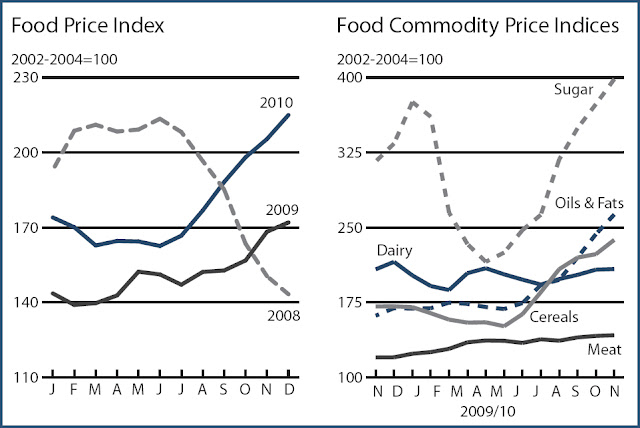
Why the Poorest Aren’t Necessarily the Most Vulnerable to Food Price Shocks
›February 8, 2011 // By Wilson Center StaffThere have been an interesting series of blog posts going around about the issue of price speculation in food markets, and the impact of that speculation on food security and people’s welfare. Going back through some of these exchanges, it seems to me that a number of folks are arguing past one another.
-
Book Preview: ‘The Future Faces of War: Population and National Security’
›February 3, 2011 // By Christina DaggettThe word “population” doesn’t come up too often in national security debates, yet, a shift may be coming, as global population reaches the seven billion mark this year, youth-led unrest rocks the Middle East, and questions of aging enter the lexicon of policymakers from Japan and South Korea to Europe and the United States. What does a population of nine billion (the UN medium-variant projection for 2050) mean for global security? How will shrinking populations in Europe affect Western military alliances and operations? Is demography destiny?The latter question has plagued demographers, policymakers, and academics for centuries, resulting in heated debate and dire warnings. Jennifer Dabbs Sciubba continues this debate in her new book, The Future Faces of War: Population and National Security, but with a decidedly more measured and optimistic tone (full disclosure: Sciubba was one of my professors). The book is targeted at policymakers but is accessible to anyone with an interest in the field of demography and national security. She will launch her book at an event hosted by the Wilson Center on March 14.
Turning Challenge Into Opportunity
The main themes of The Future Faces of War are challenge and opportunity. Yes, national security will be tested by a series of evolving demographic trends in the decades ahead, but with proper insight and preparation, states can turn these challenges into opportunities for growth and betterment. Sciubba writes, “How a state deals with its demographic situation – or any other situation for that matter – is more important than the trends themselves” (p.125).
Part of turning these population challenges into opportunity is understanding long-term trends – a daunting task given the range and number of trends to consider. Drawing on her own experiences in the defense community, Sciubba writes how policymakers were “receptive” to the idea of population influencing national security, but that the “overwhelming number of ways demography seemed to matter” made them hesitant to act (p.3). With the publication of this book, which clearly and concisely outlines the basics of each population trend with demonstrative examples, hopefully that hesitation will be turned into action.
Youth and Conflict
The first population trend Sciubba highlights is perhaps the one of most immediate concern to national security policymakers given recent world events. In the chapter “Youth and Youthful Age Structures,” Sciubba discusses the security implications of those countries (in particular those in Africa, the Middle East, and Central Asia) with a majority of their population under the age of 29. She writes, “Most important for national security, countries with youthful age structures are generally the least developed and least democratic in the world, and tend to have the highest risk of civil conflict” (p. 18). In fact, between 1970 and 1999 countries with very young and youthful age structures were two to four times more likely to experience civil conflict than countries with more mature age structures.
The risks of very young and youthful populations are well documented (Sciubba cites the examples of Somali piracy, religious extremism, and child soldiers in Africa), but what has not been as widely discussed are the opportunities. Youthful states have a large pool of potential recruits for their armies, plenty of workers to drive economic development, and even an opportunity to grow democratically through social protest. Sciubba writes, “Youth can also be a force for positive political change as they demand representation and inclusion in the political process… social protest is not always a bad thing, even if it does threaten a country’s stability, because it may lead to more representative governance or other benefits” (p. 23). (For more on youth and the transition to democracy, see “Half a Chance: Youth Bulges and Transition to Democracy,” by Richard Cincotta, and his recent blog post about the Jasmine Revolution in Tunisia).
Graying of the Great Powers
At the other end of the demographic transition is population aging. Sciubba points out that the countries with the highest proportions of people aged 60 and older are also “some of the world’s most powerful and economically or politically strategic states” (p. 42). Europe, Japan, and the United States are all getting older (though the United States to a slightly lesser extent), and Sciubba states that the “graying” of these countries has the potential to greatly limit military preparedness, size, and funding. She points out that the number of recruits available will be much smaller and more money will have to be spent on pensions and health care for the growing number of elderly persons.
To counteract these challenges, Sciubba recommends that aging states seek out alliances with each other and countries with younger populations. She writes, “As part of strong alliances, states have strength in numbers, even if they are individually weakened by aging” (p. 47). Another alternative would be to improve military technology and efficiency to compensate for the drop in personnel.
Migration and Security: A “Unique” Relationship
Migration, the third pillar of demographic change after fertility and mortality, has what Sciubba calls a “unique relationship to national security” (p.83). Migration “is the only population driver that can change the composition of a state or a community within months, weeks, or even days” (p. 83). Mass migrations (such as those caused by a natural disaster or violent conflict) are the best examples of this trend. Some of the security challenges Sciubba highlights about migration are refugee militarization, competition for resources, and identity struggles among the native and migrant populations.
However, Sciubba also argues that both migrants and receiving countries can benefit. Origin states release pressure on their crowded labor markets and earn income from remittances, while receiving countries increase their labor market and mitigate population decline (a key component of U.S. growth).
Much of this has been studied before, but two new developments in migration trends that Sciubba calls to our attention are what she calls the “feminization of migration” (the increasing number of women who are likely to move for economic reasons) and migration as a result of climate change. Both are intriguing new areas of inquiry that deserve further study, but only get a passing mention in the book.
Making Her Case
The basic trends outlined above are only a small sampling of the wealth of information to be found in The Future Faces of War. Other noteworthy topics include a discussion on transitional age structures, urbanization, gender imbalances, HIV/AIDS, differential growth among ethnic groups, and many more. The topics are varied and wide-ranging and yet, Sciubba manages to connect them and makes her case convincingly for their inclusion in the broader national security dialogue. Sciubba has briefly written about many of these topics before, but this is the first time she (or anyone else, for that matter) has brought them together in one comprehensive book with such a focus on national security.
Christina Daggett is an intern with ECSP and a former student of Jennifer Dabbs Sciubba’s at Rhodes College.
Sources: Population Action International.
Photo Credits: “Children at IDP Camp Playful During UNAMID Patrol,” courtesy of flickr user United Nations Photo. Book cover image provided by, and used with the permission of, Jennifer Dabbs Sciubba and ABC-CLIO. -
How Population Growth Is Straining the World’s Most Vital Resource
Turning Up the Water Pressure [Part Two]
›January 19, 2011 // By Russell SticklorThis article by Russell Sticklor appeared originally in the Fall 2010 issue of the Izaak Walton League’s Outdoor America magazine. Read part one here.
As concerns over water resources have grown around the globe, so too have proposed solutions, which range from common sense to absurd. Towing icebergs into the Persian Gulf or floating giant bags of fresh water across oceans to water-scarce countries are among the non-starters. But more moderate versions of those ideas are already being put into practice. These solutions showcase the power of human ingenuity — and reveal just how desperate some nations have become to secure water.
For example, India is doing business with a company out of tiny Sitka, Alaska, laying the framework for a water-export deal that could see huge volumes of water shipped via supertankers from the water-rich state of Alaska to a depot south of Mumbai. Depending on the success of this arrangement, moving bulk water via ship could theoretically become as commonplace as transoceanic oil shipments are today.
There is far greater potential, however, in harnessing the water supply of the world’s oceans. Perhaps more than any other technological breakthrough, desalination offers the best chance to ease our population-driven water crunch, because it can bolster supply. Although current desalination technology is not perfect, Eric Hoke, an associate professor of environmental engineering at the University of California-Los Angeles, told me via email, it is already capable of converting practically any water source into water that is acceptable for use in households, agriculture, or industrial production. Distances between supply and demand would be relatively short, considering that 40 percent of the world’s population — some 2.7 billion people — live within 60 miles of a coastline.
The Lure of Desalination
Although desalination plants are already up and running from Florida to Australia, the jury is still out on the role desalination can play in mitigating the world’s fresh water crisis. Concerns persist over the environmental impact seawater-intake pipes have on marine life and delicate coastal ecosystems. Another question is cost: Desalination plants consume enormous amounts of electricity, which makes them prohibitively expensive in most parts of the world. Desalination technology may not be able to produce water in sufficient scale — or cheaply enough — to accommodate the growing need for agricultural water. “Desalination is more and more effective [in producing] large quantities of water,” notes Laval University Professor Frédéric Lasserre in an interview. “But the capital needed is huge, and the water cost, now about 75 cents per cubic meter, is far too expensive for agriculture.” Although desalination might be “a good solution for cities and industries that can afford such water,” Lasserre predicts it “will never be a solution for agricultural uses.”
Nevertheless, desalination’s promise of easing future water crunches in populous coastal regions gives the technology game-changing potential at the global level. “Desalination technology,” Columbia University’s Upmanu Lall told said in an email, “will improve to the point that [water scarcity] will not be an issue for coastal areas.”
A Glass Half Full
With world population projected to grow by at least 2 billion during the next 40 years, water will likely remain a chief source of global anxiety deep into the 21st century. Because water plays such a fundamental role in everyday life across every society on earth, its shared stewardship may become an absolute necessity.
Take India and Pakistan’s landmark Indus Waters Treaty of 1960, which is still in effect today. The agreement — signed by two countries that otherwise can’t stand each other — shows that when crafted appropriately and with enough patience, international water-sharing pacts can help defuse tensions over water access before those tensions escalate into violence. Similar collaboration on managing shared waters in other areas of the world — a process that can be a bit bumpy at times — has proven successful to date.
Meanwhile, more widespread distribution of reliable family planning tools and services across Latin America, sub-Saharan Africa, and Asia will also be needed if the international community hopes to meaningfully address water scarcity concerns. Better access to healthcare and family planning tools would empower women to take greater control over their reproductive health and potentially elevate living standards in crowded parts of the developing world. Smaller family sizes would help decelerate population growth over time, easing the burden on water and soil resources in many areas. The key is ensuring such efforts have adequate funding. The United States recently pledged $63 billion over the next six years through its Global Health Initiative to help partner countries improve health outcomes through strengthened health systems, with a particular focus on improving the health of women and children.
Putting a dent in the global population growth rate will be important, but it must be accompanied by a sustained push for conservation — nowhere more so than in agriculture. Investing in the repair of a leaky irrigation infrastructure could help save water that might otherwise literally slip through the cracks. Attention to maintaining healthy soil quality — by practicing regular crop rotation, for example — could also help boost the efficiency of irrigation water.
Setting a Fair Price
The most enduring changes to current water-use practices may have to come in the form of pricing. In most parts of the world, including parts of the United States, groundwater removal is conducted with virtually zero oversight, allowing farmers to withdraw water as if sitting atop a bottomless resource. But as groundwater tables approach exhaustion, the equation changes; as Ben Franklin famously pointed out, “when the well’s dry, we know the worth of water.”
The key, then, is to establish the worth of water before this comes to pass. Smart pricing could encourage conservation by making it less economical to grow water-intensive crops, particularly those ill-suited to a particular climate. “Some crops being grown should not be grown . . . once the true cost of water is factored in,” Nirvikar Singh, a University of California-Santa Cruz economics professor who focuses on water issues, told me via email. Pricing would also provide a revenue stream for modernizing irrigation infrastructures and maintaining sewage systems and water treatment centers, further bolstering water efficiency and quality both in the United States and around the globe.
To be sure, implementing a pricing scheme for water resources — which have been essentially free throughout history — will be unpopular in many parts of the world. It’s natural to expect some pushback from the public as water managers and governments take steps to address the 21st century water crunch. But given the resource’s undeniable and universal value on an ever-more crowded planet, few options exist aside from using the power of the purse to push for more efficient water use.
In the end, however, water pricing must be combined with greater public value on water conservation — we must not flush water down our drains before using it to its full potential. Whether that involves improving the water transportation infrastructure, recycling wastewater, taking shorter showers, or turning to less water-intensive plants and crops, steps big and small need to be taken to better conserve and more equitably divide the world’s water to irrigate our farms, grow our economies, and sustain future generations.
Sources: Columbia Water Center, National Geographic, Population Reference Bureau, White House.
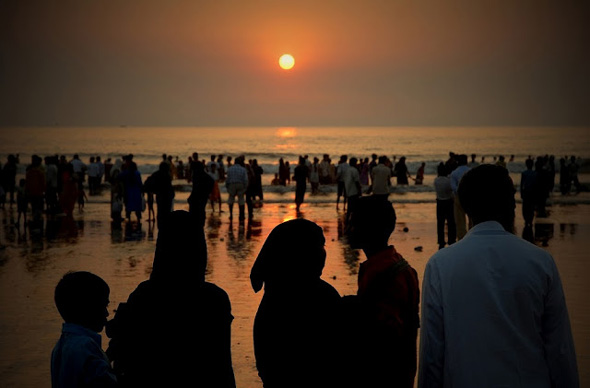
Photo Credits: “Juhu Beach Crowded,” courtesy of flickr user la_imagen, and “Irrigation (China),” courtesy of flickr user spavaai. -
How Population Growth Is Straining the World’s Most Vital Resource
Turning Up the Water Pressure [Part One]
›January 18, 2011 // By Russell SticklorThis article by Russell Sticklor appeared originally in the Fall 2010 issue of the Izaak Walton League’s Outdoor America magazine.
For many Americans, India — home to more than 1.1 billion people — seems like a world away. Its staggering population growth in recent years might earn an occasional newspaper headline, but otherwise, the massive demographic shift taking place on our planet is out of sight, out of mind. Yet within 20 years, India is expected to eclipse China as the world’s most populous nation; by mid-century, it may be home to 1.6 billion people.
So what?
In a world that is increasingly connected by the forces of cultural, economic, and environmental globalization, the future of the United States is intertwined with that of India. Much of this shared fate stems from global resource scarcity. New population-driven demands for food and energy production will increase pressure on the world’s power-generating and agricultural capabilities. But for a crowded India, domestic scarcity of one key resource could destabilize the country in the decades to come: clean, fresh water.
Stepping Into a Water-Stressed Future
From Africa’s Nile Basin and the deserts of the Middle East to the arid reaches of northern China, water resources are being burdened as never before in human history. There may be more or less the same amount of water held in the earth’s atmosphere, oceans, surface waters, soils, and ice caps as there was 50 — or even 50 million — years ago, but demand on that finite supply is soaring.
Consider that since 1900, the world population has skyrocketed from one billion to the cusp of seven billion today, with mid-range projections placing the global total at roughly 9.5 billion by mid-century. And it only took 12 years to add the last billion.
Unlike the United States — which is a water-abundant country by global standards — India is growing weaker with each passing year in its ability to withstand drought or other water-related climate shocks. India’s water outlook is cause for alarm not just because of population growth but also because of climate change-induced shifts in the region’s water supply. Depletion of groundwater stocks in the country’s key agricultural breadbaskets has raised water worries even further. Water scarcity is not some abstract threat in India. As Ashok Jaitly, director of the water resources division at New Delhi’s Energy and Resources Institute, told me this past spring, “we are already in a crisis.”
How the country manages its water scarcity challenges over the coming decades will have repercussions on food prices, energy supplies, and security the world over — impacts that will be felt here in the United States. And India is not the only country wrestling with the intertwined challenges of population growth and water scarcity.
Transboundary Tensions
Several of the world’s most strategically important aquifers and river systems cross one or more major international boundaries. Disputes over dwindling surface- and groundwater supplies have remained local and have rarely boiled over into physical conflict thus far. But given the challenges faced by countries like India, small-scale water disputes may move beyond national borders before the end of this century.
Looming global water shortages, warns a recent World Economic Forum report, will “tear into various parts of the global economic system” and “start to emerge as a headline geopolitical issue” in the coming decades.
This has become a national security issue for the United States. Any country that cannot meet population-linked water demands runs the risk of becoming a failed state and potentially providing fertile ground for international terrorist networks. For that reason, the United States is keeping close track of how water relations evolve in countries like Yemen, Syria, Somalia, Pakistan, and Afghanistan. It is also one of the reasons water security is a key goal of U.S. development initiatives overseas. For instance, between 2007 and 2008, the U.S. Agency for International Development (USAID) invested nearly $500 million across more than 70 countries to boost water efficiency, improve water treatment, and promote more sustainable water management.
More Mouths to Feed, Limited Land to Farm
Water is a critical component of industrial processes the world over — from manufacturing and mining to generating energy — and shapes the everyday lives of the people who rely on it for drinking, cooking, and cleaning. But the aspect of modern society most affected by decreasing water availability is food production. According to the United Nations, agriculture accounts for roughly 70 percent of total worldwide water usage.Global population growth translates into tens of millions of new mouths to feed with each passing year, straining the world’s ability to meet basic food needs. Given the finite amount of land on which crops can be productively and reliably grown and the constant pressure on farms to meet the needs of a growing population, the 20th and early 21st centuries have been marked by periodic regional food crises that were often induced by drought, poor stewardship of soil resources, or a combination of the two. As demographic change continues to rapidly unfold throughout much of Asia and sub-Saharan Africa, the ability of farmers and agribusinesses to keep pace with surging food demands will be continually challenged. Food shortages could very well emerge as a staple of 21st century life, particularly in the developing world.
Mirroring the growing burden on farmland will be a growing demand for water resources for agricultural use — and the outlook is not promising. According to a report from the International Water Management Institute in Sri Lanka, “Current estimates indicate that we will not have enough water to feed ourselves in 25 years’ time.”
As one of the world’s largest agricultural producers, the United States will be affected by this food crisis in multiple ways. Decreased food security abroad will increase demand for food products originating from American breadbaskets in California and the Midwest, possibly resulting in more intensive (and less sustainable) use of U.S. farmland. It may also drive up prices at the grocery store. Booming populations in east and south Asia could affect patterns of global food production, particularly if severe droughts spark downturns in food production in key Chinese or Indian agricultural centers. Such an outcome would push those countries to import huge quantities of grain and other food staples to avert widespread hunger — a move that would drive up food prices on the global market, possibly with little advance warning. Running out of arable land in the developing world could produce a similar outcome, Upmanu Lall, director of the Columbia Water Center at Columbia University, said via email.
Changing Tastes of the Developing World
Economic modernization and population growth in the developing world could affect global food production in other ways. In many developing countries, rising living standards are prompting changes in dietary preferences: More people are moving from traditional rice- and wheat-based diets to diets heavier in meat. Accommodating this shift at the global level results in greater demand on “virtual water” — the amount of water required to bring an agricultural or livestock product to market. According to the World Water Council, 264 gallons of water are needed to produce 2.2 pounds of wheat (370 gallons for 2.2 pounds rice), while producing an equivalent amount of beef requires a whopping 3,434 gallons of water.
In that way, the growing appeal of Western-style, meat-intensive diets for the developing world’s emerging middle classes may further strain global water resources. Frédéric Lasserre, a professor at Quebec’s Laval University who specializes in water issues, said in an interview about his book Eaux et Territories, that at the end of the day, it simply takes far more water to produce the food an average Westerner eats than it does to produce the traditional food staples of much of Africa or Asia.
Continue reading part two of “Turning Up the Water Pressure” here.
Sources: Columbia Water Center, ExploringGeopolitics.org, International Water Management Institute (Sri Lanka), Population Reference Bureau, The Energy and Resources Institute (India), United Nations, USAID, World Economic Forum, World Water Council.
Photo Credits: “Ganges By Nightfall,” courtesy of flickr user brianholsclaw, and “Traditional Harvest,” courtesy of flickr user psychogeographer.